Is the Heart of the Ocean Necklace Real? A Gemologist's Breakdown
Discover if the Heart of the Ocean necklace is real. We compare movie prop materials to genuine sapphires, metals, and chain mechanics.

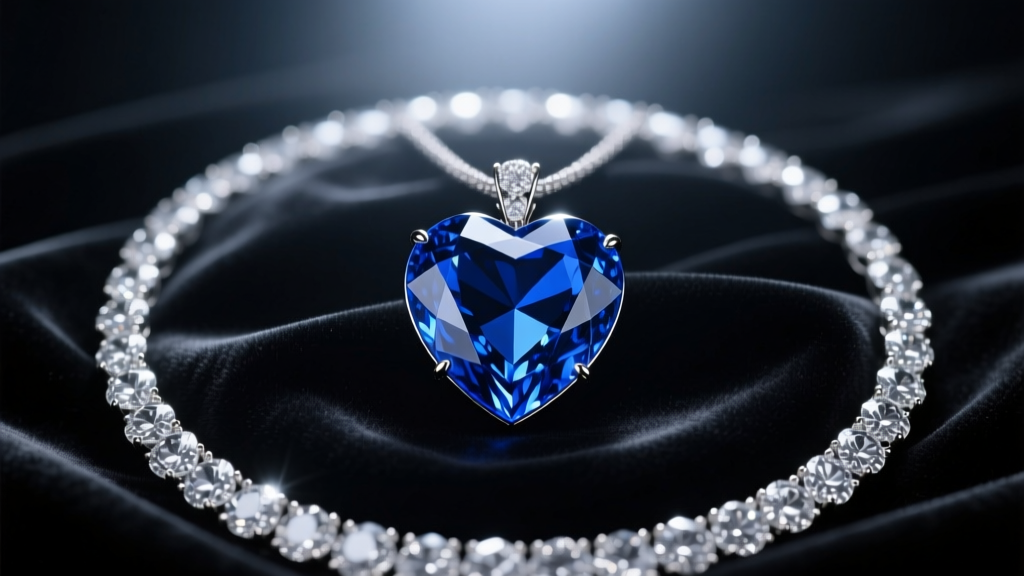
When cinephiles and jewelry enthusiasts first ask, "is the heart of the ocean necklace real," the answer requires separating Hollywood magic from gemological reality. The iconic necklace worn by Kate Winslet in James Cameron's 1997 epic Titanic is arguably the most famous piece of fictional jewelry in cinematic history. But behind the cinematic illusion lies a fascinating world of material science, gemology, and metallurgy. To understand what makes a genuine equivalent of this masterpiece, we must deconstruct the movie prop, analyze the properties of real blue gemstones, and examine the structural engineering required to support a massive, high-carat pendant.
The Cinematic Illusion: What Was the Movie Prop Actually Made Of?
The necklace seen on screen was not a multi-million-dollar sapphire. The primary movie prop was crafted from a large, heart-shaped blue cubic zirconia (CZ) set in white gold. While CZ is an excellent diamond simulant with a high refractive index (2.15–2.18) and exceptional dispersion (0.058–0.066), it possesses entirely different physical properties than a natural sapphire. Under a jeweler's 10x loupe, CZ reveals conchoidal fractures, a lack of natural inclusions, and an overly "fiery" rainbow dispersion that immediately flags it as synthetic to a trained eye. Furthermore, CZ has a specific gravity of 5.60 to 6.00, making the massive movie prop significantly heavier on the actor's neck than a natural corundum sapphire of the exact same dimensions, which sits at a specific gravity of 4.00.
Gemological Deep Dive: Sapphires vs. Alternatives
If you are looking to acquire or commission a genuine "Heart of the Ocean" today, the center stone is the most critical decision. While blue sapphire is the canonical choice, other blue gemstones are frequently marketed as alternatives. Here is how the top contenders compare across vital gemological metrics.
| Material | Mohs Hardness | Refractive Index | Pleochroism | Avg. Price per Carat (2026) |
|---|---|---|---|---|
| Blue Sapphire (Corundum) | 9.0 | 1.76 - 1.78 | Strong (Blue/Blue-Green) | $3,000 - $15,000+ |
| Tanzanite (Zoisite) | 6.0 - 7.0 | 1.69 - 1.70 | Strong (Blue/Purple/Bronze) | $400 - $900 |
| Blue Spinel | 8.0 | 1.71 - 1.73 | None (Singly Refractive) | $800 - $4,000 |
| London Blue Topaz | 8.0 | 1.62 - 1.64 | Weak | $20 - $50 |
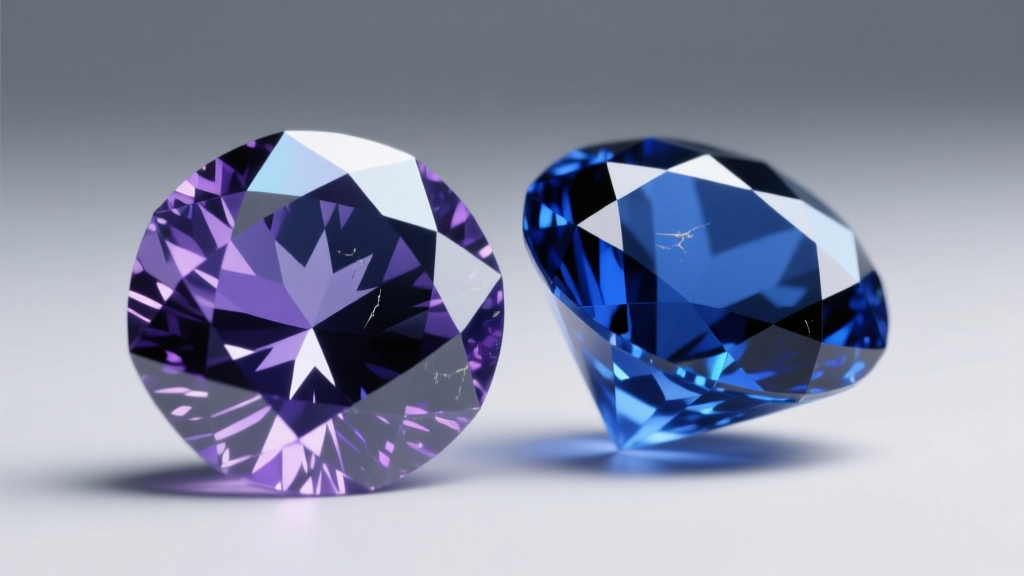
Why Tanzanite Fails the "Ocean" Test
Many commercial jewelers substitute tanzanite for sapphire in replica necklaces due to its lower cost and intense violet-blue hue. However, according to the GIA Tanzanite Guide, tanzanite's Mohs hardness of 6 to 7 makes it highly susceptible to abrasion and chipping, especially in a heavy, swinging pendant that may strike against surfaces. Furthermore, tanzanite is strongly trichroic. When viewed from different angles, it flashes purple and bronze tones, completely breaking the illusion of the deep, velvety, consistent "ocean blue" required for an authentic Heart of the Ocean aesthetic. A genuine Ceylon or Kashmir sapphire, detailed in the GIA Sapphire Guide, maintains a stable, saturated blue with secondary green pleochroism that perfectly mimics deep seawater.
Metallurgy and Chain Mechanics for Heavy Pendants
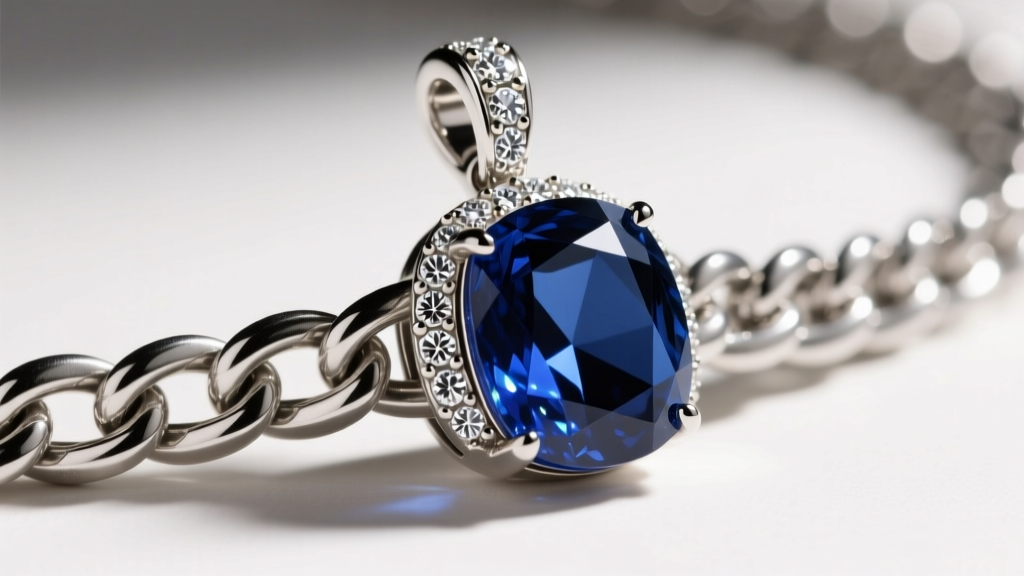
A common failure point in replica and custom high-jewelry pendants is the chain and bail assembly. A genuine 15-carat heart-shaped sapphire, surrounded by a 5-carat diamond halo and set in a dense metal alloy, will easily weigh between 12 and 18 grams. Standard jewelry chains will snap under this dynamic load.
- Chain Gauge and Style: A minimum 2.5mm to 3.5mm Wheat or Franco chain is mandatory. These styles feature interlocking, multi-directional links that distribute tensile stress evenly, unlike standard cable or curb chains which rely on single soldered joints per link.
- Metal Selection: 950 Platinum is vastly superior to 18k White Gold for the setting and chain. Platinum's density (21.45 g/cm³) and high tensile strength prevent the prongs from wearing thin over decades of use. White gold requires rhodium plating that will wear off, and its prongs are more prone to catastrophic brittle failure under heavy loads.
- Bail Engineering: The bail (the loop connecting the pendant to the chain) must be an integrated, cast piece with a minimum interior diameter of 5mm to accommodate a thick wheat chain. Soldered bails are a structural liability on pendants exceeding 15 grams.
The Asprey & Garrard Premiere Piece: The True Original
While the movie prop was CZ, a real Heart of the Ocean was actually created shortly after the film's release. The prestigious British jeweler Asprey & Garrard was commissioned to craft a genuine version for the 1998 Academy Awards. This masterpiece featured a 17.6-carat heart-shaped Ceylon sapphire surrounded by 103 brilliant-cut diamonds, all set in platinum. It was worn by Celine Dion during her performance of "My Heart Will Go On." This singular, genuine piece later sold at a Sotheby's auction for approximately $1.4 million, proving that the concept translates flawlessly to high jewelry when executed with top-tier materials.
"The transition from cinematic prop to high jewelry requires abandoning the exaggerated proportions of Hollywood in favor of gemological precision. A 50-carat sapphire is a museum piece, not a wearable pendant. The sweet spot for a wearable, genuine Heart of the Ocean equivalent is a 12 to 18-carat center stone, which provides massive visual impact without compromising the structural integrity of the platinum bail."
2026 Sourcing Framework: Commissioning a Genuine Equivalent
If you are looking to invest in a genuine sapphire heart necklace in 2026, you must approach the market with a strict material checklist. Avoid pre-set commercial replicas, which almost universally rely on heat-treated, low-clarity sapphires or glass-filled stones. Instead, work with a bespoke high jeweler. Demand an unheated or minimally heated sapphire with a GRS or GIA origin report verifying its color grade as "Royal Blue" or "Cornflower Blue." Ensure the diamond halo utilizes only VS-clarity, F-G color melee diamonds to prevent the yellowish tints that often plague commercial halos and detract from the sapphire's saturation. Finally, insist on a laser-welded platinum chain clasp with a secondary figure-eight safety catch. By prioritizing these exact material properties, you secure a piece of jewelry that transcends movie trivia and stands as a legitimate, enduring marvel of high jewelry engineering.


