How to Clean and Restore a Vintage Holly Hobbie Necklace
Learn expert techniques to clean, restore, and store your vintage Holly Hobbie necklace without damaging the delicate enamel or gold plating.

The Material Anatomy of Vintage Holly Hobbie Jewelry
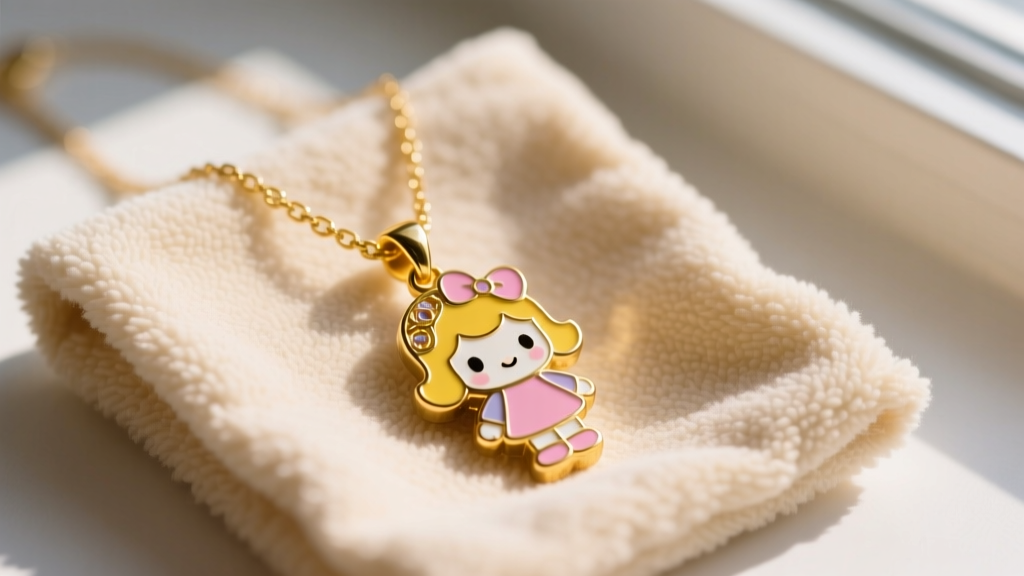
To properly care for a Holly Hobbie necklace, you must first understand its metallurgical and decorative composition. The original character jewelry boom of the 1970s and early 1980s produced thousands of these iconic pendants, often licensed by companies like American Management Jewelry (AMJ). Unlike fine jewelry, these vintage pieces were typically cast from base metal alloys—primarily zinc, pewter, or brass—and finished with a microscopic 'flash' layer of gold or silver electroplating. This plating is often less than 1.5 microns thick, making it incredibly vulnerable to friction and chemical abrasion.
The signature details of Holly Hobbie's bonnet, dress, and satchel were achieved using cold enamel. According to the Gemological Institute of America (GIA), cold enamel is not fired glass (vitreous enamel) but rather an epoxy-based resin. While it provides vibrant, opaque colors, this epoxy is highly porous and susceptible to degradation from heat, alcohol, and harsh solvents. Recognizing the fragility of both the micron-thin plating and the epoxy resin is the foundational step in preserving your vintage necklace.
Chain Maintenance: Delicate Cable and Rope Links
The pendant is only half the equation; the accompanying chain requires its own specialized care. Vintage Holly Hobbie necklaces frequently feature delicate 18-inch cable or rope chains, often equipped with small, easily bent spring ring clasps. Over decades, these chains accumulate sebum, dead skin cells, and cosmetic residues within the tiny crevices of the links, leading to stiffness and eventual galvanic corrosion.
Never pull aggressively on a tangled vintage chain. Instead, lay the necklace on a flat, non-porous surface, apply a light dusting of talc-free baby powder or cornstarch to the knot, and use a sterilized sewing needle to gently tease the links apart. The powder acts as a dry lubricant, reducing the friction that causes micro-tears in weakened jump rings.
Critical Mistakes That Destroy Vintage Pendants
Before attempting any restoration, you must eliminate modern cleaning habits that will instantly ruin vintage costume jewelry. The most catastrophic error is the use of ultrasonic cleaners. Ultrasonic machines use high-frequency sound waves to create microscopic cavitation bubbles in a liquid solution. While excellent for diamonds, this violent cavitation will shatter cold enamel, strip gold electroplating down to the base brass, and loosen the adhesive holding any accent rhinestones in place.
Commercial silver dips and ammonia-based cleaners are equally destructive. The Jewelers of America organization consistently warns that harsh chemical dips will dissolve the protective lacquer coatings often applied to vintage base metals, leading to rapid, irreversible blackening.
The Professional Step-by-Step Cleaning Protocol
To safely remove decades of grime without compromising the structural integrity of your Holly Hobbie necklace, follow this meticulous, low-impact cleaning protocol.
Phase 1: Dry Debris Removal
Begin by using a clean, dry makeup brush with ultra-soft synthetic bristles. Gently sweep the bristles over the pendant's surface, paying special attention to the crevices around the character's face and the textured edges of the bonnet. This removes abrasive surface dust that could scratch the gold plating during the wet wash phase.
Phase 2: The Targeted Aqueous Wash
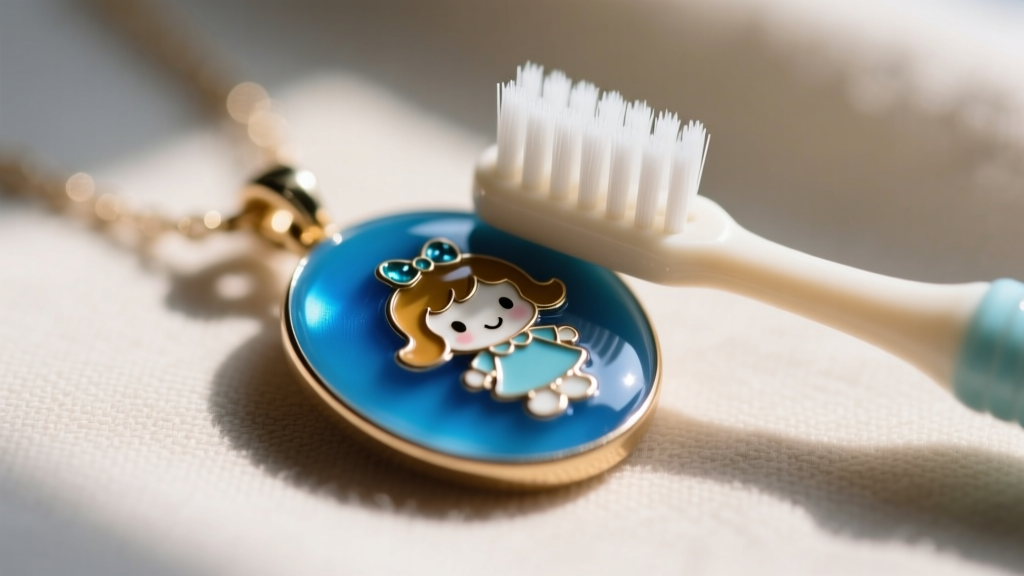
Do not submerge the necklace. Submersion risks water seeping behind the glass rhinestones, which are often foil-backed. If water breaches the bezel, the metallic foil will oxidize and turn black permanently. Instead, create a cleaning solution using distilled water and a single drop of pH-neutral dish soap (such as Dawn). Dip a cotton swab or a soft-bristled baby toothbrush into the solution, tap off the excess moisture, and gently roll the swab over the soiled areas. Use a wooden toothpick wrapped in a microfiber cloth to clean the tight seams between the enamel and the metal bezel.
Phase 3: Moisture Extraction and Polishing
Immediately extract all moisture using a dry, lint-free microfiber cloth. Press the cloth gently against the pendant—do not rub. Once completely dry, use a separate, untreated jewelry polishing cloth to lightly buff the exposed metal edges and the chain. Avoid polishing the enameled sections, as the mild abrasives in polishing cloths can dull the resin's glossy finish over time.
Troubleshooting Common Vintage Necklace Issues
Even with meticulous care, vintage character jewelry presents unique challenges. Below is a diagnostic framework for addressing the most frequent issues encountered with 1970s Holly Hobbie pendants.
| Symptom | Root Cause | Actionable Solution |
|---|---|---|
| Green discoloration on the skin | Copper or brass base metal reacting with the natural chlorides and acids in your sweat. | Apply a micro-thin layer of Renaissance Wax or clear, hypoallergenic nail polish to the back of the pendant to create a moisture barrier. |
| Cloudy or blackened rhinestones | Moisture has breached the bezel, oxidizing the delicate metallic foil backing behind the glass. | Unfortunately, this is irreversible without professional stone replacement. Keep the piece strictly dry and avoid all liquid cleaners. |
| Flaking or peeling color on the dress | The epoxy cold enamel has become brittle due to UV exposure or extreme temperature fluctuations. | Stabilize the flaking area with a microscopic drop of conservation-grade Paraloid B-72 acrylic resin. Do not attempt to glue it with superglue. |
| Dark, patchy tarnish on gold areas | The base metal is oxidizing and bleeding through microscopic pores or cracks in the thin gold plating. | Gently wipe with a dry silver polishing cloth. If the plating is entirely gone, consult a professional jeweler for a modern 2-micron re-plating. |
Long-Term Archival Storage Strategies
Proper storage is the final pillar of vintage jewelry preservation. Base metals are highly reactive to sulfur compounds in the air, which cause rapid tarnishing. Never store your Holly Hobbie necklace in a cardboard box, as the off-gassing from cardboard and certain wood pulp drawers accelerates oxidation.
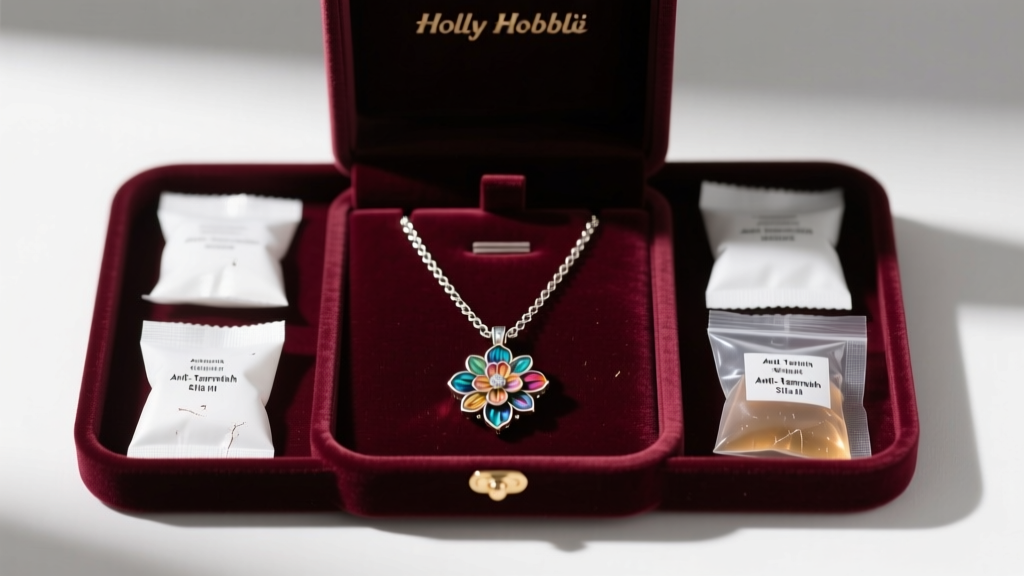
Instead, place the fully dried necklace inside an individual, zip-seal polyethylene bag. Squeeze out as much air as possible before sealing. Include a small packet of silica gel to control ambient humidity and a 3M anti-tarnish strip to absorb airborne sulfur. Store the bagged necklace in a cool, dark environment, ideally maintaining a relative humidity level between 40% and 50%. By combining gentle, targeted cleaning with archival-grade storage, you can ensure your vintage Holly Hobbie necklace remains a pristine, wearable piece of pop-culture history for generations to come.