How to Clean and Restore a Vintage Lucite Necklace
Learn how to safely clean, polish, and restring a vintage lucite necklace. Discover expert restoration steps and avoid chemical damage.

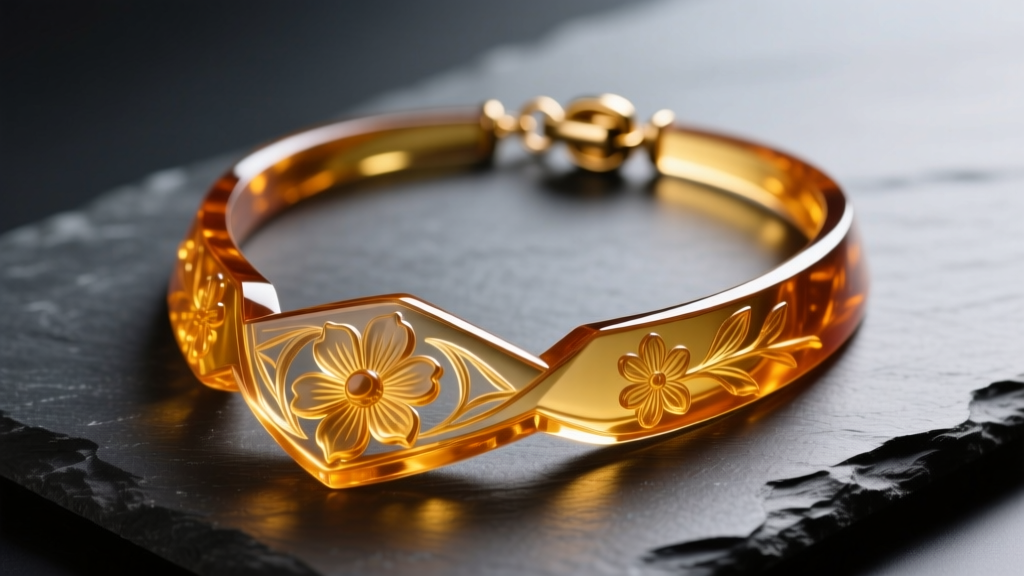
Collecting mid-century jewelry is a rewarding pursuit, but maintaining these pieces requires a deep understanding of early synthetic polymers. A vintage lucite necklace—whether a chunky 1950s carved sautoir or a delicate 1970s beaded strand—represents a golden era of costume jewelry design. Brands like Trifari, Coro, and Miriam Haskell utilized Lucite (polymethyl methacrylate, or PMMA) for its glass-like clarity, lightweight nature, and ability to be dyed in vibrant, translucent hues. However, decades of wear, improper storage, and exposure to harsh modern chemicals can leave these necklaces clouded, scratched, or structurally compromised.
In this comprehensive 2026 restoration guide, we will walk you through the exact material science of PMMA, outline a safe cleaning protocol, and provide step-by-step instructions for polishing and restringing your vintage lucite necklace to its original glory.
The Chemistry of Lucite: Why Your Necklace is Fragile
Before applying any cloth or polish to your vintage lucite necklace, you must understand the material's chemical vulnerabilities. Unlike Bakelite (phenol formaldehyde), which is highly heat-resistant but prone to off-gassing formaldehyde, Lucite is an acrylic resin that is chemically stable but highly susceptible to solvent-induced stress cracking.
The most common failure mode in vintage PMMA is crazing—a network of micro-fractures that appear as a silvery, cloudy web beneath the surface. Crazing is rarely caused by physical impact; instead, it is triggered by exposure to volatile organic compounds (VOCs). When alcohol, ammonia, or acetone comes into contact with PMMA, the solvent penetrates the microscopic pores of the plastic, causing the polymer chains to separate and fracture as the solvent evaporates.
'Never use Windex, rubbing alcohol, or ultrasonic cleaners on a vintage lucite necklace; the solvents and high-frequency vibrations will induce immediate, irreversible stress crazing.'
Step 1: The Safe Cleaning Protocol
To safely remove decades of skin oils, cosmetic residue, and environmental dust, you must use a pH-neutral, non-solvent approach. The Victoria and Albert Museum's conservation guidelines emphasize using minimal moisture and avoiding all commercial jewelry dips.
The Washing Process
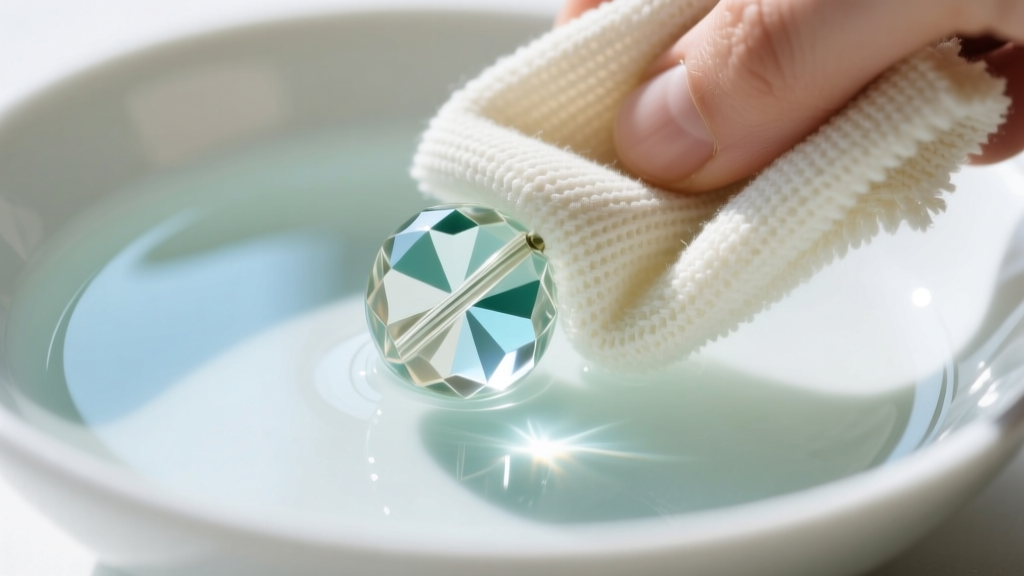
- Prepare the Solution: Mix 2 cups of distilled water (tap water contains minerals that can leave hard water spots or react with metal findings) with two drops of pH-neutral dish soap, such as Dawn Free & Clear.
- Dampen, Do Not Soak: Dip a 100% cotton flannel cloth or a high-density microfiber towel into the solution and wring it out until it is barely damp. Submerging a vintage lucite necklace can cause water to infiltrate the drill holes, leading to internal clouding or rusting of the internal wire armature.
- Wipe Gently: Wipe each bead or carved element following the grain of any carved details. Use a dry, soft-bristled makeup brush to dislodge dirt from deep crevices.
- Dry Immediately: Buff the piece dry with a separate, clean microfiber cloth to prevent water spotting.
Solvent Compatibility Chart for PMMA
Refer to this table before attempting to remove stubborn stains or adhesive residue from your necklace.
| Chemical Agent | Effect on Vintage Lucite | Verdict |
|---|---|---|
| Acetone / Nail Polish Remover | Melts surface, causes severe pitting and permanent clouding | NEVER USE |
| Isopropyl Alcohol | Induces micro-crazing and structural weakening | NEVER USE |
| Ammonia (e.g., Windex) | Strips surface polish, causes yellowing over time | NEVER USE |
| Mineral Spirits | Generally safe for brief adhesive removal, but risky on dyed lucite | Use with Extreme Caution |
| Distilled Water + Mild Surfactant | Safely lifts oils without penetrating polymer chains | SAFE & RECOMMENDED |
Step 2: Polishing Out Micro-Scratches and Scuffs
If your vintage lucite necklace suffers from surface-level scratches, dullness, or minor scuffs from being stored loosely in a jewelry box, you can restore its optical clarity using a graded abrasive polishing system. The industry standard for PMMA restoration is the Novus Plastic Polish kit, which utilizes a three-step liquid abrasive process.
Choosing the Right Abrasive
- Novus #3 (Heavy Scratch Remover): Use this only if your fingernail catches in the scratch. It contains a coarse pumice-like abrasive. Apply with a damp cotton pad using small, circular motions.
- Novus #2 (Fine Scratch Remover): This is the workhorse for general dullness and light surface scuffs. It removes the microscopic layer of oxidized plastic.
- Novus #1 (Cleaner & Polish): A non-abrasive finishing spray that leaves an anti-static, UV-resistant barrier. This should be your final step to give the necklace a glass-like luster.
Expert Tip: Never use a rotary tool (like a Dremel) with a felt polishing wheel on Lucite. The friction generates heat rapidly, and PMMA has a relatively low glass transition temperature (around 105°C / 221°F). Heat buildup will warp the bead or melt the carved details instantly.
Step 3: Restringing and Hardware Upgrades
Many vintage lucite necklaces from the 1960s and 70s were originally strung on nylon monofilament or cheap cotton threads that degrade, stretch, or snap over time. Furthermore, the drill holes in vintage beads are often rough and unpolished, acting like tiny saw blades that eventually cut through modern beading wire.
Preparing the Beads
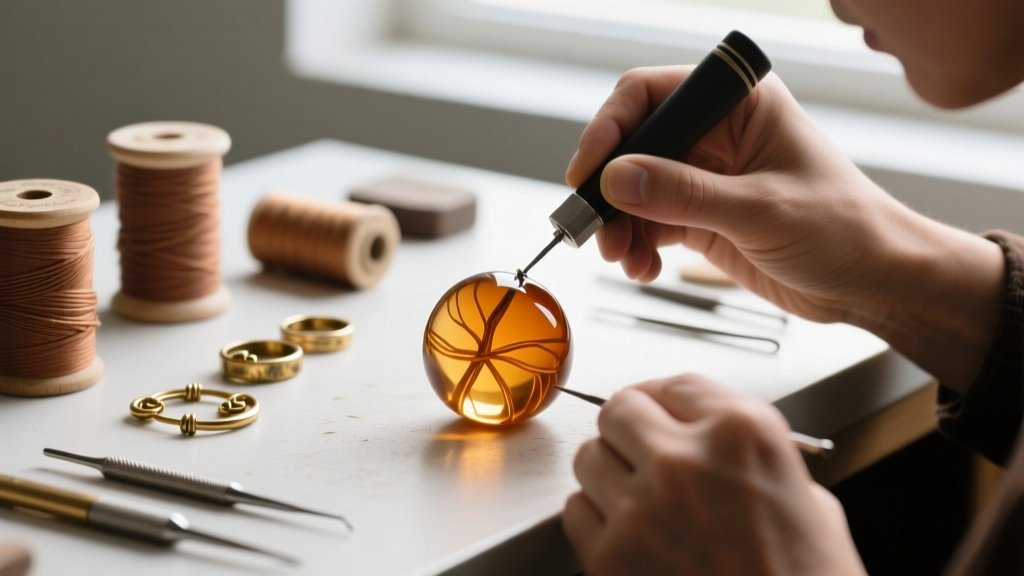
Before restringing, inspect the drill holes. Use a diamond-coated bead reamer to gently smooth the interior edges of each lucite bead. Submerge the tip of the reamer in water while working to prevent friction heat and to trap the acrylic dust. According to the AIC Conservation Wiki, mechanical alteration of historical plastics should be kept to an absolute minimum, so only ream enough to remove sharp burrs.
Selecting the Stringing Material
Avoid flexible beading wire (like SoftFlex) for heavy, chunky vintage lucite beads, as the wire can kink and cause the necklace to drape stiffly. Instead, use a high-tensile, waxed nylon thread like Silamide or Nymo Size F. The wax coating helps the thread glide through rough drill holes and provides a degree of water resistance.
Securing the Clasp
To protect the thread from fraying against the metal clasp loop, always use French wire (gimp). This is a microscopic, coiled metal spring that acts as a protective sleeve for your thread. Thread the wire through the clasp, pass back through the French wire, and secure with a bead tip or a surgeon's knot hidden inside a clamshell bead cover. This method ensures the necklace drapes fluidly and securely supports the weight of dense PMMA beads.
Archival Storage: Preventing UV and Off-Gassing Damage
Once your vintage lucite necklace is cleaned, polished, and restrung, proper storage is critical to its survival. PMMA is highly sensitive to ultraviolet (UV) radiation, which breaks down the polymer bonds and causes irreversible yellowing—particularly in clear and pale blue pieces.
Environmental Controls
Store your necklace in a dark, climate-controlled environment (ideally 65-70°F with 40-50% relative humidity). Never hang a heavy vintage lucite necklace on a jewelry stand, as the constant gravitational pull can cause the acrylic to slowly deform or stress-crack at the drill holes over several years.
Isolating from Reactive Plastics
Never store your Lucite pieces in direct contact with PVC (polyvinyl chloride) or celluloid. As celluloid degrades, it off-gasses nitric acid, which will aggressively attack the surface of your Lucite, causing a sticky, melting effect known as 'plastic disease.' Wrap your necklace loosely in unbuffered, acid-free tissue paper and place it inside an archival-quality polyethylene or polypropylene zip bag. Avoid polyvinyl plastic bags entirely.
By respecting the chemical nature of PMMA and utilizing conservation-grade cleaning and restringing techniques, you can ensure your vintage lucite necklace remains a vibrant, wearable piece of mid-century design history for decades to come.


