Dzi Bead Necklace Styling: Authenticity & 2026 Trends
Explore 2026 dzi bead necklace trends, from high jewelry styling to authenticity markers, pricing tiers, and expert care for etched agate.

The Resurgence of the Dzi Bead Necklace in High Jewelry
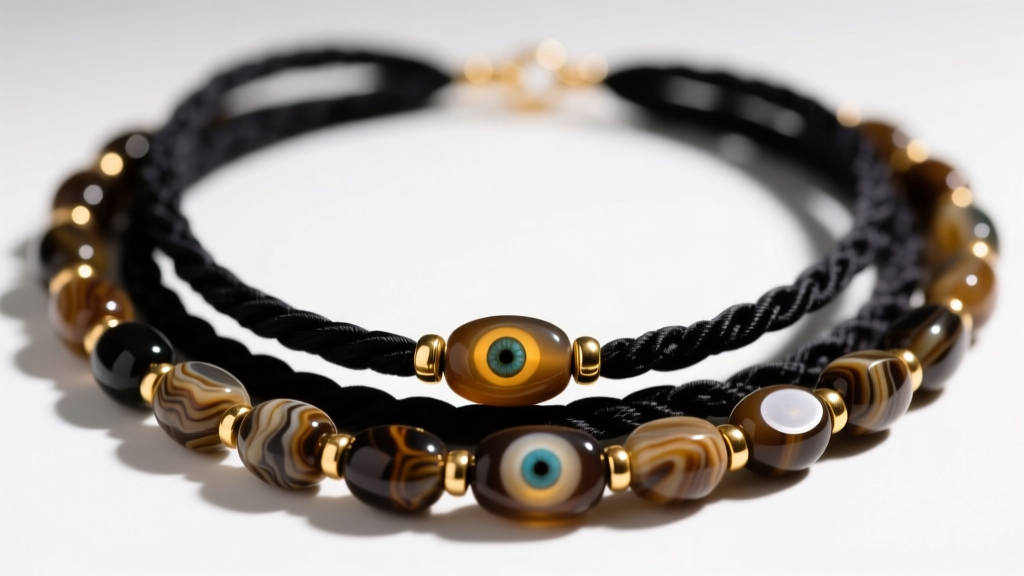
Once relegated to the realms of bohemian festival wear and niche spiritual circles, the dzi bead necklace has undergone a radical transformation. As we navigate the 2026 jewelry landscape, high jewelers and avant-garde designers are increasingly integrating ancient Himalayan artifacts into their collections. The juxtaposition of organic, millennia-old etched agate against high-polish 18k gold and VVS diamonds represents a broader consumer shift toward talismanic luxury—pieces that carry historical weight, geological rarity, and deeply personal narratives.
According to the Gemological Institute of America (GIA), the fascination with etched carnelian and agate beads stems from their complex manufacturing origins, dating back over 2,000 years. Today, styling a dzi bead necklace requires a nuanced understanding of proportion, material integrity, and the delicate balance between ancient artifact and modern adornment.
From Himalayan Amulets to Parisian Runways
Historically, Tibetan dzi beads (pronounced "zee") were worn as protective amulets, with the "eyes" etched into the chalcedony surface believed to ward off negative energy. In 2026, the aesthetic appeal of these beads lies in their striking graphic patterns—stark white or black lines contrasting against translucent brown, grey, or honey-colored agate. Designers are moving away from heavy, uniform bead strands. Instead, the prevailing trend features solitary, high-grade ancient dzi beads suspended from micro-pavé diamond bails or integrated into asymmetrical, multi-strand silk and gold configurations.
Decoding Authenticity: Ancient vs. Modern Dzi Beads
The market for dzi beads is notoriously opaque, fraught with modern reproductions masquerading as ancient artifacts. True ancient dzi beads belong to the "Lu" bead family, crafted using a lost alkaline etching technique involving plant ash, lead, and precise thermal cycling. Understanding the gemological and visual markers of authenticity is critical before investing in or styling a high-value piece.
| Tier | Era / Origin | Etching Method | Price Range (USD) | Key Visual Markers |
|---|---|---|---|---|
| Ancient Authentic | 1st - 13th Century (Tibet/Himalayas) | Alkaline plant ash & heat | $15,000 - $500,000+ | Cinnabar spots, dragon skin, milky internal structures |
| Vintage Modern | 1970s - 1990s (Taiwan) | Chemical etching & laser | $200 - $2,500 | Sharp line edges, uniform coloration, lack of deep weathering |
| Contemporary Artisan | 2000s - Present (Global) | Sodium carbonate & kiln | $50 - $400 | Perfect symmetry, glass-like polish, artificial surface pitting |
| Mass-Produced Imitation | Present (Factory-made) | Printed resin / dyed glass | $5 - $30 | Mold seams, painted lines, lightweight, thermal conductivity of glass/plastic |
The "Dragon Skin" and Cinnabar Dot Phenomenon
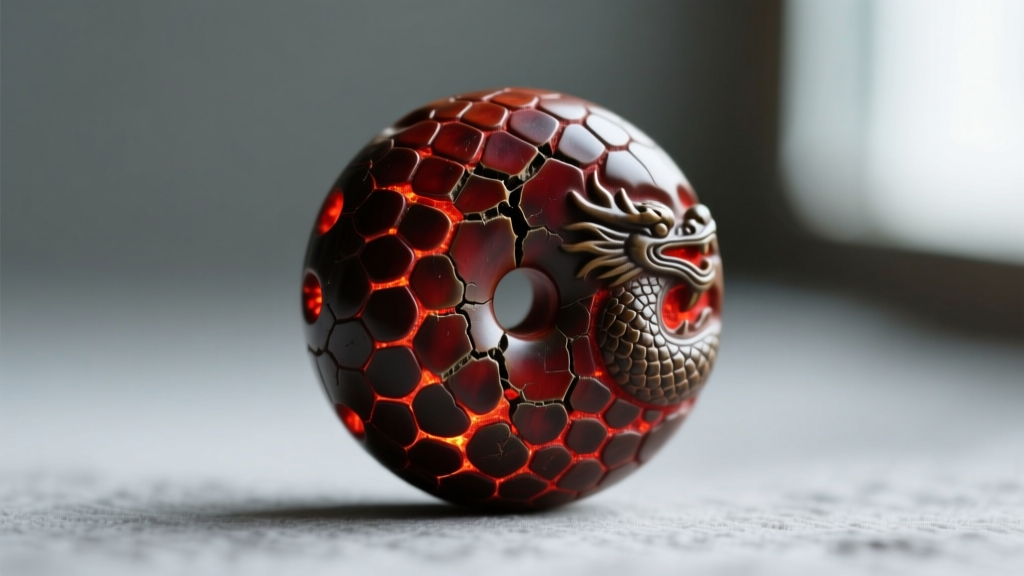
When evaluating an ancient dzi bead necklace, gemologists and Sotheby's Fine Jewelry Archives look for two primary indicators of age: "dragon skin" weathering and cinnabar dots. Dragon skin refers to the microscopic, crescent-shaped surface fissures that develop over centuries due to environmental thermal expansion and contraction. Crucially, these fissures should feel smooth to the touch, unlike the sharp, artificial pitting created by modern acid baths.
Cinnabar dots are tiny, deep reddish-brown or black specks within the agate matrix. These are natural iron oxide inclusions that have oxidized and migrated toward the surface over hundreds of years. While modern manufacturers attempt to fake these spots using laser-induced thermal shock, authentic cinnabar dots possess a distinct three-dimensional depth beneath the bead's polished surface.
2026 Styling Frameworks: How to Wear a Dzi Bead Necklace
Styling a dzi bead necklace in a contemporary context requires respecting the visual weight and historical gravity of the stone. The bohemian "layer-everything" approach of the 2010s has been replaced by deliberate, architectural styling.
Silk Knotting vs. Precious Metal Integration
For multi-bead strands, traditional silk knotting remains the gold standard for both aesthetics and preservation. We recommend using Griffin 100% natural silk cord, size #8 (0.80mm)
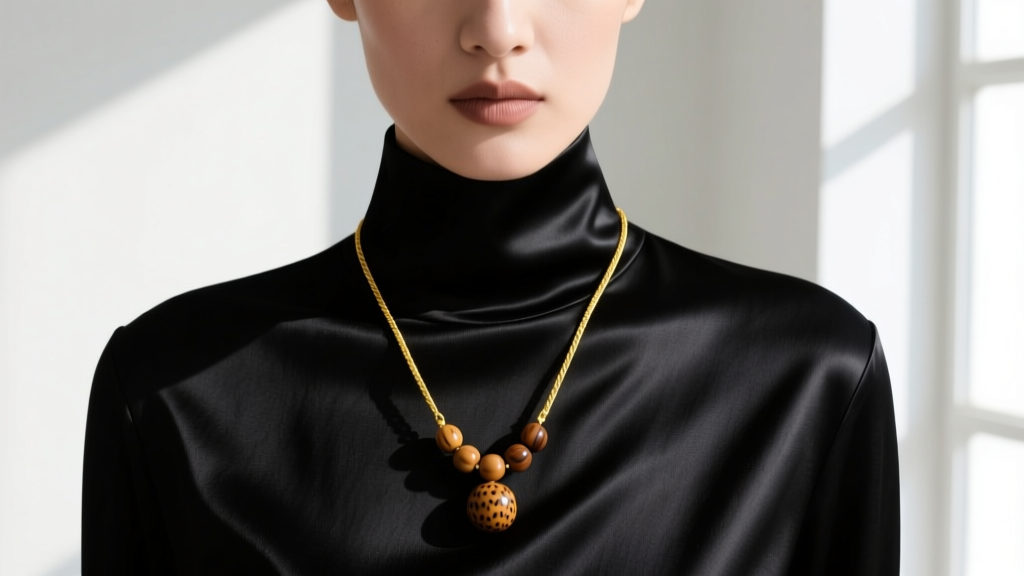
However, the 2026 trend favors precious metal integration. Instead of a full strand of beads, designers are isolating a single, high-eye-count ancient dzi (such as a 9-eyed or 21-eyed bead) and framing it with 18k recycled yellow gold caps. Suspending this from a 2mm gold box chain creates a striking dialogue between the matte, weathered chalcedony and the high-polish metal, perfect for elevated streetwear or minimalist luxury. Agate is a variety of chalcedony with a Mohs hardness of 6.5 to 7, making it relatively durable. However, ancient dzi beads possess micro-fractures and structural vulnerabilities due to their age and the original etching process. Never use ultrasonic or steam cleaners on an ancient dzi bead necklace. The high-frequency vibrations of an ultrasonic bath can easily propagate existing micro-fissures, causing the bead to split catastrophically. For routine cleaning, use lukewarm distilled water and a soft-bristled gemological brush. Avoid harsh chemical detergents, which can degrade the silk cord and strip the natural oils that give ancient agate its soft, waxy luster. If worn daily against the skin, the silk cord should be professionally inspected and re-strung every 18 to 24 months, as human sebum and environmental humidity will inevitably degrade the natural protein fibers of the silk, leading to sudden strand failure. The integration of the dzi bead necklace into modern luxury styling is more than a fleeting trend; it is a rejection of mass-produced uniformity in favor of geological and historical storytelling. Whether you are investing in a museum-grade 9-eyed ancient artifact or styling a contemporary artisan etched agate, understanding the material science, authenticity markers, and precise styling frameworks ensures your piece is worn with both reverence and impeccable taste. For further historical context on Himalayan artifacts, the Rubin Museum of Art offers extensive archives on the cultural significance of these remarkable stones.Neckline & Proportion Guidelines
Care and Maintenance of Etched Agate
Final Thoughts on Talismanic Luxury


