How to Clean and Care for a Stainless Steel Necklace Safely
Learn expert techniques to clean, polish, and maintain your stainless steel necklace. Discover safe solutions for 316L and 304 grades to prevent tarnish.

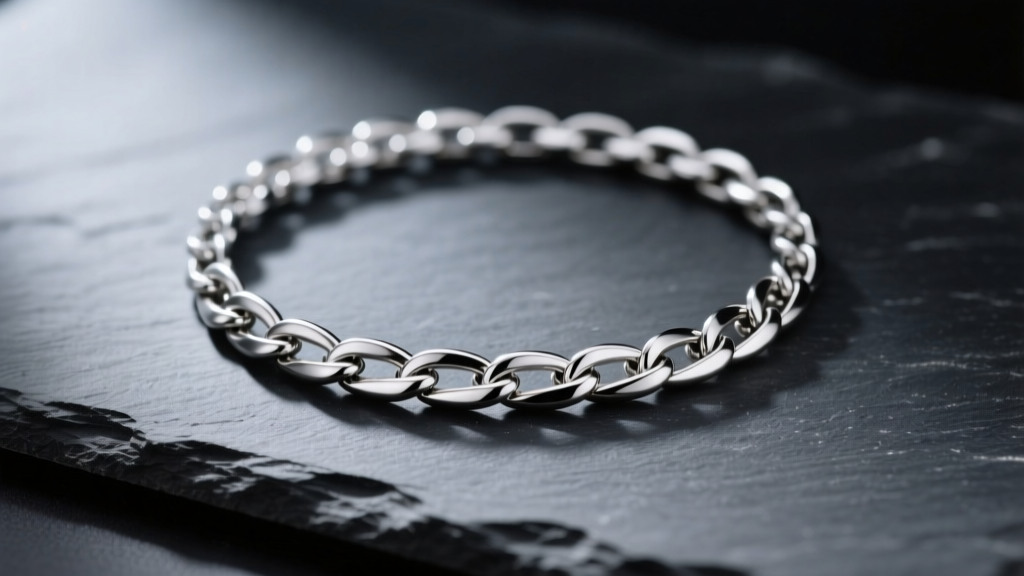
The Metallurgy of Maintenance: Understanding Your Necklace
Stainless steel necklaces are celebrated in modern jewelry for their exceptional durability, hypoallergenic properties, and sleek aesthetic. However, the term 'stainless' is somewhat of a misnomer; it does not mean 'stain-proof' or impervious to environmental factors. To properly care for your jewelry, you must first understand the specific alloy you are wearing. According to the British Stainless Steel Association (BSSA), the two most common grades used in jewelry manufacturing are 304 and 316L.
304 stainless steel is an austenitic chromium-nickel alloy that offers excellent general corrosion resistance but is vulnerable to chlorides (like saltwater and sweat). 316L, often branded as surgical or marine-grade steel, contains an additional 2-3% molybdenum. This elemental addition drastically increases its resistance to pitting and crevice corrosion. Knowing your necklace's grade dictates how aggressively you can clean it and what environments it can survive.
Why Stainless Steel Dulls: Tarnish vs. Surface Grime
Unlike sterling silver, which chemically tarnishes due to a reaction with sulfur in the air (forming black silver sulfide), stainless steel does not truly tarnish. Instead, a dull stainless steel necklace is usually suffering from one of two issues: surface bio-film buildup or passive layer disruption.
1. Sebum and Environmental Bio-Film
The human body naturally secretes sebum (oils) and sheds microscopic dead skin cells. When combined with lotions, perfumes, and environmental dust, this creates a microscopic, translucent film over the metal. This film diffuses light, making a high-polish chain look matte and cloudy. Because stainless steel is non-porous, this grime sits entirely on the surface and is highly reversible.
2. Disruption of the Chromium Oxide Layer
Stainless steel owes its rust resistance to an invisible, passive layer of chromium oxide that forms when chromium in the alloy reacts with oxygen. If this layer is chemically stripped by harsh acids or physically scratched, the underlying iron can oxidize, resulting in localized rust spots or 'pitting.' Understanding this mechanism is critical when selecting cleaning agents.

Step-by-Step Cleaning Methods for Stainless Steel Necklaces
Depending on the level of buildup and the finish of your necklace (mirror-polished vs. brushed matte), you should employ different cleaning strategies. The Gemological Institute of America (GIA) emphasizes that gentle, non-abrasive methods are always the safest starting point for metal maintenance.
Method 1: The Gentle Surfactant Soak (Best for Routine Care)
This method is safe for all stainless steel grades, all finishes, and necklaces featuring securely set gemstones.
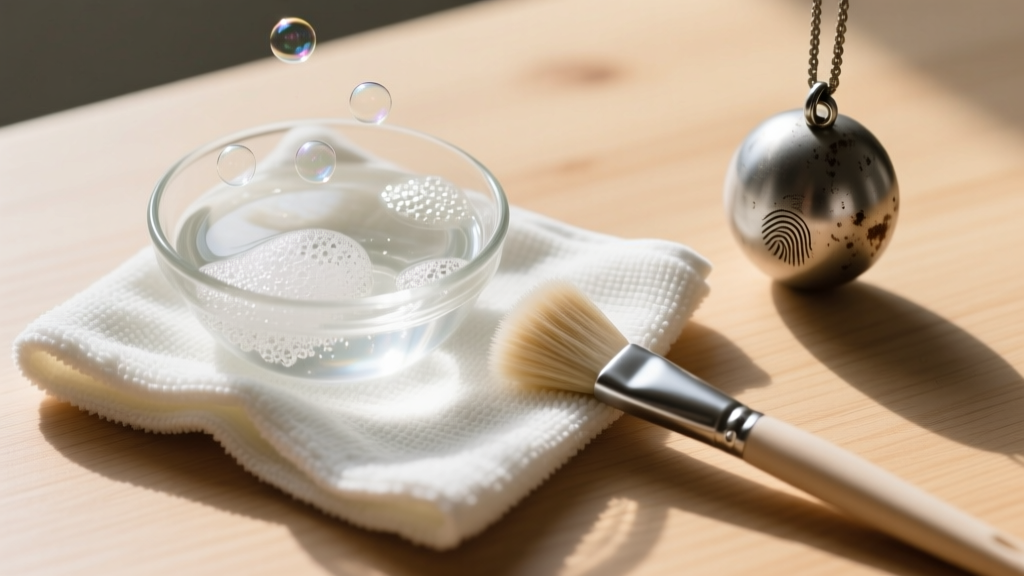
- Preparation: Fill a ceramic or glass bowl with warm water (ideally 35°C to 40°C). Avoid metal bowls to prevent galvanic reactions.
- Solution: Add 3-4 drops of a pH-neutral, dye-free liquid dish soap. Avoid soaps with added moisturizers or citrus extracts (citric acid can mildly etch the surface over time).
- Agitation: Submerge the stainless steel necklace and let it soak for 10 to 15 minutes to soften the sebum bonds.
- Detailing: Use a brand-new, extra-soft nylon toothbrush to gently agitate the links, paying special attention to the clasp mechanism where grime accumulates.
- Rinsing and Drying: Rinse thoroughly under distilled water to prevent hard water mineral spots. Pat dry immediately with a lint-free microfiber cloth.
Method 2: Baking Soda Paste (For Stubborn Grime on Matte Finishes)
Warning: Only use this method on brushed or matte-finished stainless steel. Baking soda has a Mohs hardness of about 2.5, which is softer than steel, but its crystalline structure can leave micro-scratches on mirror-polished surfaces, permanently clouding the reflection.
- Mix three parts baking soda with one part distilled water to form a thick paste.
- Apply the paste to a soft, damp cotton cloth (never directly onto the jewelry).
- Rub the necklace gently in the direction of the brushed grain, if visible.
- Rinse thoroughly and dry immediately.
Method 3: Ultrasonic Cleaning (For Intricate Link Chains)
Ultrasonic cleaners use high-frequency sound waves (typically 40 kHz to 45 kHz) to create microscopic cavitation bubbles that implode, blasting dirt out of tiny crevices. This is highly effective for complex chain weaves like Byzantine or Foxtail chains. However, never use an ultrasonic cleaner on a stainless steel necklace that features gemstones secured with epoxy or resin, as the vibrations will shatter the adhesive bond.
Chemical Hazards: What Destroys the Chromium Oxide Layer?
To preserve the structural integrity and shine of your jewelry, you must avoid specific chemicals that cause pitting corrosion. Below is a quick-reference safety chart for common household substances.
| Cleaning Agent | Active Chemical | Effect on 316L Steel | Effect on 304 Steel | Verdict |
|---|---|---|---|---|
| Bleach | Sodium Hypochlorite | Severe Pitting | Rapid Corrosion | NEVER USE |
| Ammonia | Ammonium Hydroxide | No Effect | Mild Surface Dulling | AVOID |
| White Vinegar | Acetic Acid | Safe for brief soak | Etches over time | USE CAUTION |
| Rubbing Alcohol | Isopropanol | No Effect | No Effect | SAFE (for sanitizing) |
| Baking Soda | Sodium Bicarbonate | Safe (Matte only) | Safe (Matte only) | CONDITIONAL |
Proper Storage to Prevent Micro-Scratches and Galvanic Corrosion
How you store your stainless steel necklace when it is not being worn is just as important as how you clean it. Stainless steel sits at 5.5 to 6.3 on the Mohs hardness scale. While this makes it harder than silver, gold, and platinum, it is softer than materials like tungsten carbide, titanium, and diamonds.
Expert Storage Rule: Never store your stainless steel necklaces in a communal jewelry box where they can rub against harder metals or diamond rings. The friction will cause permanent micro-scratches on the steel, creating microscopic grooves that trap dirt and accelerate dulling.
Furthermore, storing dissimilar metals in high-humidity environments (like a bathroom) can trigger galvanic corrosion. If your stainless steel chain is in direct, prolonged contact with a cheaper base metal alloy in the presence of moisture (acting as an electrolyte), an electrochemical reaction will occur, rapidly degrading the less noble metal and staining the steel. Always store your stainless steel necklaces individually in soft cotton pouches or anti-tarnish ziplock bags with the clasp left unfastened to prevent the chain from tangling and stretching.
Expert Troubleshooting: Removing Rust Spots and Pitting
If you notice small, localized brown spots on your 304 stainless steel necklace after swimming in a chlorinated pool or the ocean, you are witnessing early-stage pitting corrosion. The chloride ions have breached the passive chromium oxide layer.
To halt this process, you must mechanically remove the rust and expose fresh metal to oxygen so the passive layer can reform. Create a paste using equal parts cream of tartar and lemon juice. Apply it strictly to the rust spot, let it sit for no more than five minutes, and gently buff with a microfiber cloth. The mild acidity dissolves the iron oxide, while the physical friction removes the compromised layer. Rinse immediately with distilled water and dry thoroughly. For deep pitting that has compromised the structural integrity of a fine chain link, consult a professional jeweler for link replacement to prevent sudden chain failure.