How to Clean and Care for Your Women's Elephant Necklace
Discover expert cleaning and maintenance tips for your women's elephant necklace. Learn how to protect silver, gold, and gemstone elephant pendants.


The Symbolism and Vulnerability of Elephant Pendants
The elephant is a universal symbol of wisdom, strength, and good fortune. When worn as a pendant, this majestic motif translates into a deeply personal talisman. However, the very intricacy that makes a women's elephant necklace so visually captivating also makes it a magnet for environmental debris, cosmetic buildup, and tarnish. The deep crevices of the trunk, the delicate lattice of the ears, and the curved undersides of the tusks create microscopic pockets where dead skin cells, sebum, and lotion accumulate.
Unlike simple geometric pendants, zoomorphic jewelry requires a specialized approach to maintenance. Aggressive polishing can erase the oxidized antiquing that gives the elephant's features their three-dimensional depth, while harsh chemicals can strip gold plating or fracture porous gemstone inlays. This comprehensive guide outlines the precise, material-specific protocols required to clean, maintain, and store your elephant pendant in 2026 and beyond.
Material Identification: Knowing Your Elephant Necklace
Before applying any cleaning solution, you must accurately identify the base metal and any surface treatments. According to the Federal Trade Commission's Jewelry Guides, understanding metal stamps is your first line of defense against accidental damage.
| Material Grade | Common Stamp | Vulnerability Profile | Best Cleaning Method |
|---|---|---|---|
| Sterling Silver | 925 | Prone to sulfur-based tarnish; soft metal scratches easily. | Electrochemical bath or mild soap. |
| Solid Gold (14k/18k) | 14k, 585, 18k, 750 | Highly durable, but alloy metals can cause slight dulling. | Warm water and ammonia-free dish soap. |
| Gold Vermeil | 925 (with gold finish) | 2.5-micron gold layer over silver; high risk of wearing through. | Dry microfiber polishing only. |
| Brass/Bronze | Unstamped or Brass | Oxidizes to a green/brown patina; reacts to skin acidity. | Lemon juice and baking soda paste. |
Step-by-Step Cleaning Guide for Sterling Silver Elephant Pendants
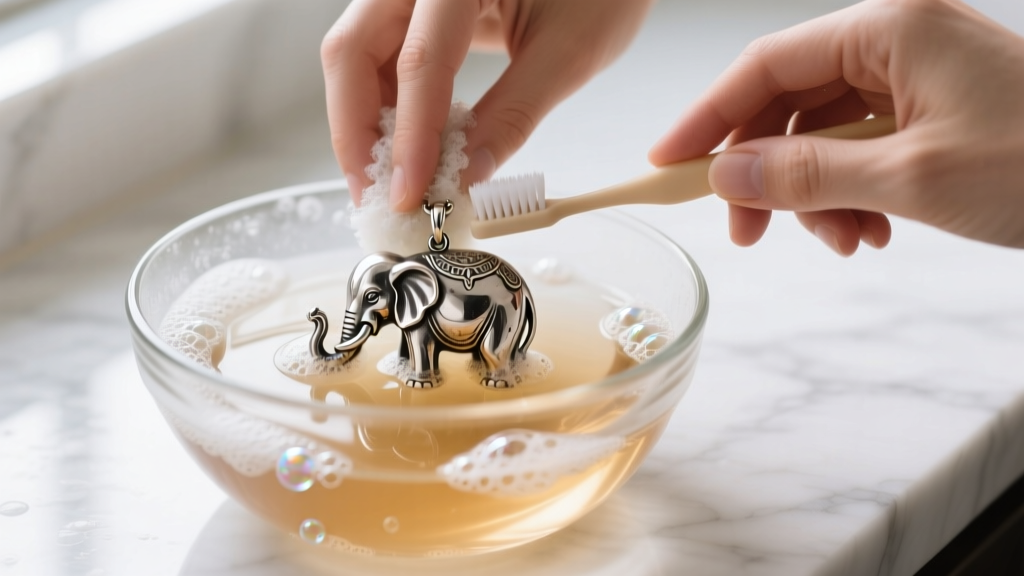
Sterling silver (92.5% pure silver, 7.5% copper) is the most common medium for detailed animal pendants due to its excellent casting properties. However, the copper content makes it highly susceptible to hydrogen sulfide in the air, resulting in black silver sulfide tarnish.
The Aluminum Foil Electrochemical Method
For heavily tarnished silver elephants without gemstones or intentional black antiquing, the electrochemical reduction method is the safest way to remove tarnish without abrading the metal.
- Line a glass or ceramic bowl with aluminum foil, shiny side up.
- Place the necklace in the bowl, ensuring the silver touches the foil.
- Sprinkle 2 tablespoons of baking soda and 1 tablespoon of sea salt over the pendant.
- Pour boiling water into the bowl until the pendant is submerged. You will immediately see bubbling and smell a sulfur (rotten egg) odor as the silver sulfide transfers from the silver to the aluminum.
- After 3 to 5 minutes, remove the necklace with wooden tongs (never metal, which can cause galvanic corrosion).
- Rinse thoroughly in distilled water and pat dry with a lint-free microfiber cloth.
Expert Warning: Never use this method if your elephant pendant features intentional oxidation (blackened crevices used to highlight the trunk wrinkles and ear folds) or any glued-in gemstones, as the boiling water will dissolve the jewelry adhesive.
Caring for Gold-Plated and Solid Gold Elephant Necklaces
Gold does not tarnish, but the intricate topography of an elephant pendant will still trap oils and cosmetics, leading to a dull, lifeless appearance. If your piece is solid 14k or 18k gold, you can safely use a few drops of mild, phosphate-free dishwashing liquid in warm water. Use an extra-soft baby toothbrush to gently agitate the bristles along the curve of the trunk and the edges of the saddle.
Targeting the Bail and Jump Ring
Pay special attention to the bail and the jump ring connecting the elephant pendant to the chain. These friction points accumulate microscopic metal dust and skin oils. Use a wooden toothpick to gently dislodge debris from the hinge or soldered loops before immersing the piece in your soapy bath.
Why Ultrasonic Cleaners Can Destroy Detailed Trunks
While ultrasonic cleaners are popular for diamond rings, they are highly dangerous for detailed zoomorphic pendants. The high-frequency sound waves create microscopic cavitation bubbles that implode with immense localized force. This can easily snap off delicate gold tusks, loosen the prongs holding tiny diamond eyes, or shatter enamel inlays on the elephant's blanket. Always stick to manual, gentle brushing for your gold elephant necklace.
Gemstone and Enamel Inlay Maintenance
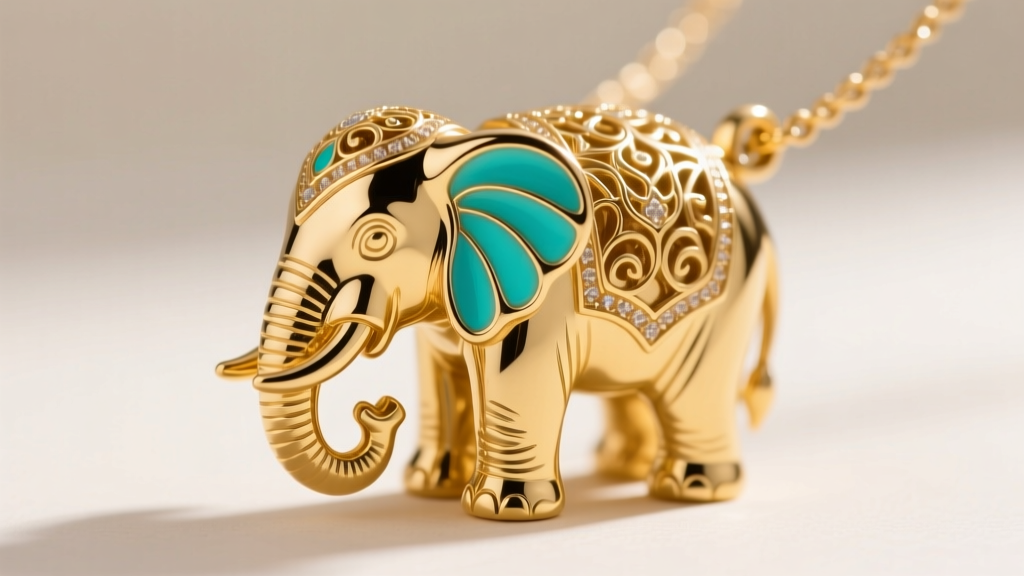
Many artisan elephant necklaces incorporate gemstones like turquoise, lapis lazuli, or mother-of-pearl, as well as vitreous enamel work. The Gemological Institute of America (GIA) strictly advises against using chemical dips or ultrasonic machines on porous or treated stones.
- Turquoise and Lapis Lazuli: These are highly porous. Even mild soap can leave a residue that dulls the stone. Wipe them only with a barely damp, untreated cotton cloth.
- Mother-of-Pearl: Extremely sensitive to acids, including the natural lactic acid in human sweat. Always wipe mother-of-pearl inlays immediately after wearing.
- Enamel: Vitreous enamel is essentially fused glass. While hard, it is brittle. A sharp tap against a bathroom sink while cleaning can cause micro-fractures or complete chipping along the metal borders.
For crevices around gemstones where dirt accumulates, use a wooden toothpick or a soft interdental brush. Metal tools will scratch both the stone and the surrounding gold or silver bezel.
Proper Storage to Prevent Tarnish and Scratching
Maintenance is 80% prevention. How you store your women's elephant necklace when it is not being worn dictates how often you will need to clean it.
- Use Anti-Tarnish Strips: Place a 3M Anti-Tarnish strip or a treated Pacific Silvercloth pouch in your jewelry box. These materials absorb atmospheric sulfur before it can react with your silver pendant.
- Control Humidity: High humidity accelerates tarnishing. Store your necklaces in a room with a consistent humidity level between 40% and 50%. Include a small, fresh silica gel desiccant packet in your jewelry drawer. Silica gel adsorbs ambient moisture, keeping the localized environment dry and significantly slowing the electrochemical reactions that lead to silver tarnish. Avoid keeping jewelry in the bathroom, where steam from showers creates a highly corrosive environment.
- Isolate the Pendant: The chain of your necklace is often harder than the pendant itself. If stored tangled in a communal jewelry box, the chain can act like a saw, micro-scratching the polished surfaces of the elephant's ears and trunk. Always store the piece in an individual, soft flannel pouch.
- Hang or Lay Flat: If the necklace features a heavy solid silver or gold elephant pendant, hanging it on a standard jewelry tree can put stress on the bail (the loop connecting the pendant to the chain). Lay heavy pendants flat in a lined drawer to prevent bail distortion.
Conclusion
A women's elephant necklace is more than just an accessory; it is a wearable piece of art and a symbol of enduring strength. By understanding the specific material composition of your piece and avoiding aggressive, one-size-fits-all cleaning methods, you can preserve the intricate details of the trunk, ears, and tusks for generations. Implement these targeted cleaning protocols and storage habits, and your elephant pendant will continue to shine with the brilliance it had the day you first clasped it around your neck.


