How to Clean & Maintain Your Women's White Gold Cross Necklace
Learn expert techniques to clean, polish, and maintain your women's white gold cross necklace, preserving its rhodium finish and diamond brilliance.


A women's white gold cross necklace is a timeless staple, blending profound personal meaning with elegant, versatile design. Whether your pendant features intricate pavé diamonds, a sleek high-polish finish, or a vintage-inspired milgrain edge, maintaining its brilliant luster requires more than a quick wipe with a cloth. As we navigate the jewelry care landscape in 2026, advancements in home-cleaning technology and a deeper understanding of alloy chemistry have revolutionized how we maintain precious metals. This comprehensive guide provides actionable, expert-level maintenance protocols to ensure your cross pendant remains as radiant as the day it was unboxed.
The Metallurgy of White Gold: Why It Needs Specific Care
To properly care for your necklace, you must first understand its molecular composition. According to the Gemological Institute of America (GIA), white gold does not exist in nature. It is an alloy created by mixing pure yellow gold (typically 75% for 18k or 58.3% for 14k) with white metals like palladium, nickel, or silver. However, this alloy naturally retains a faint yellowish or grayish undertone.
To achieve the mirror-like, icy white finish consumers expect, jewelers electroplate the piece with rhodium, a rare platinum-group metal. This rhodium layer is incredibly hard and highly reflective, but it is microscopic—usually ranging from 0.75 to 1.5 microns in thickness. When you clean a women's white gold cross necklace, you are technically cleaning the rhodium plating, not the gold alloy beneath. Using abrasive compounds or harsh chemicals can strip this plating prematurely, exposing the duller alloy underneath and necessitating an expensive replating process.
Daily Hazards for a Women's White Gold Cross Necklace
Chemical Exposures
The greatest enemy of white gold alloys is chlorine. When exposed to chlorinated water (like swimming pools or hot tubs), the copper and silver atoms within the gold alloy undergo a rapid chemical reaction. This leads to stress corrosion cracking, a phenomenon where the microscopic grain boundaries of the metal weaken, potentially causing the delicate bail of your cross pendant to snap. Furthermore, daily application of lotions, perfumes, and hairsprays creates a lipid film that traps dead skin cells and dust against the metal, dulling the rhodium finish and suffocating any diamonds set into the cross.
Mechanical Abrasion
While rhodium is harder than gold, it is still susceptible to micro-scratches from everyday friction. Sleeping in your necklace causes the cross to rub against cotton sheets and your skin, creating microscopic friction burns on the metal's surface. Over time, these micro-scratches scatter light rather than reflecting it, making the pendant appear cloudy or gray.
The Professional Cleaning Protocol (At-Home)
Forget harsh commercial dips and baking soda pastes. To safely restore brilliance without compromising the rhodium layer, follow this Jewelers of America-approved methodology:
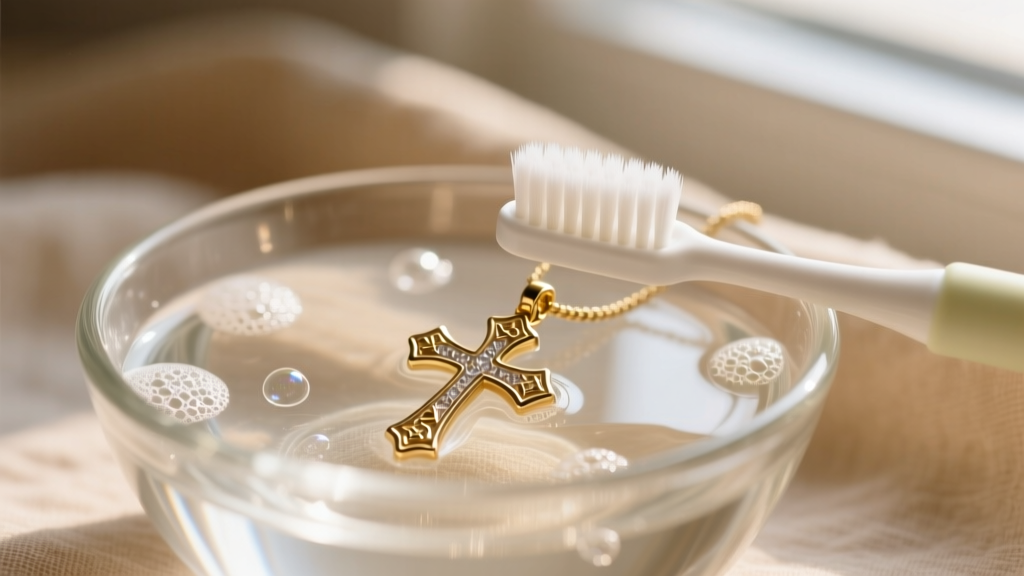
- The Solution: Mix three drops of pH-neutral, ammonia-free dish soap (like original Dawn) into a bowl of lukewarm distilled water. Avoid tap water, as dissolved minerals can leave hard water spots on the rhodium.
- The Soak: Submerge your women's white gold cross necklace for exactly 15 to 20 minutes. This allows the surfactants to break down sebum and cosmetic oils trapped in the crevices of the cross design.
- The Agitation: Using an ultra-soft baby toothbrush (bristles must be flagged/split at the tips), gently sweep the brush across the front, back, and bail of the pendant. Pay special attention to the underside of any diamond settings, where light-blocking grime accumulates. Use a cotton swab dipped in the solution to clean inside the jump ring connecting the cross to the chain.
- The Rinse: Rinse thoroughly under a gentle stream of lukewarm distilled water. Ensure the drain is securely plugged.
- The Dry: Never use paper towels or tissue paper. These are made of wood pulp and will inflict micro-scratches on the rhodium. Instead, pat dry with a lint-free microfiber jewelry cloth, then use a hair dryer on the 'cool' setting to blow water out of the setting prongs.
Ultrasonic Cleaners: Safe for Your Cross Pendant?
In 2026, consumer-grade ultrasonic cleaners operating at 40-45 kHz are widely available and highly effective for diamond-set white gold crosses. These devices use high-frequency sound waves to create microscopic vacuum bubbles in the cleaning solution—a process called cavitation. When these bubbles collapse against the metal, they blast away dirt at a microscopic level without abrasive friction.
Expert Warning: Only use ultrasonic cleaners if your cross pendant is set with high-clarity diamonds or is entirely plain metal. If your cross features fracture-filled diamonds, emeralds, opals, or pearls, the intense vibrations of cavitation will shatter or cloud these delicate gemstones instantly.
Rhodium Replating: The Ultimate Maintenance Step
No matter how carefully you clean your jewelry, the rhodium plating on the high-friction areas of the cross (like the edges and the bail) will eventually wear away. When the underlying yellowish-gray alloy becomes visible, it is time for replating. Below is a comparison of how different karat weights affect maintenance schedules:
| Maintenance Factor | 14k White Gold Cross | 18k White Gold Cross |
|---|---|---|
| Alloy Hardness | Higher (more durable) | Lower (softer, scratches easier) |
| Natural Alloy Color | Paler gray (closer to white) | Warmer yellow/gray undertone |
| Rhodium Plating Lifespan | 1.5 to 3 years | 1 to 2 years |
| 2026 Avg. Replating Cost | $65 - $95 | $85 - $130 |
According to the Federal Trade Commission (FTC) Jewelry Guides, jewelers must disclose if a piece is rhodium-plated. When taking your cross to a bench jeweler for replating, ensure they polish out the micro-scratches and perform an electro-cleaning bath before dipping it into the rhodium solution; otherwise, the new plating will trap existing dirt and peel within weeks.
Proper Storage Techniques to Prevent Oxidation
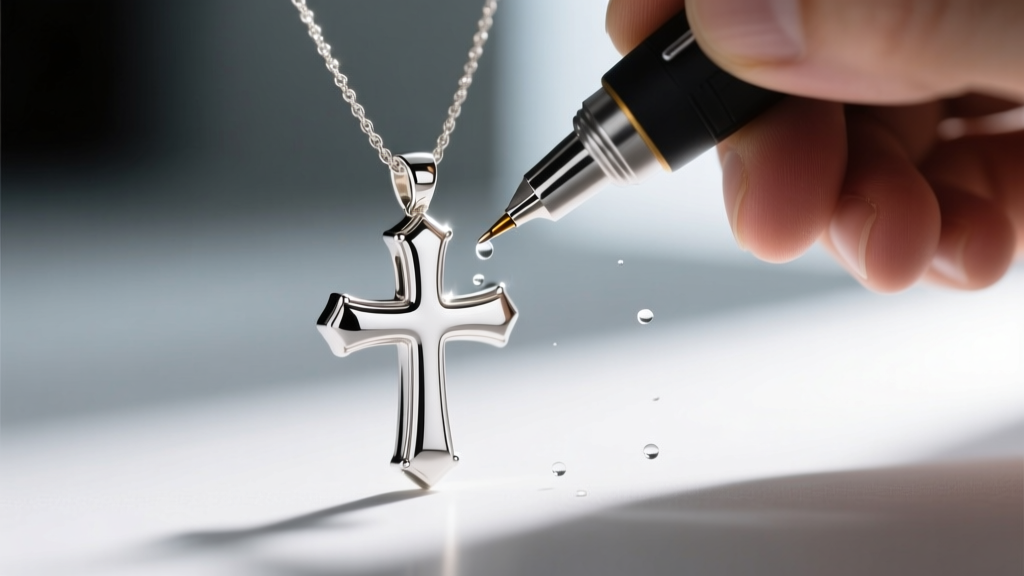
When you are not wearing your women's white gold cross necklace, how you store it dictates how often it needs professional polishing. Never toss it loosely into a jewelry box where it can collide with harder gemstones like sapphires or diamonds (a diamond is a 10 on the Mohs scale and will easily gouge the rhodium plating).
Store the necklace in an individual, airtight polyethylene ziplock bag. Squeeze out all excess air before sealing to minimize oxygen exposure, which can tarnish the alloy metals if the rhodium is compromised. For added protection, drop a 3M anti-tarnish strip into the bag. These strips absorb airborne sulfur compounds and hydrogen sulfide, neutralizing the chemical precursors to tarnish. Crucially, avoid storing jewelry in polyvinyl chloride (PVC) plastics, as PVC off-gasses hydrochloric acid over time, which will aggressively pit and corrode white gold alloys.
Conclusion
Maintaining a women's white gold cross necklace is a rewarding ritual that preserves both its sentimental value and its material integrity. By understanding the delicate nature of rhodium plating, avoiding destructive chemicals like chlorine, and employing gentle, pH-neutral cleaning methods, you can ensure your pendant remains a brilliant, enduring symbol for decades to come. Treat your jewelry with the respect its metallurgy demands, and it will continue to reflect your personal style with unmatched brilliance.


