How to Clean and Maintain Your Zara Charm Necklace
Learn expert cleaning and maintenance tips to prevent tarnish and plating wear on your Zara charm necklace. Keep your fashion jewelry looking new.

Understanding the Metallurgy of Your Zara Charm Necklace
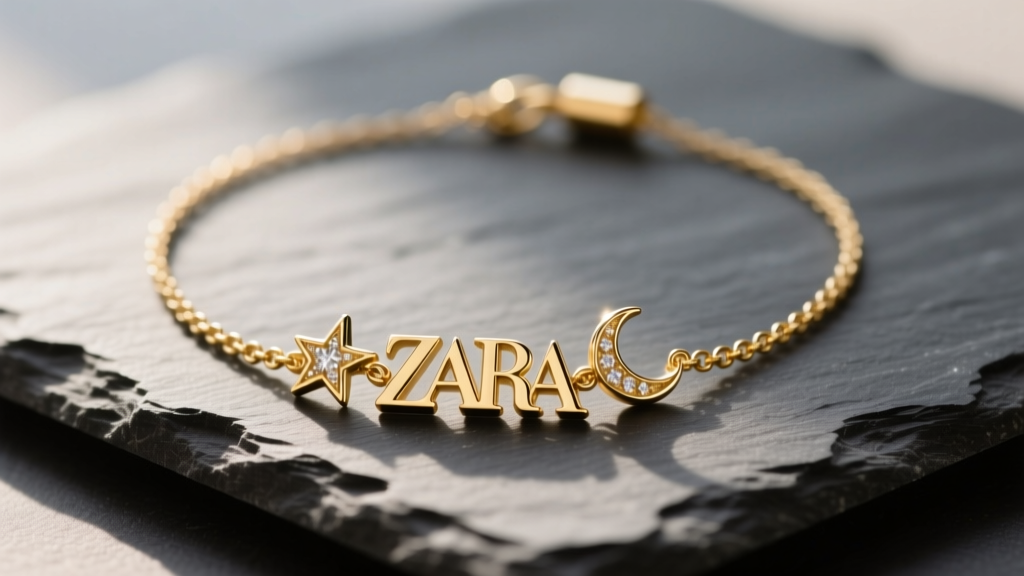
Fashion jewelry occupies a unique and highly desirable space in our accessory wardrobes, allowing us to experiment with trends without the financial commitment of fine jewelry. However, when you purchase a Zara charm necklace, you are typically investing in a brass or zinc-alloy base metal that has been finished with a thin layer of gold-tone or silver-tone plating. To properly care for these pieces, it is crucial to understand their physical construction. Unlike solid 14k gold or sterling silver, fast-fashion jewelry relies on flash plating—a process that deposits a microscopic layer of metal, usually between 0.1 and 0.3 microns thick, onto the base alloy.
In recent years, including the 2025 and 2026 collections, Zara has increasingly adopted e-coating (electrocoating) and occasionally PVD (Physical Vapor Deposition) for their premium fashion lines. E-coating involves applying a clear, anti-tarnish polymer layer over the metal plating to seal it from oxygen and moisture. While this extends the lifespan of the necklace significantly, it also dictates how you must clean it. Harsh chemicals, ultrasonic cleaners, and abrasive polishing cloths will strip this protective polymer layer, exposing the vulnerable flash plating beneath to rapid oxidation.
The Chemistry of Tarnish and Skin Discoloration
To understand how to clean your Zara charm necklace, you must first understand why it degrades. The base metals used in fashion jewelry—primarily brass (an alloy of copper and zinc) and zinc alloys—are highly reactive. When these metals are exposed to the natural environment of human skin, a chemical reaction occurs. Human sweat has a pH level ranging from 4.5 to 7.0 and contains lactic acid, urea, and salts. When the thin plating on your necklace wears down due to friction, the acidic sweat reaches the copper-rich brass base.
This reaction produces copper chloride and copper carbonate, which manifest as the dreaded green or black staining on your skin. Furthermore, environmental factors such as humidity, sulfur in the air, and exposure to cosmetic products (like perfumes, lotions, and hairsprays) accelerate the breakdown of the plating. According to the Jewelers of America, the oils and chemicals from daily grooming routines are the primary culprits behind the premature dulling of plated fashion jewelry. Preventing this chemical exchange is the cornerstone of your maintenance routine.
Handling Faux Pearls, Resin, and Glass Charms
Many Zara charm necklaces feature mixed media, incorporating faux pearls, resin enamel, or glass crystals alongside the metal charms. These materials require entirely different care protocols. Faux pearls, typically made from glass or plastic coated with a pearlescent lacquer, are incredibly sensitive to solvents and prolonged water exposure. The Gemological Institute of America (GIA) warns that even mild soaps can degrade the delicate nacre-like coating on imitation pearls over time.
If your necklace includes these elements, you must avoid submerging the entire piece in water. Instead, use a targeted cleaning approach. Dampen a cotton swab with a mixture of distilled water and a tiny drop of pH-neutral soap, and carefully clean only the metal portions, avoiding direct contact with the resin, enamel, or faux pearl charms. Never use toothbrushes on enameled surfaces, as the bristles can cause micro-scratches that dull the glossy finish.
The Ultimate Step-by-Step Cleaning Protocol
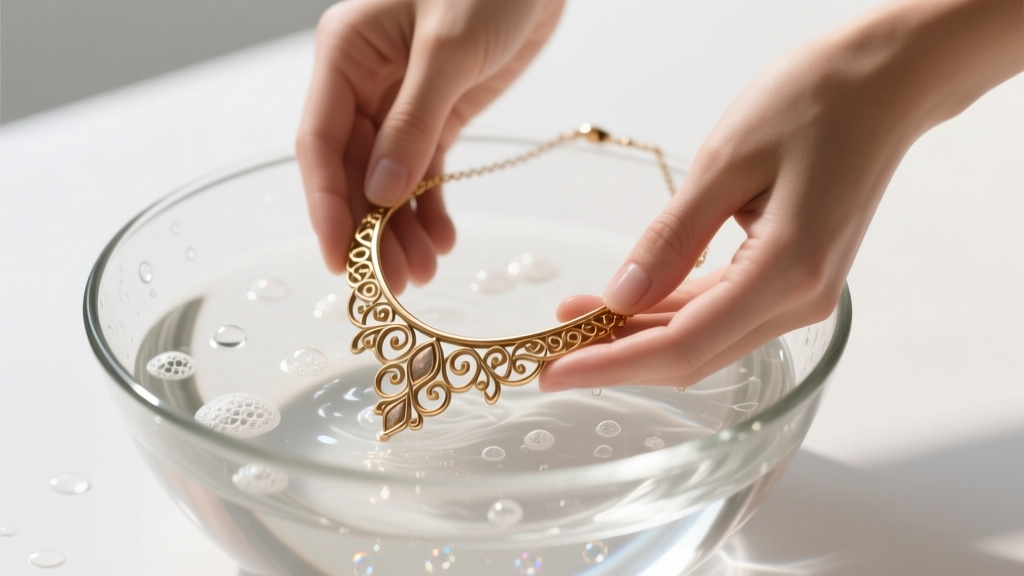
Cleaning plated fashion jewelry requires a radically different approach than cleaning solid fine jewelry. The goal is to remove sebum, dead skin cells, and cosmetic residue without abrading the microscopic plating or stripping the e-coating. Follow this precise protocol to safely restore your necklace's shine.
Tools Required
- Distilled Water: Never use tap water. Tap water contains chlorine, fluoride, and trace minerals that can leave hard water spots and accelerate tarnishing on exposed base metals.
- pH-Neutral Dish Soap: A mild, lotion-free dish soap (such as original Dawn) is ideal. Avoid soaps with moisturizers or citrus extracts, as citric acid can react with the metal.
- Baby Toothbrush: You need an extra-soft bristle brush. Standard toothbrushes are too stiff and will create micro-scratches on the plating.
- Lint-Free Microfiber Cloth: Essential for immediate drying to prevent water spots.
The Cleaning Steps
- Prepare the Solution: In a small glass bowl, mix one cup of room-temperature distilled water with a single drop of pH-neutral dish soap. Swirl gently to combine.
- The 30-Second Dip: Submerge the metal portions of your Zara charm necklace into the solution for no more than 30 seconds. Prolonged soaking can cause water to seep into the tiny jump rings and charm loops, leading to hidden internal corrosion that will eventually rust and break the chain.
- Gentle Agitation: Remove the necklace and use the baby toothbrush to gently sweep the crevices of the charms and the links of the chain. Use light, circular motions. Do not scrub aggressively.
- The Rinse: Quickly dip the necklace into a second bowl of clean distilled water to remove any soap residue.
- Immediate Drying: Lay the necklace flat on a dry microfiber cloth and gently pat it dry. Do not air dry, as evaporating water will leave mineral deposits. Ensure the clasp and jump rings are completely dry before storing.
Strategic Storage: Beyond the Original Cardboard Box
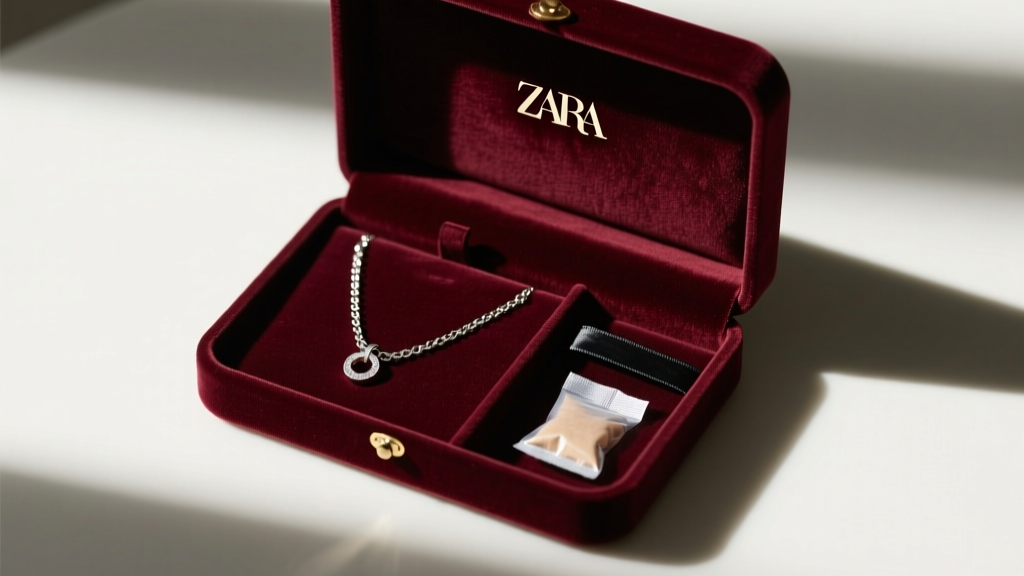
The environment in which you store your necklace when it is not on your neck dictates its lifespan just as much as how you clean it. The original Zara cardboard box and cotton pouch are designed for retail presentation, not long-term preservation. Cardboard and standard cotton can actually emit trace amounts of sulfur and acids that promote tarnishing.
To properly store your Zara charm necklace, invest in a sealed, airtight environment. Place the completely dry necklace into a small, zip-top polyethylene plastic bag. Before sealing, add two crucial elements: a silica gel packet to absorb any ambient moisture, and a 3M Anti-Tarnish Strip. These specialized strips are treated to absorb hydrogen sulfide and sulfur dioxide gases from the air inside the bag, effectively neutralizing the primary chemical agents that cause silver and gold-tone plating to turn black. Stored this way, your necklace can remain tarnish-free for months, even in humid climates.
Troubleshooting Common Plating Failures
Even with meticulous care, fashion jewelry is subject to wear and tear. Below is a diagnostic guide to help you identify and mitigate the most common issues associated with plated charm necklaces.
| Issue | Root Cause | Actionable Solution |
|---|---|---|
| Green Skin Staining | Copper in the brass alloy reacting to the acidity of your sweat. | Apply a micro-thin layer of clear, non-yellowing nail polish or a specialized jewelry shield spray to the back of the charms and the clasp to create a physical barrier. |
| Dull, Cloudy Plating | Buildup of lotions, sebum, and hard water minerals on the surface. | Perform the 30-second distilled water and pH-neutral soap cleaning protocol outlined above. Avoid commercial silver dips, which will strip the plating entirely. |
| Flaking or Peeling Metal | Physical abrasion or chemical degradation of the e-coating and flash plating. | Unfortunately, flaking cannot be reversed at home. Stop wearing the piece to prevent skin irritation from exposed base metals, and consider professional replating. |
| Stiff or Stuck Clasp | Debris, lint, or oxidation trapped inside the spring mechanism of the lobster clasp. | Use a wooden toothpick to gently dislodge debris. Apply a microscopic drop of sewing machine oil to the hinge, working it in by opening and closing the clasp repeatedly. Wipe away excess oil. |
When to Seek Professional Replating
Sometimes, despite your best efforts, the plating on a beloved Zara charm necklace will wear through to the base metal, particularly on high-friction areas like the clasp and the center charms. If the piece holds significant sentimental value or features a highly sought-after discontinued design, you can have it professionally replated.
Local jewelers or specialized mail-in electroplating services can strip the remaining original plating, polish the brass base, and apply a new layer of gold or rhodium. Be aware that professional replating typically costs between $40 and $80, which often exceeds the original retail price of the fast-fashion necklace. However, a professional replating job can apply up to 2.5 microns of gold (the standard for heavy gold electroplate), effectively transforming your fashion jewelry into a durable, long-lasting piece that rivals fine jewelry in its resistance to tarnish and wear.


