Cleaning & Care Tips for Real Flowers in Necklace Lockets
Learn expert cleaning and maintenance tips to preserve real flowers in necklace lockets, resin pendants, and delicate enamel floral jewelry.


The Anatomy of Botanical Jewelry: Why They Need Special Care
When you incorporate real, preserved flowers in necklace designs, you are blending organic fragility with metallurgical permanence. Whether your floral jewelry features dried botanicals suspended in cast epoxy resin, delicate specimens sealed behind glass locket bezels, or intricate guilloché enamel floral motifs, the maintenance protocols are vastly different from standard gemstone care. In 2026, the popularity of preserved nature jewelry continues to surge, yet many owners inadvertently destroy their pieces using conventional cleaning methods.
The primary challenge lies in the conflicting environmental needs of the materials. Sterling silver and gold chains require occasional polishing and tarnish removal, but the organic matter (anthocyanins, chlorophyll, and cellulose) inside the pendant is highly reactive to the very chemicals used to clean the metal. Furthermore, the encapsulation mediums—be it resin or glass—introduce their own vulnerabilities, such as UV degradation, micro-fracturing, and moisture ingress. Understanding these material interactions is the first step in preserving your botanical heirlooms.
The "Never" List: Cleaning Agents to Avoid
Before discussing what you should do, it is critical to establish what will instantly ruin a botanical pendant. The Gemological Institute of America (GIA) consistently warns against using harsh chemicals on organic or treated materials. For floral necklaces, the following are strictly prohibited:
- Ultrasonic Cleaners: The high-frequency cavitation bubbles will shatter glass locket seals, strip delicate plique-à-jour enamel, and cause micro-fractures in epoxy resin. More importantly, the vibrations will physically disintegrate dried flower petals inside the casing.
- Isopropyl Alcohol & Solvents: Alcohol extracts plasticizers from epoxy resins, leading to a permanent cloudy effect known as "crazing." It also degrades the silicone O-ring gaskets inside waterproof glass lockets, compromising their moisture seal.
- Commercial Silver Dips: These thiourea-based acidic solutions are highly toxic to organic matter. If a drop seeps into a locket hinge or penetrates a microscopic resin bubble, it will chemically burn the botanicals, turning them black within hours.
- Steam Cleaners: Thermal shock will instantly crack glass and melt the structural integrity of botanical waxes used in preservation.
Material-Specific Maintenance Matrix
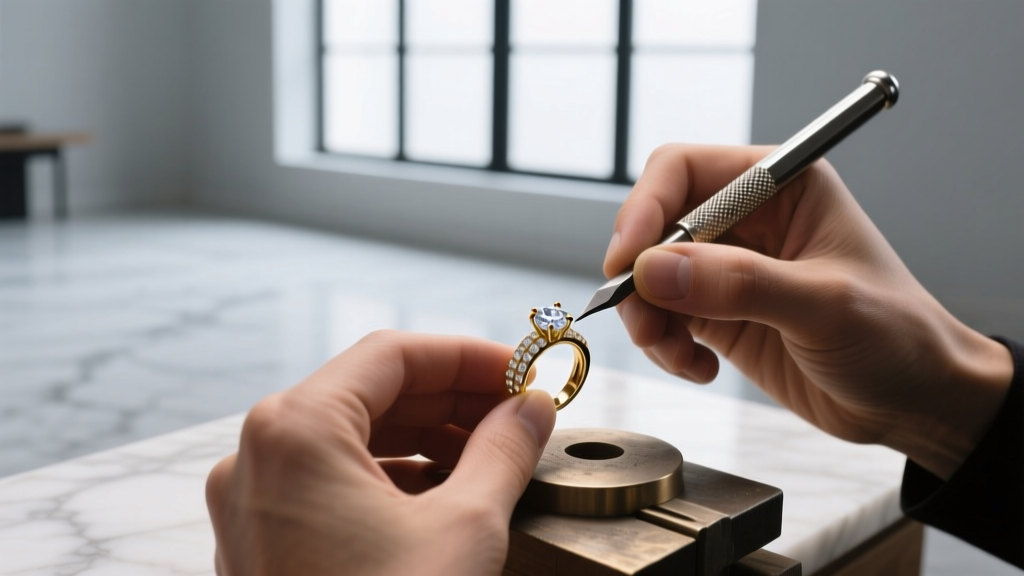
To care for your jewelry properly, you must tailor your approach to the specific encapsulation method. Below is a quick-reference framework for the three most common floral necklace types.
| Cleaning Agent / Method | Cast Epoxy Resin Pendants | Glass Locket (w/ Organics) | Guilloché / Cloisonné Enamel |
|---|---|---|---|
| Mild Dish Soap (pH 7) | SAFE (Use damp microfiber) | SAFE (Avoid hinge/seam areas) | SAFE (Gentle dabbing only) |
| Ultrasonic Cleaner | NEVER (Causes crazing) | NEVER (Shatters glass/traps water) | NEVER (Strips enamel from metal) |
| Isopropyl Alcohol | NEVER (Clouds the surface) | AVOID (Degrades silicone gaskets) | AVOID (Strips protective wax coatings) |
| Polishing Cloths | SAFE (For metal bails only) | SAFE (For exterior metal rims) | SAFE (Use non-abrasive microfiber) |
Deep Dive: Resin Yellowing and Botanical Browning
Even the highest-grade jewelry resins (such as those fortified with HALS—Hindered Amine Light Stabilizers) are not entirely immune to UV radiation. Over time, direct sunlight will cause the epoxy matrix to yellow, acting as a sepia filter over your flowers. More critically, UV exposure breaks down the cellular pigments of the flowers themselves. To clean resin, use only a drop of pH-neutral dish soap (like Dawn) on a lint-free microfiber cloth. Rub in small, circular motions to lift skin oils and cosmetics without creating micro-scratches on the resin's Shore D hardened surface.
Step-by-Step Cleaning Protocol for Glass Lockets
Glass lockets housing real flowers in necklace arrangements present a unique engineering challenge: keeping moisture out. If your locket features a silicone O-ring or a glued bezel, your cleaning routine must protect that seal.
- Inspect the Seal: Before introducing any liquid, examine the bezel under a jeweler's loupe. Look for gaps in the adhesive or wear on the gasket.
- Dry Dusting: Use a clean, soft-bristled makeup brush (like a goat-hair powder brush) to sweep away dust from the glass surface and the intricate metal filigree surrounding it.
- Targeted Glass Cleaning: Apply a minuscule amount of distilled water mixed with a drop of mild soap to a cotton swab. Gently roll the swab over the glass face. Never spray cleaner directly onto the locket.
- Chain Separation: If the sterling silver or gold chain requires heavy polishing, unclip it from the pendant bail. Polish the chain separately using a treated jeweler's cloth, then reattach it once all polishing compounds have been buffed away.
- Immediate Drying: Use a dry microfiber cloth to immediately absorb any moisture near the seams. Trapped water will lead to metal oxidation and internal condensation.
Long-Term Storage: Climate Control and Desiccation
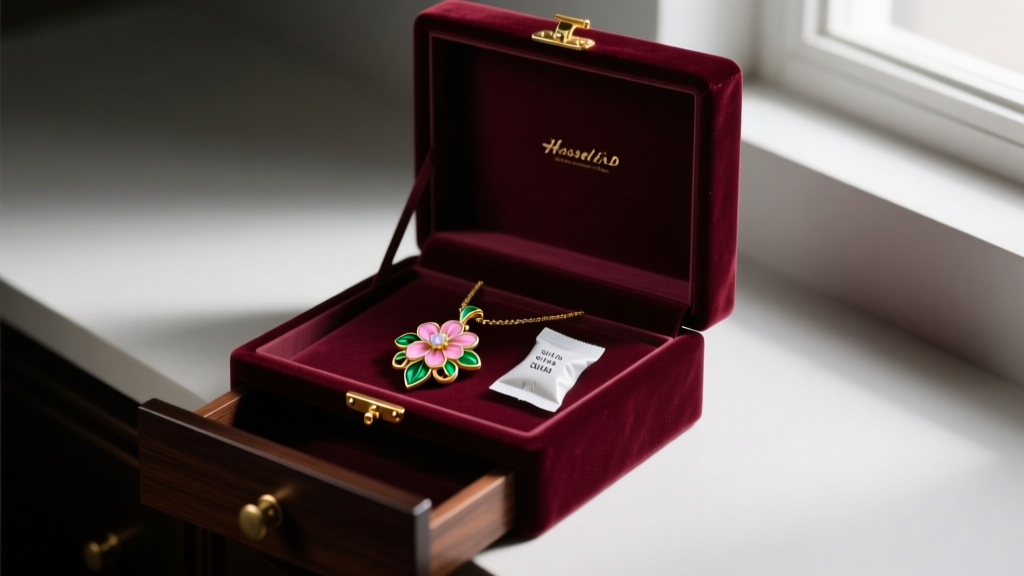
How you store your floral necklace is arguably more important than how you clean it. Organic materials are hygroscopic, meaning they absorb moisture from the air. If the relative humidity (RH) in your jewelry box exceeds 60%, dormant mold spores on the dried petals can activate, creating a fuzzy, destructive layer of mildew inside a sealed glass locket.
Expert Storage Tip: Store botanical lockets and resin pendants in an airtight, anti-tarnish pouch alongside a rechargeable silica gel desiccant packet. Maintain an ambient RH of 40-50%. Keep the pouch inside a dark drawer to eliminate cumulative UV exposure, which is the primary catalyst for pigment bleaching in preserved violets, ferns, and baby's breath.
For enamel floral pendants, the concern shifts from moisture to thermal shock and physical abrasion. Enamel is essentially fused glass; it can chip if it strikes a hard surface. Store enamel pieces in individual velvet compartments where they cannot swing and collide with other metal jewelry. The Jewellers of America recommends keeping enameled items away from extreme temperature fluctuations, such as leaving them in a car dashboard, as the metal backing expands and contracts at a different rate than the enamel, leading to hairline fractures.
Troubleshooting Common Botanical Jewelry Failures
Condensation Inside a Glass Locket
If you notice fog or water droplets inside your glass locket, the moisture seal has failed. Do not ignore this; the moisture will rapidly decay the flower. You must have a professional jeweler carefully pry open the bezel in a low-humidity environment (or a desiccator chamber), dry the botanical with a gentle stream of cool, dry argon gas, replace the silicone gasket or UV-cure adhesive, and reseal the piece.
Surface Scratches on Epoxy Resin
Unlike glass, epoxy resin scratches easily. If your resin floral pendant has accumulated a web of fine surface scratches, do not attempt to buff it with standard metal polishing compounds, as these will cloud the resin permanently. Instead, a professional can perform a wet-sanding progression (from 1000 to 3000 grit) followed by a specialized plastic polish to restore optical clarity without damaging the suspended botanicals.
When to Seek Professional Conservation
While routine maintenance can be performed at home, heirloom pieces—especially antique Victorian taxidermy or botanical mourning lockets—require the expertise of a professional conservator. If a historical piece featuring flowers in necklace settings suffers from structural metal fatigue, hinge failure, or internal organic degradation, consult a specialist affiliated with organizations like the American Institute for Conservation (AIC). They possess the specialized micro-vacuums, custom humidification chambers, and reversible conservation adhesives necessary to stabilize fragile historical organics without altering their original patina or botanical integrity.
By respecting the delicate boundary between nature and metal, your floral necklaces will remain vibrant, clear, and structurally sound for generations to come.


