Beginner Guide to Cleaning Sterling Silver Necklace Tarnish
Learn the safest methods for cleaning sterling silver necklace tarnish. Discover expert tips on .925 silver care, chemical reactions, and storage.

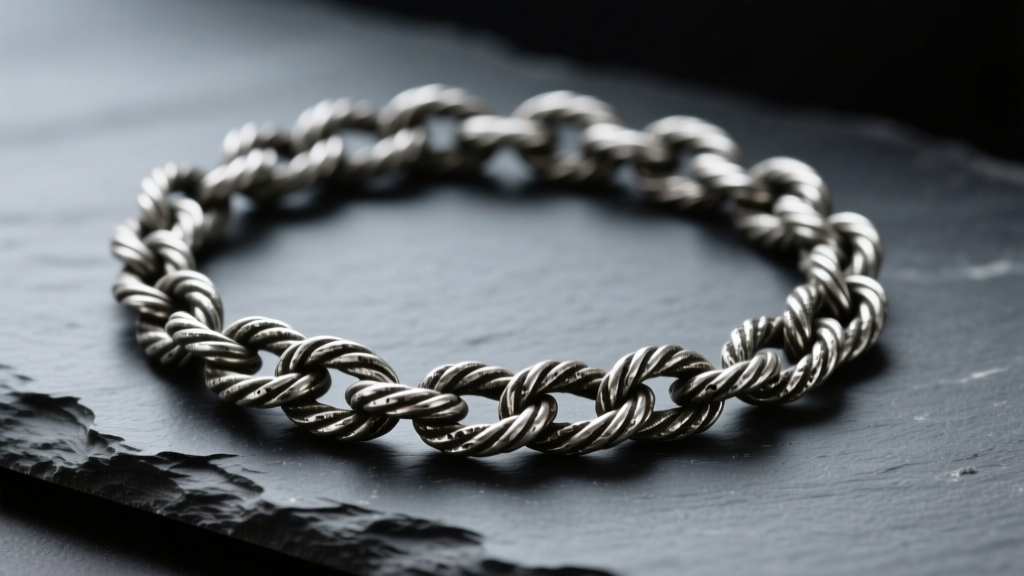
The Chemistry of Tarnish: Why Your .925 Silver Turns Black
If you have ever pulled a favorite necklace out of your jewelry box only to find it dull, yellowed, or completely blackened, you have encountered silver tarnish. To master the art of cleaning sterling silver necklace chains and pendants, you first need to understand the metallurgy of your jewelry. Sterling silver is an alloy composed of 92.5% pure silver and 7.5% secondary metals, most commonly copper. Pure silver is highly resistant to corrosion, but it is too soft for everyday jewelry wear. The addition of copper provides the necessary tensile strength for durable chain links and pendant bails, but it introduces a major vulnerability: chemical reactivity.
Tarnish is not dirt, and it is not a sign that your jewelry is fake. It is a chemical reaction. When the copper in your .925 sterling silver is exposed to hydrogen sulfide in the air—which is present in everyday environments due to pollution, humidity, and even certain foods—it forms silver sulfide (Ag2S). This compound manifests as a dull yellow film that eventually deepens into a dark, blackish-gray crust. According to the Gemological Institute of America (GIA), understanding this chemical process is the first step in safely reversing it without stripping away the underlying precious metal.
What NOT to Do: Common Beginner Mistakes
Before diving into the correct methods for cleaning sterling silver necklace tarnish, it is crucial to eliminate destructive DIY hacks from your repertoire. Silver is a relatively soft metal, rating just 2.5 to 3 on the Mohs hardness scale. This makes it highly susceptible to micro-scratches that permanently ruin its mirror finish.
- The Toothpaste Myth: Never use toothpaste. Modern toothpastes contain hydrated silica and calcium carbonate abrasives designed to scrub enamel. On silver, these abrasives act like sandpaper, leaving microscopic scratches that actually increase the surface area, making the necklace tarnish faster in the future.
- Bleach and Chlorine: Household bleach causes rapid, severe, and often irreversible oxidation. If you drop a silver chain into a chlorinated pool or clean it with bleach, the silver sulfide layer will become deeply pitted and brittle.
- Paper Towels and Tissues: Wiping your necklace with a paper towel seems harmless, but wood pulp fibers are surprisingly abrasive. Always use a 100% cotton flannel or a dedicated microfiber jewelry cloth.
The Aluminum Foil & Baking Soda Method (Step-by-Step)
The most effective, scientifically sound, and beginner-friendly method for cleaning sterling silver necklace tarnish relies on a basic electrochemical reaction. Instead of physically abrading the tarnish off (which removes a microscopic layer of silver), this method chemically converts the silver sulfide back into elemental silver.
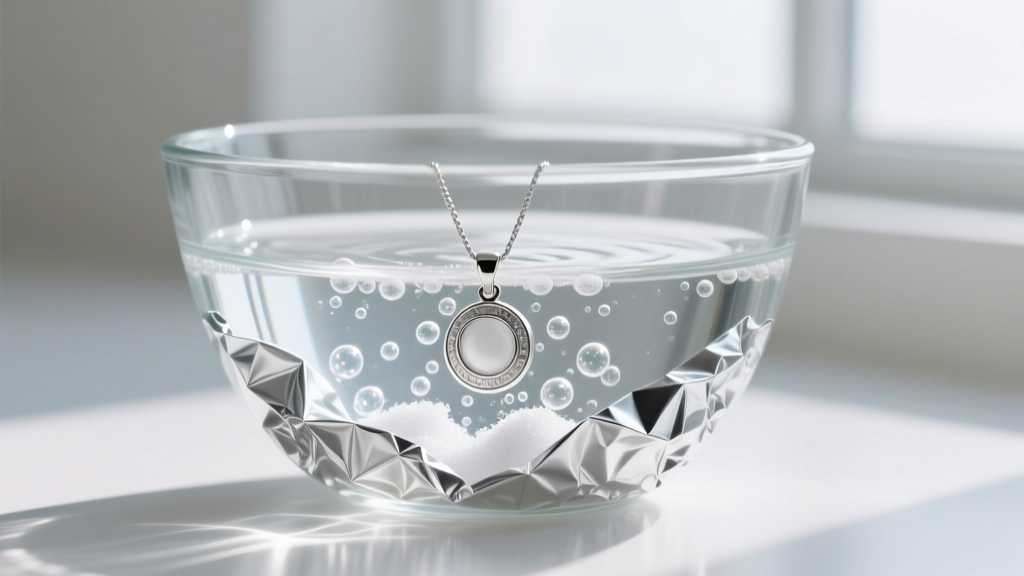
What You Will Need:
- A glass or ceramic bowl (never use a metal bowl, which will interfere with the ion exchange).
- Aluminum foil.
- Baking soda (sodium bicarbonate).
- Boiling water.
- Soft cotton tongs or a wooden spoon.
The Process:
- Prepare the Bath: Line the bottom and sides of your glass bowl with aluminum foil, shiny side facing up. The aluminum will act as the sacrificial anode in our electrochemical cell.
- Add the Catalyst: Sprinkle exactly one tablespoon of baking soda over the foil for every cup of water you plan to use. The baking soda creates the alkaline environment necessary for the electron transfer.
- Activate the Solution: Carefully pour boiling water into the bowl. You will see immediate fizzing as the baking soda dissolves and reacts with the foil.
- Submerge the Jewelry: Using your tongs, gently lower your sterling silver necklace into the solution. Ensure the chain or pendant makes direct physical contact with the aluminum foil. This contact is mandatory for the electrical circuit to complete.
- Wait and Observe: Leave the necklace in the bath for 3 to 5 minutes. You may notice a faint smell of sulfur (similar to rotten eggs); this is the hydrogen sulfide gas being released as the silver sulfide is broken down.
- Rinse and Dry: Remove the jewelry, rinse it thoroughly under warm running water to remove any alkaline residue, and pat it completely dry with a soft cotton cloth.
Critical Exceptions: Oxidized Silver and Gemstones
While the aluminum foil method is miraculous for standard polished .925 silver, it is highly destructive to certain specialty finishes and delicate materials. You must identify your necklace type before proceeding.
Oxidized (Antiqued) Sterling Silver
Oxidized silver is intentionally treated with potassium sulfide to create dark, blackened crevices that highlight the intricate details of a pendant or chain link. If you use the aluminum foil and baking soda method on an oxidized piece, the electrochemical reaction will strip away the intentional antiquing, leaving you with a flat, bright silver piece that has lost its dimensional contrast. For oxidized silver, use only a mild dish soap and a soft-bristled baby toothbrush to gently clean the raised surfaces while avoiding the dark recesses.
Porous and Organic Gemstones
If your sterling silver pendant features turquoise, lapis lazuli, malachite, opal, coral, or pearls, do not submerge it in the baking soda bath. The alkaline solution and high heat will permanently alter the chemical structure of porous stones, causing them to crack, discolor, or lose their natural luster. Instead, use a damp, soapy cotton swab to carefully clean only the silver components, avoiding the gemstone settings entirely. For detailed gemstone care protocols, Jewelers of America recommends consulting a professional jeweler for pieces with complex pave or bezel settings.
Commercial Cleaners vs. DIY: A Comparison Matrix
Not everyone has the time or inclination to boil water and line bowls with foil. Here is a data-driven comparison of popular commercial cleaning options versus the DIY method to help you choose the right approach for your lifestyle.
| Cleaning Method | Active Mechanism | Best Use Case | Risk Level | Approx. Cost |
|---|---|---|---|---|
| DIY Foil & Baking Soda | Electrochemical Reduction | Heavily tarnished, solid silver chains without porous stones | Low (if stones are removed) | < $1.00 |
| Silver Polishing Cloths | Mild Abrasive & Chemical Tarnish Inhibitor | Light maintenance, rhodium-plated silver, daily wipe-downs | Very Low | $6 - $12 |
| Liquid Silver Dip (e.g., Hagerty) | Thiourea-based Chemical Solvent | Instant cleaning of intricate filigree and hard-to-reach links | High (toxic, strips oxidation) | $10 - $18 |
| Ultrasonic Cleaner | High-Frequency Cavitation Waves | Diamond or sapphire pendants set in sturdy silver mountings | Medium (can loosen prongs) | $35 - $80 |
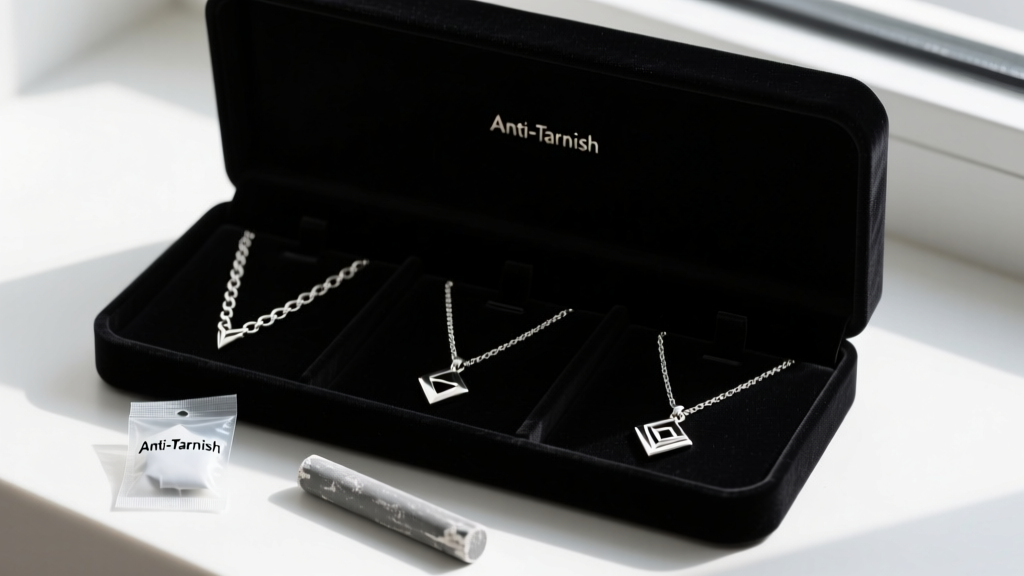
Long-Term Storage: Preventing Tarnish Before It Starts
The most efficient way to handle cleaning sterling silver necklace tarnish is to prevent it from forming in the first place. Tarnish requires moisture and sulfur to develop. By controlling the micro-environment of your jewelry storage, you can keep your chains pristine for months or even years.
- Anti-Tarnish Strips: Invest in 3M anti-tarnish tabs. These small, copper-based strips absorb airborne sulfur compounds before they can reach your silver. Place one strip inside your jewelry box or storage bag, and replace it every six months.
- Pacific Silvercloth: For high-value heirloom necklaces, store them in bags made of Pacific Silvercloth. This specialized flannel is embedded with microscopic silver particles that act as a sacrificial shield, capturing sulfur and moisture to protect the jewelry inside.
- Silica Gel Packets: Moisture accelerates the copper-sulfur reaction. Tossing a few reusable silica gel desiccant packets into your jewelry drawer will drastically lower the ambient humidity, slowing the tarnishing process to a crawl.
- Avoid the Bathroom: Never store your silver necklaces in the bathroom. The constant fluctuations in humidity from showers, combined with sulfur compounds found in many personal care products and hair treatments, create the ultimate incubator for rapid silver sulfide formation.
Expert Tip: If you wear your sterling silver necklace daily, the natural oils and gentle friction from your skin and clothing will actually act as a mechanical polish, significantly delaying the onset of tarnish. Silver that is worn regularly rarely turns black.
By understanding the underlying chemistry of your .925 alloys and utilizing safe, non-abrasive reduction methods, you can ensure your favorite pendants and chains remain brilliant and structurally sound for a lifetime of wear.


