Cleavage Necklaces Buying Guide: Styles & Fit for 2026
Discover how to choose the perfect cleavage necklaces for deep necklines. Our 2026 buying guide covers lengths, chain gauges, and hypoallergenic metals.

Defining the Décolletage Category
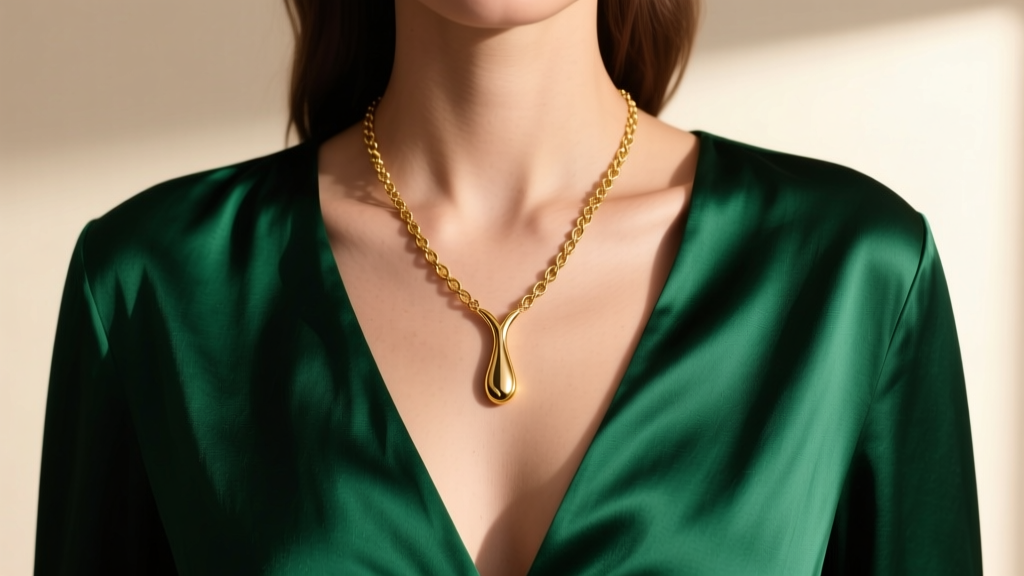
In the realm of fine jewelry and haute couture, what is colloquially searched as 'cleavage necklaces' is formally categorized as décolletage jewelry. These pieces are specifically engineered to draw the eye vertically, elongating the neck and torso while resting elegantly within the natural contours of the chest. Unlike standard princess-length necklaces that sit at the collarbone, décolletage pieces—such as Y-drop chains, lariat necklaces, and deep-V pendants—require a precise understanding of gravity, chain mechanics, and anatomical proportions. As we move through 2026, the trend has shifted away from overly heavy, cumbersome statement pieces toward fluid, articulated designs that move seamlessly with the wearer's body.
Choosing the right piece for deep necklines is not merely about aesthetics; it is an exercise in structural engineering. A poorly balanced pendant will constantly flip backward, hiding the centerpiece against the skin, while an incompatible metal alloy can cause severe contact dermatitis on the sensitive skin of the chest. This comprehensive buying guide breaks down the exact specifications, material grades, and sizing metrics you need to make an informed purchase.
The Mathematics of Drop Lengths
The most critical variable in décolletage jewelry is the drop length. Standard necklace lengths fall short for deep-V, scoop, or sweetheart necklines. To properly frame the décolletage without disappearing into the fabric hem or resting awkwardly on the collarbone, you must target specific matinee and opera lengths. Below is a structural breakdown of how length correlates with neckline depth and visual impact.
| Length Category | Measurement | Ideal Neckline Pairing | Visual Effect |
|---|---|---|---|
| Standard Matinee | 20 to 22 inches | Shallow Scoop, Boatneck | Rests just above the upper chest; frames the collarbone. |
| Deep Matinee | 23 to 25 inches | Deep-V, Sweetheart | The sweet spot for décolletage; pendant rests centrally in the chest hollow. |
| Short Opera | 26 to 28 inches | Plunging V, Open-Back Halter | Elongates the torso dramatically; ideal for Y-drops and lariats. |
| Standard Opera | 30 to 34 inches | High-neck with chest cutouts | Creates a severe, avant-garde vertical line; often doubled or knotted. |
When purchasing a Y-necklace or lariat, remember that the stated length usually refers to the base chain that wraps around the neck. The 'drop'—the vertical segment that falls into the décolletage—typically adds an additional 3 to 6 inches. Always verify the total drop length with the jeweler to ensure it will not fall below the sternum, which disrupts the visual balance of the torso.
Chain Gauge and the Center of Gravity
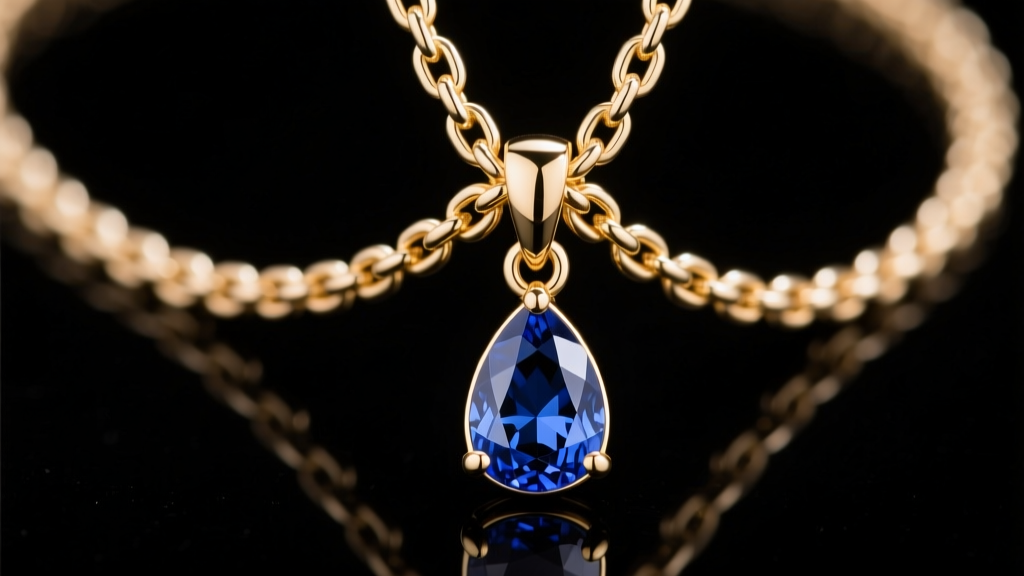
A frequent failure mode in deep-drop necklaces is the 'flip'—when the weight of the pendant pulls the chain forward, causing the clasp to slide around to the front of the neck. This is a simple physics issue related to the center of gravity and chain gauge. Many mass-market jewelers pair heavy, 15-gram gemstone pendants with flimsy 1.0mm or 1.2mm cable chains to keep gold weight (and cost) down. This is a structural mismatch.
To maintain equilibrium, adhere to the following gauge-to-weight ratios:
- Pendants under 5 grams: Can be safely suspended on 1.0mm to 1.2mm box or cable chains.
- Pendants between 5 and 12 grams: Require a 1.5mm to 2.0mm chain. A 1.5mm box chain is highly recommended as its flat, interlocking links lay flush against the skin and resist kinking.
- Pendants over 12 grams: Demand a 2.5mm to 3.5mm rope or rolo chain. Alternatively, the jeweler must incorporate a 'counterweight'—a small 2-3 gram metal tag attached to the chain just behind the clasp to anchor the back of the necklace.
Furthermore, avoid snake chains for deep drops. While sleek, snake chains lack structural memory and are notorious for permanently kinking when subjected to the lateral tension of a heavy, swinging pendant in the décolletage area.
Dermatological Considerations for Chest Skin
The skin on the chest and décolletage is significantly thinner and more sensitive than the skin on the hands or earlobes. It is also highly prone to perspiration and friction from garments. This creates an environment highly conducive to allergic contact dermatitis, particularly if the jewelry contains nickel or low-grade copper alloys.
According to the American Academy of Dermatology, nickel allergy is one of the most common causes of allergic contact dermatitis, and sweat can accelerate the leaching of nickel ions from base metals. For pieces that will rest directly in the hollow of the chest for extended periods, you must prioritize hypoallergenic purity. The Gemological Institute of America (GIA) notes that higher karat gold and specific platinum group metals are vastly superior for sensitive zones.
Recommended Metals for Décolletage Jewelry:
- 18k Yellow or Rose Gold (75% purity): The gold standard for fine jewelry. Ensure it is explicitly marked 'nickel-free,' as some white gold alloys use nickel as a bleaching agent.
- Platinum (95% purity): Naturally hypoallergenic, incredibly dense, and will not tarnish when exposed to chest perspiration or cosmetics.
- ASTM F136 Titanium: If opting for contemporary or avant-garde 2026 designs, implant-grade titanium is entirely biocompatible and impervious to sweat-induced corrosion.
Avoid: Gold vermeil or gold-plated brass for deep-drops. The friction of the pendant swinging against the chest will rapidly wear through the thin gold micron layer, exposing the reactive brass underneath.
Neckline Pairings: A Visual Framework
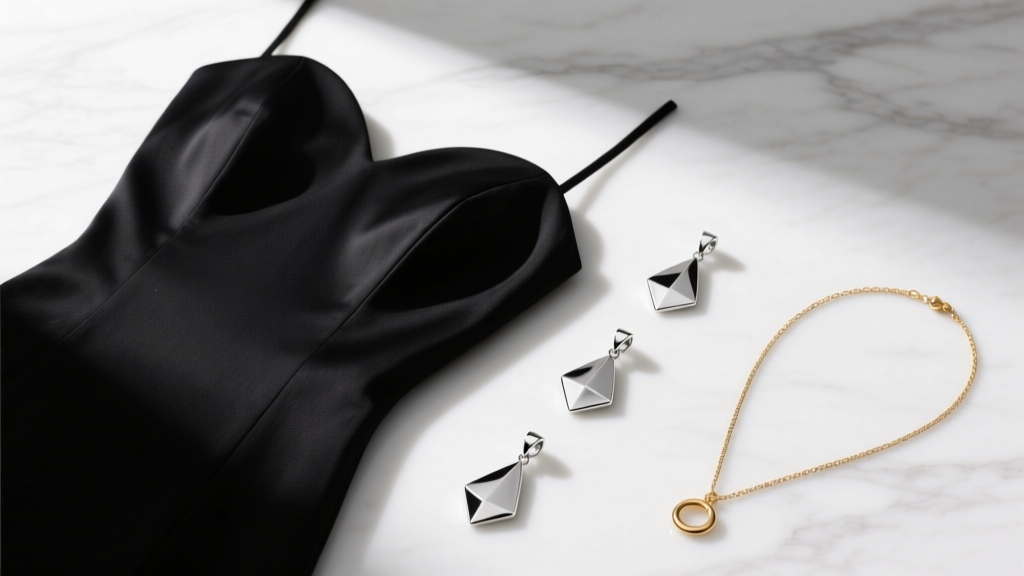
Mastering the styling of cleavage necklaces requires understanding the geometry of your garment. The necklace should act as an extension of the neckline, not a competing element.
The Deep-V Neckline
Pair with a Y-drop or lariat necklace. The vertical line of the chain mimics the angle of the fabric, creating a continuous, unbroken line that elongates the neck and torso. A 24-inch chain with a 4-inch drop is mathematically ideal for standard deep-V blouses.
The Sweetheart Neckline
Sweetheart necklines feature a curved, scalloped edge that mimics the top of a heart. To complement this, avoid rigid, geometric pendants. Instead, opt for a fluid, articulated 22-inch matinee necklace featuring a curved or teardrop motif that nestles perfectly into the central dip of the sweetheart cut without overlapping the fabric hem.
The Scoop Neck
For wider, shallower scoop necks, a traditional deep-drop is often lost. Instead, utilize a 'layered décolletage' approach. Combine a 20-inch choker-style chain with a 24-inch solitaire pendant. This fills the negative space of the chest without relying on a single, overwhelming focal point.
2026 Trends in Deep-Drop Jewelry
As we navigate the 2026 jewelry market, several distinct trends have emerged in the décolletage category. First is the rise of the asymmetrical lariat, where the chain feeds through an off-center tension clasp, allowing the wearer to manually adjust the drop length from 2 inches to 6 inches depending on the garment. Second is the integration of convertible Y-chains, featuring micro-pavé diamond stations that can be detached to transform a deep-drop evening piece into a standard 18-inch princess chain for daytime wear. Finally, pricing for solid 14k gold deep-drop lariats has stabilized in the $600 to $1,200 range, while platinum articulated drops command a premium of $2,800 to $5,500, reflecting the increased labor required to engineer invisible, fluid hinges that prevent the metal from catching on delicate silk and chiffon fabrics.
Ultimately, investing in high-quality cleavage necklaces is about prioritizing structural integrity and biocompatibility over sheer carat weight. By selecting the correct gauge, verifying the drop length, and insisting on nickel-free alloys, you ensure the piece remains a versatile, comfortable staple in your evening and formal wardrobe for decades to come.


