Cleopatra Necklace Silver: Troubleshooting Tarnish and Weight
Is your cleopatra necklace silver turning black or straining your neck? Discover expert fixes for tarnish, clasp stress, and weight distribution.

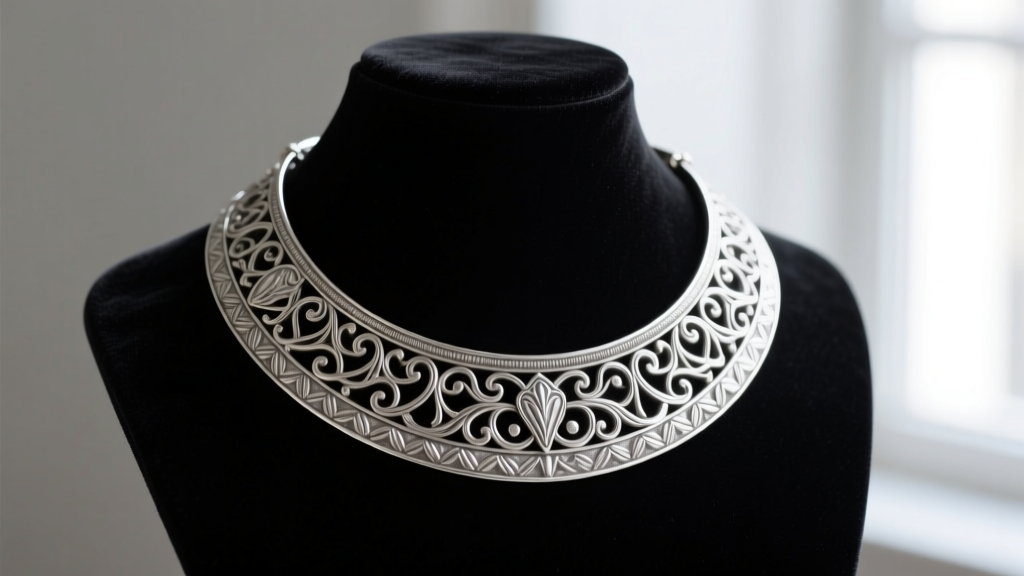
The Cleopatra necklace—often inspired by the ancient Egyptian wesekh or broad collar—is a masterpiece of statement jewelry. When crafted in silver, these pieces offer a striking, moonlit contrast to the traditional gold of the pharaohs. However, translating this ancient, heavy, and expansive design into modern sterling silver introduces a unique set of structural and chemical challenges. If you own a cleopatra necklace silver design and find yourself battling severe tarnishing, broken clasps, or uncomfortable neck strain, you are not alone. This guide provides expert-level troubleshooting to restore your statement piece to its former glory.
The Anatomy of a Cleopatra Collar: Why Silver Poses Unique Challenges
Unlike a standard pendant chain, a Cleopatra collar is characterized by its wide, bib-like front that tapers sharply toward the nape of the neck. This geometry creates a highly front-heavy center of mass. Furthermore, sterling silver (92.5% pure silver, 7.5% copper) is a relatively dense metal. A solid silver broad collar can easily weigh between 150 and 250 grams. According to The Silver Institute, the addition of copper is necessary for structural integrity, but it is precisely this copper alloy that makes the necklace highly reactive to environmental and biological factors. Understanding this metallurgical reality is the first step in troubleshooting your jewelry.
Troubleshooting Problem 1: Severe Tarnishing and Skin Discoloration
The most common complaint with silver bib necklaces is rapid, uneven tarnishing and the dreaded "green neck" effect. Because a Cleopatra collar sits flush against the clavicle and sternum, it traps body heat, sweat, and cosmetics against the metal.
The Chemistry of the Black and Green Stains
The black coating on your silver is silver sulfide (Ag2S), formed when silver reacts with hydrogen sulfide in the air or sulfur compounds in your sweat. The green stain on your skin, however, is caused by the 7.5% copper content reacting with chlorides and acids in your perspiration to form copper chloride.
The Expert Fix: Electrochemical Reduction
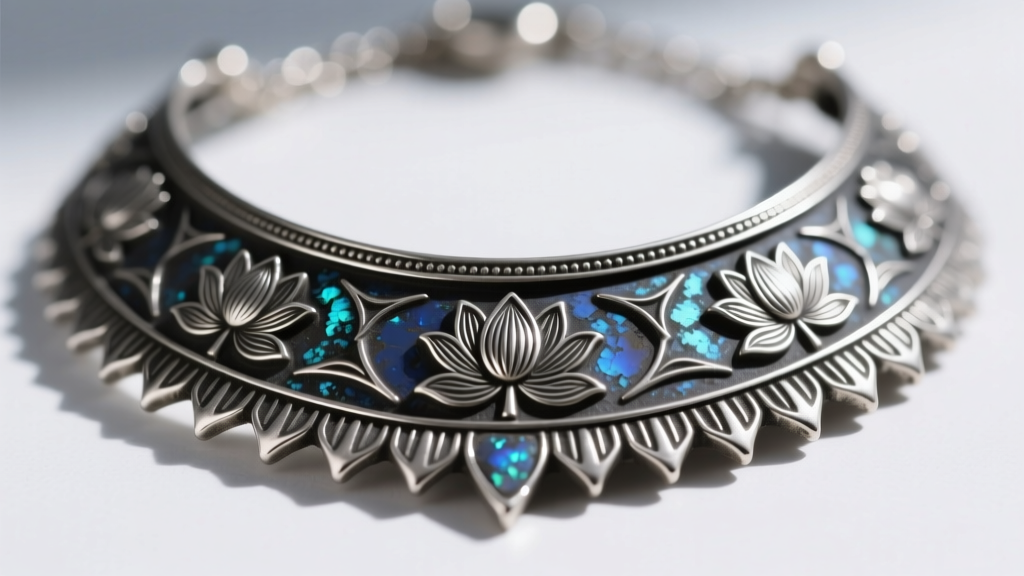
Do not use abrasive silver dips or polishing cloths on a heavily textured Cleopatra collar; you will strip the antiquing from the intricate lotus or scarab motifs. Instead, use an electrochemical reversal bath:
- Line a glass bowl with heavy-duty aluminum foil (shiny side up).
- Add 1 tablespoon of baking soda and 1 tablespoon of non-iodized salt.
- Pour boiling water over the mixture to activate it.
- Submerge the necklace, ensuring the silver touches the aluminum foil. The sulfide will transfer from the silver to the aluminum in 3 to 5 minutes.
Warning: If your Cleopatra necklace features glued-in turquoise, lapis lazuli, or malachite cabochons, do not submerge it in hot water, as the thermal shock and moisture will dissolve the jeweler's epoxy. Clean around the stones with a targeted Q-tip application of a mild thiourea-based paste.
Troubleshooting Problem 2: Clasp Failure and Chain Snapping
A 200-gram silver collar generates significant kinetic energy when you bend over or move quickly. Standard jewelry findings are simply not engineered for this dynamic load. If your necklace frequently pops open or the jump rings at the clasp are stretching into ovals, your hardware is failing.
Clasp Weight Tolerance Matrix
Upgrading your clasp is a mandatory fix for heavy silver collars. Refer to the table below to select the appropriate hardware based on your necklace's exact weight.
| Clasp Type | Max Static Load | Dynamic Safety Rating | Best For |
|---|---|---|---|
| Standard Spring Ring | 30g | Poor (Fails easily) | Lightweight chains only |
| 12mm Lobster Claw | 60g | Fair | Medium pendants |
| Box Clasp with Safety 8 | 250g+ | Excellent | Heavy Cleopatra Collars |
| Magnetic Tube Clasp | 150g | Good (If neodymium) | Mid-weight bib necklaces |
The Fix: Take your necklace to a bench jeweler and request a double-tongue box clasp with a figure-eight safety catch. The safety wire acts as a fail-safe, ensuring that even if the primary tension mechanism fatigues, the necklace remains secured around your neck.
Troubleshooting Problem 3: Neck Strain and Collar Flipping
The "choking" sensation and the tendency for the back of the necklace to slide up and flip over are issues of physics, not poor craftsmanship. The broad front of the Cleopatra collar acts as a lever, pulling the back chain upward into the nape of your neck. This causes friction, hair tangling, and muscle fatigue.

Engineering a Counterweight System
To solve the lever-arm problem, you must balance the center of gravity. The Gemological Institute of America (GIA) notes that proper weight distribution is critical for the wearability of heavy statement pieces.
- The 30% Rule: The back of your necklace needs a counterweight equal to at least 30% of the front collar's weight. If the front bib weighs 180g, you need a 55g counterweight at the nape.
- Hidden Tungsten Beads: Because silver is expensive and bulky, ask a jeweler to thread high-density tungsten beads (which are small but exceptionally heavy) onto the chain at the back of the neck, hiding them inside a decorative silver tube or barrel bead.
- The Scarab Drop: Alternatively, attach a heavy, solid silver scarab pendant directly to the clasp at the nape. This acts as an aesthetic counterweight that pulls the back chain down, anchoring the front bib flat against your collarbone.
Maintenance Matrix: Daily vs. Deep Care for Silver Collars
Because of its large surface area, a Cleopatra collar requires a strict maintenance protocol to prevent the copper alloys from reacting with the environment. The London Assay Office emphasizes that proper storage is just as critical as active cleaning for hallmark sterling silver.
Daily Wear Protocol
- Order of Operations: Always put your silver collar on after applying perfume, hairspray, and lotions. Allow cosmetics to dry for 5 minutes before donning the metal.
- The Wipe Down: Keep a untreated, dry microfiber cloth in your jewelry box. Wipe the inner curve of the collar (the part that touches your skin) immediately upon taking it off to remove acidic oils and sweat.
Long-Term Storage Protocol
- Anti-Tarnish Strips: Store the necklace flat in a sealed polyethylene bag with a 3M anti-tarnish strip. These strips absorb ambient sulfur gases before they can reach the silver.
- Chalk or Silica: If storing in a velvet-lined box, place a small piece of white chalk or a silica gel packet inside to control ambient humidity, which accelerates the copper oxidation process.
When to Seek a Professional Jeweler
While electrochemical baths and clasp upgrades can be managed with some DIY effort, certain issues require a master bench jeweler. If your Cleopatra necklace features interconnected, articulated silver scales or woven mesh, do not attempt to bend or reshape the metal yourself. Silver suffers from "work hardening"; repeated bending will cause the links to snap cleanly in half. Furthermore, if you are tired of the constant maintenance required by raw sterling silver, a jeweler can apply a rhodium flash plate over the entire piece. This micron-thin layer of platinum-group metal will permanently seal the copper alloy, rendering the necklace completely immune to tarnish and skin discoloration, though it will give the silver a slightly brighter, whiter, and more mirror-like finish than its natural state.


