Clover Looking Necklace Guide: Material Properties Compared
Discover how to choose the perfect clover looking necklace by comparing inlay materials, gold karats, and enamel types for lasting durability.

The Anatomy of a Clover Pendant: Why Material Dictates Longevity
The iconic four-leaf motif has transcended its luxury designer origins to become a universal symbol of luck and elegance in modern jewelry. When searching for a clover looking necklace, consumers are often captivated by the silhouette but overlook the critical material properties that determine the piece's lifespan. A pendant is not just a shape; it is a complex assembly of metals, adhesives, and inlays that react differently to environmental stressors, skin pH, and daily friction. In this comprehensive guide, we deconstruct the material science behind the clover looking necklace, comparing stone inlays, enamel types, and gold alloys to help you make an informed, investment-grade decision.
Inlay Showdown: Organic vs. Mineral Materials
The center of a clover pendant typically features an inlay. The choice between organic materials (like shell) and mineral stones (like onyx or malachite) drastically alters the necklace's durability profile. According to the Gemological Institute of America (GIA), understanding the Mohs hardness scale is essential for predicting how an inlay will withstand daily wear.
Mother of Pearl (MOP) vs. Onyx vs. Malachite
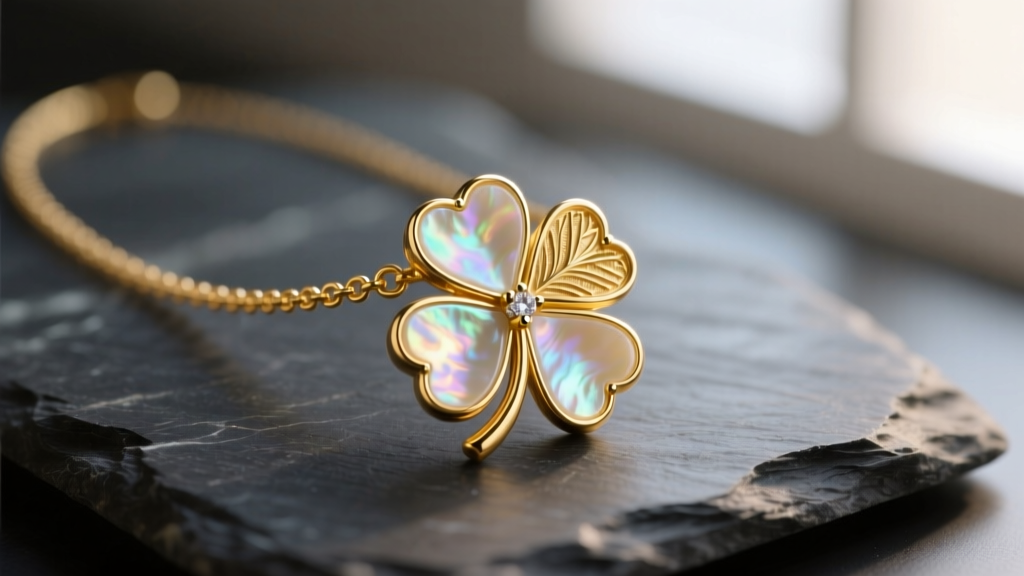
Mother of Pearl (MOP): Sourced from the inner layer of mollusk shells, MOP offers a stunning, iridescent luster that shifts in the light. However, it ranks a mere 2.5 to 3 on the Mohs scale. It is highly porous and susceptible to acid etching. A single drop of perfume or prolonged exposure to sweat can dull its surface over time.
Black Onyx: A variety of chalcedony, onyx ranks at a 7 on the Mohs scale. It is exceptionally durable, resistant to scratching, and non-porous, making it the superior choice for everyday wearers who refuse to remove their jewelry before applying cosmetics.
Malachite: Prized for its vivid green banding, malachite is a copper carbonate hydroxide that ranks between 3.5 and 4. It is notoriously fragile. Heat, hot water, and acidic substances can permanently damage its polished surface, and it is prone to chipping if dropped on a hard surface.
| Inlay Material | Mohs Hardness | Porosity | Primary Failure Mode | Maintenance Level |
|---|---|---|---|---|
| Mother of Pearl | 2.5 - 3.0 | High | Acid etching, surface scratching | High (Requires gentle wiping) |
| Black Onyx | 7.0 | None | Hard impact chipping | Low (Standard cleaning) |
| Malachite | 3.5 - 4.0 | Medium | Thermal shock, chemical stripping | Very High (Avoid water/heat) |
The Enamel Dilemma: Vitreous vs. Cold Resin
For those who prefer a vibrant, opaque pop of color over natural stone, enamel is the standard choice. However, not all enamel is created equal. The jewelry industry utilizes two distinct processes that yield vastly different results in a clover looking necklace.
Vitreous Enamel (Glass Frit)
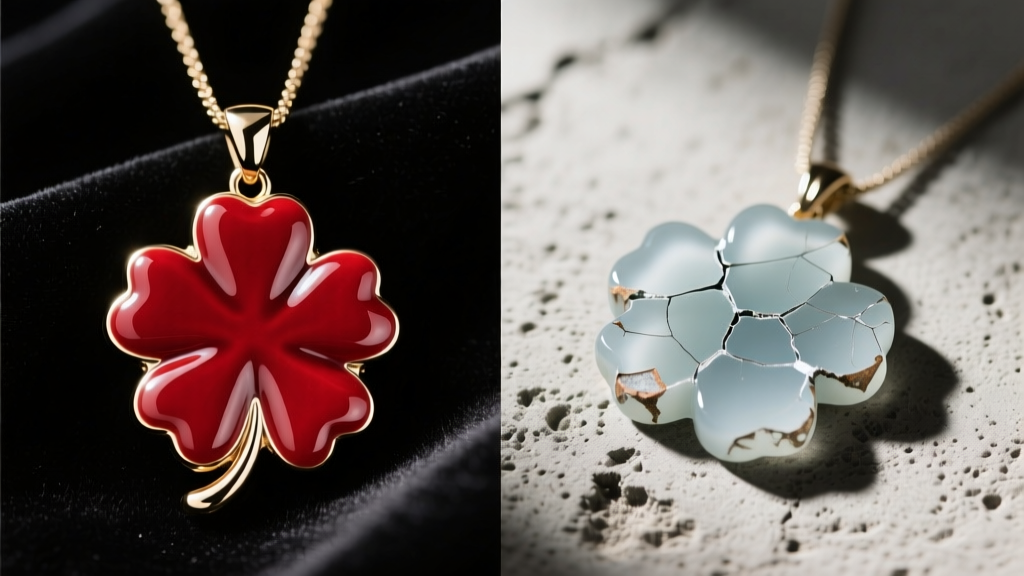
Vitreous enamel is created by fusing powdered glass to a metal substrate at extreme temperatures (typically between 1,300°F and 1,600°F). The result is a hard, scratch-resistant, and UV-stable surface that will never yellow or fade. The trade-off is brittleness. If a vitreous enamel pendant is dropped onto a tile floor, the glass can crack or chip away from the metal bezel. Repairing vitreous enamel requires a specialized artisan and is often cost-prohibitive.
Cold Enamel (Epoxy Resin)
Cold enamel is actually a two-part epoxy resin poured into the metal clover bezel and left to cure at room temperature. While it is highly impact-resistant and will not shatter when dropped, it is fundamentally a plastic. Over a period of 3 to 5 years, cold resin is susceptible to UV degradation, leading to a yellowish tint, particularly in white, cream, or light blue colorways. Furthermore, resin is easily scratched by everyday friction against clothing and zippers.
The Metal Framework: 14k vs. 18k Gold and Vermeil
The structural integrity of the bezel holding the inlay depends entirely on the metal alloy. The World Gold Council notes that pure 24k gold is too soft for jewelry, necessitating the addition of alloy metals like copper, silver, and zinc.
18k Gold (75% Pure)
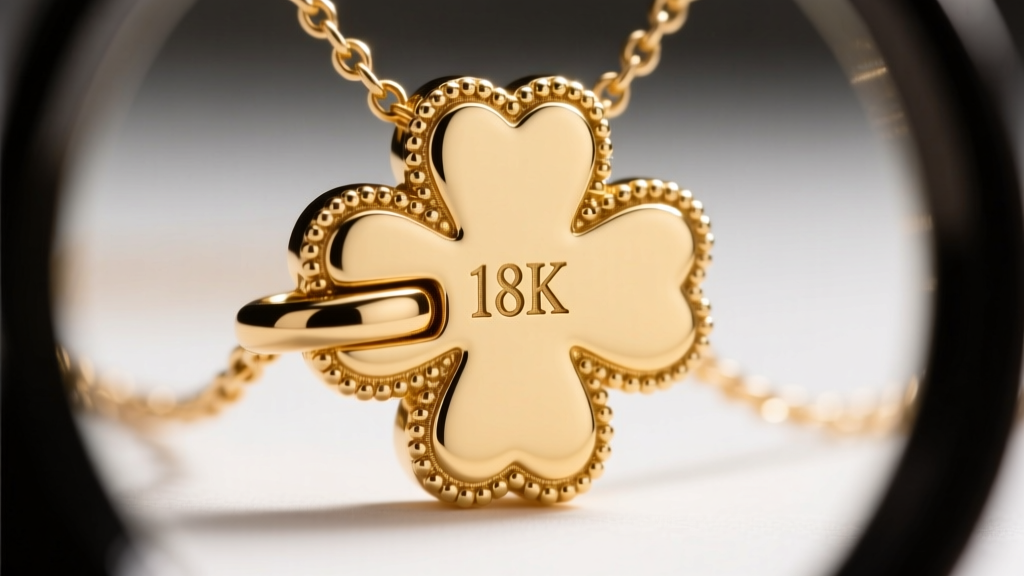
18k gold offers a rich, buttery yellow hue that perfectly complements warm-toned inlays like malachite or tiger's eye. However, its Vickers hardness is approximately 130, making it relatively soft. The thin milgrain or beaded edges often found on luxury clover pendants can wear down or dent if subjected to heavy impact.
14k Gold (58.5% Pure)
With a Vickers hardness of around 170, 14k gold is significantly more durable. It resists scratching and maintains the structural grip on the inlay much better than 18k. The color is slightly cooler and paler, but for a daily-wear clover looking necklace, 14k is the pragmatic choice for longevity.
Gold Vermeil and Plating
Vermeil consists of a sterling silver base plated with a minimum of 2.5 microns of gold. While affordable, the friction of the pendant flipping against the skin and clothing will eventually wear through the plating, exposing the silver beneath. Once the silver oxidizes, it can cause the inlay adhesive to degrade, leading to the dreaded 'stone pop-out' failure mode.
Chain Mechanics: Cable vs. Rolo
The chain is the unsung hero of the pendant's lifespan. A delicate 1mm cable chain allows the heavy clover pendant to swing freely, but the constant pendulum motion accelerates wear on the jump ring and clasp. Conversely, a sturdier 2mm Rolo or belcher chain restricts excessive movement, keeping the pendant centered and reducing stress on the bail. When investing in a solid gold clover piece, always pair it with a chain that can support at least three times the weight of the pendant itself.
2026 Pricing Matrix: What to Expect
Market prices for clover looking necklaces vary wildly based on material provenance and manufacturing techniques. Below is a realistic pricing framework for the current market:
- Vermeil + Cold Resin Inlay: $85 - $150 (High fashion jewelry, 2-3 year lifespan before replating is needed).
- 14k Solid Gold + Mother of Pearl: $600 - $950 (Mid-tier luxury, excellent for occasional wear).
- 18k Solid Gold + Black Onyx: $1,800 - $3,500 (Investment grade, heirloom durability, retains high resale value).
- 18k Solid Gold + Malachite + Diamond Pavé: $4,500 - $8,000+ (High jewelry, requires meticulous care and insurance).
Expert Verdict: Matching Material to Lifestyle
Selecting the right clover looking necklace requires an honest assessment of your daily habits. If you are an active individual who wears jewelry to the gym, applies lotions with the necklace on, and prefers low-maintenance accessories, a 14k solid gold pendant with a black onyx inlay is virtually indestructible. If you view jewelry as an art form and are willing to adopt a strict 'put on last, take off first' routine, the ethereal beauty of 18k gold paired with fragile malachite or iridescent mother of pearl will offer unparalleled visual rewards. Ultimately, understanding the material science transforms a simple purchase into a lifelong appreciation for wearable art.
"The true cost of a pendant isn't just its retail price; it's the cumulative cost of maintenance. A softer stone in a high-karat gold bezel will inevitably require professional re-tipping and repolishing, whereas a harder stone in a durable alloy will outlast its owner." — Senior Bench Jeweler


