Coach C Necklace Troubleshooting: Fix Tarnish & Clasps
Expert troubleshooting for your Coach C necklace. Learn how to fix tarnished plating, repair broken clasps, untangle chains, and spot counterfeits.

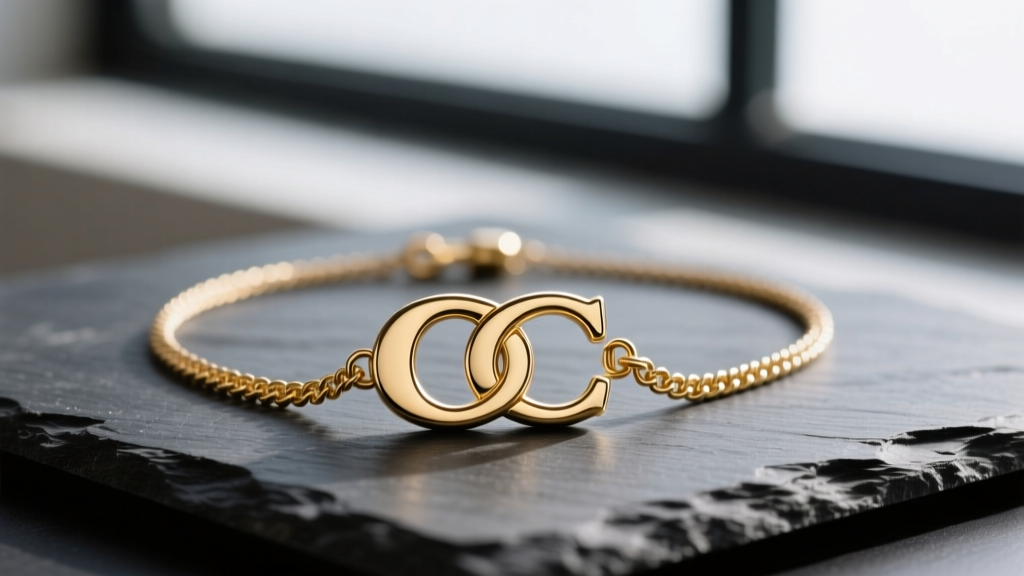
The Anatomy of a Coach C Necklace: Why Problems Occur
Coach jewelry, particularly the iconic Coach C pendant necklace, bridges the gap between accessible fashion and luxury aesthetics. However, understanding its metallurgical composition is the first step in troubleshooting common issues. Most Coach C necklaces are crafted from a jeweler's brass base (an alloy of copper and zinc) and finished with a micro-layer of 14k or 18k gold plating, rhodium, or silver. The plating thickness typically ranges between 0.5 and 1.0 microns. While this provides a brilliant initial luster, daily wear exposes the piece to friction, cosmetics, and the acidic pH of human sweat, leading to the inevitable wear-through that plagues fashion jewelry.
Furthermore, the signature 'C' logo often features epoxy resin enamel or pavé crystal accents. Unlike vitreous (glass) enamel used in fine jewelry, epoxy resin is susceptible to UV degradation and chemical breakdown from perfumes, causing it to yellow or cloud over time. According to the Jewelers of America, fashion jewelry requires a distinctly different care regimen than solid gold or platinum pieces to preserve these delicate surface treatments.
Troubleshooting Tarnish and Plating Loss
When the gold or silver plating on your Coach C necklace begins to wear thin, the underlying copper-rich brass reacts with oxygen and moisture, resulting in a dull, dark tarnish or the dreaded 'green skin' effect. This is a galvanic reaction, not an allergy, as detailed by the Gemological Institute of America (GIA).
The Safe Cleaning Protocol
Never use ultrasonic cleaners, silver dip, or baking soda pastes on plated Coach jewelry. These abrasive or highly alkaline methods will strip the remaining 0.5-micron plating instantly. Instead, use this exact formulation:
- Step 1: Mix one drop of pH-neutral dish soap (like Dawn Platinum) into one cup of distilled water. Tap water contains chlorine and minerals that can spot the plating.
- Step 2: Submerge the necklace for exactly three minutes. Do not exceed this time, as prolonged water exposure can seep into the microscopic pores of the epoxy enamel.
- Step 3: Gently agitate with a baby-soft toothbrush (bristle diameter under 0.1mm) to dislodge sebum from the chain links.
- Step 4: Rinse with distilled water and immediately pat dry with a lint-free microfiber cloth. Air drying causes water spots.
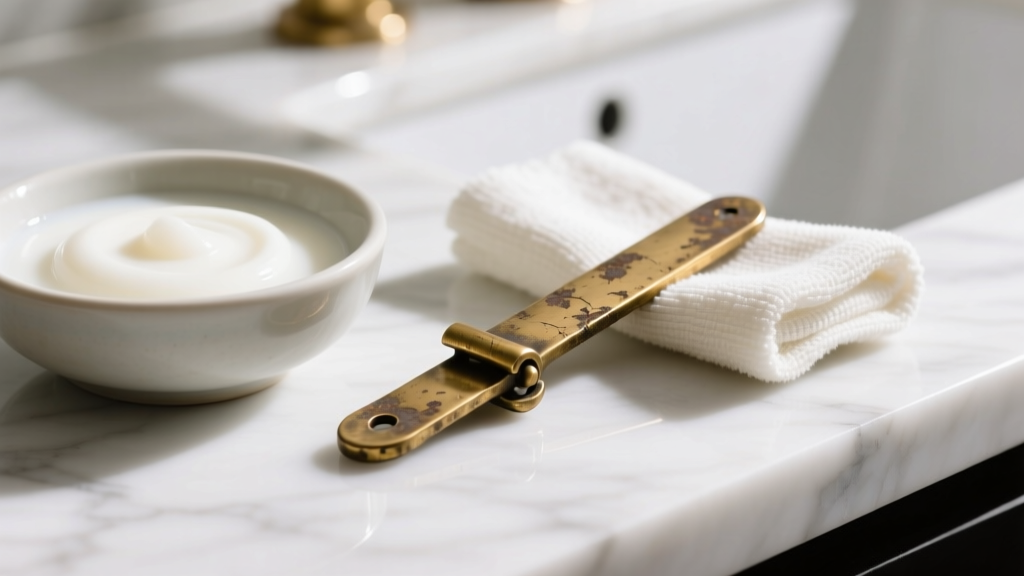
When to Seek Professional Re-Plating
If the brass is visibly exposed on the high-friction areas of the 'C' pendant, cleaning will not restore the color. You need an electroplating service. A professional jeweler can apply a 2.0-micron flash of 18k gold or rhodium. Expect to pay between $45 and $85 for this service. Ensure the jeweler strips the old epoxy enamel or masks it carefully, as the electroplating acid baths will melt the resin accents.
Fixing Broken Clasps and Tangled Chains
Coach typically utilizes delicate 1.2mm to 1.5mm cable chains paired with standard cast brass lobster clasps. These components are the most frequent points of mechanical failure.
Untangling Micro-Knots
The fine gauge of the cable chain makes it highly prone to tangling, especially when stored loosely. Do not pull the knot tight. Lay the necklace on a flat, hard surface. Apply a generous dusting of talc-free baby powder or cornstarch to the knot to reduce friction. Using two 0.5mm sewing needles, gently work the center of the knot outward. The powder acts as a dry lubricant, allowing the 20-gauge wire links to slide past one another without kinking.
Clasp Diagnostics and Repair
If your lobster clasp is stiff or fails to snap shut, the internal spring mechanism has likely corroded or lost tension. Do not attempt to oil the clasp. Standard jewelry oils will attract dust and create an abrasive paste that permanently jams the mechanism. Instead, apply a microscopic amount of dry graphite powder (from a mechanical pencil) into the clasp lever and click it open and closed a dozen times. If the spring is completely dead, the clasp must be replaced. Coach chains usually attach to the clasp via a 3mm or 4mm jump ring. A jeweler can replace the clasp and solder the jump ring shut for under $30, preventing future loss.
Securing Loose Pavé Crystals and Missing Stones
Many iterations of the Coach C necklace feature micro-pavé cubic zirconia or Swarovski crystals set into the brass framework. Unlike fine jewelry that uses prong or bezel settings, fashion jewelry typically relies on bead settings or adhesive backing to secure these tiny stones. Over time, exposure to hand sanitizers, lotions, and temperature fluctuations degrades the adhesive or bends the micro-beads, leading to stone loss.
If you notice a loose crystal catching on your clothing, stop wearing the necklace immediately. Do not attempt to glue it back in place with cyanoacrylate (Super Glue). Super glue emits fumes that will permanently cloud the surrounding crystals and create a white, crusty residue on the gold plating that is nearly impossible to remove without stripping the metal. Instead, use a UV-curing jewelry adhesive like G-S Hypo Cement. Apply a microscopic droplet using a 0.1mm needle tip, seat the stone, and let it cure for 24 hours. If a stone is entirely missing, a professional jeweler can source a matching 1.5mm round-cut cubic zirconia and re-set it for approximately $15 to $25 per stone.
Authentication: Spotting a Fake Coach C Pendant
The secondary market is flooded with counterfeit Coach jewelry. Because the designs are relatively simple, they are easy to replicate poorly. Use this troubleshooting framework to authenticate your piece.
| Feature | Authentic Coach C Necklace | Counterfeit Red Flags |
|---|---|---|
| Weight & Feel | 8 to 12 grams; solid brass base feels dense and cool to the touch. | Noticeably lighter; often hollow-cast or made from cheap, low-density zinc alloys. |
| Enamel Fill | Flush with the metal borders; clean, sharp lines with no bleeding. | Enamel spills over the metal edges; bubbled texture; uneven surface height. |
| Hallmark Stamp | 'COACH' stamped in a crisp, specific sans-serif font with deep, clean engraving. | Shallow laser etching; incorrect font weight; letters 'C' and 'O' often merge. |
| Chain Hardware | Jump rings are seamlessly soldered or tightly closed; lobster clasp bears a tiny 'C' or '925' (if silver). | Jump rings have visible gaps; clasp feels flimsy and lacks secondary branding. |
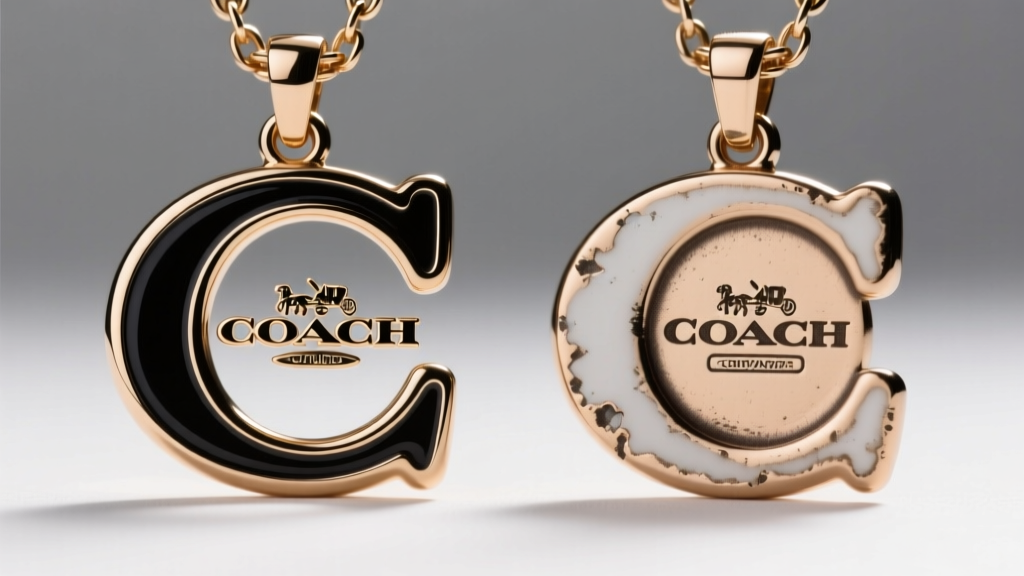
When purchasing from third-party sellers, always request a macro photograph of the back hallmark stamp and the jump ring connecting the pendant to the chain. According to Coach's official guidelines, authentic pieces maintain strict quality control on typography and metal finishing. If the 'C' logo lacks perfect bilateral symmetry or the gold plating has an overly yellow, almost orange tint (a common flaw in cheap acid-gold plating), walk away from the purchase.
Preventative Storage for Longevity
Pro-Tip: Never store your Coach jewelry in the original cardboard presentation box for long-term storage. Cardboard off-gasses sulfur compounds that accelerate brass oxidation. Use a sealed anti-tarnish bag instead.
Troubleshooting is reactive; proper storage is proactive. The epoxy enamel and micro-plating on your Coach C necklace degrade fastest when exposed to ambient humidity and UV light. Store the necklace in a sealed, anti-tarnish ziplock bag with a 3M anti-tarnish strip. By controlling the micro-climate around your jewelry, you can extend the life of the factory plating by three to five years, keeping your iconic pendant looking pristine.


