How to Style, Layer, and Care for a Turquoise Bar Necklace
Master the art of styling a turquoise bar necklace. Learn step-by-step layering techniques, authentication tips, and essential care protocols.

The Anatomy of a Turquoise Bar Necklace
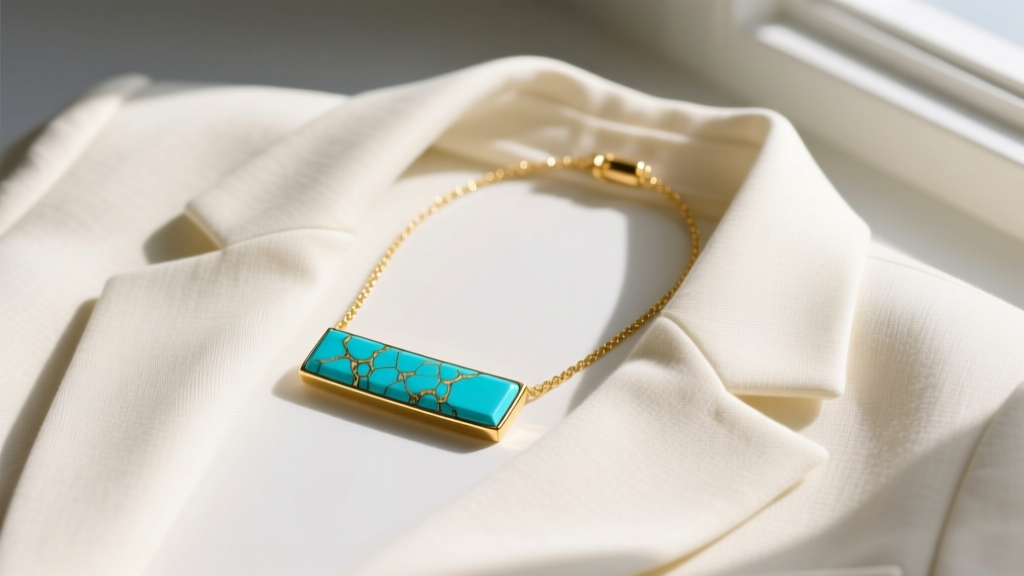
The turquoise bar necklace bridges the gap between organic bohemian aesthetics and sharp, contemporary minimalism. Unlike traditional teardrop or oval cabochons, the horizontal bar cut (typically ranging from 25mm to 40mm in width) provides a modern geometric silhouette that anchors the decolletage. However, styling this piece requires an understanding of both lapidary science and proportional layering. Because turquoise is a porous, relatively soft phosphate mineral (rating 5 to 6 on the Mohs hardness scale), it demands specific handling and pairing strategies to maintain its structural integrity and visual impact.
Step 1: Authenticate Your Stone Before Styling
Before building an outfit around your necklace, verify the stone's origin and treatment. The market is saturated with dyed howlite, magnesite, and epoxy-heavy composites. According to the Gemological Institute of America (GIA), genuine turquoise is frequently stabilized with clear epoxy to improve durability, but outright dyeing must be disclosed. Understanding your specific stone dictates how you wear and care for it.
| Turquoise Variety | Matrix Pattern | Common Treatments | Estimated Stone Value |
|---|---|---|---|
| Sleeping Beauty (AZ) | Minimal to none; solid sky blue | Stabilized (Zachery process) | $2 - $8 per carat |
| Kingman (AZ) | Prominent black or brown webbing | Stabilized epoxy resin | $1 - $5 per carat |
| Persian (Neyshabur) | None; intense robin's egg blue | Natural (untreated) or lightly waxed | $10 - $50+ per carat |
| Dyed Howlite | Gray/white veins mimicking matrix | Heavily dyed and resin-coated | $0.10 - $0.50 per carat |
The Acoustic Test
Gently tap the bar pendant against your tooth or a piece of glass. Natural or properly stabilized turquoise produces a dense, muted 'clink.' Dyed howlite or plastic composites will emit a higher-pitched, hollow sound. If your bar necklace is highly porous natural turquoise, it will absorb skin oils and change color over time—a phenomenon known as 'patina' that is prized by collectors but requires deliberate styling choices.
Step 2: Select the Optimal Metal and Chain Gauge
The metal housing your turquoise bar drastically alters its formality and longevity. Sterling silver (925) is the traditional pairing, offering a cool contrast that enhances the blue and green hues of the stone. However, silver tarnishes, and the sulfur compounds used in some silver polishes can permanently discolor porous turquoise.
For a maintenance-free alternative, opt for 14k or 18k yellow gold. The warmth of yellow gold creates a striking, high-contrast backdrop for Kingman turquoise with heavy brown matrix. When selecting the chain, avoid ultra-fine cables (under 1.0mm) for bar pendants wider than 30mm. The weight distribution of a horizontal bar puts lateral stress on the bail. A 1.2mm to 1.5mm box chain or rope chain provides the necessary tensile strength while maintaining a refined profile.
Step 3: Execute the 3-Tier Layering Protocol
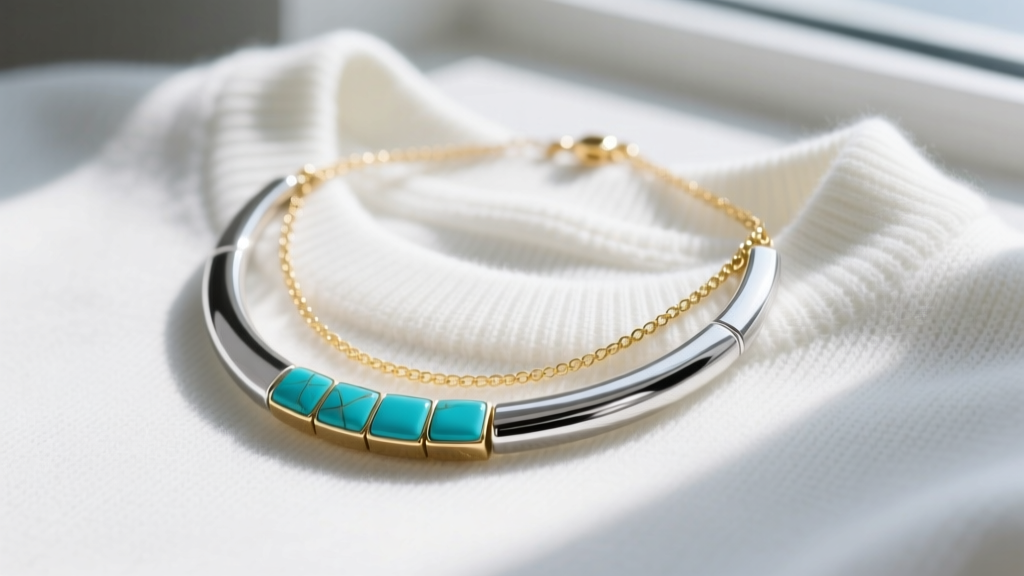
A turquoise bar necklace excels as the 'anchor' piece in a layered stack. To prevent visual clutter and tangling, follow this precise 3-tier spacing formula:
- The Base Layer (14" - 16"): Start with a delicate, lightweight chain. A 14-inch 14k gold pearl station necklace or a 16-inch sterling silver herringbone chain sits at the collarbone, providing a subtle metallic or iridescent foundation without competing with the turquoise.
- The Anchor Layer (18" - 20"): This is where your turquoise bar necklace sits. An 18-inch length places the horizontal bar precisely at the center of the upper chest, acting as the visual fulcrum of the stack. Ensure the bail allows the bar to lay completely flat against the skin.
- The Extension Layer (24" - 28"): Finish with a longer, textural piece. A 24-inch oxidized silver lariat or a 28-inch matte gold bead chain draws the eye downward, elongating the torso and framing the central turquoise bar.
Step 4: Map Your Neckline Geometry
The horizontal lines of a bar necklace interact differently with various garment cuts. Use this framework to match your jewelry to your wardrobe:
- The Crew Neck: A classic cotton crew neck provides a blank canvas. Wear the turquoise bar at 18 inches so it rests exactly one inch below the fabric's ribbed collar. This creates a clean, uninterrupted horizontal line.
- The V-Neck or Wrap Dress: Avoid wearing a short bar necklace inside a deep V, as the competing angles create visual tension. Instead, drop the bar necklace to 22 inches so it floats in the negative space of the V, or layer it above the V-line with a 16-inch choker.
- The Button-Down Shirt: Unbutton the top three buttons of a crisp white or chambray shirt. Layer a 16-inch gold chain with your 18-inch turquoise bar. The rigid geometry of the shirt collar perfectly complements the structured cut of the bar pendant.
Step 5: Implement Porous Stone Care Standards
Turquoise is highly susceptible to chemical damage. The American Gem Society explicitly warns against using ultrasonic cleaners, steamers, or harsh commercial jewelry dips on porous gems. The high-frequency vibrations can fracture internal matrices, while chemicals can strip stabilizing resins or alter the stone's color.
The Safe Cleaning Protocol
To clean your turquoise bar necklace after wear, follow these exact steps:
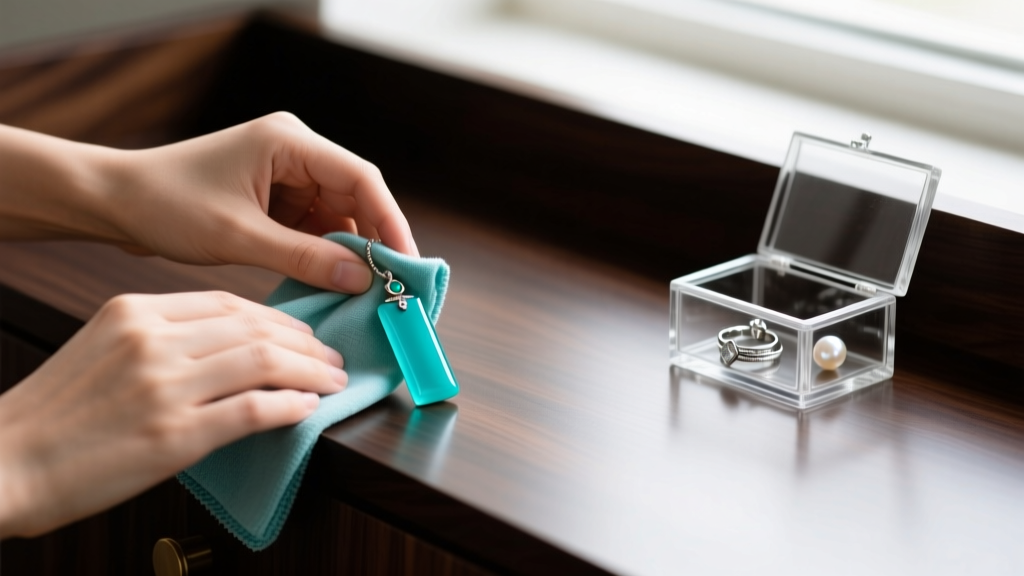
- Dry Wipe: Immediately after removing the necklace, wipe the turquoise bar with a dry, lint-free microfiber cloth to remove sebum, sweat, and cosmetic residue.
- Damp Polish (Monthly): If the stone loses its luster, slightly dampen a corner of the microfiber cloth with distilled water. Gently rub the surface of the turquoise. Do not soak the stone.
- Metal Cleaning: If the sterling silver setting tarnishes, apply a tiny amount of silver polish to a Q-tip and carefully swab only the metal, avoiding all contact with the turquoise. Wipe away residue immediately.
- Storage: Store the necklace in a soft anti-tarnish pouch. Keep it away from harder gemstones (like diamonds or sapphires) which can easily scratch the 5-6 Mohs surface of the turquoise bar.
Troubleshooting Common Turquoise Issues
Even with proper care, vintage or natural turquoise bars may present unique challenges. If your stone develops a greenish tint, it is likely reacting to acidic skin pH or prolonged exposure to copper from the setting. While the Federal Trade Commission (FTC) requires jewelers to disclose treatments, older estate pieces may have been treated with oils or waxes that degrade over time. If your bar necklace becomes excessively dull or chalky, consult a professional lapidary for a gentle re-polish and re-waxing, rather than attempting chemical restoration at home.
Final Thoughts on the Turquoise Bar
The turquoise bar necklace is far more than a fleeting trend; it is a versatile architectural piece that grounds both casual and formal ensembles. By authenticating your stone, calculating your layering proportions, and adhering to strict porous-mineral care standards, you ensure that your necklace remains a vibrant, structural focal point in your jewelry collection for decades to come.


