2026 Gift Guide: Turn a Necklace Coloring Page Into a Pendant
Transform a child's necklace coloring page into a custom enameled pendant. Our 2026 gift guide covers casting methods, metals, and pricing.

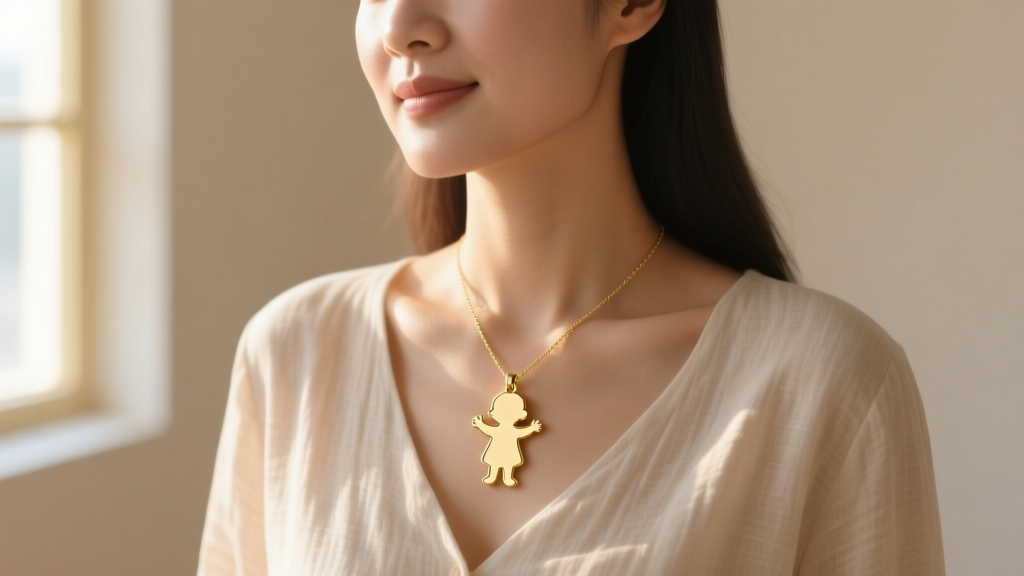
The Magic of Wearable Art: Why Custom Pendants Are Trending
Finding the perfect Mother’s Day or holiday gift often means looking beyond traditional retail jewelry. In 2026, the most coveted gifts are deeply personal, and a massive trend has emerged among parents and artisans: transforming a child's simple necklace coloring page into a breathtaking, wearable custom pendant. Children frequently engage with printable jewelry templates, coloring intricate mandalas, hearts, or abstract shapes meant to mimic necklaces. Instead of taping these paper creations to the fridge, savvy gift-givers are partnering with custom jewelers to cast these exact 2D drawings into 3D heirloom pieces.
This guide dives deep into the metallurgy, enameling techniques, and structural requirements needed to successfully translate a paper coloring page into a durable, high-end pendant. Whether you are a parent looking for a unique gift or a jewelry enthusiast exploring custom fabrication, understanding the technical nuances of this process is critical to avoiding costly manufacturing failures.
From Paper to Precious Metal: The Manufacturing Process
Translating a waxy crayon drawing or colored pencil sketch into a structurally sound metal pendant requires a precise multi-step fabrication process. Jewelers cannot simply pour metal over paper; they must interpret the drawing into a three-dimensional CAD model.
Step 1: Digitizing and Vectorizing the Art
The first step involves scanning the original necklace coloring page at a high resolution (minimum 600 DPI). A CAD technician then imports the image into software like Rhino 3D or MatrixGold. They trace the colored regions, converting them into distinct vector paths. This is where structural integrity begins: the technician must ensure that no isolated 'island' of metal is thinner than 0.8mm, as anything thinner will warp or burn out during the casting process.
Step 2: CAD Modeling and 3D Wax Printing
Once the vector lines are established, the technician extrudes the design into a 3D model. For a coloring page with multiple distinct colored zones, the CAD model must feature recessed channels (cloisons) to hold the enamel later. The model is then sent to a high-resolution DLP 3D printer using castable purple or blue wax resin. A 2.5mm wax sprue is attached to the design to ensure proper molten metal flow during the next phase.
Step 3: Lost-Wax Casting and Finishing
The wax model is encased in a plaster-like investment material inside a steel flask. The flask is heated in a kiln to around 1350°F to melt and vaporize the wax, leaving a perfect negative cavity. Molten metal—typically 14k gold or sterling silver—is then centrifugally or vacuum-cast into the flask. Once cooled and quenched, the raw casting is cut from the sprue, filed, and polished to prepare for enameling.
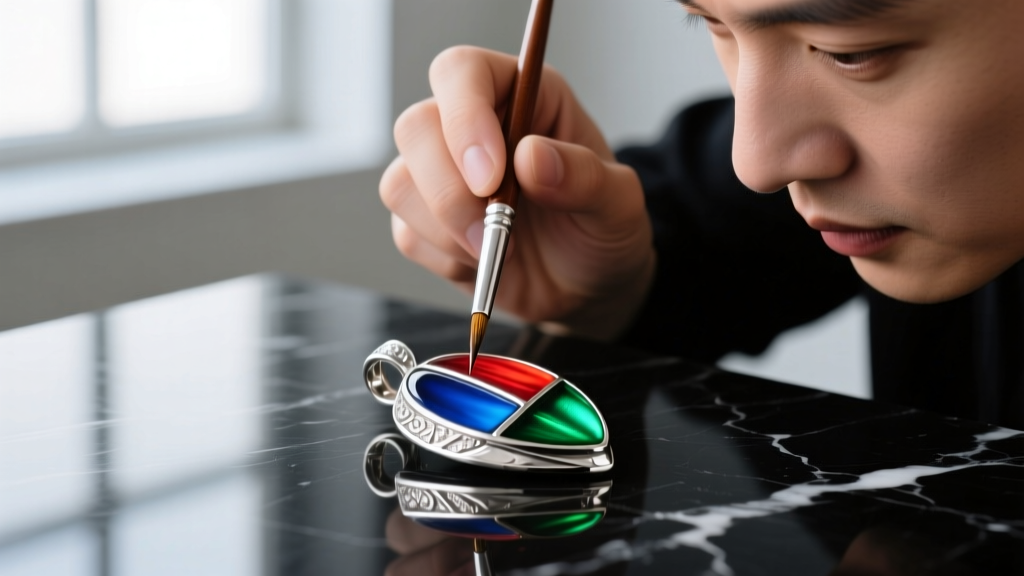
Material Selection Guide for Custom Pendants
Choosing the right metal and enamel type is the most crucial decision when adapting a necklace coloring page. The complexity of the child's drawing will dictate which materials are viable. According to the Gemological Institute of America (GIA), the thermal expansion rates of the metal and the enamel must be perfectly matched to prevent cracking.
| Metal & Enamel Combo | Best For | Durability | Estimated Price Range |
|---|---|---|---|
| Sterling Silver + Cold Enamel (Epoxy) | Intricate drawings with thin lines and many colors | Moderate (Scratches over time, UV sensitive) | $120 - $250 |
| 14k Yellow Gold + Vitreous Enamel | Simple, bold shapes with 2-3 distinct color blocks | Exceptional (Glass-hard, UV stable, heirloom quality) | $350 - $650 |
| 14k Rose Gold + Guilloché (Transparent) | Geometric coloring pages with repeating patterns | High (Requires engine-turning on the metal base first) | $500 - $900 |
For most children's coloring pages, Sterling Silver with Cold Enamel is the most practical choice. Cold enamel is essentially a two-part epoxy resin that cures at room temperature. It allows jewelers to use fine-tipped brushes to fill microscopic recesses that would be impossible with traditional vitreous (glass) enamel, which requires firing in a kiln at 1400°F and tends to bubble in tiny channels.
Sizing and Chain Pairing for Children's Art
A common mistake in custom jewelry gifting is mismatching the pendant weight with an inadequate chain. A pendant derived from a standard 8.5x11 inch necklace coloring page might be scaled down to a 30mm diameter. If cast in solid 14k gold, this piece can easily weigh 12 to 15 grams.
- For Pendants Under 5g: A 1.0mm to 1.2mm sterling silver or 14k gold cable chain is sufficient. Ensure it features a sturdy lobster clasp rather than a fragile spring-ring.
- For Pendants 5g to 12g: Upgrade to a 1.5mm box chain or a 2.0mm rolo chain. The soldered links on a rolo chain provide superior shear strength against the pendulum motion of a heavy custom piece.
- Bail Proportions: The hidden loop (bail) connecting the pendant to the chain must have an internal diameter at least 0.5mm larger than the chain's thickness to prevent friction wear.
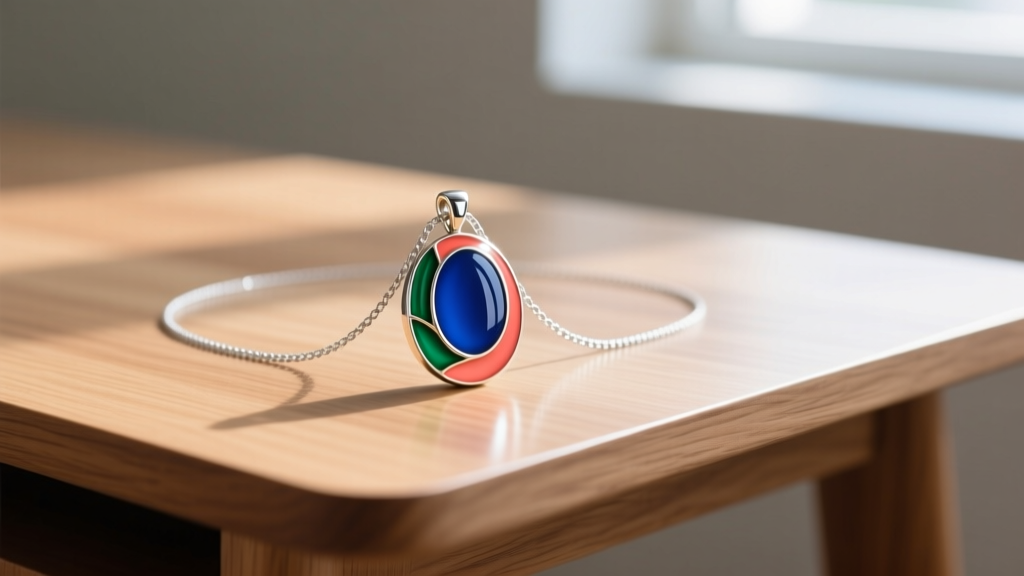
Troubleshooting Common Custom Jewelry Failures
When commissioning a piece based on a child's art, be aware of specific structural failure modes that can ruin the final product. Understanding these will help you communicate effectively with your jeweler and ensure the piece lasts a lifetime.
The Enamel Cracking Phenomenon
If you opt for vitreous enamel over metal, the metal base must be at least 18-gauge (1.0mm thick). If the jeweler casts the pendant too thin to save on gold weight, the metal will flex slightly when worn. Because glass enamel has zero flexibility, this micro-flexing will cause the enamel to crack or pop out of the recessed channels. Always specify a minimum 1.0mm base thickness for vitreous work.
Counter-Enameling for Warping Prevention
When glass enamel is applied to the front of a metal pendant and fired, it creates immense surface tension as it cools and contracts. If the back of the pendant is left bare, this tension will pull the metal, causing the entire pendant to warp into a bowl shape. Reputable jewelers will apply a 'counter-enamel' (a layer of flux or opaque enamel) to the back of the piece to balance the tension, a technique heavily documented by suppliers like Rio Grande.
The 'Island' Detachment Issue
Children's drawings often feature floating elements—like a star inside a circle, with empty space between them. In metal fabrication, this 'island' must be physically connected to the outer border, or it will simply fall out. A skilled CAD designer will integrate invisible prongs or a transparent resin bridge to hold these interior elements in place without disrupting the original look of the coloring page.
Where to Order and How to Present the Gift
To execute this project, seek out independent bench jewelers or specialized custom casting houses rather than mall-based retail stores. Look for artisans who explicitly advertise 'lost-wax casting' and 'cloisonné or champlevé enameling' in their portfolios. The turnaround time for a fully custom CAD-to-cast enameled pendant is typically 4 to 6 weeks, so plan your holiday or anniversary shopping well in advance.
For the ultimate presentation, frame the original necklace coloring page in a high-quality shadowbox. Drape the finished custom pendant over the exact spot on the paper where the child originally drew it, securing the chain with archival-safe mounting tape. This bridges the gap between innocent childhood creativity and high-end luxury jewelry, creating a 2026 gifting experience that guarantees an emotional, unforgettable reaction.


