How to Make a Necklace Into a Bracelet: A Conversion Buying Guide
Learn how to make a necklace into a bracelet with our buying guide. Discover the best chain types, clasps, and wrapping techniques for convertible jewelry.

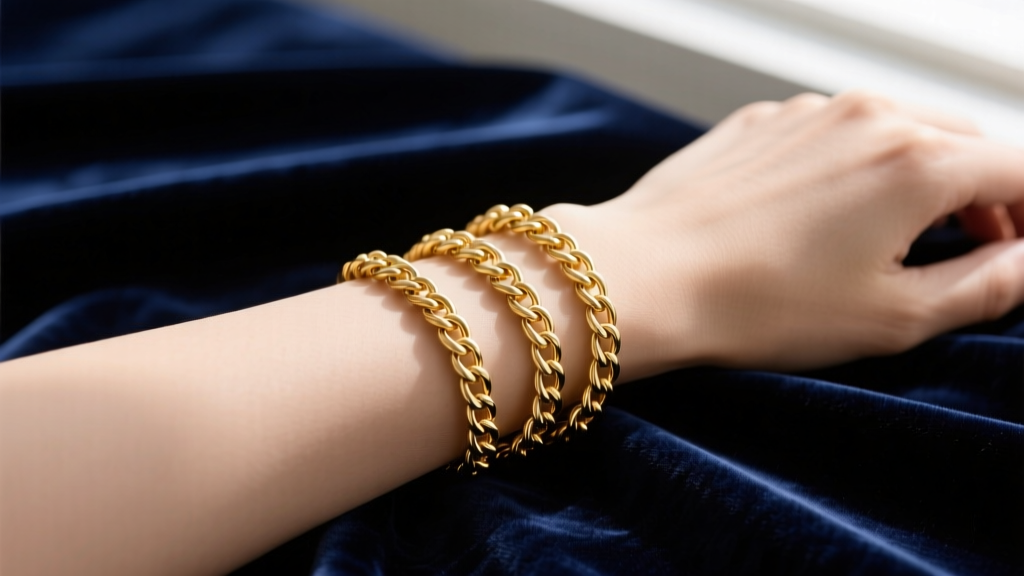
The Math of Wrapping: Sizing Your Convertible Necklace
The appeal of modular, multi-functional jewelry has surged, with consumers increasingly seeking pieces that offer maximum versatility. Learning how to make a necklace into a bracelet is not just a styling trick; it is a strategic approach to buying jewelry. However, you cannot simply wrap any chain around your wrist and expect a comfortable, durable fit. The secret lies in the mathematics of circumference and drape.
A standard women's bracelet measures between 6.5 and 7.5 inches. If you attempt to wrap a standard 16-inch choker necklace twice, it will be far too tight, restricting blood flow and putting immense stress on the clasp. Conversely, a 36-inch opera necklace wrapped four times might feel bulky and slide around if the links are too heavy.
The Conversion Sizing Formula
When shopping for a necklace with the explicit intention of wearing it as a multi-wrap bracelet, use this precise formula to determine the ideal length:
- Measure your wrist: Use a soft measuring tape. (e.g., 6.5 inches)
- Add drape allowance: Add 0.5 inches for comfort and movement. (Total: 7 inches)
- Multiply by desired wraps: For a 3-wrap bracelet, multiply by 3. (Total: 21 inches)
- Add hardware overlap: Add 1 to 1.5 inches to account for the clasp, jump rings, and any pendant bail. (Final Target: 22.5 inches)
Therefore, when browsing, look for matinee-length necklaces (20 to 24 inches) for a comfortable triple-wrap, or rope-length necklaces (30 to 36 inches) for a stacked quadruple-wrap effect.
Chain Profiles That Survive the Wrap
Not all chains are engineered for torsional stress. When you wrap a necklace around your wrist, the chain bends laterally and twists with every movement of your hand. According to Rio Grande's chain selection guide, the articulation plane of a chain dictates its flexibility. Buying the wrong profile will result in permanent kinking and structural failure within weeks.
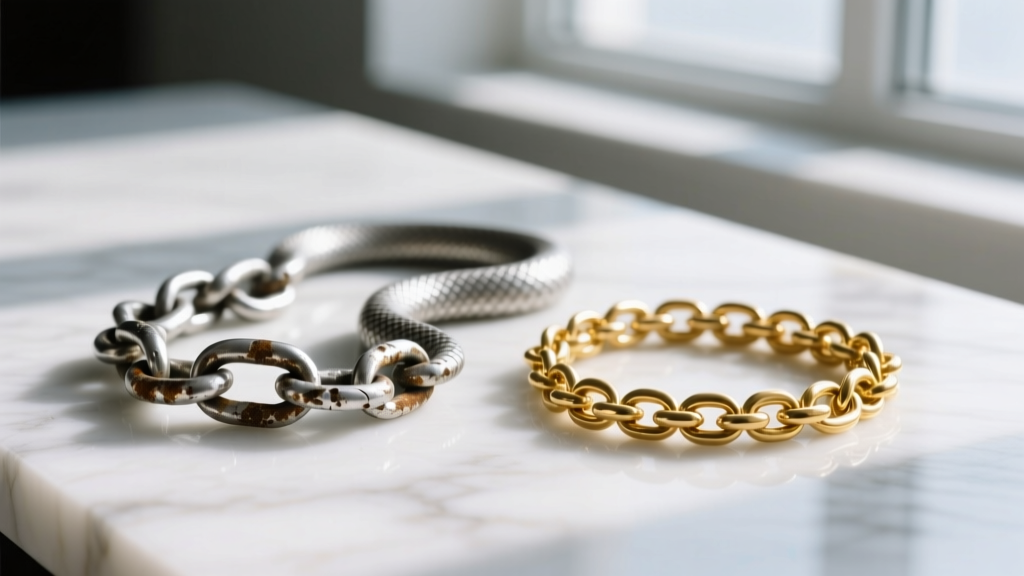
Chains to Buy for Wrapping
Cable, Rolo, and Figaro Chains: These are constructed from individual, interlocking oval or round links. Because each link moves independently on multiple axes, they offer 360-degree rotation. An 18-gauge (1.02mm) or 16-gauge (1.29mm) rolo chain is the gold standard for multi-wrap bracelets, providing enough weight to drape elegantly without tangling.
Curb Chains: These lay flat against the skin, making them highly comfortable for wrapping. However, ensure the links are soldered; unsoldered flat links can pull apart when subjected to the lateral torque of wrist movement.
Chains to Avoid
Snake and Box Chains: Never buy these for conversion. They are made of tightly interlocking metal bands or square plates that only bend in one direction (their natural articulation plane). Bending them laterally around a wrist will permanently kink the metal, ruining the necklace.
Clasp Mechanics: Tension and Security
When a necklace is worn traditionally, gravity pulls the chain downward, placing minimal, consistent tension on the clasp. When wrapped three times around a wrist, the clasp becomes the anchor point for multiple loops. If one loop catches on a sleeve or a bag strap, the clasp must bear the sudden, concentrated force of the pull.
Based on insights from the Fire Mountain Gems clasp guide, standard 5mm to 8mm spring ring clasps are entirely inadequate for convertible jewelry. The internal tension springs are weak and prone to snapping under lateral stress. When evaluating a necklace for bracelet conversion, look for the following hardware:
- Heavy-Duty Lobster Clasps: A 12mm to 15mm lobster clasp features a solid internal pin and a robust spring mechanism that resists pulling forces.
- Magnetic Tube Clasps: High-grade neodymium magnetic clasps are excellent for multi-wrap designs, allowing you to secure the bracelet easily without fumbling with tiny levers. Ensure the magnets are encased in stainless steel or brass to prevent corrosion from sweat.
- Toggle Clasps: While aesthetically pleasing, toggles can slip through their corresponding rings if the chain is pulled taut across the wrist. Only buy toggle clasps if the ring is significantly wider than the bar, and the chain has enough drape to prevent constant tension.
Pendant Placement and Bail Sizing
A frequently overlooked aspect of learning how to make a necklace into a bracelet is pendant positioning. If you wrap a 24-inch necklace with a fixed center pendant three times around your wrist, the pendant will likely end up resting awkwardly on the side of your hand or digging into your pulse point.
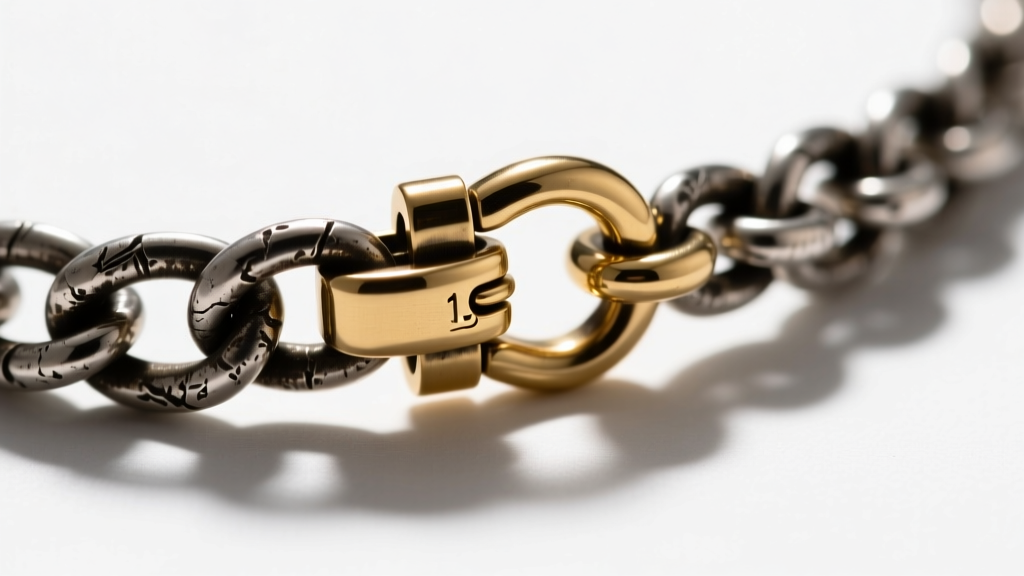
The Sliding Bail Solution: When shopping, look for necklaces where the pendant features an oversized bail or a specialized sliding mechanism (often seen in station necklaces). This allows you to push the pendant off to the side, letting it dangle gracefully near the clasp as a charm, rather than sitting rigidly in the middle of your wrist wraps.
Alternative - Off-Center Pendants: Some designers intentionally place pendants at the 1/3 or 1/4 mark of the chain. These asymmetrical designs are highly prized for wrapping, as the pendant naturally falls near the wrist bone, mimicking the look of a traditional charm bracelet.
Material Grades for High-Friction Wear
Bracelets endure significantly more abuse than necklaces. They bang against keyboards, scrape against desks, and are constantly exposed to sweat, lotions, and friction. The metal grade you choose is critical for longevity.
Avoid standard "gold-plated" or "flash-plated" necklaces for conversion. Flash plating is typically less than 0.1 microns thick and will wear off rapidly due to the friction of the chain rubbing against itself and your skin. Instead, look for these specific material grades:
- 14k or 18k Gold Vermeil: By definition, vermeil must have a sterling silver base and a gold layer of at least 2.5 microns. It offers excellent durability for daily wrapping.
- 14k Gold Filled: This involves mechanically bonding a thick layer of gold (at least 5% of the total weight) to a brass core using heat and pressure. It is virtually indistinguishable from solid gold in terms of wear resistance and is the best mid-tier investment for convertible jewelry.
- 316L Surgical Stainless Steel: For budget-friendly options, 316L steel is highly resistant to tarnish and scratching. However, as noted in GIA's research on jewelry metal allergies, ensure the steel is certified nickel-free if you have sensitive skin, as the prolonged, tight contact of a bracelet can trigger contact dermatitis.
Durability Comparison Chart: Chain Types for Wrapping
Use this quick-reference table when evaluating necklace listings online to determine if the chain style will survive the conversion to a multi-wrap bracelet.
| Chain Type | Kink Resistance | Friction Durability | Best Wrap Count | Verdict for Conversion |
|---|---|---|---|---|
| Rolo / Cable | Excellent | High | 2 to 4 wraps | Highly Recommended |
| Figaro / Curb | Very Good | High | 2 to 3 wraps | Recommended (Soldered only) |
| Wheat / Spiga | Good | Medium | 2 wraps | Use with caution (can trap hair) |
| Box Chain | Poor | Low | N/A | Avoid (Will kink permanently) |
| Snake Chain | Very Poor | Very Low | N/A | Strictly Avoid |
Managing Excess Length with Conversion Findings
If you already own a 36-inch rope necklace and want to wear it as a double-wrap bracelet, you will have excess chain. Do not cut it. Instead, purchase silicone O-rings or ribbon crimp ends from a jewelry supply store. Gather the excess chain loops, slide them through a large silicone O-ring, and let the remainder hang as a deliberate, layered tassel. This preserves the original integrity of the necklace while allowing you to customize the wrap count on the fly, ensuring your convertible jewelry remains as versatile as the day you bought it.


