How to Craft and String an Authentic Magatama Necklace
Learn how to craft, string, and style a custom magatama necklace. Our step-by-step guide covers jade sourcing, cord selection, and knotting.

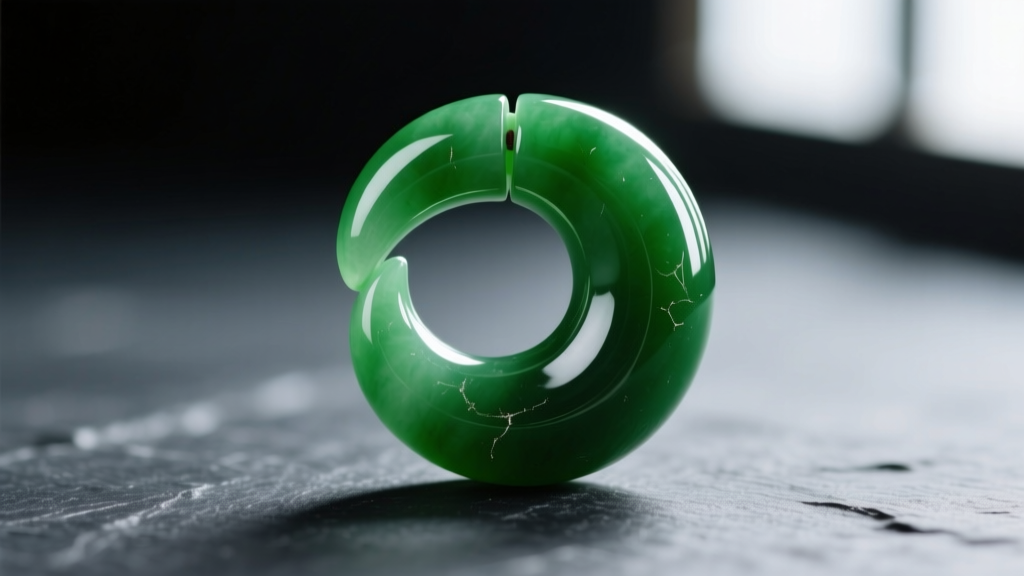
The Anatomy and Appeal of the Magatama
The magatama is one of the most historically significant jewelry motifs in East Asia, originating in Japan during the Jomon period (circa 14,000–300 BCE). Characterized by its distinctive curved, comma-like shape, the magatama was historically crafted from jade, jasper, or glass and worn as a symbol of status and spiritual protection. Today, the magatama necklace remains a powerful statement piece, blending ancient heritage with modern minimalist aesthetics. However, crafting a durable and authentic magatama necklace requires specialized knowledge of stone drilling techniques, material hardness, and tension-based stringing methods.
Unlike standard round beads, a magatama features a bulbous "head" and a tapered "tail." The stringing hole is almost exclusively drilled through the head. Because authentic stone magatama—particularly nephrite jade and serpentine—are often hand-carved, their drill holes can present unique challenges for jewelry makers. Understanding these nuances is the first step in creating a heirloom-quality piece that will withstand daily wear.
Sourcing Authentic Magatama: Materials and Drill Holes
When sourcing a magatama bead for your necklace, you will primarily encounter three materials: nephrite jade, serpentine (often sold as "new jade"), and kiln-cast glass. According to the Gemological Institute of America (GIA), nephrite jade is a highly durable, interlocking fibrous mineral with a Mohs hardness of 6.0 to 6.5, making it ideal for everyday pendants. Serpentine is softer (Mohs 2.5–5.5) and more prone to scratching, while glass offers high clarity but is susceptible to shattering upon impact.
The Hourglass Drill Hole Challenge
High-quality, hand-carved stone magatama beads are typically drilled using a bicone or "hourglass" technique. Artisans drill from both sides of the bead's head toward the center to prevent the stone from "blowing out" or chipping when the drill bit exits. This results in a hole that is wider at the edges (often 2.5mm) and narrower in the center (sometimes as tight as 1.2mm). If you attempt to force a thick, stiff cord through this bottleneck, the friction will fray and eventually snap your stringing material. Always measure the narrowest point of the drill hole using digital calipers before selecting your cord.
Selecting Your Stringing Medium
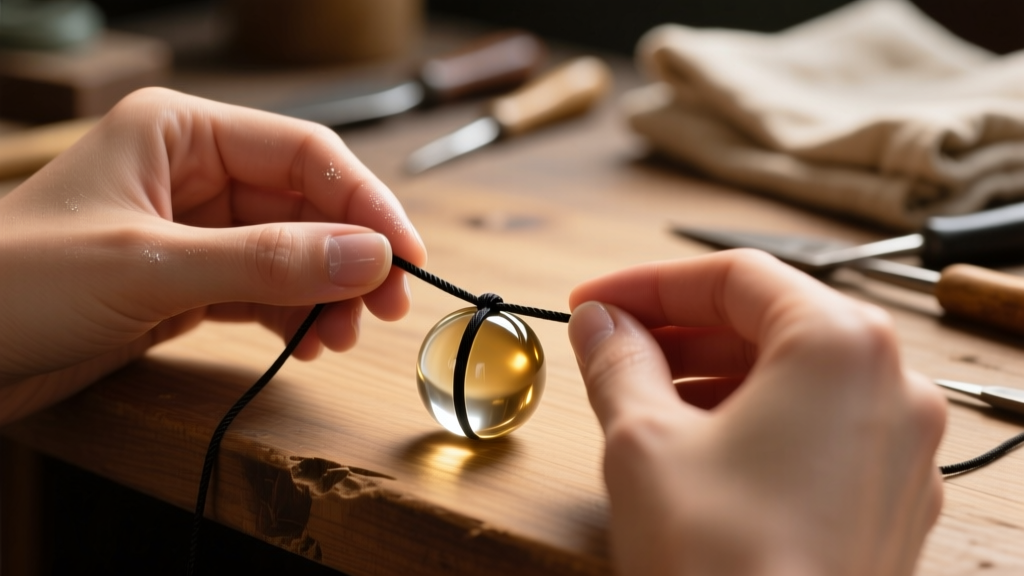
Choosing the right stringing material is critical for the drape, durability, and security of your magatama necklace. The heavy, asymmetrical weight of a stone magatama (a 30mm nephrite bead can weigh upwards of 15 grams) requires a cord with high tensile strength. Below is a comparison of the most effective stringing materials for this specific pendant style.
| Material | Thickness Range | Tensile Strength | Best For | Drawbacks |
|---|---|---|---|---|
| Braided Nylon (e.g., C-Lon) | 0.8mm - 1.2mm | Very High | Heavy jade magatama; sliding knot closures | Can stretch slightly over time under heavy loads |
| Chinese Knotting Cord | 1.0mm - 2.0mm | High | Traditional aesthetics; macrame accents | Too thick for narrow hourglass drill holes |
| Coated Beading Wire (49-strand) | 0.018" - 0.024" | Extremely High | Securing heavy beads with crimp clasps | Stiff drape; cannot be used for sliding knots |
| S-Plon Silk Cord | 0.6mm - 1.0mm | Moderate | Lightweight glass magatama; traditional knotting | Degrades with exposure to water and skin oils |
For a versatile, modern magatama necklace that can be adjusted from a 16-inch choker to a 22-inch princess length, 1.0mm braided nylon cord is the industry standard. It is supple enough to navigate hourglass drill holes but strong enough to support the weight of solid nephrite.
Step-by-Step Guide: Stringing and Securing the Magatama
Creating an adjustable magatama necklace using a sliding macrame closure eliminates the need for metal clasps, which can detract from the organic, historical feel of the stone. Follow these precise steps to construct your necklace.
Step 1: Measure and Cut the Cord
Determine your maximum desired length. For a standard adjustable necklace that fits most necklines, a 22-inch maximum length is ideal. Cut two pieces of 1.0mm braided nylon cord: one measuring 28 inches (for the main necklace loop) and one measuring 12 inches (for the sliding knot mechanism). Use a thread burner or a lighter to slightly melt the tips of the cords to prevent fraying and create a stiff "needle" for easier threading.
Step 2: Thread the Magatama
Take the 28-inch main cord and fold it exactly in half. Thread the folded loop through the magatama's drill hole from the top of the head down toward the tail. Once the loop emerges from the bottom, pull the two loose ends of the cord through the loop and pull tight (a lark's head knot). This secures the magatama at the exact center of your cord without the need for glue or crimps, allowing the bead to hang naturally with its tail curving outward.
Step 3: Create the Sliding Square Knot Closure
Bring the two long ends of the main cord together, overlapping them by about four inches to form a complete circle. Take your 12-inch working cord and place it horizontally across the overlapping main cords. Perform a square knot (right over left, then left over right) tightly around the main cords. Repeat this process until you have created a knot barrel approximately 3/4 of an inch long. Burn the ends of the working cord flush against the knot barrel. The main cords should now slide smoothly through the barrel, allowing you to adjust the necklace length with a simple tug.

Styling and Layering Your Magatama Necklace
The asymmetric weight and organic curve of the magatama make it a striking focal point. In 2026, the prevailing trend in pendant styling leans toward "grounded layering"—pairing heavy, historical stones with delicate, modern metallic chains.
- The Solo Statement: Wear the magatama on a black or deep forest green nylon cord at a 20-inch length over a crisp, white crew-neck t-shirt or a neutral linen button-down. The high contrast highlights the stone's polish.
- Metallic Layering: Pair your adjustable magatama necklace with a 24-inch oxidized sterling silver paperclip chain. The rigid geometry of the silver links contrasts beautifully with the smooth, curved silhouette of the jade.
- Neckline Pairing: Magatama pendants look exceptionally elegant over V-necklines, as the curved tail of the bead mimics and elongates the V-shape. Avoid wearing large magatama (over 35mm) with high turtlenecks, as the visual weight can overwhelm the face.
Care and Maintenance of Stone Magatama
Proper care ensures your magatama retains its luster for decades. The Metropolitan Museum of Art notes that ancient jade artifacts survive millennia due to the stone's incredible chemical stability. However, modern treatments require specific care.
Never place treated jade or serpentine magatama in an ultrasonic jewelry cleaner. The high-frequency vibrations can fracture internal stress lines, and the heat can melt the polymer resins used in "Type B" or "Type C" jade treatments.
To clean your necklace, simply wipe the stone with a microfiber cloth dampened with warm water and a drop of mild, pH-neutral dish soap. Rinse the cord separately if it becomes soiled with skin oils, and allow it to air dry completely before storing. When not in wear, store your magatama necklace in a soft cotton pouch to prevent the stone from scratching softer jewelry pieces in your collection, or conversely, to protect softer stones like serpentine from being scratched by diamonds or sapphires.


