How to Craft a Durable Aventurine Bead Necklace: Step-by-Step
Learn how to design and string a durable aventurine bead necklace. Step-by-step guide on bead sizes, stringing materials, and knotting.

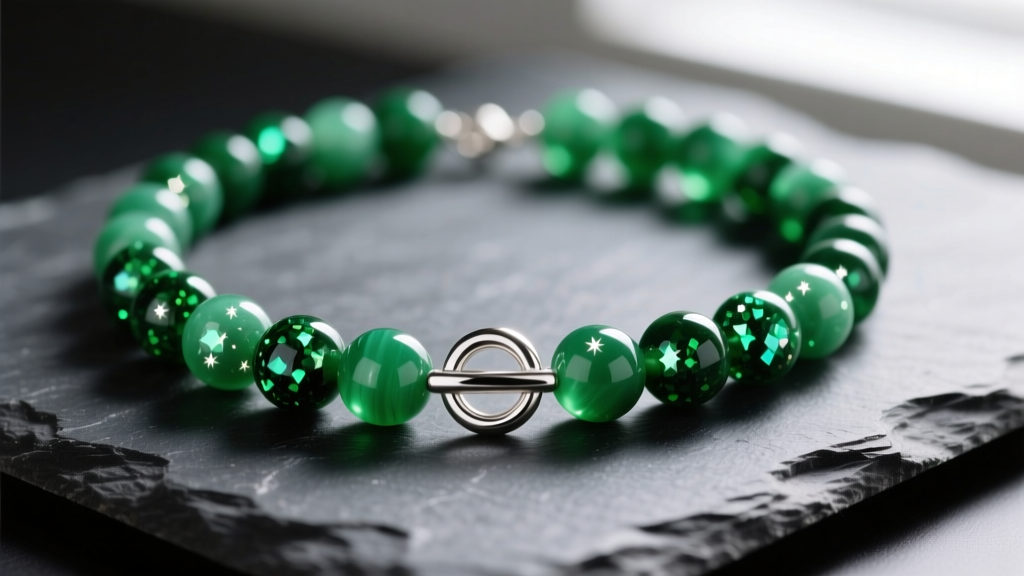
Crafting a high-quality aventurine bead necklace requires more than just sliding beautiful green stones onto a piece of elastic cord. Aventurine, a macrocrystalline quartz variety renowned for its shimmering fuchsite or hematite inclusions, presents unique structural challenges for jewelry makers. The very mica flakes that give the stone its signature "aventurescence" can create internal fault lines, making the beads susceptible to chipping or cracking around the drill holes if subjected to excessive tension or friction.
In this comprehensive guide, we will walk you through the exact lapidary specifications, stringing materials, and professional knotting techniques required to build an aventurine bead necklace that is as durable as it is beautiful. Whether you are working with 4mm rondelles or heavy 12mm round beads, mastering these steps will ensure your finished piece withstands daily wear without catastrophic failure.
Understanding Aventurine: Material Properties and Bead Selection
Before selecting your stringing material, you must understand the physical properties of your beads. According to mineralogical data from Mindat.org, aventurine ranks between 6.5 and 7 on the Mohs hardness scale. While this makes it relatively scratch-resistant, its toughness is compromised by the platy mica inclusions (usually fuchsite in green aventurine). These inclusions can cause the bead to fracture if the drill hole intersects a large mica plane.
Expert Insight: Always inspect the drill holes of your aventurine beads under a 10x jeweler's loupe. If you see heavy, flaky green layers intersecting the bore, those beads are high-risk for blowouts during the stringing process and should be placed near the clasp where tension is lowest, or discarded entirely.
Bead Size, Weight, and Drill Hole Specifications
The weight of your beads dictates the tensile strength required from your stringing material. Quartz is a dense mineral (specific gravity of 2.65). Below is a reference chart for standard round aventurine beads:
| Bead Diameter | Average Hole Size | Weight per 16" Strand | Recommended Stringing Core |
|---|---|---|---|
| 4mm Round | 0.6mm - 0.8mm | ~12 grams | Size #1 Silk or .012" Wire |
| 6mm Round | 0.7mm - 0.9mm | ~22 grams | Size #2 Silk or .015" Wire |
| 8mm Round | 0.8mm - 1.0mm | ~38 grams | Size F Nylon or .019" Wire |
| 10mm+ Round | 1.0mm - 1.2mm | ~60+ grams | Size G Nylon or .024" Wire |
Choosing the Right Stringing Material
The most common point of failure in handmade gemstone jewelry is the degradation of the stringing medium. For an aventurine bead necklace, you must avoid polyurethane stretch cords (like Elasticity or Opelon). Stretch cords stretch unevenly under the weight of quartz, causing the beads to gap and the cord to abrade against the sharp inner edges of the drill holes, eventually snapping.
Option 1: 49-Strand Micro-Braided Beading Wire
For a modern, highly durable necklace that requires no knotting between beads, use a 49-strand nylon-coated stainless steel beading wire (such as Soft Flex or Beadalon). The 49-strand construction provides superior drape compared to 7-strand or 19-strand wires, allowing the heavy aventurine beads to lay flat against the collarbone without kinking. For 8mm beads, a 0.019-inch diameter wire offers the perfect balance of tensile strength (approx. 20 lbs) and flexibility.
Option 2: High-Grade Nylon or Silk Thread
If you prefer the traditional, luxurious drape of knotted beads, use Size F or G bonded nylon thread (like Griffin or C-Lon). Silk is traditional but degrades faster when exposed to skin oils and UV light. Nylon offers superior abrasion resistance against the quartz drill holes.
Step-by-Step Stringing and Knotting Guide
If you have chosen the knotted nylon route to protect your beads from grinding against one another, follow this precise methodology. The GIA Gem Encyclopedia notes that proper spacing and knotting are essential for preserving the polish and structural integrity of quartz-family gemstones.
Step 1: The French Wire (Bullion) Anchor
Never tie nylon or silk directly to a metal clasp ring; the metal will eventually saw through the thread. Cut a 4mm piece of fine French wire (a coiled silver or gold-filled spring). Thread your nylon through the French wire, then through the clasp ring, and tie a secure overhand knot or use a bead tip to anchor it. The French wire acts as a flexible metal shield, protecting the thread from friction.
Step 2: Threading and Spacing
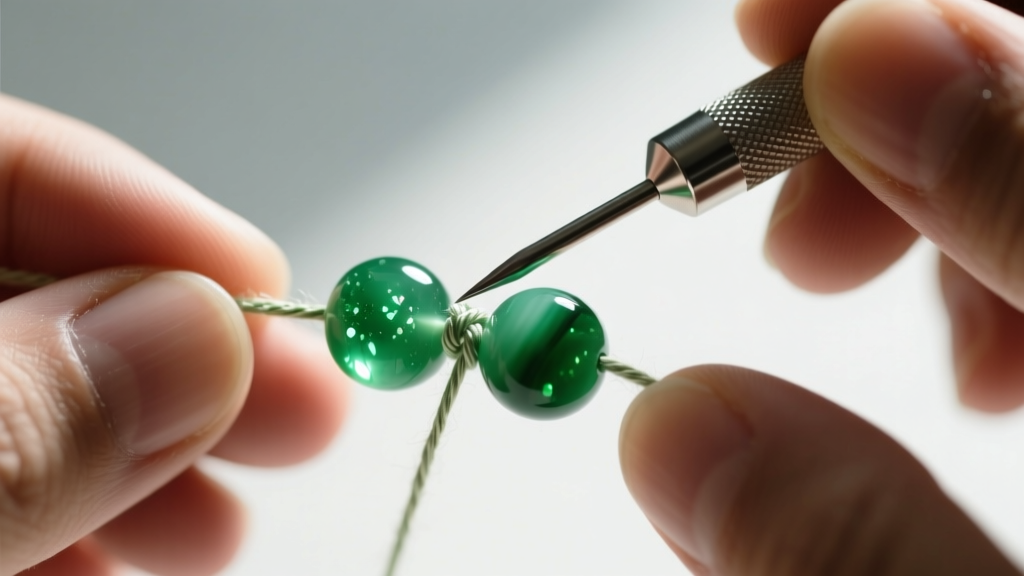
- String your first aventurine bead onto the nylon thread.
- Tie a loose overhand knot, but do not pull it tight yet.
- Insert the tip of a fine beading awl into the loop of the knot.
- Slide the awl down the thread, pushing the knot flush against the bead.
- Pull the working end of the thread firmly while keeping the awl in place, then slide the awl out at the last millisecond to seat the knot perfectly tight against the bead.
Step 3: Maintaining Consistent Tension
Repeat this process for every bead. Consistent tension is critical; if knots are too loose, the necklace will look sloppy and the beads will still click together. If too tight, the necklace will become rigid and prone to snapping when bent. A properly knotted aventurine bead necklace should drape like a fluid chain, with each knot acting as a tiny, flexible hinge.
Clasp Selection and Finishing Techniques
An 18-inch necklace made of 8mm aventurine beads can easily weigh over 45 grams. Standard spring-ring clasps or small lobster claws are insufficient for this weight and will fail or slip open under the pendulum effect of the heavy stone.
- Toggle Clasps: Ideal for heavy bead strands. Ensure the toggle bar is at least 15mm long and the ring has an internal diameter no larger than 12mm to prevent accidental unfastening.
- Magnetic Clasps: Excellent for accessibility, but you must use a neodymium core clasp rated for at least 3 lbs of pull force, and always secure it with a safety chain or a secondary figure-8 catch.
- Box Clasps with Safety Latches: The most secure option for high-value aventurine strands, integrating seamlessly into the bead pattern while providing dual-lock security.
When finishing a beading wire strand, always use a wire guardian (a horseshoe-shaped metal finding) at the clasp loop. Crimp the wire using a 2x2mm sterling silver crimp tube, and flatten it using a micro-crimping tool to fold it into a neat, rounded bead shape. This prevents the sharp edges of a crushed crimp from snagging on clothing or scratching the adjacent aventurine bead.
Care, Maintenance, and Troubleshooting
Even a perfectly crafted aventurine bead necklace requires specific maintenance to ensure longevity. Quartz is chemically stable, but the inclusions and the stringing materials are not.
Cleaning Protocols
Never clean an aventurine necklace in an ultrasonic cleaner. The high-frequency vibrations can cause the internal mica inclusions to separate or fracture, turning a vibrant, sparkling bead dull and cloudy. Instead, wipe the beads gently with a damp microfiber cloth and a drop of mild dish soap. Dry immediately with a soft towel to prevent moisture from seeping into the drill holes and degrading the nylon or silk thread.
Common Failure Modes and Solutions
- Bead Grinding: If you hear a clicking sound when the necklace moves, your knots are too loose or you opted not to knot between beads. The quartz is grinding away the bead next to it. Restringing with tighter knots or adding 2mm metallic spacer beads can solve this.
- Thread Rot: If the necklace feels stiff or you see fuzzy fibers near the clasp, the nylon or silk is degrading from skin acidity and cosmetics. Restring the necklace every 2 to 3 years if worn weekly.
- Wire Kinking: If using beading wire, never store the necklace in a tight coil or let it be crushed in a jewelry box. A kink in a 49-strand wire creates a permanent weak point that will eventually snap under the weight of the aventurine.
By respecting the unique mineralogy of aventurine and utilizing professional-grade stringing techniques, you transform a simple string of stones into an heirloom-quality piece of jewelry. A meticulously crafted aventurine bead necklace not only showcases the mesmerizing depth of the earth's natural mica-laced quartz but also stands the test of time through superior structural engineering.


