How to Craft and Style a Fine Jewelry Flower Lei Necklace
Learn how to craft a delicate flower lei necklace using jewelry-grade wire, enamel, and resin. Step-by-step guide to making and styling floral garlands.

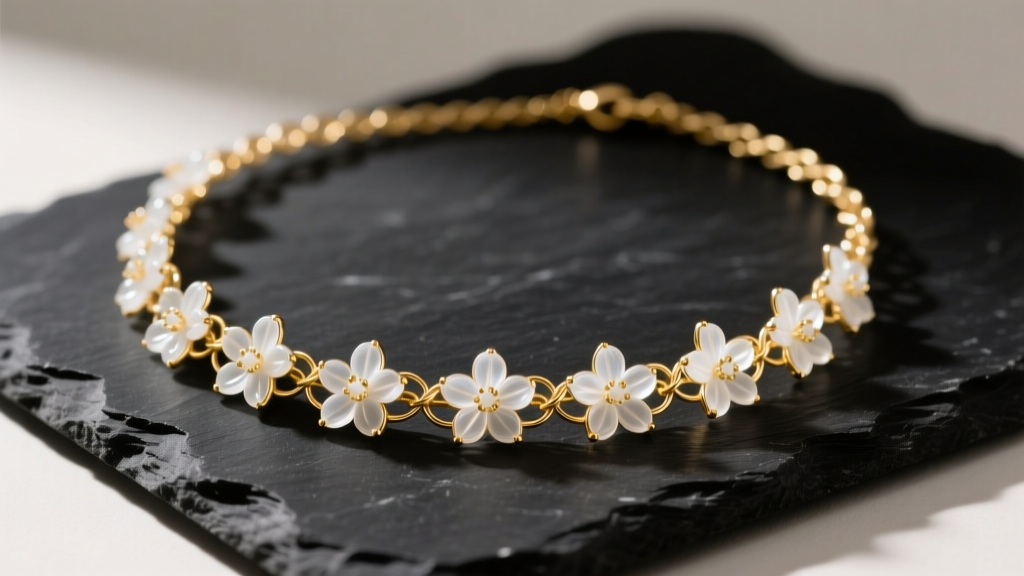
The Evolution of the Botanical Lei
The flower lei necklace has transcended its origins as a traditional Hawaiian garland and its 1990s iteration as a plastic bead staple. In 2026, the botanical lei has been reimagined as a sophisticated fine jewelry piece, blending cottagecore aesthetics with heirloom-quality metals and preservation techniques. Unlike a standard pendant necklace, a true lei-inspired piece features a continuous or semi-continuous strand of floral elements that drape elegantly across the collarbone. This guide will walk you through the exact jeweler's techniques required to craft a durable, high-end flower lei necklace using 14k gold-filled wire, UV resin, and preserved botanicals.
Sourcing Jeweler-Grade Materials
To ensure your flower lei necklace does not tarnish or degrade, you must bypass craft-store supplies and source professional jewelry components. According to the metal specialists at Rio Grande, 14/20 gold-filled wire is the industry standard for accessible fine jewelry. Unlike gold-plated wire, which has a microscopic surface layer of gold that will quickly wear off against the skin, gold-filled wire contains a substantial outer layer of 14k gold mechanically bonded to a brass core, comprising at least 1/20th of the total weight of the metal.
For the floral elements, you will need low-viscosity UV resin and 10mm bezel cups or shallow silicone molds. High-viscosity resins trap air bubbles and create a domed, magnifying effect that can distort the delicate petals of your botanicals. For the structural chain, 20-gauge wire is ideal for jump rings and clasps, while 24-gauge wire is necessary for weaving and securing the botanical links.
Material Durability Matrix
When designing a flower lei necklace, the choice of floral medium dictates the lifespan and care requirements of the piece. Below is a comparison of common materials used in botanical jewelry fabrication.
| Material Type | Durability | UV Resistance | Best Use Case |
|---|---|---|---|
| Resin-Encased Dried Flowers | High (if fully dehydrated) | Moderate (requires UV topcoat) | Front-facing lei focal links |
| Enamel Floral Spacers | Very High | Excellent | Continuous chain integration |
| Fresh Flowers in Oil | Low (degrades in months) | Poor | Not recommended for fine jewelry |
| Silk/Microfiber Botanicals | Moderate | Excellent | Textural, non-transparent links |
Step-by-Step Fabrication Process
Creating a cohesive flower lei necklace requires a systematic approach to botany, chemistry, and metallurgy. Follow these steps to construct a 16-inch botanical garland with a front-facing floral drop.
Phase 1: Botanical Preparation and Dehydration
The most common failure mode in resin jewelry is botanical rot. If a flower retains more than 5% moisture content, it will turn brown and decompose inside the resin seal. Select low-moisture flowers such as Gypsophila (baby's breath), Limonium (statice), or pressed fern fronds. Bury the botanicals in fine-grain silica gel for 72 hours in an airtight container. Once dehydrated, seal the petals with a micro-thin layer of clear acrylic spray to prevent the UV resin from bleeding into the plant tissue and causing a 'wet' translucent look.
Phase 2: Resin Casting the Lei Modules
Place your sealed botanicals into 10mm shallow bezel cups. Using a silicone-tipped applicator, drop low-viscosity UV resin over the flowers, starting from the center and letting it flow outward to push air bubbles to the edges. Cure under a 36W UV lamp for 60 seconds. Repeat for a second layer to create a smooth, glass-like dome. You will need approximately 15 to 20 of these resin floral modules to create the front drape of your flower lei necklace.
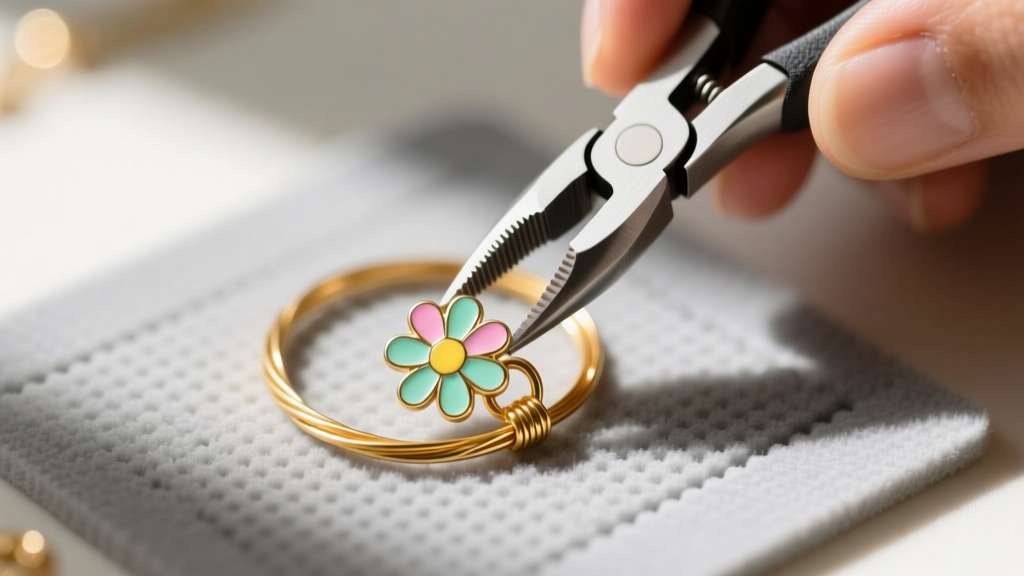
Phase 3: Wire-Wrapping and Assembly
Assembling the lei requires precision to maintain the flexible, garment-like drape of a traditional garland. The experts at Halstead Bead recommend using a 'chainmaille' linking technique rather than rigid stringing for botanical jewelry. Cut your 20-gauge gold-filled wire into uniform 1-inch segments and wrap them around a 4mm steel mandrel to create custom jump rings. Flush-cut the rings and use two pairs of chain-nose pliers to twist them open laterally—never pull them apart, as this distorts the circle and weakens the metal.
Link your resin floral bezels together using these jump rings, alternating each module with a 3mm gold-filled cable chain link or an enamel daisy spacer to introduce negative space. This alternating pattern prevents the necklace from becoming too heavy and ensures it lays flat against the clavicle. For the back of the neck, transition entirely to a delicate 1.5mm cable chain to reduce weight and increase comfort, finishing with a 5mm lobster clasp and a custom wire-wrapped extender chain.
Styling Framework: Necklines and Layering
A flower lei necklace is inherently romantic and detailed, meaning its styling must be intentional to avoid visual clutter. In 2026, the prevailing trend is 'curated maximalism'—pairing delicate botanical pieces with structured, minimalist garments.
- The Scoop Neck: A 16-inch flower lei necklace sits perfectly just below the collarbone, framing the face without competing with the garment's hemline.
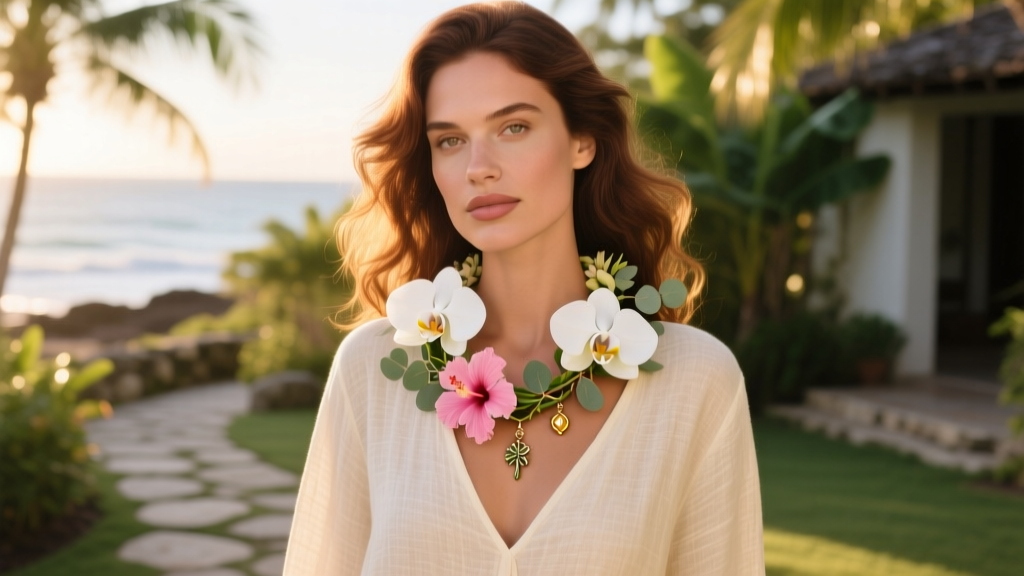
- The V-Neck Blouse: Opt for an 18-inch length. The V-shape of the neckline naturally draws the eye downward, elongating the neck and allowing the front-facing floral drop to act as a natural focal point.
- Layering Strategy: Pair your botanical lei with a 14-inch, 1mm gold-filled snake chain choker. The solid, reflective surface of the snake chain provides a modern, industrial contrast to the organic, matte textures of the preserved flowers.
Pro Tip: Never wear a delicate flower lei necklace with high-collared garments or ruffled blouses. The intricate wire-wrapping and resin bezels will catch on loose threads, risking structural damage to the jump rings.
Care and Preservation
While gold-filled wire is highly resistant to tarnish, UV resin and preserved botanicals require specific maintenance. Prolonged exposure to direct, unfiltered sunlight can cause the resin to yellow and the botanical pigments to fade over time. When not being worn, store your flower lei necklace in an opaque, velvet-lined jewelry box with a silica desiccant packet to control ambient humidity. To clean the metal links, use a soft-bristled baby toothbrush and a mild, ammonia-free dish soap. Avoid ultrasonic cleaners entirely, as the high-frequency vibrations can shatter the resin bezels and detach the delicate floral elements from their settings.


