Metallurgy & Design: Crafting a Necklace of Adaptation 5e Replica
Discover how to craft a durable, screen-accurate Necklace of Adaptation 5e replica using expert metallurgy, chain gauges, and enamel techniques.

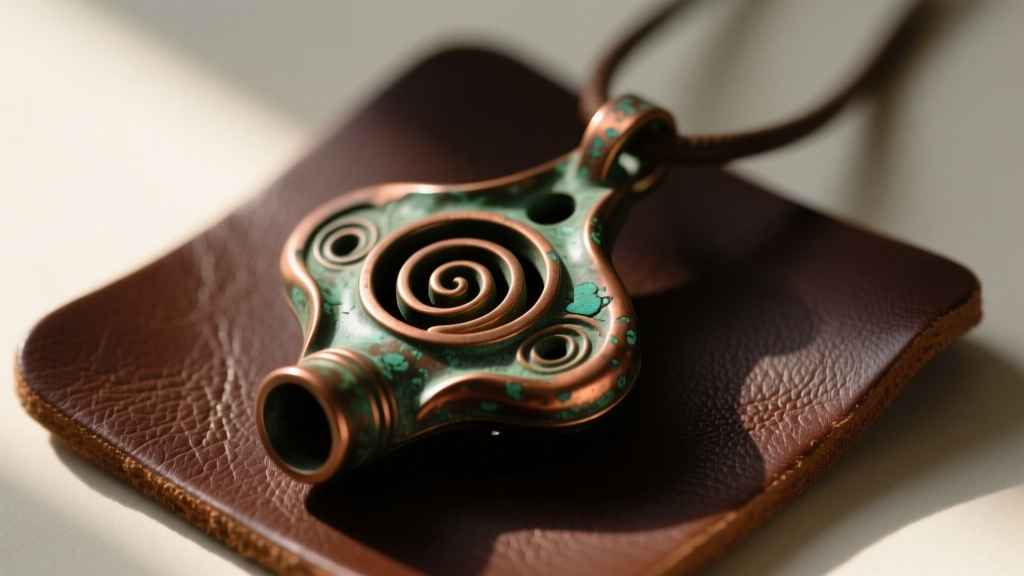
Translating Magic into Metallurgy
In the realm of tabletop roleplaying games, few magical artifacts capture the imagination of cosplayers and LARP (Live Action Role-Playing) enthusiasts quite like the Necklace of Adaptation 5e. According to the official System Reference Document, this wondrous item allows the wearer to breathe normally in any environment, effectively acting as a mystical, self-contained breathing apparatus. Translating this conceptual magic into a physical, wearable piece of jewelry requires more than just sculpting a generic amulet; it demands a thoughtful integration of mechanical motifs, robust metallurgy, and ergonomic engineering.
To create a screen-accurate and convention-ready replica, a jeweler must design a pendant that visually communicates 'filtration' and 'elemental protection.' This typically involves intricate venting grilles, overlapping metallic scales, or recessed channels meant to house glowing enamel or resin. However, because this piece will be worn at crowded gaming conventions, Renaissance faires, or active LARP events, the structural integrity of the necklace is just as critical as its aesthetic appeal. A flimsy, mass-produced alloy will snap under the stress of a foam sword swing or a snagged cloak. Therefore, we must approach the crafting of this artifact with the same rigor as fine jewelry manufacturing.
Alloy Selection: Silicon Bronze vs. Sterling Silver
The base metal of your adaptation pendant dictates its weight, casting fidelity, and long-term wearability. While many amateur crafters default to cheap zinc alloys or pewter, these materials suffer from low tensile strength and poor detail resolution. For a high-end replica, the two premier choices are Silicon Bronze (specifically the Everdur alloy) and 925 Sterling Silver.
Silicon Bronze is composed of approximately 95% copper, 4% silicon, and 1% manganese. It is a favorite among art jewelers and sculptors because of its exceptional fluidity during lost-wax casting, allowing it to capture the microscopic details of 3D-printed venting grilles. Furthermore, it takes a dark, antiqued patina beautifully, giving the pendant an ancient, excavated artifact aesthetic. Sterling Silver offers a brighter, more luxurious finish and higher intrinsic value, but it is softer and more prone to scratching in active LARP environments.
| Material | Hardness (HV) | Casting Temp | Tarnish Resistance | Best Use Case |
|---|---|---|---|---|
| Silicon Bronze (Everdur) | 95-110 | 1950°F (1065°C) | Moderate (Patina desired) | LARP, Heavy Cosplay, Antiqued Finishes |
| 925 Sterling Silver | 65-75 | 1650°F (899°C) | Low (Requires polishing) | Everyday Geek-Chic, High-End Display |
| Jeweler's Brass | 80-90 | 1750°F (954°C) | Low (Tarnishes quickly) | Budget Prototyping, Steampunk Aesthetics |
Chain Gauge and Clasp Engineering
A common failure point in cosplay jewelry is the chain. A heavy, multi-ounce bronze pendant will quickly snap a standard 18-gauge or 20-gauge cable chain. For the Necklace of Adaptation, you must engineer a suspension system capable of withstanding sudden kinetic shocks.
The optimal choice is a 14-gauge (1.6mm wire thickness) Rolo or Figaro chain with an outer link diameter of 5mm to 6mm. Rolo links, being perfectly round and uniformly welded, distribute tensile stress evenly across the chain's length. To connect the chain to the pendant's bail, use a heavy-duty 12-gauge jump ring that has been soldered shut or features a secure screw-lock mechanism. Open jump rings, even thick ones, will inevitably pull apart if the pendant is yanked.
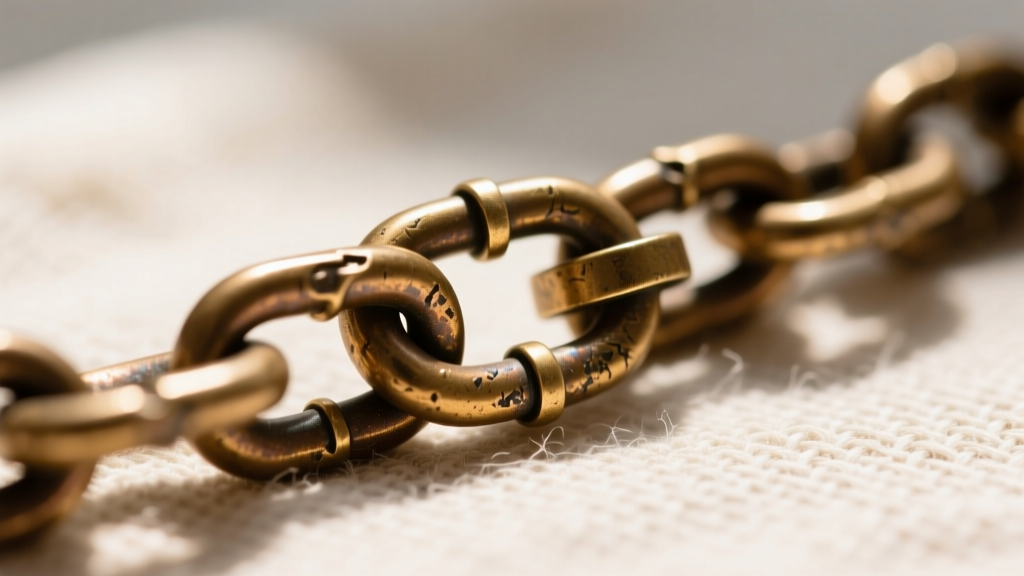
Equally important is the clasp. In active LARP environments, safety regulations strictly mandate breakaway mechanisms to prevent choking hazards if a player is grabbed by the neck or if the chain snags on a branch. Standard lobster clasps are a safety hazard. Instead, integrate an 18mm neodymium magnetic tube clasp into the chain's midpoint. These clasps hold firmly under the static weight of the pendant but will safely pop open under 5 to 8 pounds of lateral pull force, satisfying convention safety marshals while maintaining immersion.
The Lost-Wax Casting and Enamel Process
To achieve the complex, layered ventilation motifs inherent to an adaptation apparatus, modern jewelers utilize a hybrid digital-to-analog workflow. The master model is first designed in CAD (Computer-Aided Design) software, ensuring that the internal grilles are precisely spaced and the bail is structurally reinforced. The model is then 3D printed using a castable wax resin, such as Siraya Tech Cast, which burns out cleanly without leaving ash residue that could cause porosity in the final metal casting.
Burnout and Casting Parameters
The wax master is invested in a phosphate-bonded plaster and placed in a kiln. A proper burnout schedule is critical: ramp the kiln to 1350°F (732°C) and hold for a minimum of two hours to ensure total vaporization of the resin. The silicon bronze is then melted in a graphite crucible and centrifugally cast into the hot flask. Once quenched and divested, the raw bronze pendant is tumbled in stainless steel shot to work-harden the surface and smooth any micro-burrs left by the casting sprues.
Vitreous Enamel Inlay
To simulate the 'magical filtration' aspect of the Necklace of Adaptation 5e, the recessed channels of the pendant are filled with vitreous enamel. Unlike cold enamels (epoxy resins) which yellow over time and scratch easily, vitreous enamel is essentially powdered glass fused to the metal. Using a sifting technique, the jeweler applies lead-free opaque enamel powders into the recessed vents and fires the piece in a specialized enamel kiln at 1400°F (760°C) for 90 seconds. The result is a brilliant, glass-like inlay that mimics glowing arcane energy and will never fade, chip, or degrade with wear.
LARP Safety and Wearability Standards
Beyond the magnetic breakaway clasp, the physical edges of the pendant must be addressed. A freshly cast bronze piece with sharp, aggressive venting grilles can act as a hazard during physical combat scenarios. After tumbling, the jeweler must meticulously hand-file and sand all outer perimeters using 400-grit followed by 800-grit sandpaper, ensuring a blunt, skin-safe profile. The piece is then finished with a light application of pumice powder to give it a soft, satin-matte texture that looks authentic on camera and feels comfortable against the sternum.
Sourcing and Final Assembly
Procuring the correct raw materials is essential for a professional-grade artifact. For casting grain, enameling powders, and heavy-gauge chain, professional suppliers like Rio Grande offer the metallurgical consistency required for high-end jewelry. For advanced enameling techniques and troubleshooting kiln schedules, the educational archives at Ganoksin remain the gold standard for bench jewelers worldwide.
Bench Tip: To achieve a weathered, dungeon-delved aesthetic on your silicon bronze adaptation pendant, submerge the finished piece in a warm solution of Liver of Sulfur (potassium sulfide) for exactly 45 seconds. Rinse immediately in cold water, then use a brass wire brush to selectively remove the dark oxidation from the high points of the venting grilles, leaving the deep recesses pitch-black. This creates dramatic contrast and instantly ages the metal by decades.
Crafting a functional, durable, and visually striking replica of the Necklace of Adaptation 5e is a masterclass in functional jewelry design. By prioritizing high-tensile alloys, safety-conscious clasps, and permanent vitreous enameling, you elevate a simple cosplay prop into a genuine, heirloom-quality artifact worthy of any legendary adventurer's inventory.


