Crafting the Shell Necklace from Little Mermaid: Materials & Guide
Explore the material science, lapidary techniques, and wire-wrapping specs needed to craft an authentic shell necklace from Little Mermaid.

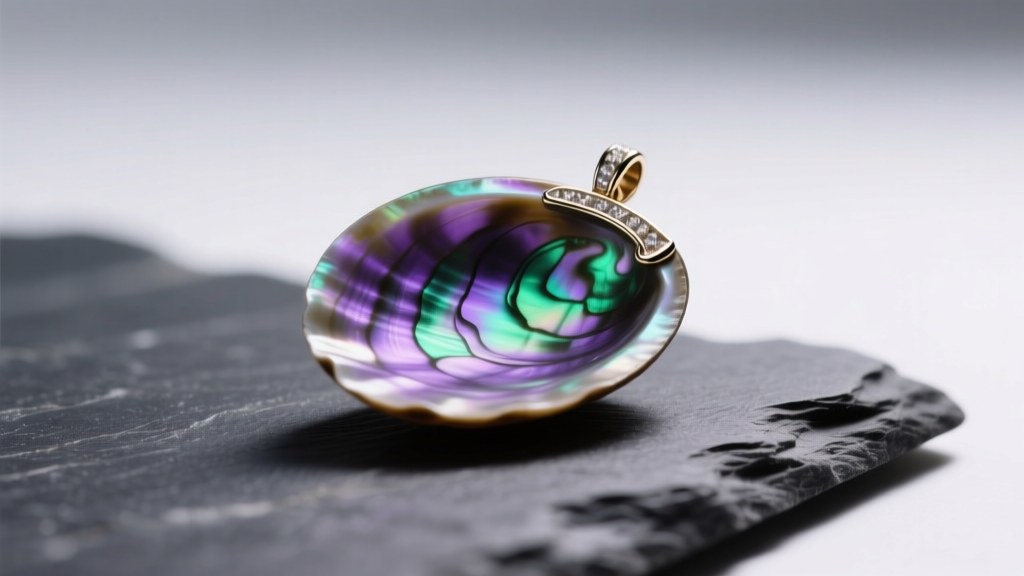
The Anatomy of Ariel’s Iconic Shell Jewelry
When fans and jewelers set out to recreate the iconic shell necklace from Little Mermaid, they are often confronted with a surprising technical challenge. While Ariel’s scallop shell bikini top is the most recognized garment in animation history, the expanded lore, live-action adaptations, and high-end merchandise have popularized the iridescent purple shell pendant as a staple of fine jewelry and premium cosplay. Recreating this piece is not simply a matter of gluing a seashell to a chain. It requires a deep understanding of organic gemology, precise lapidary cutting, and structural metalwork to ensure the piece is both visually stunning and durable enough for daily wear.
As of 2026, the jewelry industry has seen a massive shift toward ethically sourced marine materials and advanced bio-resins. Whether you are a master jeweler looking to craft a high-end sterling silver and abalone piece, or a prop-maker aiming for screen-accurate durability, understanding the material science behind the shell is your first step.
Material Science: Selecting the Right Nacre
The mesmerizing iridescence of a high-quality shell pendant is caused by nacre, also known as mother-of-pearl. According to the GIA Gem Encyclopedia, nacre is an organic-inorganic composite material produced by some mollusks as an inner shell layer. It is composed of microscopic hexagonal platelets of aragonite (a crystalline form of calcium carbonate) separated by elastic biopolymers like chitin and lustrin.
Natural Abalone vs. Purple Pearl Oyster
To achieve the signature purple and green hues associated with the shell necklace from Little Mermaid, jewelers typically choose between two primary materials:
- New Zealand Paua (Haliotis iris): Known for its electric blues, greens, and deep purples. Paua is highly vibrant but features a more chaotic, marbled color pattern.
- Tahitian Pearl Oyster (Pinctada margaritifera): The byproduct shells of Tahitian pearl farming offer a smoother, more uniform purple-to-peacock-green gradient. This is the preferred material for fine jewelry due to its predictable color zoning and structural density.
Both materials sit at a 2.5 to 3.0 on the Mohs hardness scale. This makes them exceptionally soft and prone to scratching, requiring careful setting techniques that avoid placing direct pressure on the shell's cleavage planes.
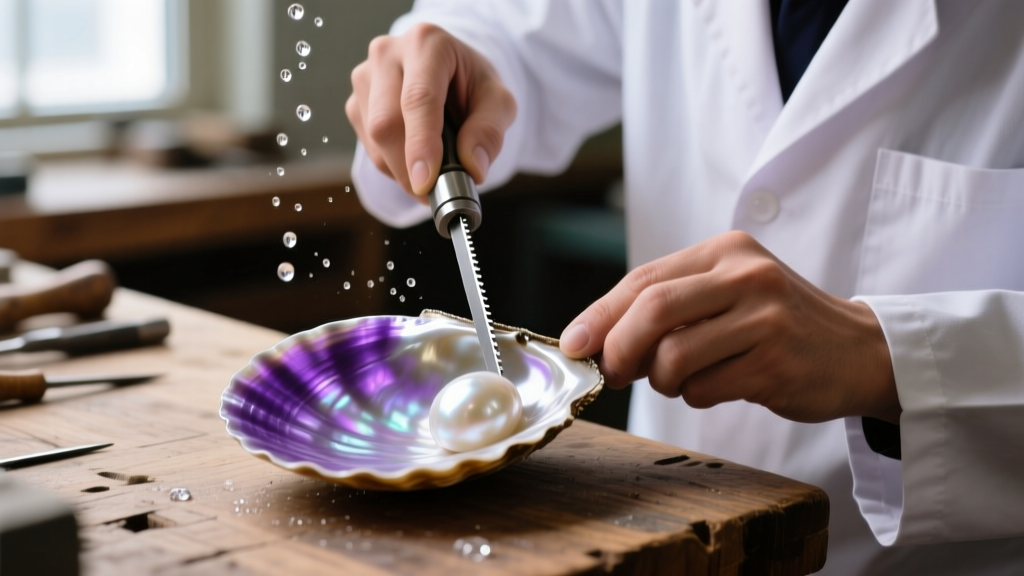
Lapidary Techniques: Cutting and Polishing Shell
Cutting a raw shell into the symmetrical, fan-like scallop shape requires specialized lapidary equipment. Standard carbide blades will shatter the aragonite layers. Instead, master lapidaries use water-fed diamond saws with a continuous rim to minimize vibration.
"The greatest enemy of nacre is heat. If the friction from your grinding wheel raises the temperature of the shell above 100°C, the aragonite platelets will undergo a phase transition into calcite. The shell will permanently turn chalky white, destroying the iridescence." — Master Lapidary Technical Guidelines, 2025.
The Grit Progression and Polish
Once the rough scallop shape is cut, the edges must be rounded and polished. Because shell is soft, you must move through grit progressions carefully to avoid deep scratches that are difficult to buff out later.
- 220 Grit Diamond Wheel: For initial shaping and beveling the top ridge where the wire wrap will sit.
- 600 Grit Diamond Wheel: For smoothing the edges and removing deep saw marks.
- 1200 Grit Diamond Pad: For pre-polishing the face of the shell.
- Cerium Oxide on Felt: The final polish. Cerium oxide reacts chemically with the calcium carbonate to produce a mirror-like, glassy finish without generating excessive heat.
Metalwork: Wire Wrapping the Scallop Pendant
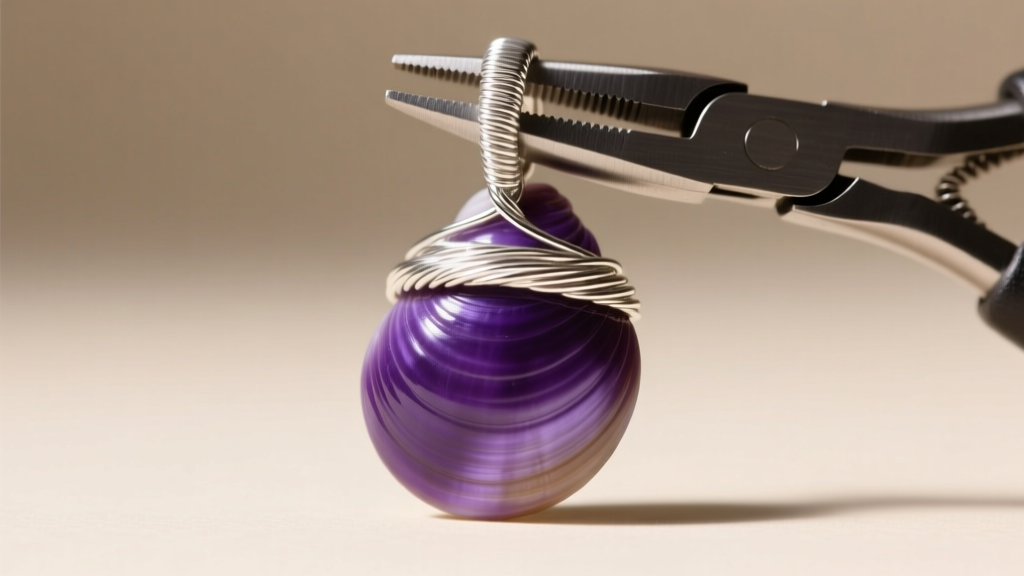
Because drilling a hole through a thin shell pendant compromises its structural integrity and risks blowout on the back side, wire wrapping is the superior setting method for the shell necklace from Little Mermaid. This technique cradles the shell in a metal cage and creates a bail at the top without invasive drilling.
Wire Gauge Specifications
Using the correct wire temper and gauge is critical. Dead-soft wire is too malleable and will allow the shell to fall out, while hard wire is too difficult to weave without marring the silver.
| Component | Wire Gauge | Temper | Purpose |
|---|---|---|---|
| Main Frame / Bail | 18-Gauge (1.0mm) | Half-Hard | Provides structural rigidity and holds the pendant's shape. |
| Prongs / Cage | 20-Gauge (0.8mm) | Dead-Soft | Forms the front and back prongs that secure the shell edges. |
| Decorative Weaving | 26-Gauge (0.4mm) | Dead-Soft | Used for intricate coiling around the main frame and bail. |
When wrapping the top ridge, always use nylon-jaw pliers to grip the sterling silver. Standard steel pliers will leave permanent tool marks on the soft silver, which are difficult to remove without over-polishing the wire.
Material Alternatives: Fine Jewelry vs. Cosplay
Not every recreation of the shell necklace from Little Mermaid requires natural marine materials. Depending on the end use, jewelers and prop-makers select different base materials. The structural properties of nacre dictate that natural shell is heavy and fragile, which isn't always ideal for convention wear.
| Material Grade | Weight | Durability (Mohs) | Best Application | Estimated Cost (Pendant Only) |
|---|---|---|---|---|
| Natural Paua Abalone | Medium (8-12g) | 2.5 - 3.0 | Fine jewelry, heirloom gifts | $45 - $120 |
| Cultured Pearl Shell | Heavy (12-18g) | 2.5 - 3.0 | High-end screen-accurate replicas | $30 - $85 |
| High-Density Bio-Resin | Light (3-5g) | N/A (Impact Resistant) | Cosplay, daily convention wear | $15 - $40 |
In 2026, advances in 3D-printed bio-resins infused with actual crushed nacre powder have allowed prop-makers to cast lightweight, shatterproof shells that retain 80% of the optical iridescence of natural shell, making them the top choice for active cosplayers.
Chain Mechanics and Clasp Hardware
The final step in assembling the shell necklace from Little Mermaid is selecting the appropriate chain. Because a natural shell pendant wrapped in sterling silver can weigh between 15 and 25 grams, delicate chains like a 0.9mm cable chain will eventually stretch or snap at the solder points.
For optimal durability and aesthetic balance, a 2.0mm Wheat Chain or a 2.5mm Rolo Chain in sterling silver is recommended. These chains distribute the weight of the pendant evenly across the neck. Furthermore, avoid standard spring-ring clasps, which are prone to failing under the pendulum motion of a heavy pendant. Instead, utilize a 12mm Lobster Claw clasp with a reinforced jump ring soldered shut at the connection point. This ensures that the necklace remains secure, allowing the wearer to channel the magic of the ocean without the fear of losing their treasured artifact.


