Cremation Necklaces: A Technical Guide to Materials and Sealing
Discover the technical details of cremation necklaces. Learn about surgical steel, titanium, sealing mechanisms, and ash capacity for safe keepsakes.

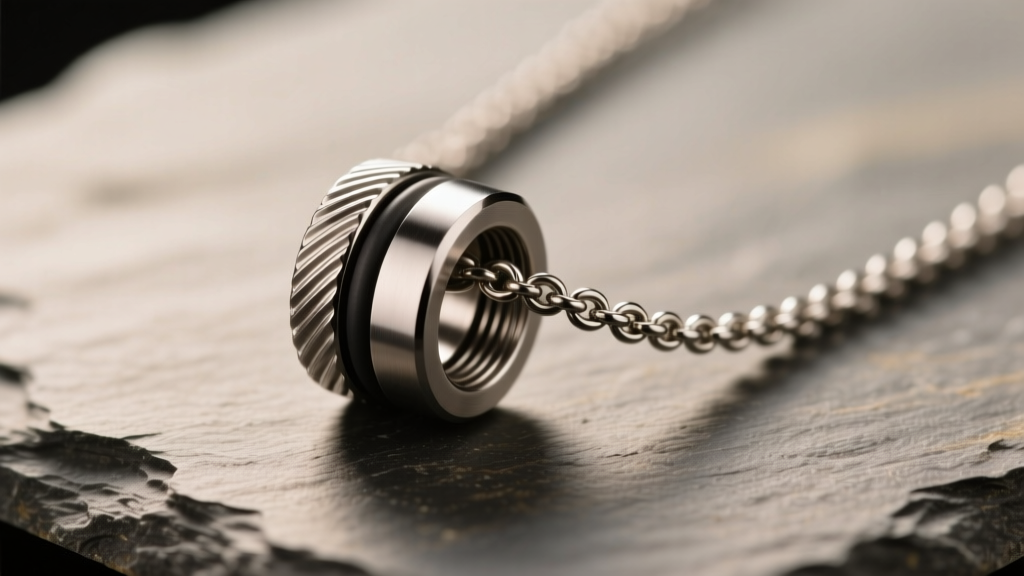
Cremation necklaces serve as profoundly personal memorial keepsakes, but their emotional significance must be matched by rigorous engineering. When a pendant is tasked with securely holding the cremated remains of a loved one, aesthetic appeal takes a backseat to material science, structural integrity, and precision sealing. As a jewelry technical evaluator, I frequently inspect memorial pieces that fail due to poor metallurgical choices or inadequate thread tolerances. This guide strips away the marketing fluff to examine the exact specifications, alloy grades, and mechanical sealing protocols required to ensure your cremation jewelry remains secure, untarnished, and intact for decades.
The Material Science of Memorial Jewelry
The internal environment of a cremation pendant is highly alkaline. Cremated remains (cremains) are primarily composed of calcium phosphate, with a pH level typically ranging from 8.5 to 11.0. This alkalinity, combined with the external exposure to human sweat (which is acidic and contains corrosive chloride ions), demands highly specific alloy selections. According to the Federal Trade Commission's Jewelry Guides, precise metal disclosures are mandatory, but understanding the metallurgical behavior of these metals is critical for longevity.
316L Surgical Stainless Steel
While 304 stainless steel is common in cheap fashion jewelry, 316L is the mandatory baseline for cremation necklaces. The "L" denotes low carbon, but the crucial difference is the addition of 2% to 3% molybdenum. This element drastically increases resistance to pitting and crevice corrosion in chloride environments (like sweat). If a pendant is manufactured from 304 steel, the alkaline ashes combined with external moisture can eventually cause micro-pitting inside the chamber, degrading the structural integrity of the inner threads.
Grade 5 Titanium (Ti-6Al-4V)
For individuals with severe nickel allergies or those living in high-humidity coastal environments, Grade 5 titanium is the superior choice. Unlike pure titanium (Grade 2), which is too soft for precision threading, Grade 5 is alloyed with 6% aluminum and 4% vanadium. This yields a tensile strength of roughly 1,170 MPa, allowing for incredibly precise, sharp internal threads that will not strip during repeated opening and closing. Furthermore, titanium is entirely bio-inert and will not react with the calcium phosphate in the ashes.
Sterling Silver (.925) and Rhodium Plating
Sterling silver is traditional but technically problematic for ash storage. Silver reacts with sulfur and moisture, leading to silver sulfide (tarnish). If used, the internal chamber must be heavily rhodium-plated to create an inert barrier. Without this plating, the tarnish can flake off and contaminate the cremains over time.
Sealing Mechanisms: Threaded vs. Friction vs. Resin
The most common point of catastrophic failure in cremation necklaces is the sealing mechanism. A pendant swinging from a neck experiences constant kinetic vibration and thermal expansion from body heat. Friction-fit caps (where a plug is simply pushed into the hole) are entirely unacceptable for memorial jewelry; they will inevitably work loose.
The Gold Standard: Threaded Caps with NBR O-Rings
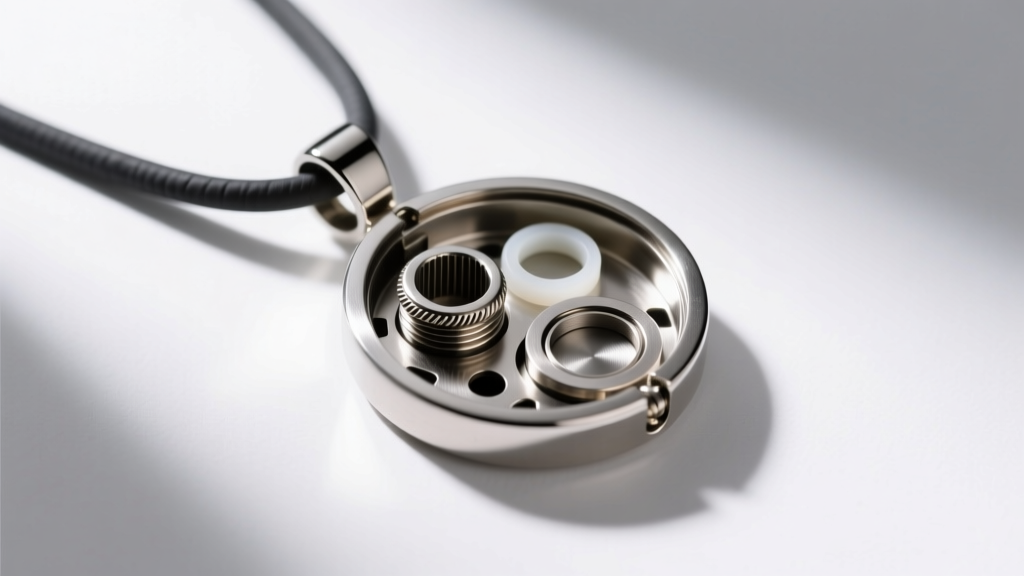
High-quality cremation pendants utilize a threaded screw-cap integrated with an O-ring groove. The O-ring should be manufactured from Nitrile Butadiene Rubber (NBR) with a Shore A durometer of 70. This specific hardness provides enough compression to create a watertight seal without deforming permanently under the torque of the cap. The thread pitch should be fine (typically 0.5mm to 0.75mm) to prevent cross-threading and ensure a slow, controlled compression of the O-ring.
"A properly engineered cremation pendant should require exactly 2.5 to 3 full rotations to seat the cap, compressing the O-ring by 20% to 30% of its original cross-sectional diameter to achieve a true hermetic seal."
Baffle Systems
Premium designs include an internal baffle—a secondary threaded or press-fit barrier that sits just below the main cap. This prevents the cremains from coming into direct contact with the primary O-ring, which could otherwise cause the rubber to degrade or prevent the cap from seating fully if ash particles become trapped in the threads.
Ash Capacity and Loading Tolerances
Understanding the volumetric capacity of cremation necklaces is essential. The Cremation Association of North America (CANA) notes that the average adult yields roughly 180 to 220 cubic inches of cremains. Memorial jewelry holds only a symbolic fraction of this. Attempting to overfill a pendant is the leading cause of thread stripping and O-ring failure.
| Pendant Shape | Average Internal Volume | Max Ash Weight (Approx.) | Recommended Loading Tool |
|---|---|---|---|
| Micro Cylinder | 0.05 - 0.10 cu in | 0.8 - 1.5 grams | Micro-spatula / Pin |
| Standard Teardrop | 0.15 - 0.25 cu in | 2.0 - 3.5 grams | Paper funnel & tap |
| Hollow Heart | 0.20 - 0.35 cu in | 3.0 - 5.0 grams | Plastic funnel & pin |
| Glass Orb (Blown) | 0.50 - 1.00 cu in | 8.0 - 15.0 grams | Wide paper cone |
The Loading Protocol
Never pack or compress the ashes into the chamber. Cremains contain microscopic, jagged bone fragments. If compacted, these fragments can act like a wedge against the internal threads when the cap is screwed down, generating immense outward hydraulic pressure that can snap the cap or strip the alloy. Always use a paper funnel and gently tap the side of the pendant to allow the ashes to settle naturally, leaving at least 2mm of clearance below the threading.
Waterproofing and Long-Term Maintenance
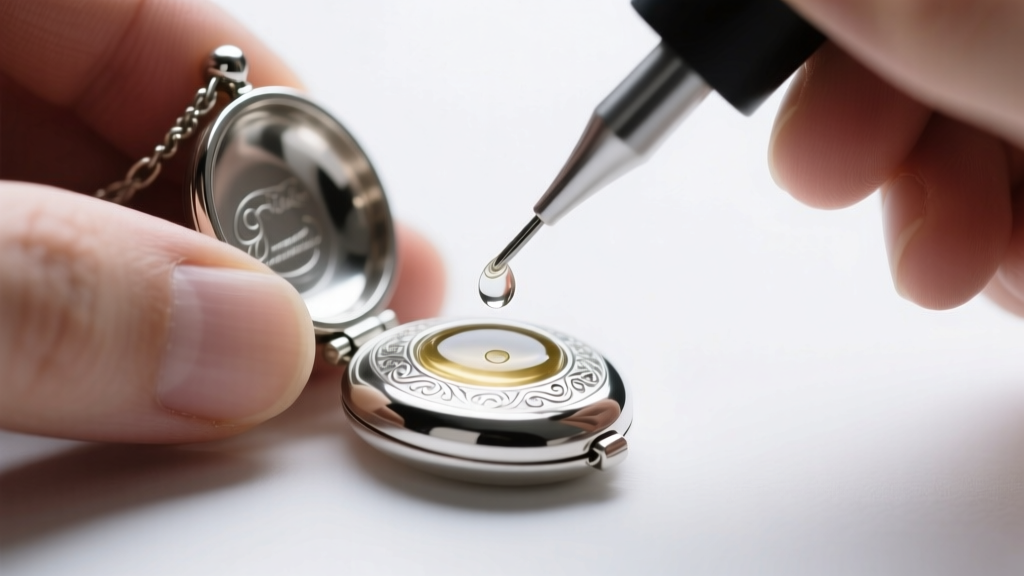
While a high-quality NBR O-ring provides excellent water resistance, permanent sealing is recommended if the wearer intends to shower, swim, or sweat heavily while wearing the necklace. However, the choice of sealant is critical.
- Avoid Cyanoacrylate (Super Glue): It becomes brittle over time, shatters under kinetic vibration, and releases acidic vapors during curing that can etch the metal threads.
- Avoid UV Resin: UV light cannot penetrate deep into opaque metal threads, leaving the inner layers uncured and sticky, which will eventually ruin the ashes.
- Use Two-Part Jeweler's Epoxy: A slow-curing (30-minute work time), optically clear, acid-free epoxy is the only reliable choice. Apply a microscopic bead to the male threads using a 0.5mm precision tip before the final screw-down. Wipe away any extrusion immediately with a lint-free swab dipped in isopropyl alcohol.
Chain Gauge and Hardware Specifications
Cremation pendants are inherently dense. A solid 316L steel teardrop pendant can easily weigh between 15 and 25 grams. Suspending this weight on a standard 0.8mm or 1.0mm fashion chain is a mechanical hazard; the constant pendulum motion will cause metal fatigue at the jump ring, leading to a snapped chain and a lost keepsake.
For pendants weighing over 12 grams, you must upgrade to a chain with a minimum wire gauge of 1.5mm to 2.0mm. Box chains and wheat (spiga) chains are structurally superior to rope or cable chains for this application because their interlocking geometric links distribute tensile stress more evenly. Furthermore, ensure the bail (the loop connecting the pendant to the chain) is laser-welded or cast as a single solid piece with the pendant body. Soldered bails on heavy memorial pieces are a frequent point of shear failure.
By prioritizing metallurgical compatibility, precision O-ring seals, and appropriate structural hardware, you ensure that a cremation necklace functions not just as a beautiful tribute, but as an impenetrable, permanent vault for your most precious memories.


