Cross Bead Necklace Trends 2026: The Quiet Luxury Evolution
Discover how the cross bead necklace evolved into a 2026 quiet luxury staple. Explore material grades, bead sizing, and expert layering techniques.

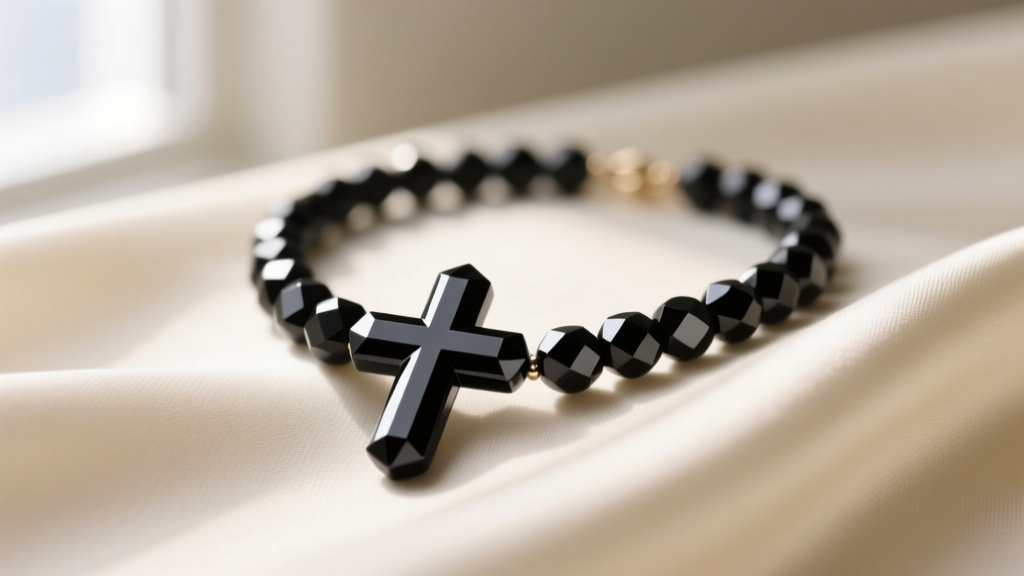
The 2026 Shift: From Devotional to High-Fashion Staple
The jewelry landscape of 2026 has decisively moved away from the heavy, ostentatious streetwear motifs of the previous decade. In its place, the cross bead necklace has emerged as a cornerstone of the 'quiet luxury' and 'dark academia' aesthetics. No longer just a bold statement piece, the modern cross bead necklace relies on tactile sophistication, micro-scaled gemstones, and meticulous stringing techniques. This evolution reflects a broader consumer demand for jewelry that feels deeply personal, historically grounded, and versatile enough to transition from a minimalist office environment to an evening out. The integration of semi-precious stone beads with a singular, refined cross pendant creates a rhythmic visual texture that solid metal chains simply cannot replicate.
Material Matrix: What Defines a Premium Cross Bead Necklace?
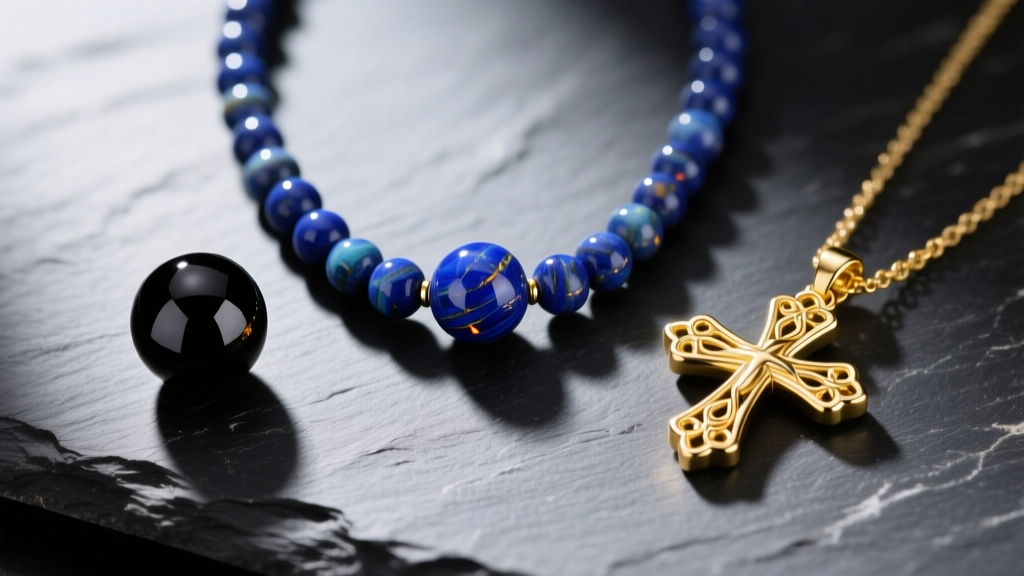
The defining characteristic of a high-end cross bead necklace in 2026 is the provenance and cut of the bead material. Mass-market versions rely on dyed howlite or glass, but premium iterations utilize precisely calibrated, ethically sourced semi-precious stones. The interplay of light through faceted beads versus the matte absorption of polished cabochon beads drastically alters the necklace's presence. Below is a technical breakdown of the top materials dominating the 2026 market.
| Material | Mohs Hardness | Optimal Bead Size | Price Tier (18-inch) | Care Profile |
|---|---|---|---|---|
| Black Onyx | 7.0 | 3mm - 4mm | $120 - $250 | High durability, safe for ultrasonic |
| Black Spinel | 8.0 | 2mm - 3mm | $200 - $450 | Exceptional scratch resistance, high refraction |
| Lapis Lazuli | 5.5 | 4mm - 6mm | $150 - $300 | Porous, avoid chemicals and ultrasonic |
| Recycled 14k Gold | 3.5 (Metal) | 2mm - 3mm | $600 - $1,200+ | Requires polishing, avoid chlorine |
According to the Gemological Institute of America (GIA), understanding the Mohs hardness and porosity of gemstone beads is critical for long-term wearability, especially for porous stones like Lapis Lazuli which can absorb skin oils and lotions, leading to discoloration over time.
Sizing & Stringing: The Technical Details That Matter
The structural integrity of a cross bead necklace is entirely dependent on its stringing medium—a detail often overlooked by consumers but heavily emphasized by master jewelers. In 2026, traditional silk thread has been largely replaced in premium pieces by Ultra-High-Molecular-Weight Polyethylene (UHMWPE) braided cords.
The UHMWPE Advantage
UHMWPE cords, often utilized in high-end marine and tactical applications, offer a tensile strength that vastly outperforms silk or standard nylon. A 15-lb test UHMWPE micro-cord (typically 0.15mm in diameter) can easily pass through 2mm micro-beads while providing virtually zero stretch. This prevents the 'gapping' effect where the cord becomes visible between beads after months of wear. Furthermore, premium pieces utilize micro-French knotting techniques between every 4 to 6 beads, ensuring that if a catastrophic break occurs, the loss of gemstones is minimized.
Bead Diameter and Drape
The diameter of the beads dictates the necklace's drape and formality. 2mm micro-beads mimic the fluid drape of a fine metal chain, making them ideal for layering. 4mm standard beads offer a pronounced, tactile texture that stands alone beautifully over knitwear. 6mm statement beads provide a bold, rosary-inspired silhouette that anchors deep V-necklines.
The Hardware: Clasp and Cross Pendant Integration
A common failure point in beaded jewelry is the transition from the flexible cord to the rigid metal hardware. In 2026, the integration of the cross pendant and the clasp has seen significant engineering upgrades.
- The Bail: Premium cross pendants feature a reinforced, soldered bail with an inner diameter of at least 3.5mm to accommodate the doubled-over UHMWPE cord and a protective French knot. This prevents the sharp metal edge of the bail from sawing through the cord over time.
- The Clasp: While traditional lobster clasps remain popular, 2026 has seen a surge in neodymium magnetic clasps encased in 925 sterling silver or 14k gold, featuring internal silicone friction sleeves. These provide a secure, 8-pound magnetic hold while allowing the wearer to easily fasten the necklace without fumbling with tiny metal springs.
2026 Layering Frameworks for the Cross Bead Necklace
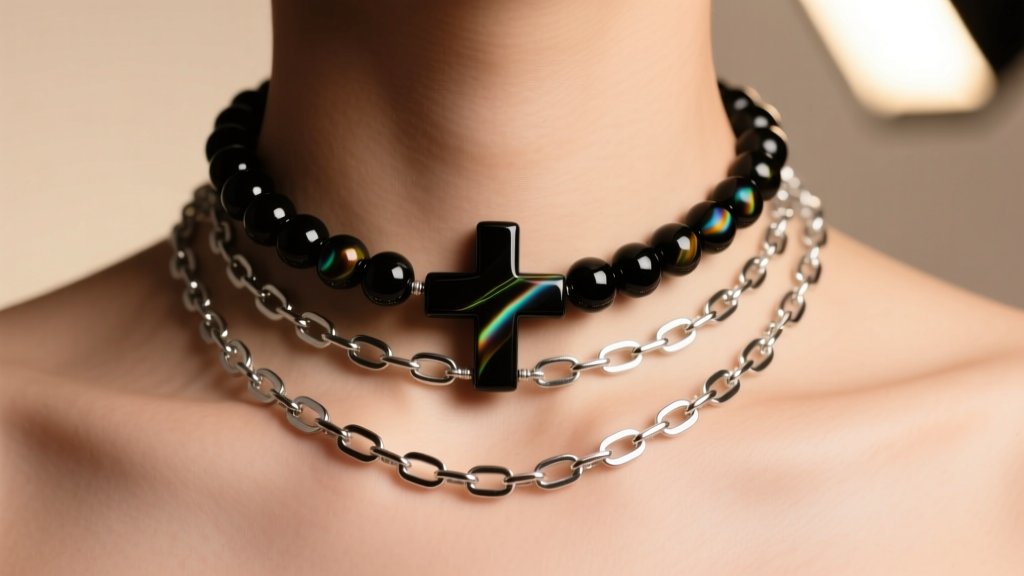
Layering is no longer about haphazardly piling on chains; it is an exercise in precise spatial geometry. The cross bead necklace serves as the perfect textural anchor in a layered stack. Here are three expert-approved layering formulas for 2026:
1. The 'Quiet Executive' (Minimalist & Refined)
- Base: 16-inch 2mm Black Spinel cross bead necklace with a micro 10mm silver cross pendant.
- Mid: 18-inch 1.5mm 14k Gold rope chain with a single, flush-set diamond bezel.
- Outer: 20-inch 3mm oxidized sterling silver paperclip chain (no pendant).
- Why it works: The dark spinel provides a high-contrast backdrop that makes the gold and oxidized silver pop, while the varied chain textures prevent tangling.
2. The 'Dark Academia' (Vintage & Textural)
- Base: 18-inch 4mm Lapis Lazuli cross bead necklace with an ornate, oxidized brass 25mm cross.
- Outer: 22-inch heavy 5mm antiqued silver cuban link chain.
- Why it works: The matte, porous texture of the Lapis paired with heavy, aged metals evokes a scholarly, historical aesthetic perfect for autumn and winter layering over turtlenecks.
3. The 'Tonal Monolith' (Modern & Sleek)
- Base: 15-inch 3mm Black Onyx bead necklace (no pendant, acts as a choker).
- Mid: 17-inch 4mm Black Onyx cross bead necklace with a sleek, bezel-set black diamond cross.
- Outer: 19-inch matte black PVD-coated titanium box chain.
- Why it works: Monochromatic black layering relies entirely on the interplay of light reflection—matte titanium, polished onyx, and sparkling black diamonds create depth without introducing new colors.
Market Pricing & Where to Invest
The market for cross bead necklaces in 2026 is distinctly stratified. Entry-level pieces ($40–$90) typically feature dyed agate, glass beads, and gold-plated brass hardware strung on basic nylon. While fashionable, these are prone to rapid cord degradation and hardware tarnishing. The mid-tier ($150–$400) is the sweet spot for serious collectors, offering genuine semi-precious stones like natural onyx and spinel, solid 925 silver or 10k/14k gold hardware, and UHMWPE stringing. Luxury iterations ($800–$2,500+) feature precision-cut black diamonds, recycled 18k gold beads, and bespoke, hand-engraved cross pendants from heritage jewelers. Jewelers of America recommends always verifying the metal stamp and requesting a breakdown of the stringing materials when investing in mid-to-high-tier beaded jewelry to ensure you are paying for structural longevity, not just the gemstones.
Care and Maintenance of Strung Bead Jewelry
Unlike solid metal chains, a cross bead necklace requires a specialized care regimen to protect both the stringing medium and the gemstones. Never wear beaded necklaces in chlorinated pools or hot tubs; chlorine will rapidly degrade synthetic cords and permanently dull the polish of porous stones like Lapis Lazuli and Turquoise. When cleaning, avoid ultrasonic cleaners entirely unless you are certain the beads are solid, unfractured Onyx or Spinel. The high-frequency vibrations can shatter beads with internal inclusions or strip the dye from treated stones. Instead, use a soft, lint-free microfiber cloth dampened with distilled water to gently wipe the beads after wear, removing skin oils and environmental pollutants. Store the necklace flat or hanging in a climate-controlled environment away from direct UV light, which can cause certain organic and treated beads to fade over time.


