Cross Necklace Iced Out: The Ultimate Buying Guide
Discover how to choose the perfect cross necklace iced out with our expert guide. Learn about diamond clarity, chain types, and setting styles.

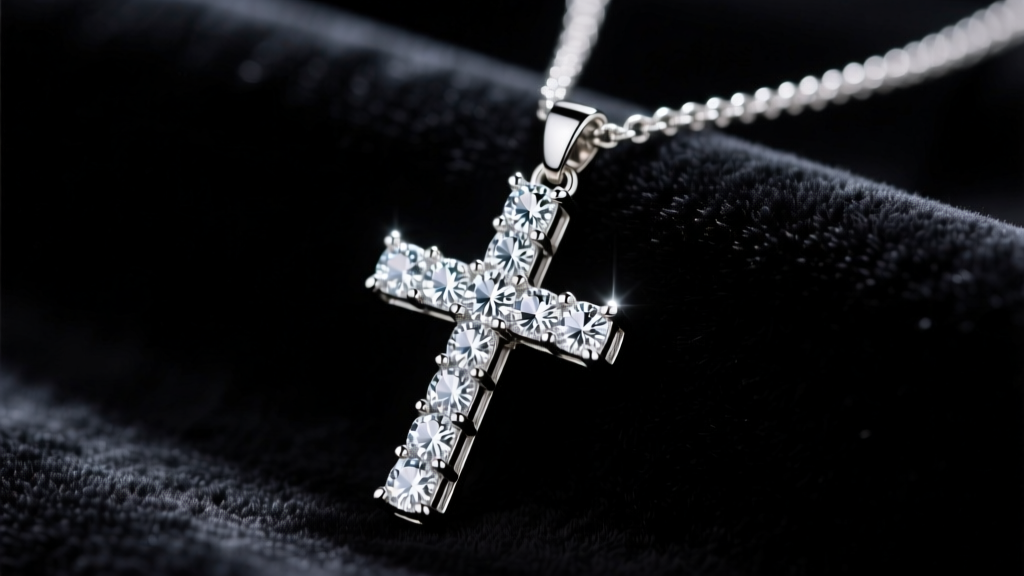
The Anatomy of a Premium Iced Out Cross
The cultural cachet of the cross pendant has evolved from a traditional religious symbol into a cornerstone of high-end streetwear and hip-hop jewelry. When shopping for a cross necklace iced out with precision, the difference between a masterpiece and a mediocre accessory lies in the metallurgy, stone selection, and structural engineering. As of 2026, the market is flooded with options ranging from budget-friendly moissanite to investment-grade natural diamonds. This guide cuts through the marketing jargon to give you the exact specifications you need to make an informed purchase.
Decoding the Stones: Natural vs. Lab-Grown vs. Moissanite
The 'ice' on your pendant dictates its price, brilliance, and longevity. Understanding the optical and physical properties of your chosen gemstone is the first critical step.
| Stone Type | Mohs Hardness | Refractive Index (Brilliance) | Price Tier (per carat) | Best For |
|---|---|---|---|---|
| Natural Diamond | 10 | 2.42 | $2,000 - $10,000+ | Investment, heirloom pieces |
| Lab-Grown Diamond | 10 | 2.42 | $300 - $800 | Maximum brilliance on a budget |
| Moissanite | 9.25 | 2.65 (Double Refraction) | $50 - $150 | Hyper-sparkle, entry-level luxury |
| Cubic Zirconia (CZ) | 8.0 - 8.5 | 2.15 | $1 - $5 | Fashion jewelry (Avoid for fine) |
According to the Gemological Institute of America (GIA), lab-grown diamonds possess the exact same chemical and optical properties as mined diamonds. For an iced out cross, opting for VVS (Very Very Slightly Included) or VS (Very Slightly Included) clarity in lab-grown stones provides a flawless, 'glassy' appearance without the exponential markup of natural stones. Moissanite is another excellent alternative; as noted by JCK Online, its double refraction gives it a 'disco ball' fire that appeals to buyers who want maximum flash, though it lacks the prestige of a true diamond.
Metal Matters: Karat Weight and Structural Integrity
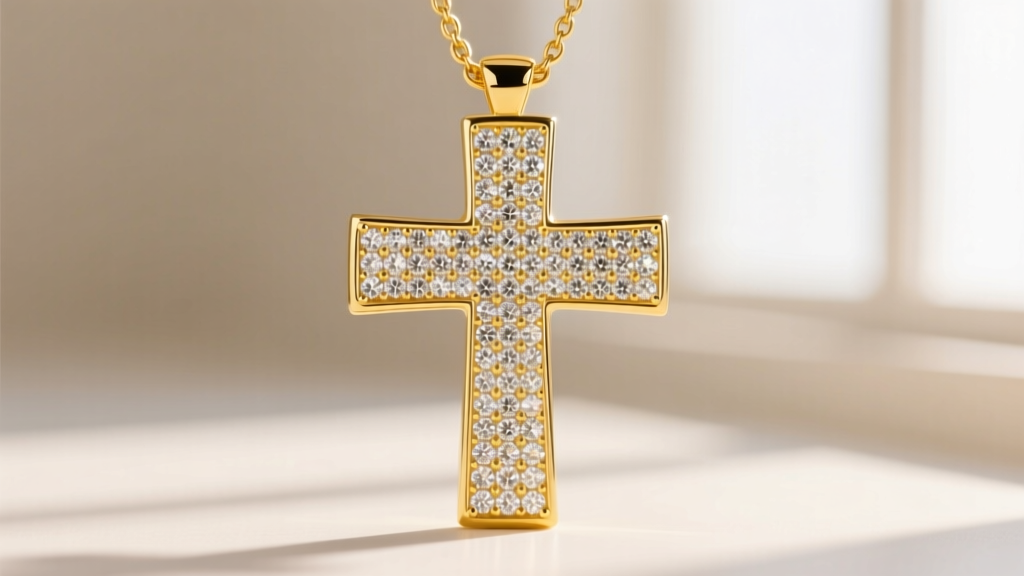
The base metal of your cross necklace iced out must support the weight of the stones. A fully iced 2.5-inch cross can feature over 150 individual stones, adding significant mass to the piece.
Why 10k and 14k Gold Outperform 18k for Heavy Pendants
While 18k gold (75% pure gold) is prized for its rich yellow hue, it is inherently soft. When a pendant is heavily laden with diamonds, the prongs holding the stones are subjected to lateral stress. 14k gold (58.5% pure) and 10k gold (41.7% pure) contain higher amounts of alloy metals like zinc, copper, and silver. This makes the metal significantly harder and more resistant to bending. If a 10k gold prong gets snagged on a sweater, it is far less likely to bend and drop a stone than an 18k gold prong.
The Hollow vs. Solid Debate
Never buy a hollowed-out iced pendant. Jewelers sometimes hollow out the back of the cross to save on gold weight and reduce the retail price. However, hollow pendants are prone to denting, cannot be easily resized or repaired, and the micro-pavé stones on the front will eventually loosen as the thin metal face flexes during daily wear. Always demand a solid back, or at minimum, a heavily reinforced honeycomb backing.
Setting Styles: Prong vs. Micro-Pavé
The way the stones are secured drastically alters the visual impact and maintenance requirements of the piece.
- Shared Prong Setting: The gold standard for iced out crosses. Each stone is held by four distinct metal prongs. This allows maximum light to enter the sides of the diamond, resulting in superior brilliance. It also makes replacing a lost stone relatively straightforward for a bench jeweler.
- Micro-Pavé: Tiny beads of gold are pushed over the girdle of the stones to hold them in place. This creates a seamless 'wall of ice' with minimal metal visibility. However, micro-pavé requires meticulous care; ultrasonic cleaners can vibrate the tiny beads loose, causing stones to fall out.
- Bezel Setting: A rim of metal surrounds the entire stone. While incredibly secure, it covers roughly 20% of the stone's surface area, significantly reducing the overall sparkle of the cross.
Chain Selection: Pairing Your Pendant Correctly
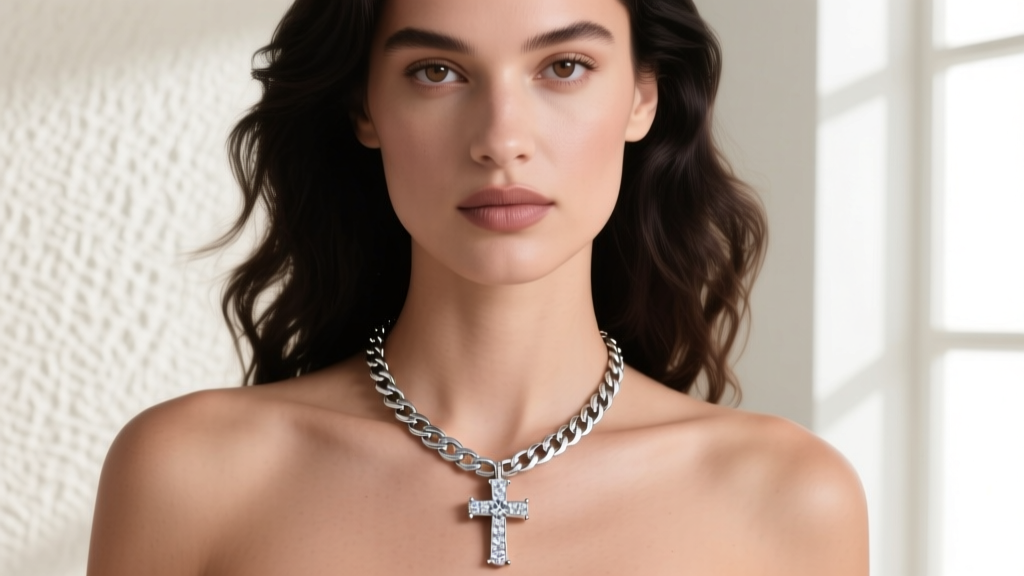
A heavy, fully iced cross requires a chain with high tensile strength. Pairing a 25-gram pendant with a flimsy 2mm chain will result in a broken clasp or a snapped link.
Top Chain Styles for Heavy Crosses
1. Franco Chain: The undisputed king of pendant chains. Its V-shaped, interlocking links are incredibly dense and resistant to kinking. A 4mm to 6mm solid Franco chain can comfortably support a large iced cross without tangling or stretching.
2. Miami Cuban Link: A streetwear staple. The flat, interlocking round links offer a bold aesthetic. However, ensure you are buying a solid, soldered-link Cuban. Hollow Cubans will stretch and snap under the pendulum effect of a heavy cross pendant swinging on your chest.
3. Rope Chain: Offers a beautiful, twisting drape that catches the light. However, the intricate twisting grooves can sometimes catch on the prongs of your cross pendant, potentially bending them over time.
Sizing and Proportions: Getting the Dimensions Right
The dimensions of your cross should complement your frame and the thickness of your chain. Use this framework to select the right size:
- The Subtle Flex (1 to 1.5 inches): Best for everyday wear, office environments, or layering with other chains. Pairs perfectly with a 2mm to 3mm rope or box chain.
- The Statement Piece (2 to 2.5 inches): The most popular size for a cross necklace iced out. It rests perfectly on the sternum and demands attention. Requires a 4mm to 6mm Franco or Cuban chain.
- The Showstopper (3 inches and above): Reserved for stage performances, music videos, or high-fashion streetwear. These pieces often weigh over 40 grams and require an 8mm+ chain and a custom-soldered V-bail to distribute the weight safely.
The Bail: The Unsung Hero of Pendant Engineering
The bail is the loop at the top of the cross that connects it to the chain. For heavy iced out pieces, a standard cast bail is a massive failure point. Look for a European-style bail or a hidden V-bail that is laser-welded directly to the structural skeleton of the cross. Furthermore, ensure the bail opening is wide enough to accommodate your chosen chain's clasp without forcing it, which can scratch the gold or chip the diamonds near the top of the pendant.
Red Flags and Care Instructions
Expert Insight: If a jeweler uses terms like 'diamond dust,' 'simulated diamond,' or 'diamond-esque' without specifying the exact material (CZ, Moissanite, or Lab-Grown), walk away. Transparency is the hallmark of a reputable dealer.
To maintain the blinding sparkle of your iced out cross, avoid wearing it in chlorinated pools or hot tubs. Chlorine reacts with the alloy metals in gold, causing microscopic stress fractures in the prongs over time. Clean your piece weekly using a soft-bristled baby toothbrush, warm water, and a drop of mild, ammonia-free dish soap. Rinse thoroughly and dry with a microfiber cloth to keep the gallery (the underside of the setting) free from skin oils and lotion buildup that can dull the stones.


