Choosing the Right Metal for a Cross Necklace: Material Guide
Discover the best metals for a cross necklace. Compare sterling silver, titanium, and gold for durability, pricing, and skin sensitivity in our expert guide.

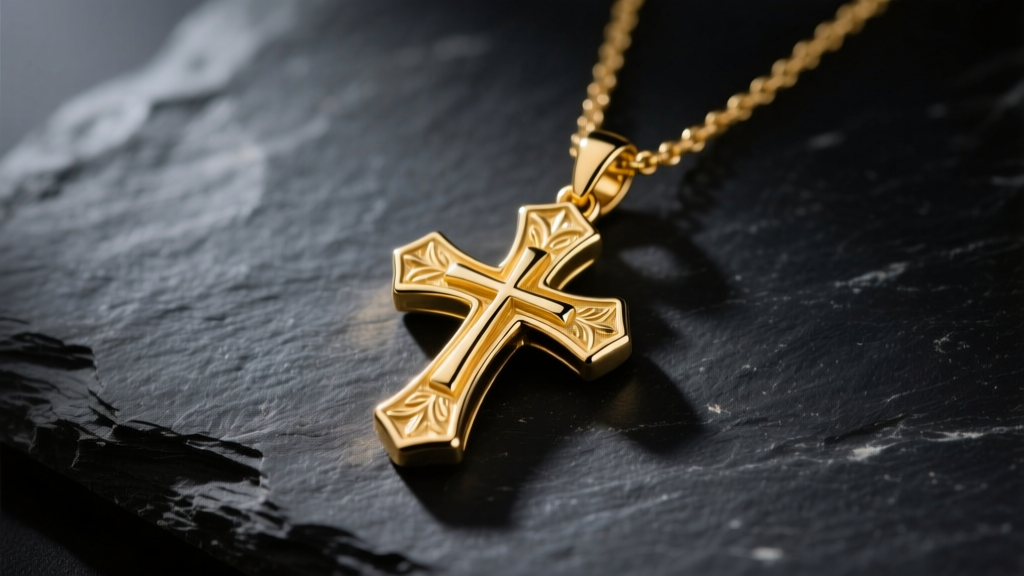
The Metallurgy of Faith and Fashion: Why Material Matters
A cross necklace is rarely just a piece of jewelry; it is a daily-wear artifact, a statement of belief, and a personal talisman. Because it rests directly against the sternum—an area prone to friction, sweat accumulation, and temperature fluctuations—the metallurgical properties of the pendant and its chain dictate its lifespan and your skin's health. Selecting the right alloy is not merely an aesthetic choice; it is a functional necessity.
When investing in a cross necklace, buyers often focus exclusively on the design or the gemstone accents, overlooking the base metal's tensile strength, corrosion resistance, and galvanic reactivity. According to the Gemological Institute of America (GIA), the alloy composition of precious metals fundamentally alters their hardness, color stability, and wear characteristics. In this comprehensive guide, we dissect the material science behind the most common metals used in cross pendants, providing you with actionable data to match your lifestyle with the optimal alloy.
Precious Metals: Gold and Platinum Alloys
Gold remains the traditional standard for religious and fashion jewelry, but pure 24k gold is far too soft (Vickers hardness of ~60 HV) for a daily-wear pendant. Therefore, jewelers alloy it with copper, silver, and zinc to increase durability.
14k vs. 18k Gold
14k gold (58.3% pure gold) boasts a Vickers hardness of approximately 130-150 HV, making it highly resistant to scratching and deformation. It is the ideal choice for intricate cross designs with delicate filigree or diamond pavé, as the prongs will hold stones securely over decades of wear. 18k gold (75% pure gold) is softer (~110-125 HV) and possesses a richer, warmer hue, but it is more susceptible to micro-abrasions from clothing friction. Pricing for a standard 1-inch 14k gold cross pendant typically ranges from $350 to $800, while 18k equivalents command $600 to $1,200.
Platinum (Pt950)
Platinum is exceptionally dense and heavy, giving a cross necklace a substantial, premium feel on the chest. Unlike gold, which loses microscopic layers of metal when scratched, platinum merely displaces, developing a soft "patina" over time. Pt950 (95% platinum, 5% ruthenium or iridium) is hypoallergenic and impervious to tarnish, though its high density makes it the most expensive option, often starting above $900 for a modest pendant.
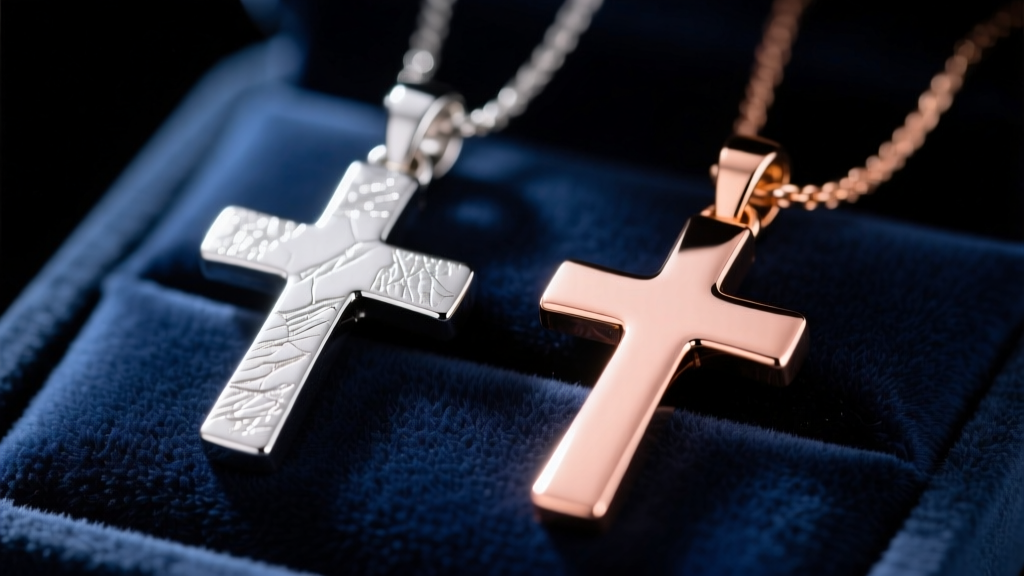
The Workhorses: Sterling Silver vs. Surgical Steel
For those seeking durability and affordability without the premium price tag of gold or platinum, sterling silver and surgical steel dominate the market. However, their chemical behaviors are vastly different.
| Property | 925 Sterling Silver | 316L Surgical Steel |
|---|---|---|
| Composition | 92.5% Silver, 7.5% Copper | 16-18% Cr, 10-14% Ni, 2-3% Mo |
| Tarnish Resistance | Low (Reacts to hydrogen sulfide) | Extremely High (Passive oxide layer) |
| Hardness (Vickers) | ~65-75 HV (Soft, easily scratched) | ~150-190 HV (Highly scratch-resistant) |
| Hypoallergenic | Yes (Unless alloyed with nickel) | No (Contains 10-14% Nickel) |
| Average Price (Pendant) | $45 - $150 | $25 - $60 |
The Reality of 925 Sterling Silver
Sterling silver is a classic choice for a cross necklace, but the 7.5% copper content makes it highly reactive to sulfur compounds in the air and human sweat, leading to silver sulfide (tarnish). To combat this, many manufacturers apply a microscopic layer of rhodium plating. While rhodium prevents tarnish, it eventually wears away at the high-friction points of the pendant bail, requiring re-plating every few years.
316L Marine-Grade Stainless Steel
316L steel is an industrial workhorse adapted for jewelry. The addition of 2-3% molybdenum drastically increases its resistance to pitting corrosion from chlorides (like sweat and swimming pool water). It requires zero maintenance and will not tarnish. However, the 10-14% nickel content makes it unsuitable for individuals with contact dermatitis, as prolonged skin contact can trigger allergic reactions.
Hypoallergenic Heroes: Titanium and Niobium
If you suffer from metal sensitivities, the Mayo Clinic's dermatological guidelines strongly recommend avoiding alloys containing nickel and copper. This is where reactive metals like titanium and niobium shine.
Aerospace-Grade Titanium
Titanium is renowned for its exceptional strength-to-weight ratio. A titanium cross necklace will feel incredibly light on the neck, eliminating the "pendulum effect" that heavier gold or steel pendants experience during physical activity. For jewelry, you will typically encounter Grade 2 (commercially pure, softer) or Grade 5 (Ti-6Al-4V, an aerospace alloy that is vastly harder and can be polished to a mirror finish). Titanium is 100% biocompatible, meaning it will never cause a skin reaction, and it is completely impervious to saltwater and chlorine. Furthermore, titanium can be anodized using electricity to produce vibrant, permanent colors like deep blues and purples without the use of dyes or plating.

Niobium
Less common than titanium, niobium is a highly malleable, hypoallergenic refractory metal. It is heavier than titanium but lighter than steel, offering a satisfying drape. Niobium is primarily chosen by artisan jewelers for its anodizing properties, allowing for striking, iridescent cross designs that shift color in the light.
Real-World Failure Modes and Maintenance
Even the most expensive platinum cross necklace will fail if the structural weak points are ignored. Understanding how jewelry breaks allows you to perform preventative maintenance.
- Bail Friction: The bail (the loop connecting the cross to the chain) experiences constant kinetic friction. In soft metals like 18k gold or silver, the chain can eventually saw through the bail. Inspect the bail's inner thickness annually. If it thins below 1mm, have a jeweler reinforce it.
- Chain Tensile Failure: A heavy solid gold cross pendant requires a chain with adequate tensile strength. Delicate chains like serpentine or thin box chains will snap under the dynamic load of a heavy pendant during sudden movements. Opt for structural chains like rope, wheat, or thick curb chains (minimum 2.0mm width) for pendants exceeding 15 grams.
- Prong Degradation: If your cross features gemstones, the prongs holding them are subject to snagging on knitwear. Have a professional jeweler check prong tension every 18 months to prevent stone loss.
Final Verdict: Matching Your Lifestyle to the Alloy
Selecting the perfect metal for a cross necklace requires balancing budget, aesthetics, and daily environment. If you lead an active lifestyle, frequently swim, or work with your hands, Grade 5 Titanium or 316L Surgical Steel (assuming no nickel allergy) offer unmatched resilience and zero maintenance. For those seeking a lifelong heirloom piece with traditional prestige and excellent stone-setting security, 14k Gold remains the undisputed champion, offering the perfect equilibrium of precious metal value and structural hardness. Finally, if you desire a heavy, luxurious feel and have a flexible budget, Platinum provides a brilliant, hypoallergenic canvas that will outlast generations.


