Beginner's Guide to Choosing a Crystal Lariat Necklace
Discover how to choose, tie, and style a crystal lariat necklace. Learn about chain gauges, crystal hardness, and neckline pairings.

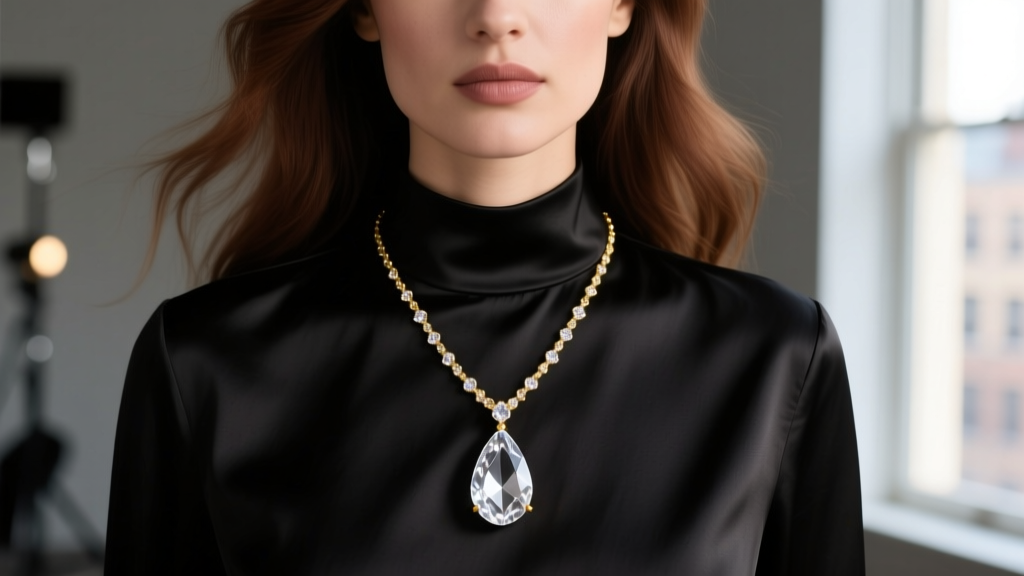
What Exactly Is a Crystal Lariat Necklace?
A crystal lariat necklace is a versatile, clasp-free jewelry piece characterized by a long chain that threads through a central slide bead or fixed loop, creating a distinctive 'Y' shape. Unlike traditional necklaces that sit statically on the collarbone, lariats offer dynamic adjustability. The wearer can manipulate the drop length, tie knots, or wrap the chain multiple times, making it one of the most adaptable silhouettes in modern jewelry design.
For beginners, the appeal lies in its effortless elegance and customizability. However, not all lariats are constructed equally. The longevity and drape of your necklace depend entirely on three factors: the chain gauge, the metal type, and the Mohs hardness of the featured crystal. In this guide, we will break down the exact specifications you need to look for when purchasing your first crystal lariat necklace, ensuring you invest in a piece that is both beautiful and structurally sound.
The Anatomy of a Lariat: Slide Beads vs. Fixed Drops
Before selecting a crystal, you must understand how the necklace functions. There are two primary construction methods for lariats:
- The Slide Bead Lariat: This is the most common style. The chain threads through a small bead (often lined with silicone for grip) that can be moved up and down to adjust the 'Y' drop. The crystal pendant is usually attached to one or both ends of the chain.
- The Fixed Y-Drop Lariat: In this design, a central ring or soldered loop permanently fixes the drop length. The chain connects to the necklace clasp at the back of the neck, while a single chain segment drops down to the crystal. While less adjustable, fixed lariats eliminate the frustration of a slipping slide bead.
Pro Tip: If you opt for a slide bead lariat, check the bead's interior lining. Bare metal-on-metal sliding will eventually wear down the chain links. Look for beads with an internal silicone or rubber O-ring grip, which protects the chain and holds your desired length in place throughout the day.
Choosing the Right Crystal for Daily Wear
Because lariat necklaces hang freely and are prone to swinging, tapping against tables, or catching on clothing, the durability of the crystal is paramount. We measure gemstone durability using the GIA Mohs Scale of Hardness. For a necklace that you plan to wear daily, you should aim for crystals with a Mohs rating of 7 or higher.
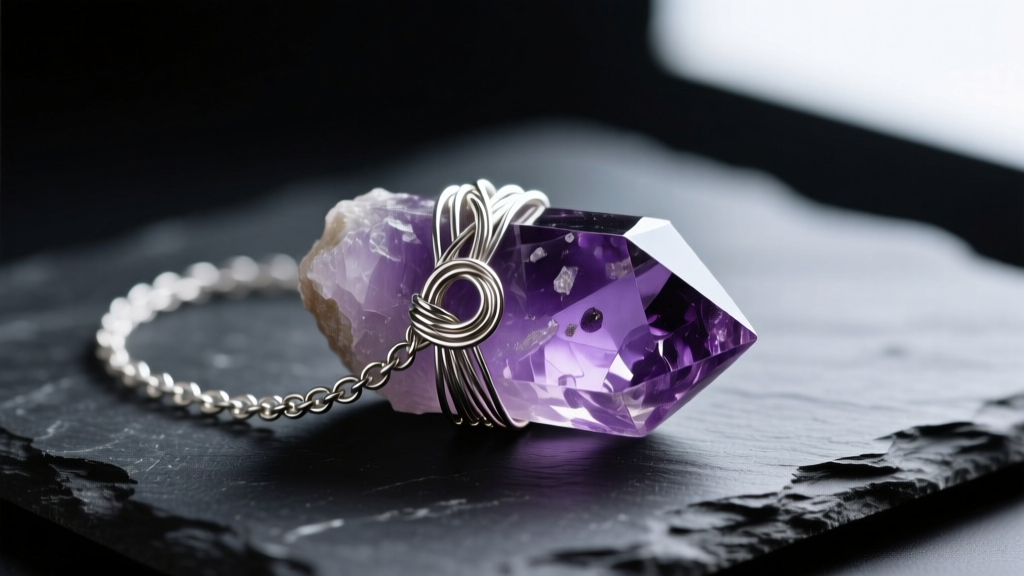
Crystal Durability & Pricing Chart
| Crystal Type | Mohs Hardness | Cleavage Risk | Avg. Price Range (14k Gold-Filled) | Best For |
|---|---|---|---|---|
| Clear Quartz | 7 | None (Conchoidal fracture) | $65 - $95 | Everyday wear, high impact resistance |
| Amethyst | 7 | None | $70 - $110 | Statement pieces, evening wear |
| Tourmaline | 7 - 7.5 | Moderate | $120 - $180 | Color variety, durable daily wear |
| Fluorite | 4 | Perfect (High chip risk) | $40 - $60 | Occasional wear only, display |
| Selenite | 2 | Perfect (Water soluble) | $25 - $45 | Avoid for jewelry, strictly display |
As shown above, while crystals like fluorite and selenite are visually stunning, their low Mohs ratings make them terrible candidates for a swinging lariat pendant. A single tap against a granite countertop will chip a fluorite point. Stick to quartz-family stones for worry-free styling.
Chain Gauges and Materials: Preventing Kinks
The most common point of failure for a crystal lariat necklace is the chain. Because the chain must constantly slide through a bead or loop, it requires high flexibility. According to jewelry manufacturing standards outlined by Rio Grande, chain flexibility is dictated by its gauge (thickness) and link structure.
The Best Chain Styles for Lariats
- Cable Chain (20-Gauge / 0.81mm): The gold standard for lariats. The simple oval links provide excellent drape, resist kinking, and slide smoothly through metal beads. A 20-gauge thickness offers the perfect balance between delicate aesthetics and structural integrity.
- Rolo Chain (18-Gauge / 1.02mm): Featuring round, interlocking links, rolo chains are slightly heavier and highly durable. They are ideal for heavier crystal pendants, such as large raw quartz points or geode slices.
Chains to Avoid
Never buy a lariat with a Box Chain or Snake Chain. Box chains are constructed with square, tightly interlocked links that lack lateral movement. When pulled through a tight slide bead, box chains will inevitably kink, twist, and eventually snap. Snake chains, while smooth, trap skin oils and hair, and will permanently crease if bent at a sharp angle while tying a knot.
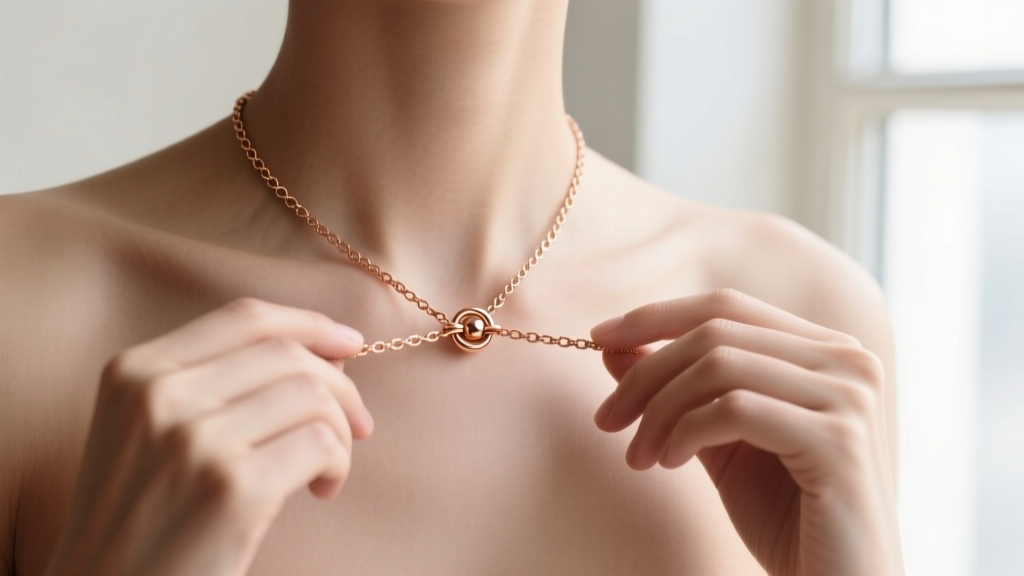
4 Foolproof Ways to Tie and Style Your Lariat
The beauty of the crystal lariat necklace is its styling versatility. Here are four distinct ways to wear it, depending on your outfit and the occasion:
- The Classic 'Y' Drop: Pull the chain through the slide bead until the pendant rests at your sternum. Leave the two front ends of the chain hanging parallel. This elongates the neck and is perfect for deep V-neck blouses.
- The Asymmetrical Drape: Thread the chain so the slide bead sits just below your collarbone on one side, allowing the crystal pendant to hang off-center. This creates an edgy, modern look that pairs beautifully with off-the-shoulder tops.
- The Choker Wrap: If your lariat is long enough (typically 40 inches or more), wrap it around your neck twice. Let the crystal drop hang down the center, and tie the remaining ends into a simple overhand knot at the base of your throat.
- The Layered Knot: Pair your crystal lariat with a shorter, 16-inch choker. Pull the lariat's slide bead up tight to the base of your neck and tie a loose knot right above the crystal, creating a clustered, textured focal point.
Neckline Pairings: Maximizing the 'Y' Silhouette
A lariat necklace relies on negative space to make an impact. Because the eye is naturally drawn down the vertical line of the drop, you must choose necklines that complement, rather than compete with, this geometry.
- V-Necks and Sweetheart Necklines: The ideal pairing. The 'Y' shape of the lariat mirrors the 'V' of the neckline, creating a cohesive, elongating effect that flatters all body types.
- Button-Down Shirts: Leave the top three buttons undone. The lariat acts as a visual bridge, drawing the eye inward and adding a touch of femininity to structured, menswear-inspired tailoring.
- Crew Necks (Proceed with Caution): A short drop lariat can look cluttered against a high crew neck. If you must wear it with a crew neck, opt for a fixed-drop lariat where the crystal hangs at least 4 inches below the collarbone, clearing the fabric line entirely.
Care and Maintenance: Protecting the Slide Mechanism
To ensure your crystal lariat necklace lasts for years, specific maintenance is required—particularly regarding the slide bead and the crystal itself.
1. Silicone Degradation: If your slide bead uses an internal silicone grip, be aware that natural skin oils, lotions, and perfumes will cause the silicone to degrade, harden, and lose its grip over 12 to 18 months. If the bead starts slipping, you can easily replace it by purchasing a replacement 'silicone stopper bead' from any jewelry supply store, or upgrade to a metal bead with a tension spring insert.
2. Crystal Cleansing: Clean your quartz or amethyst pendant using warm water, a drop of mild dish soap, and a soft-bristled baby toothbrush. Avoid ultrasonic cleaners if your crystal has internal inclusions or fractures, as the high-frequency vibrations can cause the stone to split along its fault lines.
3. Storage: Never store your lariat in a tangled pile. The sliding chain is prone to knotting upon itself. Always hang the necklace on a vertical jewelry stand, or lay it completely flat and straight in a velvet-lined drawer, ensuring the crystal pendant is not resting on top of the chain links to prevent scratching.


