Japanese Necklace Tattoo Aesthetic: Ink & Jewelry Guide
Discover the Japanese necklace tattoo trend. Learn how to style Irezumi collarbone ink and choose tattoo-inspired pendants safely for healed skin.

The Intersection of Ink and Metal: Understanding the Trend
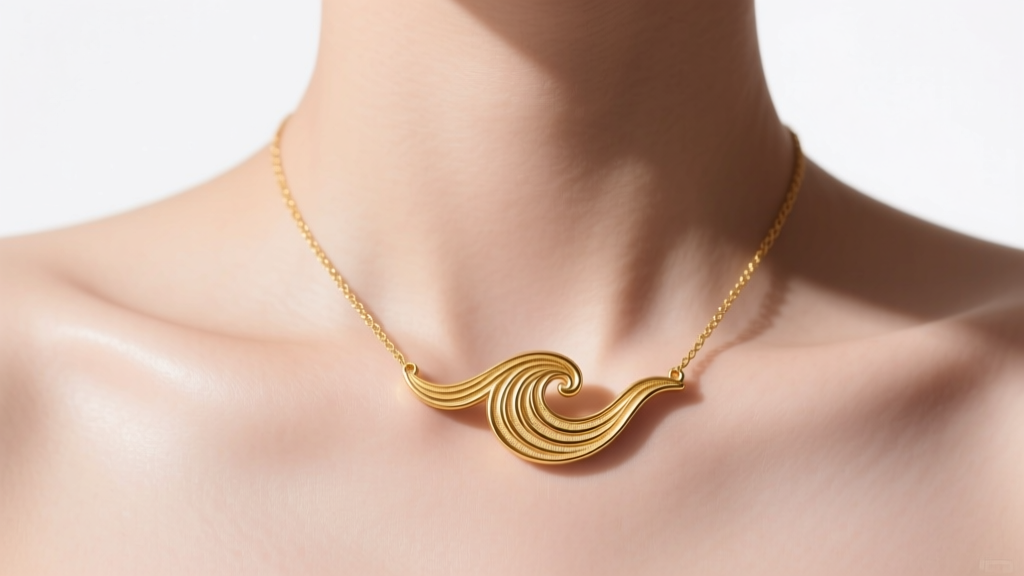
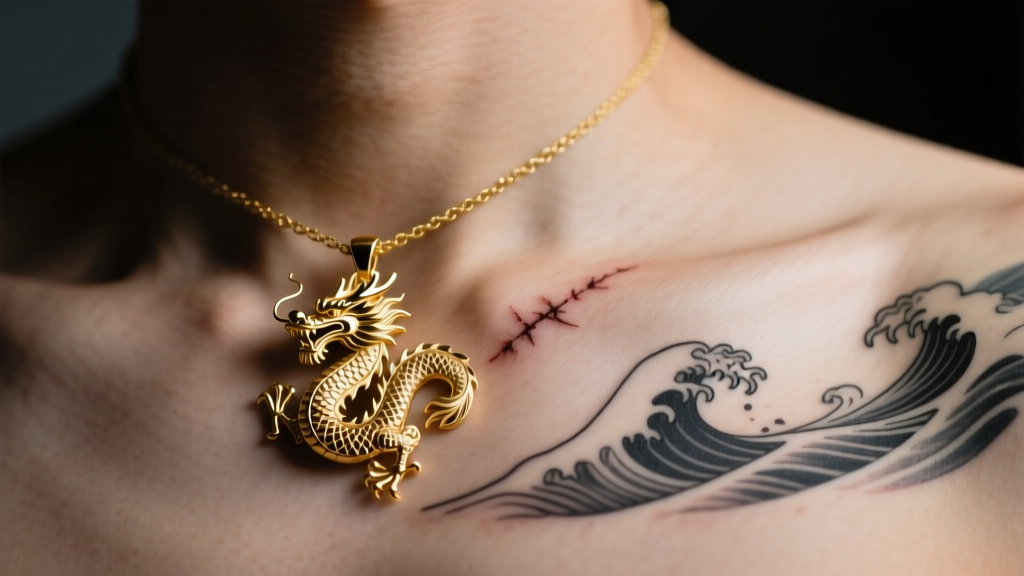
When enthusiasts and collectors search for a japanese necklace tattoo, they are typically navigating the intersection of two distinct but overlapping aesthetic worlds. On one hand, this term refers to the highly sought-after permanent body art where traditional Irezumi motifs are tattooed directly across the collarbones and throat to mimic the drape of a necklace. On the other hand, it describes a rapidly growing jewelry movement in 2026 where fine metalworkers craft hyper-detailed, tattoo-inspired pendants designed to rest perfectly over the suprasternal notch and clavicle, offering the visual weight of ink without the permanence.
As a jewelry stylist, I frequently consult with clients who either want to frame their existing Japanese-inspired collarbone tattoos with the right chain, or who want to achieve the exact visual aesthetic of a traditional neck tattoo using high-karat gold and implant-grade metals. The neck and collarbone area features some of the thinnest skin on the human body—averaging just 0.5mm to 1.0mm in thickness compared to the 2.0mm thickness on the back. This biological reality dictates strict rules for jewelry selection, metal grades, and chain gauges to prevent contact dermatitis, friction burns, and damage to both the skin and the jewelry.
Decoding the Motifs: Irezumi Ink vs. Metal Pendants
Whether you are sitting in a tattoo parlor for a Tebori (hand-poked) session or browsing a jeweler's CAD designs, the core motifs of Japanese art remain consistent. Translating these from skin to metal requires an understanding of line weight and negative space.
- Seigaiha (Ocean Waves): In ink, this represents resilience and the ebb and flow of life. As a pendant, Seigaiha is best executed in 18k yellow gold with deep oxidized recesses to mimic the bold black linework of a traditional tattoo. A 20mm to 25mm drop pendant is ideal to capture the concentric circle details.
- Ryu (Dragon): Symbolizing wisdom and strength. Dragon motifs require intricate scaling. For jewelry, look for micro-pave diamond accents or hand-engraved scales on a solid 14k gold base. 14k gold is preferred over 18k for complex dragon pendants because the higher copper and zinc alloy content increases the Vickers hardness, preventing the delicate dragon whiskers from bending against the chest.
- Sakura (Cherry Blossom): Representing the transient nature of life. Sakura translates beautifully into rose gold or enamel-infused pendants. For a tattoo-mimicking effect, jewelers use black rhodium plating on the stems to replicate the stark contrast of blackwork tattoo ink against the skin.
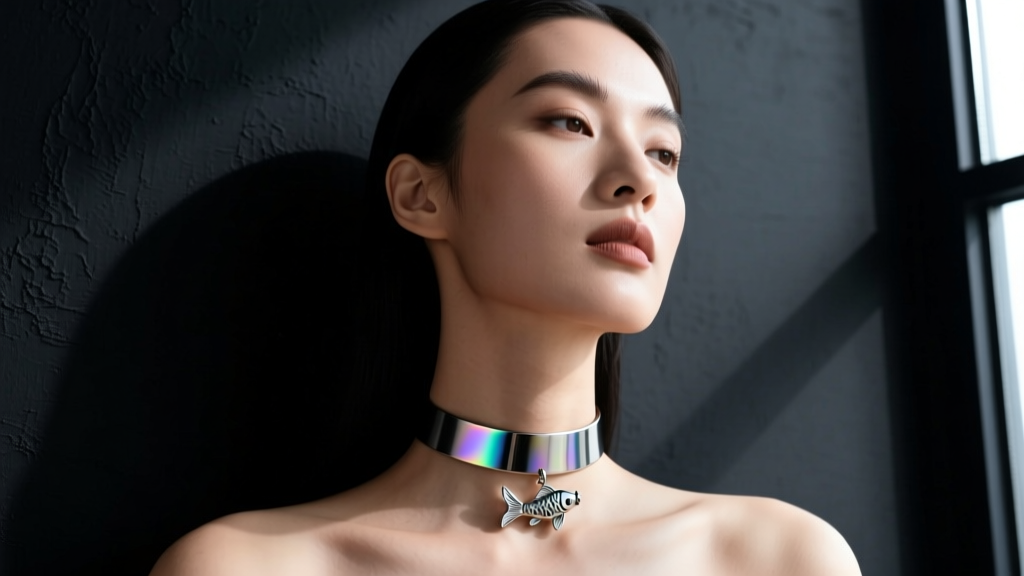
- Koi Fish: A symbol of perseverance. Koi pendants are often asymmetrical, designed to curve naturally along the clavicle rather than hanging dead-center.
The Jewelry-Tattoo Compatibility Matrix
Styling a necklace over or around a Japanese collarbone tattoo requires precise attention to chain length and drop placement. The wrong length can obscure the focal point of the ink, while the right length acts as a framing device. Below is a structural guide to matching chain lengths with specific Irezumi placements.
| Chain Length | Placement Zone | Best Motif Pairing | Tattoo Interaction & Styling Notes |
|---|---|---|---|
| 14 inches (Choker) | High neck / Throat | Minimalist Kanji, Small Sakura | Sits above the clavicle. Ideal for avoiding fresh collarbone ink during the 4-week healing phase. Use a 1.0mm gauge to prevent choking sensations. |
| 16 inches (Princess) | Clavicle / Collarbone | Seigaiha Waves, Koi | Frames the collarbone perfectly. The pendant will rest in the suprasternal notch, acting as a centerpiece between symmetrical left/right collarbone tattoos. |
| 18 inches (Matinee) | Upper Chest | Dragon, Tiger, Full Chest Pieces | Drops below the collarbone. Best for layering over large, healed chest pieces where the ink serves as the background and the gold serves as the foreground. |
Skin Safety: Metal Grades and Friction Management
The most critical mistake beginners make when pairing jewelry with a japanese necklace tattoo is ignoring metal biocompatibility. The skin on the neck and chest is highly vascular and exceptionally thin. According to the DermNet NZ guidelines on contact dermatitis, nickel exposure can trigger severe allergic reactions, which are exacerbated when the skin barrier is compromised or constantly subjected to micro-abrasions from heavy jewelry.
The Approved Metals for Tattooed Skin
If you are wearing jewelry over a healed tattoo, or waiting out the healing period of a fresh piece, you must restrict your choices to biocompatible metals:
- ASTM F136 Implant-Grade Titanium: The absolute gold standard for skin safety. It contains zero nickel and is incredibly lightweight. A 1.5mm titanium cable chain will drape over a healing tattoo without causing the friction burns associated with heavier brass or silver alloys.
- Solid 14k and 18k Gold: Safe for healed skin. However, avoid gold-plated or gold-vermeil chains. The thin layer of gold will eventually wear away from the friction of the collarbone, exposing the base metal (often brass or copper) which can cause green discoloration and irritate the tattooed tissue.
- Niobium: A highly hypoallergenic, lightweight metal that can be anodized to produce deep blacks and vibrant colors, mimicking the look of colored tattoo ink without the use of chemical dyes or enamels.
Chain Weaves and Friction Profiles
Not all chains are created equal when they rest against inked skin. The Mayo Clinic emphasizes keeping healing and newly healed skin free from irritants and excessive friction. Your chain weave dictates the friction profile:
- Snake Chain: Features a smooth, tubular surface. This is the best choice for wearing over sensitive or recently healed collarbone tattoos, as it glides over the skin without catching on microscopic scabs or dry skin flakes.
- Cable Chain: The classic oval-link design. While beautiful, the individual links can pinch the thin skin of the neck if the gauge is too thick. Stick to 1.2mm or smaller for cable chains in this region.
- Wheat (Spiga) Chain: Highly textured and woven. Avoid wearing wheat chains directly over fresh or peeling tattoos, as the woven grooves can harbor bacteria and act like a mild abrasive against the delicate epidermis.
Advanced Layering Techniques for the Collarbone
Achieving the ultimate japanese necklace tattoo aesthetic often involves layering multiple chains to mimic the intricate, sweeping lines of a full Irezumi chest piece. In 2026, the trend has moved away from chaotic, tangled layering toward intentional, structured cascading.
The 16-to-18 Inch Cascade Rule
To layer without tangling, you must maintain a minimum 2-inch gap between chains. Start with a 16-inch 1.0mm titanium snake chain featuring a small, 10mm Sakura blossom charm. This chain will sit high on the clavicle. Follow this with an 18-inch 1.5mm 14k gold cable chain holding a larger, 25mm Seigaiha wave pendant. The 2-inch drop ensures the pendants do not collide, and the contrast between the cool titanium and warm gold mimics the multi-tonal shading found in traditional Japanese black-and-grey tattoos.
Clasp Mechanics and Accessibility
When dealing with neck jewelry, especially if you are navigating the soreness of a fresh collarbone tattoo, traditional lobster clasps can be incredibly frustrating to fasten behind the neck. Upgrade your chains with neodymium magnetic clasps or box clasps with safety latches positioned at the front or side of the neck. This not only preserves the integrity of your fingernails but prevents you from accidentally scratching the delicate skin at the nape of your neck while fumbling with tiny metal springs.
"The true mastery of the Japanese necklace tattoo aesthetic lies in restraint. The jewelry should not compete with the skin; it should act as a metallic extension of the body's natural topography, drawing the eye to the clavicle and the throat without overwhelming the wearer's natural canvas."
Final Styling Verdict
Whether you are committing to the needle for a permanent Irezumi collarbone piece or curating a collection of tattoo-inspired fine jewelry, the principles remain the same: respect the biology of the neck, prioritize biocompatible metals like ASTM F136 titanium and solid gold, and choose motifs that carry deep cultural resonance. By understanding the interplay between chain gauge, pendant drop, and skin thickness, you can master the japanese necklace tattoo look, creating a harmonious blend of ancient artistry and modern metallurgy that is entirely your own.


