2026 Gift Guide: The Ultimate Crystal Necklace Blue Stone Guide
Discover the 2026 gift guide for the perfect crystal necklace. Blue gemstones like sapphire, topaz, and lapis lazuli matched to every occasion.

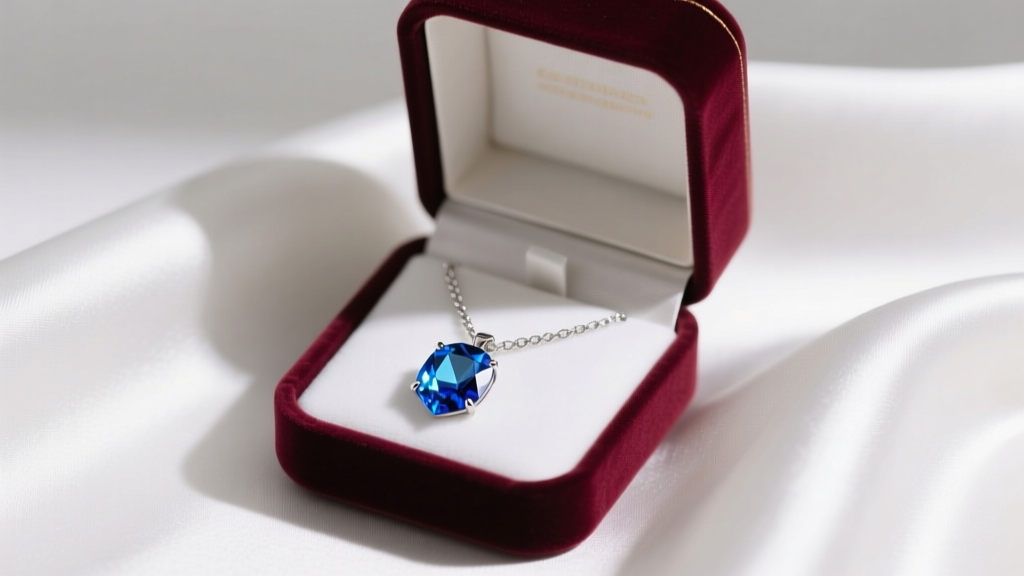
Gifting jewelry is an intimate gesture, and in 2026, the focus has shifted heavily toward pieces that carry both aesthetic brilliance and emotional resonance. When selecting a crystal necklace blue in hue, you are tapping into a color palette that universally symbolizes tranquility, loyalty, and wisdom. However, the term 'blue crystal' encompasses a vast geological spectrum, ranging from the nearly indestructible corundum family to delicate, porous stones that require meticulous care.
This comprehensive gift guide moves beyond generic jewelry advice. We will break down exact Mohs hardness ratings, specific treatment disclosures required by federal law, and precise metal pairings to help you match the perfect blue crystal pendant to your recipient's lifestyle and occasion.
The Durability Matrix: Will It Survive Daily Wear?
Before purchasing a gemstone pendant, you must evaluate the recipient's lifestyle. A stone that is perfect for occasional evening wear will quickly fracture if subjected to the rigors of daily gym sessions or manual labor. The Mohs Hardness Scale is your primary decision-making tool here.
| Blue Crystal | Mohs Hardness | Cleavage / Fracture Risk | Best Gifting Occasion |
|---|---|---|---|
| Blue Sapphire | 9.0 | No true cleavage; highly durable | Anniversaries, Daily Wear |
| Blue Topaz | 8.0 | Perfect basal cleavage (prone to splitting) | Graduations, Office Wear |
| Aquamarine | 7.5 - 8.0 | Poor cleavage, but brittle | Milestones, Spring Birthdays |
| Lapis Lazuli | 5.0 - 6.0 | Uneven fracture; porous | Wellness Gifts, Evening Events |
| Blue Kyanite | 5.0 - 7.0 | Perfect cleavage; directional hardness | Spiritual Milestones, Collectors |
Pro-Tip: Never gift a Blue Topaz or Kyanite necklace to someone who works with their hands. The perfect cleavage planes in these crystals mean a single sharp knock against a desk or steering wheel can split the stone cleanly in half.
Occasion Matching: Who Gets Which Blue Crystal?
The Milestone Anniversary: Sapphire & Aquamarine
For major anniversaries (particularly the 5th, 16th, or 45th), Sapphire and Aquamarine are the premier choices. Blue Sapphire (a variety of corundum) is second only to diamond in hardness. When shopping, look for 'Ceylon' sapphires, which offer a vibrant, medium-tone cornflower blue, or 'Montana' sapphires, which provide a slightly more muted, teal-blue aesthetic that has surged in popularity throughout 2025 and 2026. Expect to pay between $800 and $4,000 per carat for untreated, high-clarity stones.
Aquamarine, a member of the beryl family, offers a lighter, airy blue. According to the Gemological Institute of America (GIA), nearly all aquamarine on the market is heat-treated to remove greenish or yellowish secondary tones. This treatment is permanent and universally accepted in the gem trade, meaning you do not need to pay a premium for 'unheated' aquamarine unless you are a strict purist.
The Graduation or Promotion: Blue Topaz
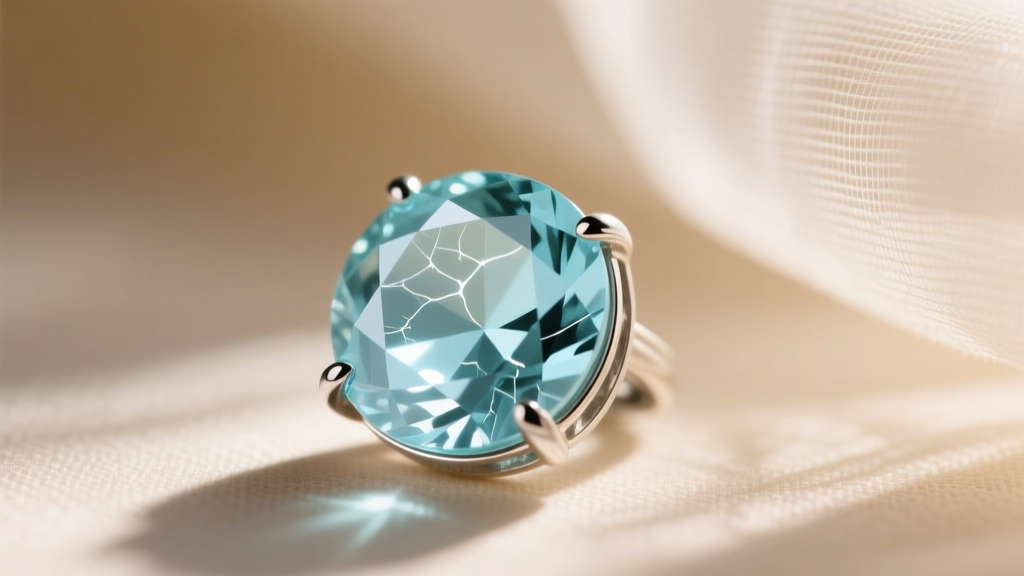
Blue Topaz is the undisputed champion of the 'accessible luxury' category, making it the ideal gift for college graduations or first major promotions. It offers incredible clarity and brilliance at a fraction of the cost of sapphire. However, as a buyer, you must understand the color grades:
- Sky Blue: A pale, delicate blue. Priced around $10–$20 per carat.
- Swiss Blue: A vibrant, electric medium blue. Priced around $20–$40 per carat.
- London Blue: A deep, inky blue with subtle gray or green undertones. Priced around $30–$70 per carat.
Crucial Disclosure: Blue topaz does not occur in these vibrant shades naturally. It is created by irradiating colorless topaz and subsequently heating it. The Federal Trade Commission (FTC) Jewelry Guides mandate that sellers disclose irradiation treatments if they affect the stone's value or require special care, though the residual radioactivity in commercial topaz is safely regulated and decays to background levels long before it reaches the retail market.
The Spiritual & Wellness Seeker: Lapis Lazuli & Kyanite
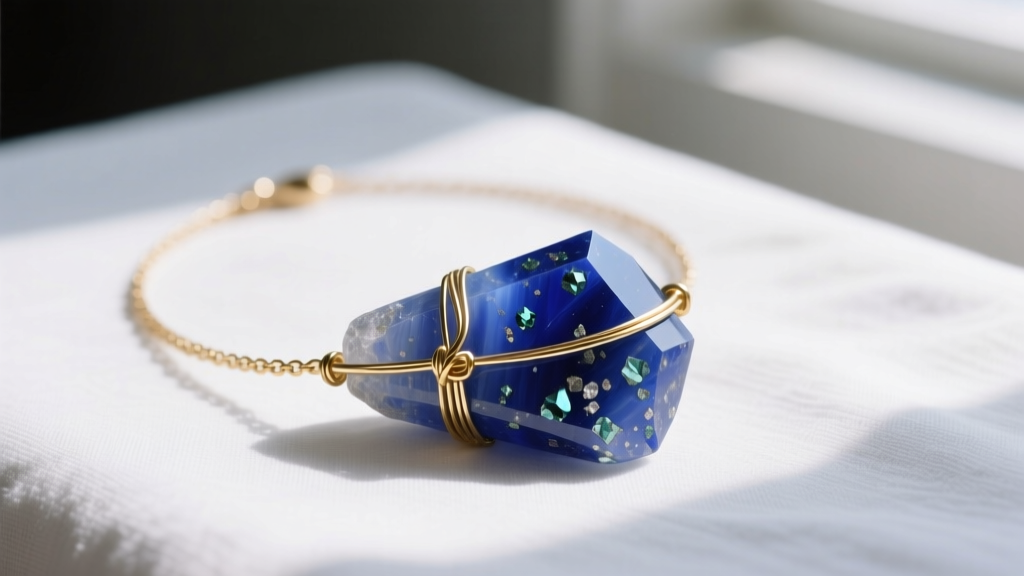
If your recipient is deeply invested in mindfulness, chakra balancing, or raw aesthetics, skip the faceted gems and opt for cabochon or raw stones. Lapis Lazuli is a metamorphic rock, not a single mineral. Its value is dictated by the intensity of its deep royal blue color (from lazurite) and the even distribution of golden pyrite flecks. Avoid stones with heavy white calcite veining, as this drastically lowers the value. Because Lapis is porous (Mohs 5-6), it must be set in a protective bezel and kept away from perfumes and lotions.
Blue Kyanite is a fascinating mineralogical anomaly. It exhibits 'directional hardness'—meaning it has a hardness of 5.0 along the length of its crystal blades, but 7.0 across them. This makes it incredibly challenging to cut and polish, resulting in a raw, slightly ridged texture that looks stunning in bohemian or artisanal wire-wrapped settings.
Metal Pairings and Chain Gauges
The metal you choose for a crystal necklace blue pendant dictates both its longevity and its aesthetic temperature.
Sterling Silver (925) vs. White Gold
Blue crystals inherently possess a cool color temperature, making white metals the traditional pairing. Sterling Silver is highly affordable and complements the icy tones of Aquamarine and Swiss Blue Topaz beautifully. However, silver tarnishes when exposed to sulfur and moisture. If you are gifting a porous stone like Lapis Lazuli, avoid silver settings that require frequent chemical dipping for cleaning, as the chemicals will ruin the stone.
For high-value stones like Sapphire, 14k or 18k White Gold is mandatory. White gold is alloyed with nickel or palladium and plated with rhodium to achieve its bright white finish. Be aware that rhodium plating wears off every 12 to 24 months and requires professional re-plating.
Chain Thickness and Clasps
A common failure mode in pendant necklaces is the chain snapping under the weight of the crystal. Follow these gauge rules:
- Delicate Pendants (Under 3 grams): 0.9mm to 1.1mm cable or box chains with a standard spring-ring clasp.
- Medium Pendants (3 to 8 grams): 1.2mm to 1.5mm rope or wheat chains. Upgrade to a lobster-claw clasp for security.
- Heavy Raw Stones (8+ grams): 1.8mm to 2.5mm Figaro or curb chains. A heavy stone on a thin chain will cause the links to stretch and eventually snap at the jump ring.
The 2026 Buyer’s Authenticity Checklist
Before finalizing your purchase, run the piece through this rapid authenticity and quality checklist to ensure you are getting exactly what you pay for:
- Demand Treatment Disclosures: If buying Sapphire, ask if it has been 'lattice diffusion' treated (a surface treatment that should heavily discount the price) or simply heat-treated (standard).
- Check for Synthetics: Lab-created blue sapphires and spinels are ubiquitous. If a 2-carat blue sapphire necklace is priced under $300 and has flawless clarity, it is almost certainly synthetic (Flame Fusion or Flux-Grown). Look for the word 'created' or 'simulated' in the fine print.
- Inspect the Bail: The bail (the loop connecting the pendant to the chain) should be soldered, not just bent shut. A bent bail will eventually pry open and drop the crystal.
- Verify the Return Policy: Natural crystals often have internal inclusions that don't show up in heavily edited e-commerce photos. Ensure the retailer offers a minimum 14-day no-questions-asked return window so the recipient can evaluate the stone's true color in natural daylight.
Final Gifting Thoughts
A blue crystal necklace is more than just an accessory; it is a wearable anchor. Whether you are presenting a flawless London Blue Topaz to celebrate a hard-earned degree, or a raw, pyrite-flecked Lapis Lazuli to support a friend's wellness journey, matching the stone's geological properties to the wearer's lifestyle ensures your gift will be cherished—and worn—for decades to come. Prioritize durability for daily wearers, and never compromise on the structural integrity of the chain and bail.