Crystal Rose Quartz Necklace: Material Properties & Care
Discover the material properties of a crystal rose quartz necklace. Compare grades, chain pairings, and durability against morganite and rhodonite.

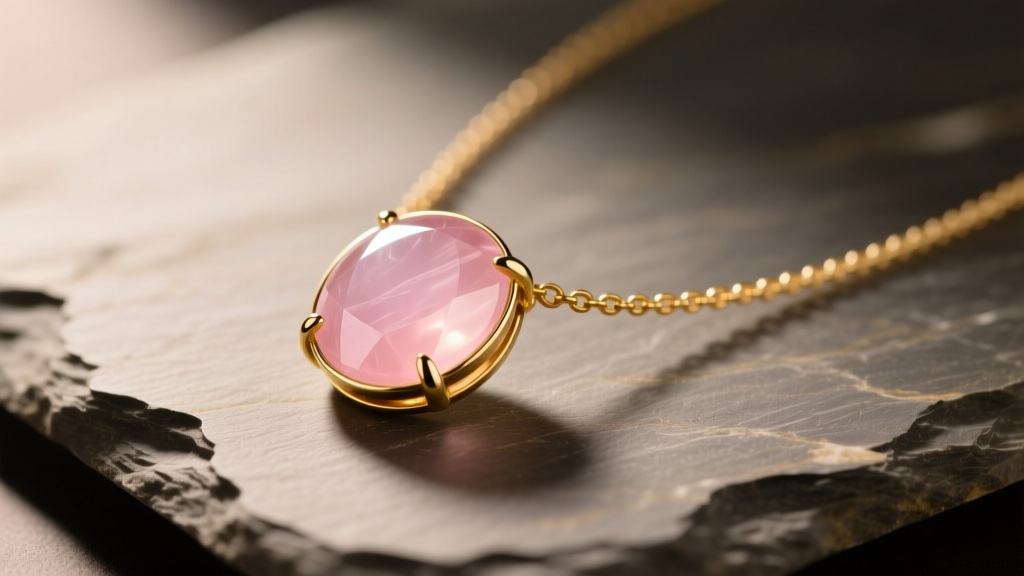
When selecting a crystal rose quartz necklace, most buyers are drawn to the stone's soothing pink hue and its reputation as the ultimate symbol of unconditional love. However, from a gemological and metallurgical perspective, rose quartz is a fascinating, complex material that requires specific handling, setting, and care. Unlike faceted diamonds or highly stable corundum, rose quartz presents unique structural challenges and opportunities for jewelry designers.
In this comprehensive material guide, we will dissect the mineralogical properties of rose quartz, establish a concrete grading framework, compare it against similar pink gemstones, and outline the exact chain metals and setting tensions required to ensure your necklace survives daily wear.
The Mineralogy of Rose Quartz: Hardness, Clarity, and Inclusions
Rose quartz is a macrocrystalline variety of the mineral quartz (silicon dioxide, SiO2). According to the Mindat.org mineral database, it registers a 7 on the Mohs scale of hardness, making it highly resistant to everyday scratches from dust and common metals. However, its toughness is only 'good' due to its conchoidal fracture and lack of cleavage. This means that while it won't scratch easily, a sharp impact against a hard surface can cause it to chip or shatter.
Unlike amethyst or citrine, which often form in distinct, visible crystal prisms, rose quartz almost exclusively occurs in massive, compact forms. The pink coloration is widely debated among gemologists; while traditionally attributed to trace amounts of titanium, iron, or manganese, advanced spectroscopic analysis by the Gemological Institute of America (GIA) suggests that microscopic fibers of a pink borosilicate mineral related to dumortierite are the primary color agents in most translucent specimens.
Grading Your Crystal Rose Quartz Necklace
Because rose quartz is rarely faceted and almost always cut en cabochon or carved, standard diamond grading (the 4 Cs) does not apply. Instead, the value of the pendant on your crystal rose quartz necklace is determined by translucency, color saturation, and the presence of asterism (the star effect). Below is the industry-standard grading matrix used by high-end lapidaries:
| Grade | Translucency & Color | Inclusions & Flaws | Market Price (Pendant Only) |
|---|---|---|---|
| Grade A (Commercial) | Opaque to slightly translucent; pale, washed-out pink. | Heavy white quartz veining, visible cracks, and chalky texture. | $5 - $15 |
| Grade AA (Mid-Tier) | Semi-translucent; consistent medium pink tone. | Moderate internal fogging; minor surface pitting. | $18 - $45 |
| Grade AAA (Gemmy) | Highly translucent; deep, vibrant 'bubblegum' pink. | Eye-clean with a smooth, glass-like polish; often from Madagascar. | $50 - $120+ |
| Star Rose Quartz | Translucent to opaque; displays a sharp 6-ray star under direct light. | Dense, perfectly aligned rutile needle inclusions required for asterism. | $80 - $250+ |
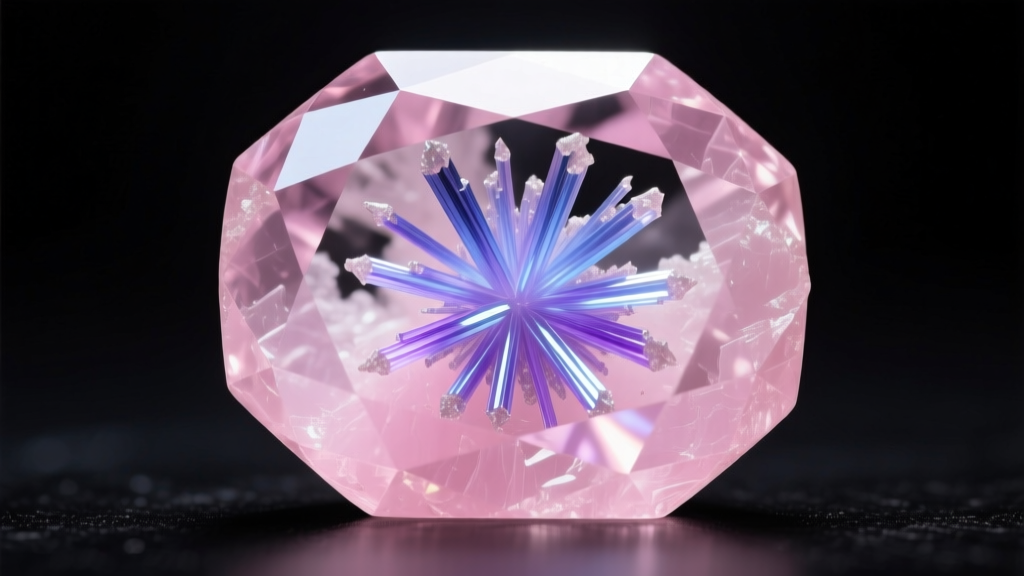
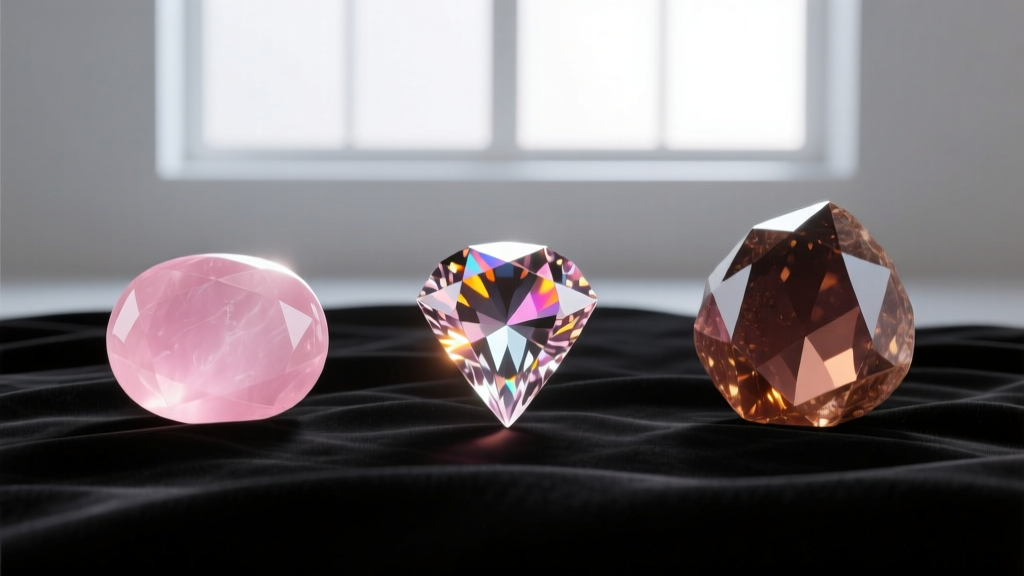
Material Comparison: Rose Quartz vs. Morganite vs. Rhodonite
If you are exploring pink gemstone necklaces, you will likely encounter morganite and rhodonite. Understanding the material differences is critical for determining long-term durability and aesthetic aging.
Morganite (The Beryl Alternative)
Morganite is a beryl variety (Mohs 7.5 - 8) with a significantly higher refractive index (1.57 - 1.58) compared to rose quartz (1.54). While morganite offers superior brilliance and is almost always faceted, it is also highly susceptible to cleavage fractures if struck. Furthermore, a high-quality morganite pendant will cost between $100 and $300 per carat, making a comparable-sized pendant exponentially more expensive than a Grade AAA rose quartz cabochon.
Rhodonite (The Opaque Competitor)
Rhodonite is an inosilicate mineral (Mohs 5.5 - 6.5) characterized by its opaque, deep pink-to-red body color intersected by striking black manganese oxide veins. Because it is softer than rose quartz, rhodonite is highly prone to micro-scratching and surface dulling over years of wear. It is also sensitive to prolonged sun exposure, which can cause the pink pigments to fade. Rose quartz, by contrast, is highly color-stable under UV light.
Pink Opal (The Fragile Option)
Pink opal (Mohs 5 - 6.5) is a porous, amorphous silica gel. It is incredibly fragile, prone to crazing (cracking due to moisture loss), and cannot withstand the ultrasonic cleaning methods that rose quartz can occasionally tolerate. For everyday wear, rose quartz remains the most structurally sound option among the opaque/semi-translucent pink stones.
Optimal Chain Metals and Setting Tensions for Rose Quartz
The structural integrity of your crystal rose quartz necklace depends just as much on the metalwork as the stone itself. Because rose quartz is typically cut into smooth, domed cabochons, the setting must protect the girdle (the outer edge) from impact.
Bezel vs. Prong Settings
Avoid prong settings for rose quartz. Prongs leave the girdle exposed, and the pressure required to tighten the prongs can induce internal stress fractures within the massive quartz structure. A full or half-bezel setting is the metallurgical ideal. The metal rim absorbs lateral impacts and secures the stone without applying localized pressure points.
Chain Pairings and Galvanic Considerations
Rose quartz's warm, milky pink tones are best complemented by specific metal alloys:
- 14k Yellow Gold: The warm undertones of yellow gold harmonize with the pink silica, creating a vintage, romantic aesthetic. A 1.2mm to 1.5mm solid 14k rolo or cable chain provides sufficient tensile strength to support a heavy, 20mm+ cabochon pendant without snapping.
- Sterling Silver (925): Silver provides a crisp, modern contrast. However, silver has a Mohs hardness of only 2.5 to 3. If the quartz pendant rubs directly against the silver chain, the quartz will act as an abrasive, permanently scratching the silver over time. Always ensure the pendant is suspended via a hardened steel or gold-filled jump ring to act as a sacrificial buffer.
- Rose Gold: While aesthetically popular, rose gold gets its color from copper. If you have acidic skin chemistry, copper alloys can oxidize and leave green residue on your neck. Ensure the rose gold is at least 14k and rhodium-plated on the clasp to prevent degradation.
Care, Cleansing, and Structural Maintenance
Despite its 7 Mohs hardness, a crystal rose quartz necklace requires specific maintenance protocols to preserve its polish and structural integrity.
Expert Warning: Never place a rose quartz pendant in an ultrasonic jewelry cleaner if the stone has visible surface-reaching fractures or if it is a 'Star Rose Quartz'. The high-frequency vibrations can cause internal rutile needles to shift or existing micro-fractures to propagate, resulting in a split stone.
For routine cleaning, use a solution of lukewarm water and a few drops of pH-neutral dish soap. Gently agitate the pendant with a soft-bristled baby toothbrush to remove sebum and cosmetic buildup from the bezel lip. Rinse thoroughly and dry with a microfiber cloth. Avoid steam cleaners, as sudden thermal shock can cause the quartz to fracture due to its relatively high thermal expansion coefficient.
By understanding the mineralogical realities of rose quartz and pairing it with the correct bezel settings and chain metals, you ensure that your necklace remains not just a beautiful talisman, but a structurally sound piece of fine jewelry capable of lasting generations.


