The Curse of the Necklace: 2026 Style & Trend Fixes
Discover how to break the curse of the necklace in 2026. Expert styling fixes for pendant flipping, chain tangling, and neckline clashes.


The Anatomy of 'The Curse of the Necklace'
Every seasoned stylist and jewelry collector is intimately familiar with the curse of the necklace. It is the frustrating phenomenon where a beautifully curated piece of jewelry actively undermines an outfit. The curse manifests in several distinct ways: the pendant that stubbornly flips backward to hide its gemstone, the layered chains that knot into an unbreakable matrix, the choker that creates a visually 'choked' silhouette, and the alloy that leaves a green oxidation ring on the collarbone. As maximalist layering and heavy sculptural pendants dominate the 2026 trend forecast, these functional and aesthetic failures are more prevalent than ever. Breaking the curse requires moving beyond mere aesthetics and understanding the physics, metallurgy, and geometry of jewelry design. This guide provides actionable, technical solutions to rewrite the rules of necklace styling.
Curse #1: The Physics of the Pendant Flip
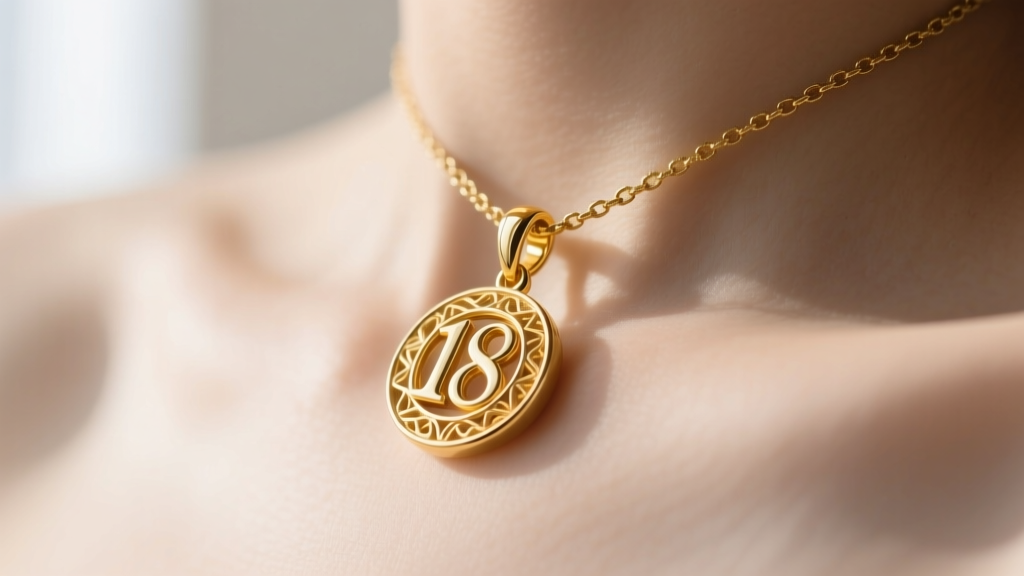
There is nothing more annoying than spending five minutes adjusting a pendant, only for it to flip backward the moment you take a step, exposing the plain metal backplate and the soldered bail. This is not bad luck; it is a center-of-gravity issue. The 'pendulum effect' occurs when the mass of the pendant is top-heavy relative to the bail's pivot point on the chain. If the bail is too light, gravity pulls the heavier decorative face backward.
The 2026 Counter-Weight Technique
To break this specific hex, you must manipulate the physics of the piece. For pendants weighing over 12 grams, standard lightweight bails (often under 1 gram) are insufficient. You need a bail that weighs at least 20-25% of the pendant's total mass to act as a counter-lever. Furthermore, bail aperture dictates rotational friction. A 5mm pendant bail sliding on a 1.2mm cable chain allows too much lateral movement. Match the bail's inner diameter to within 1.5mm of the chain's width to restrict flipping. If you are retrofitting an existing piece, jewelers can add a microscopic tungsten counter-weight bead inside the bail loop, a 2026 bench technique that lowers the center of gravity without altering the visual design.
Curse #2: The Layering Tangle Matrix
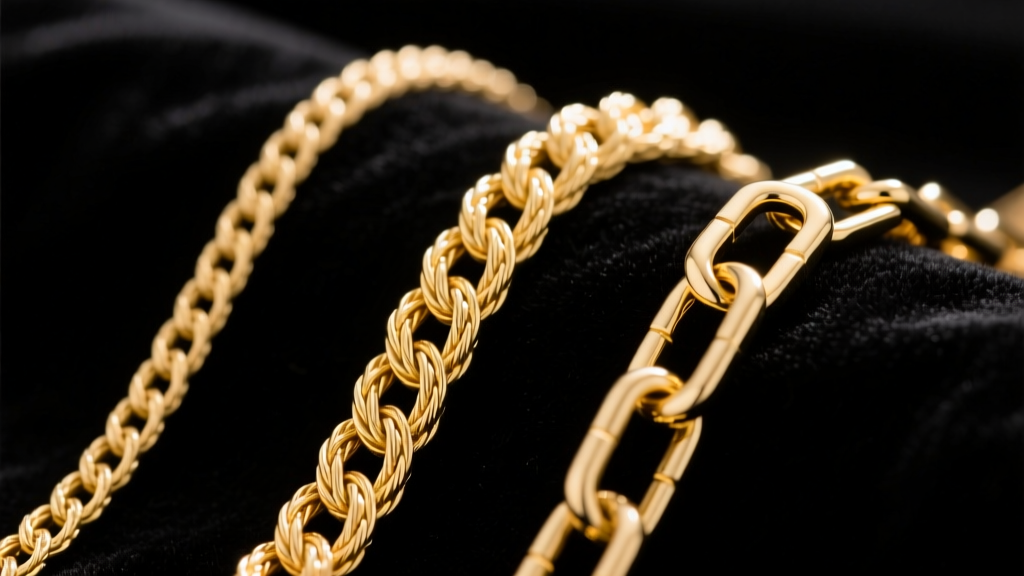
Layering three or more chains is a staple of modern street style and editorial fashion, but the 'tangle curse' ruins the look within minutes. Tangling is dictated by link geometry, surface friction, and electrostatic attraction. When multiple chains share the same link profile and length, their gaps interlock like gears.
| Chain Type | Link Profile | Surface Friction | Tangle Risk |
|---|---|---|---|
| Cable | Round/Oval interlocking | High (catches on adjacent links) | Severe |
| Rope | Twisted helical | Medium (smooth exterior) | Moderate |
| Box | Square geometric | Low (flat edges slide past each other) | Minimal |
| Snake | Wavy continuous | Low (but prone to permanent kinking) | Low (High Kink Risk) |
The 2-Inch Rule and Profile Mixing
According to Vogue's Necklace Layering Masterclass, the golden rule of stacking is the 2-inch differential. Never layer chains with less than a 2-inch length gap. A 16-inch choker, 18-inch princess, and 20-inch matinee create distinct visual zones that physically prevent the pendants from colliding. More importantly, you must mix link profiles. Pairing a structured box chain with a woven rope chain prevents their links from interlocking with one another, effectively neutralizing the tangle matrix.
Curse #3: The Neckline Collision
The curse of the choked silhouette happens when a necklace's terminal length clashes with the garment's neckline, creating visual clutter rather than elongation. In 2026, architectural necklines and asymmetrical cutouts are trending, making precise necklace placement critical.
- The Crew Neck: Avoid 16-inch chokers which mimic the shirt's seam and create a 'double-collar' effect. Opt for a 20-to-24-inch matinee length with a vertical pendant to draw the eye downward and elongate the torso.
- The Deep V-Neck: The pendant must terminate exactly one inch above the apex of the V. If it crosses into the skin-baring zone, it looks messy; if it sits too high, it ignores the garment's geometry.
- The Square Neck: Mirror the geometry. A horizontal, linear bar pendant or a collar-style rigid torque necklace complements the harsh angles of a square neckline far better than a chaotic, multi-strand layered cluster.
- The Off-Shoulder: Skip the neck entirely. The curse here is competing with exposed collarbones. Pivot to dramatic ear cuffs or a heavy, shoulder-grazing lariat that drapes over one shoulder.
Curse #4: The Green Skin Hex and Clasp Failures
Perhaps the most literal interpretation of the curse is the green or black oxidation ring left on the skin. This is a galvanic reaction, not an allergy. As detailed in Blue Nile's Metal Education Guide, lower-karat golds (like 10k or 14k) and gold-plated brass contain high percentages of copper and zinc. When these alloys interact with the skin's natural pH (averaging 5.5), sweat, and the sulfur compounds in modern lotions, copper oxidizes and transfers to the epidermis.
Material Upgrades for 2026
To banish the green skin hex, you must audit your metallurgy. If you require the warmth of gold but have highly acidic skin chemistry, bypass gold vermeil and plated brass entirely. Upgrade to solid 18k gold (which contains 75% pure gold, leaving less room for reactive copper), or pivot to 316L surgical stainless steel, which contains molybdenum that actively prevents surface oxidation. For white metals, platinum and palladium are entirely hypoallergenic and will never oxidize against the skin.
'The true mark of luxury in 2026 is not just the karat weight, but the engineering of the clasp. A spring-ring clasp fails after 500 tension cycles; a neodymium magnetic barrel clasp secures the piece with 15 pounds of lateral resistance.'
Finally, address the mechanical curse: the broken clasp. Traditional spring-ring clasps rely on a microscopic internal tension spring that degrades rapidly. In 2026, high-end jewelers are integrating N52-grade neodymium magnetic barrel clasps. These clasps snap together seamlessly, eliminate the need for fumbling with tiny jump rings, and provide immense structural integrity, ensuring your heavy pendants never hit the floor.
Final Verdict: Rewriting the Necklace Rules
The curse of the necklace is not an unavoidable law of fashion; it is simply a series of physical and chemical mismatches. By respecting the center of gravity in pendant design, engineering your layering stacks with varied link profiles and 2-inch length drops, matching geometric silhouettes to your necklines, and investing in stable, non-reactive metallurgy, you take total control of your styling. In 2026, the most stylish individuals are those who treat their jewelry not just as decoration, but as engineered accessories designed to perform flawlessly in the real world.


