Buying a Necklace 925 Sterling Silver: A Beginner's Guide
Learn how to choose, verify, and care for your first necklace 925 sterling silver. Expert tips on hallmarks, tarnish prevention, and pricing.

What Exactly is 925 Sterling Silver? (The Metallurgy Breakdown)
When you begin shopping for fine jewelry, you will inevitably encounter the term "925 sterling silver." For beginners, understanding this designation is the most critical step in making an informed purchase. Pure silver, also known as fine silver (99.9% Ag), is exceptionally beautiful but far too soft for everyday wear. On the Mohs scale of mineral hardness, pure silver sits at a mere 2.5 to 3, meaning it can be easily scratched, bent, or warped by simple mechanical stress.
To solve this, metallurgists created sterling silver, an alloy consisting of exactly 92.5% pure silver and 7.5% secondary metals—most commonly copper. This precise ratio dramatically increases the tensile strength and durability of the metal while retaining the brilliant white luster of pure silver. According to the Gemological Institute of America (GIA), this 92.5% threshold is the globally recognized standard for sterling silver. However, modern metallurgy has also introduced alternatives like Argentium silver, which replaces some copper with germanium to significantly boost tarnish resistance. When buying your first necklace 925 sterling silver, you are investing in a time-tested alloy that balances luxury with structural integrity.
How to Verify Authenticity (Spotting Fakes in 2026)
The market is saturated with silver-plated base metals masquerading as solid sterling silver. Before purchasing a necklace 925 sterling silver, you must know how to verify its authenticity using non-destructive testing methods.
The Hallmark Inspection
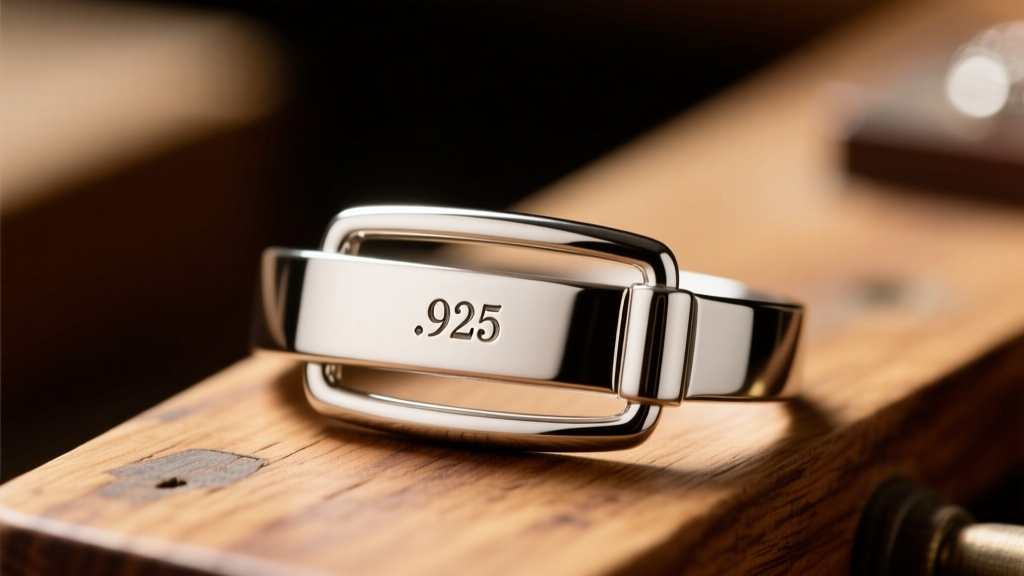
By law in most jurisdictions, genuine sterling silver must be stamped with a quality mark. Look closely at the clasp or the end ring of the chain for engravings such as .925, STER, STG, or Sterling. Use a jeweler's loupe (10x magnification) to ensure the stamp is crisp and deeply struck, not merely painted or laser-etched on the surface.
The Neodymium Magnet Test
Silver is paramagnetic, meaning it exhibits very weak magnetic properties. If you hold a strong neodymium rare-earth magnet to your necklace and it snaps to the metal or shows noticeable pull, the core is likely ferromagnetic (such as iron, nickel, or cobalt) and merely plated with a microscopic layer of silver. Note that the clasp's internal spring mechanism may be made of steel and will attract a magnet, so always test the chain links themselves.
The Thermal Conductivity (Ice) Test
Silver possesses the highest thermal conductivity of any common metal, measuring an impressive 429 W/(m·K). If you place an ice cube on a thick sterling silver pendant, the ice will begin to melt almost instantaneously, far faster than it would on a plastic or stainless steel surface, as the silver rapidly draws ambient heat into the ice.
Pricing Framework: What Should You Actually Pay?
One of the most common beginner mistakes is overpaying for basic silver chains. The raw material cost of silver is relatively low compared to gold or platinum. Therefore, the price of a necklace 925 sterling silver should primarily reflect the weight of the metal and the complexity of the craftsmanship, rather than an arbitrary brand markup.
Below is a data-driven pricing framework based on an average silver spot price of $28.00 per troy ounce (approximately $0.90 per gram). This table outlines what you should expect to pay for standard 18-inch chains.
| Chain Style | Avg. Weight (18") | Raw Silver Value | Expected Retail Price Range |
|---|---|---|---|
| Cable Chain (1.5mm) | 4.2 grams | $3.78 | $25 - $45 |
| Curb Chain (3.0mm) | 11.5 grams | $10.35 | $60 - $95 |
| Figaro Chain (4.0mm) | 18.0 grams | $16.20 | $90 - $140 |
| Rope Chain (2.5mm) | 9.8 grams | $8.82 | $75 - $120 |
*Note: Prices fluctuate with the commodities market. Intricate weaves like the Byzantine or Wheat chain will command higher craftsmanship premiums due to the labor-intensive soldering required.
Tarnish vs. Patina: The Chemistry of Silver Oxidation
Every owner of a necklace 925 sterling silver will eventually encounter tarnish. It is vital to understand that silver does not "rust" or oxidize with oxygen in the same way iron does. Instead, tarnish is a chemical reaction between the copper alloy in the sterling silver and hydrogen sulfide ($H_2S$) present in the ambient air, moisture, and even human sweat. This reaction forms silver sulfide ($Ag_2S$), a dark, dull layer on the surface of the metal.
Expert Insight: Many mass-market brands apply a microscopically thin layer of rhodium (a platinum-group metal) over sterling silver to prevent tarnish. While this keeps the necklace bright white initially, rhodium plating eventually wears off, requiring expensive re-plating. Unplated, bare sterling silver is generally preferred by collectors because it can be easily polished back to its original luster at home without degrading the base metal.
Step-by-Step Cleaning and Storage Protocol
When your silver sulfide layer becomes visible, avoid commercial silver dips, which often contain harsh thiourea chemicals that can cause long-term pitting. Instead, utilize a safe, science-backed method recommended by conservationists.
The Electrochemical Reduction Method
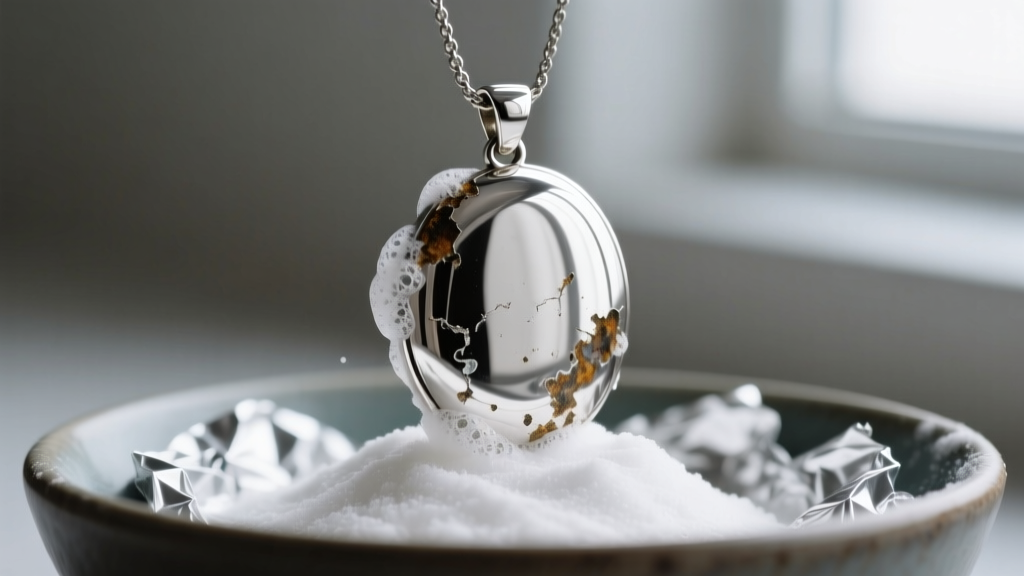
This method reverses the chemical reaction, converting the silver sulfide back into pure silver without removing any of the underlying metal.
- Prepare the Vessel: Line a glass or ceramic bowl with aluminum foil, shiny side facing up.
- Add the Catalyst: Sprinkle 2 tablespoons of baking soda (sodium bicarbonate) and 1 tablespoon of sea salt over the foil.
- Activate the Solution: Pour boiling water into the bowl. The solution will bubble as it releases carbon dioxide.
- Submerge the Jewelry: Using wooden tongs, lower your necklace 925 sterling silver into the solution. Ensure the silver physically touches the aluminum foil to complete the electrochemical circuit.
- Rinse and Dry: After 3 to 5 minutes, remove the necklace. The tarnish will have transferred to the foil. Rinse thoroughly with distilled water and buff dry with a microfiber cloth.
Common Beginner Mistakes to Avoid
To maximize the lifespan of your sterling silver jewelry, avoid these frequent care errors highlighted by the Jewelers of America:
- Using Toothpaste for Polishing: Toothpaste contains hydrated silica and calcium carbonate, which are highly abrasive. Scrubbing silver with a toothbrush and toothpaste will create micro-scratches that dull the finish and actually make the metal tarnish faster in the future by increasing its surface area.
- Wearing Silver in Chlorinated Pools: Chlorine reacts aggressively with the copper in sterling silver, causing irreversible structural weakening and a dark, stubborn black tarnish that often requires professional buffing to remove.
- Storing in Cardboard or Paper: Wood pulp and recycled paper products contain sulfur compounds and acidic residues that accelerate tarnishing. Always store your necklace in an airtight polyethylene bag with a 3M anti-tarnish strip, or wrap it in a treated Pacific cloth.
By understanding the metallurgy, verifying authenticity, and employing proper electrochemical cleaning techniques, your first necklace 925 sterling silver will remain a brilliant, enduring staple in your wardrobe for decades to come.


