Designing A Custom Mother Daughter Necklace Set Of 3
Discover the technical details of designing a custom mother daughter necklace set of 3, from chain gauges and alloy grades to clasp mechanics.

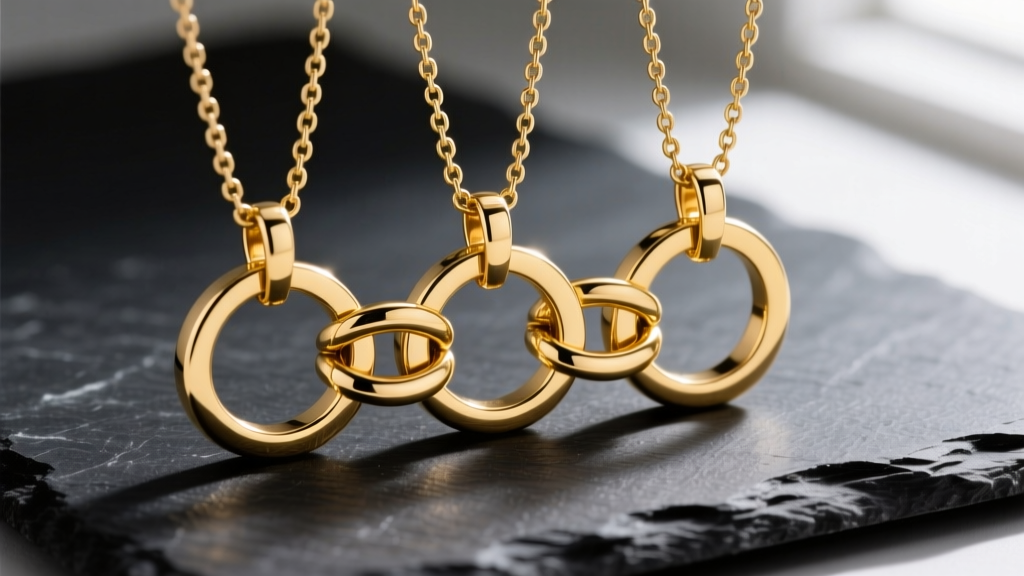
The Engineering Challenge of Multi-Generational Jewelry
When commissioning a mother daughter necklace set of 3, the primary engineering challenge extends far beyond aesthetic matching. You are designing for three distinct physiological profiles, activity levels, and dexterity ranges. A high-end custom set must survive the rigorous daily wear of a working mother, the active lifestyle of a younger daughter, and the delicate skin and potential joint stiffness of an older grandmother. Mass-market jewelry often fails this test within months, utilizing thin gold vermeil over brass and weak spring-ring clasps. In 2026, true heirloom-quality generational jewelry requires a rigorous approach to metallurgy, chain architecture, and ergonomic clasp selection. This deep dive explores the exact specifications required to engineer a set that will genuinely last a lifetime.
Metallurgy and Alloy Selection for Daily Wear
The foundation of any enduring necklace set is the base metal. While 18-karat gold (75% pure gold) offers a richer, deeper yellow hue, it is inherently softer, registering around 115-135 on the Vickers Hardness (HV) scale. For a piece meant to be worn daily by three different generations, 14-karat gold (58.5% pure gold) is the superior technical choice. The higher alloy content—typically a precise blend of copper, silver, and zinc—increases the hardness to approximately 140-160 HV, drastically improving resistance to micro-scratches and deformation.
For those prioritizing hypoallergenic properties and ultimate density, Platinum 950 (95% platinum, 5% ruthenium or iridium) is the benchmark. According to hallmarking standards outlined by The London Assay Office, Platinum 950 is incredibly dense and will not wear away over decades; instead, it develops a soft patina that can be polished back to a high mirror finish. However, platinum's weight means the chain gauge must be carefully calibrated so the necklace does not feel burdensome on a younger wearer's neck.
Chain Architecture: Gauge, Weave, and Tensile Strength
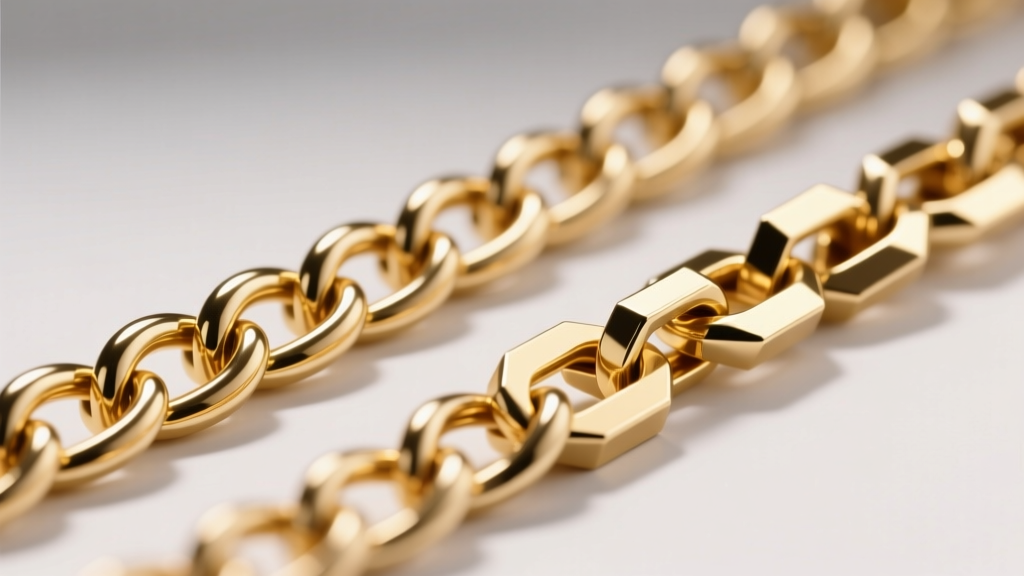
The chain is the structural spine of the necklace. Selecting the wrong weave or gauge is the most common failure point in multi-piece sets. Below is a technical breakdown of the most common weaves and their mechanical limits.
| Chain Weave | Optimal Gauge (mm) | Tensile Limit | Primary Failure Mode |
|---|---|---|---|
| Rolo (Round Links) | 1.2mm - 1.5mm | 15+ lbs | Link stretching over decades of heavy wear |
| Box (Square Links) | 0.9mm - 1.1mm | 4 - 6 lbs | Kinking and snapping at the microscopic solder points |
| Cable (Oval Links) | 1.0mm - 1.2mm | 8 - 10 lbs | Catching on clothing/hair, pulling the link open |
| Wheat (Braided) | 1.5mm - 2.0mm | 20+ lbs | Dirt accumulation in the tight braids requiring ultrasonic cleaning |
For a mother daughter necklace set of 3, the 1.2mm to 1.5mm Rolo chain is the undisputed expert recommendation. Its interlocking round links distribute tension evenly, preventing the kinking that plagues box chains. Furthermore, rolo links are thick enough to support the weight of a solid gold pendant without bowing, yet lightweight enough for all-day comfort.
Pendant Engineering and Bail Mechanics
The bail—the component that connects the pendant to the chain—is subjected to continuous friction and lateral stress. Standard cast bails with thin walls (under 0.8mm) will eventually wear through from the metal-on-metal friction of the chain sliding back and forth. Expert bench jewelers recommend a solid cast or die-struck bail with a minimum wall thickness of 1.2mm.
The Jump Ring Imperative
"The jump ring is the single most critical point of failure in any pendant necklace. For a multi-generational heirloom, split rings are unacceptable; laser-welded closed jump rings are the only industry standard that guarantees longevity." — Master Bench Jeweler
A split ring (like a miniature keychain ring) will eventually catch on a sweater or towel and pull open, dropping the pendant. The jump ring connecting the pendant to the bail must be made from 18-gauge or 20-gauge wire and must be laser-welded completely shut. Traditional torch soldering can leave a brittle seam or damage heat-sensitive gemstones, whereas laser welding fuses the metal at a microscopic level without thermal transfer to the rest of the piece.
Gemstone Matching: The 'Set of 3' Color Calibration
Sourcing three naturally mined gemstones with identical color, clarity, and cut is a statistical nightmare that drives up costs exponentially. If your set features birthstones or diamonds, natural variations in refractive index and inclusions will be obvious when the three wearers stand next to each other.
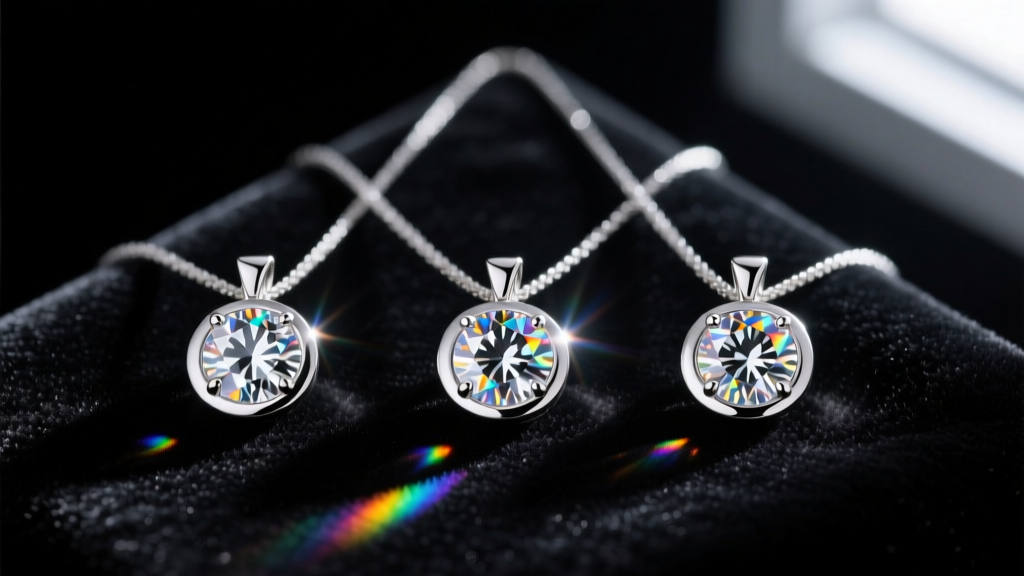
As of 2026, the smartest technical solution is utilizing CVD (Chemical Vapor Deposition) lab-grown diamonds or high-grade moissanite. Lab-grown diamonds share the exact same physical, chemical, and optical properties as mined diamonds (a Mohs hardness of 10 and a refractive index of 2.42), as verified by the Gemological Institute of America (GIA). This allows the jeweler to select three stones with identical D-F color grades and VVS1 clarity, ensuring perfect optical symmetry across the entire set. For colored stones, lab-grown sapphires (Mohs 9) offer the same durability and exact color calibration without the risk of the inclusions found in natural emeralds or opals, which are far too fragile (Mohs 5.5-6.5) for daily-wear generational jewelry.
Ergonomic Sizing and Clasp Selection
Creating a balanced mother daughter necklace set of 3 means accounting for different neck circumferences and physical dexterity. A standard 16-inch chain may fit a teenager perfectly but feel like a choker on an older woman.
- The Extender Solution: Specify a 16-inch base chain with a 2.5-inch adjustable extender chain. This allows each wearer to customize the drop length to suit their specific neckline and collarbone structure.
- Clasp Mechanics: Standard 12mm lobster clasps are secure but require fine motor skills to operate. If the set includes an older matriarch with arthritis, upgrading her specific necklace to a neodymium magnetic clasp is a crucial ergonomic adjustment. To maintain security, the magnetic clasp must be paired with a secondary 0.9mm figure-8 safety chain to prevent loss if the magnets accidentally detach.
Engraving Depth and Structural Integrity
Many sets of three feature personalized laser engraving, such as fingerprints, handwriting, or coordinates. A common manufacturing error is engraving too deeply into a thin pendant, compromising its structural integrity and creating a dirt trap. For deep fingerprint engraving, the pendant base must be milled to a minimum thickness of 1.0mm to 1.2mm. The laser should be set to a shallow ablation depth (no more than 0.15mm) followed by a dark enamel or rhodium inlay to provide contrast without hollowing out the metal.
Long-Term Maintenance Protocol
Even the most meticulously engineered jewelry requires a maintenance protocol. Because this set will be worn in diverse environments—from gym showers to corporate offices—the wearers must be educated on proper care. Ultrasonic cleaners are safe for solid gold and diamond/sapphire pendants, but they will shatter fracture-filled stones or loosen the adhesive in any tension-set pieces. Advise all three wearers to have the prongs or bezel walls checked under 10x magnification by a professional jeweler every 18 months to ensure the stones remain secure against the rigors of daily life.
Ultimately, a meticulously engineered mother daughter necklace set of 3 transcends mere sentimentality. By prioritizing 14k gold or platinum alloys, tensile-tested rolo chains, laser-welded jump rings, and ergonomically considered clasps, you transform a simple gift into a true structural heirloom capable of surviving the beautiful, chaotic reality of three different lives.


