Hemp and Bead Necklace Trends: 2026 Boho Style Guide
Discover how the hemp and bead necklace evolved into 2026's top sustainable boho trend. Explore styling tips, cord gauges, and premium bead pairings.

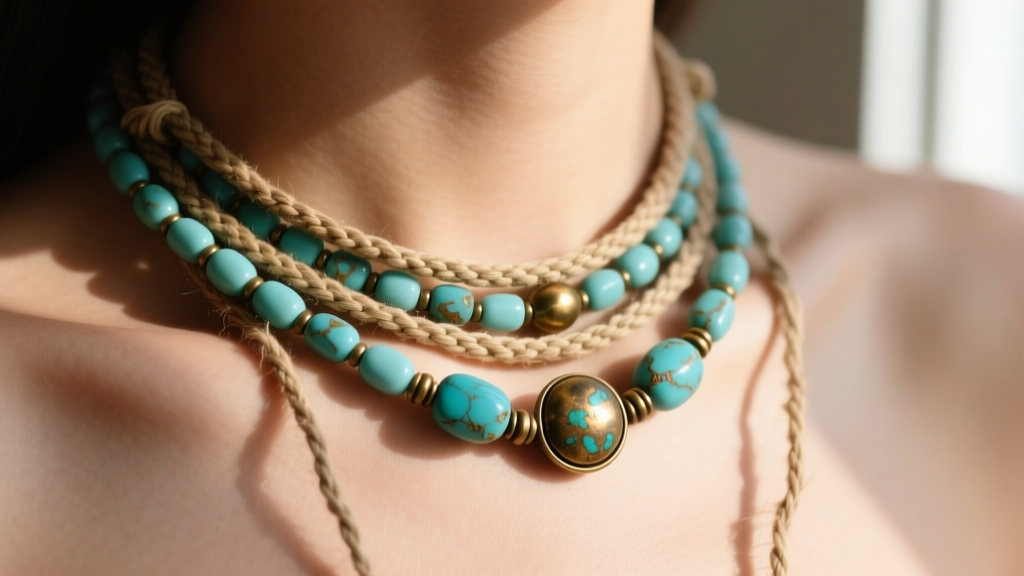
The Renaissance of the Hemp and Bead Necklace
Once relegated to the realm of childhood summer camps and 1990s music festivals, the hemp and bead necklace has undergone a radical transformation. As we navigate the fashion landscape of 2026, the demand for sustainable, tactile, and artisan-crafted jewelry has pushed this humble accessory into the spotlight of elevated boho-chic and quiet luxury. No longer just a novelty, today's hemp and bead necklace represents a convergence of eco-conscious material sourcing and sophisticated, globally-inspired design.
The shift is driven by a broader consumer rejection of fast-fashion plastics and synthetic metals. According to recent fashion trend analyses by Vogue, 'grounded luxury'—which emphasizes natural fibers, unpolished gemstones, and visible craftsmanship—is dominating resort and festival wear. Hemp, a crop that requires roughly one-quarter of the water needed for cotton and naturally regenerates soil, has become the fibrous backbone of this movement. When paired with high-grade beads, the result is a piece of jewelry that feels both deeply personal and remarkably luxurious.
Material Breakdown: Cord Gauges and Bead Grades
To truly appreciate or invest in a premium hemp and bead necklace, one must understand the mechanics of its materials. The difference between a piece that frays in a month and an heirloom-quality accessory lies in the ply count, cord gauge, and bead hole sizing.
Hemp Cord Specifications
Natural hemp cord is categorized by its thickness (gauge) and the number of twisted strands (ply). For jewelry, 100% dew-retted hemp is the gold standard, as it avoids the harsh chemical bleaches used in water-retting, preserving the fiber's natural tensile strength and skin-safe pH.
- 1mm (4-ply): Ideal for delicate, minimalist bead stringing. It has a tensile strength of roughly 15 lbs, making it surprisingly durable despite its slender profile.
- 2mm (8-ply): The industry standard for macrame and heavy beadwork. It provides enough structural integrity to support large focal beads without snapping.
- 3mm+ (12-ply or braided): Reserved for thick choker styles or structural collar necklaces, often left un-beaded to showcase the intricate twisting of the natural fiber.
The Bead Hole Dilemma
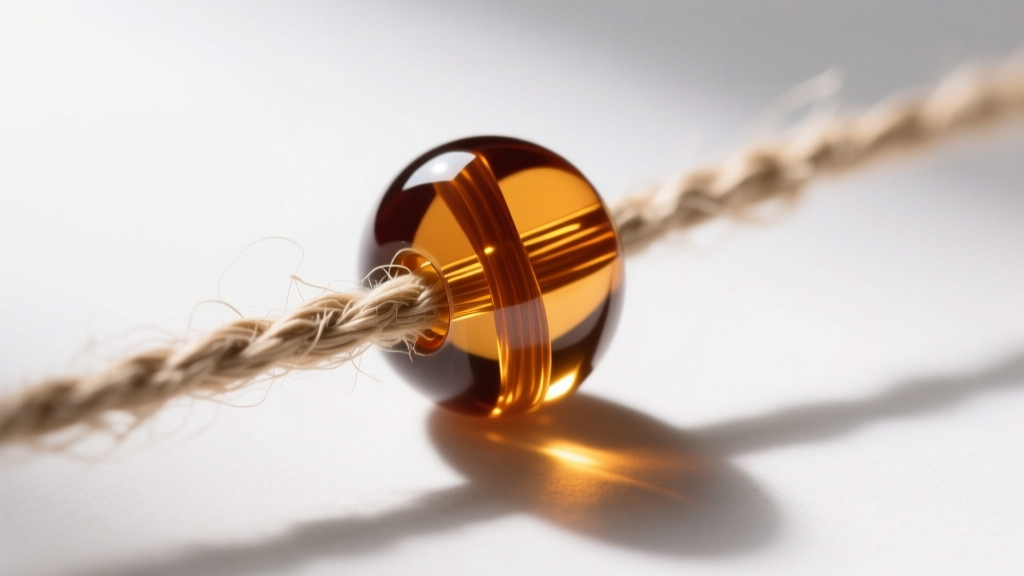
A common failure point in mass-market hemp jewelry is the mismatch between cord thickness and bead hole diameter. Standard glass or gemstone beads typically feature a 0.8mm hole. If a manufacturer attempts to force a 1mm hemp cord through this hole, the friction degrades the outer fibers, leading to premature fraying and breakage. High-end artisans specifically source 'large-hole' or 'Euro-style' beads with 1.5mm to 2.0mm drilled channels, ensuring the hemp cord glides through without structural compromise.
2026 Trend Forecast: Colorways and Silhouettes
This year's styling trends move away from the neon, chaotic color-blocking of the early 2000s. The 2026 aesthetic favors intentional, earthy palettes and sophisticated silhouettes that transition seamlessly from a daytime linen ensemble to an evening out.
Earthy Terracotta and Oxidized Metals
Undyed, natural hemp (which boasts a warm, oat-like beige) is being paired heavily with oxidized brass beads and matte terracotta ceramic beads. This combination creates a monochromatic, sun-baked look that mimics ancient excavation artifacts. The Gemological Institute of America (GIA) notes a rising trend in using stabilized turquoise and unpolished jasper beads, which complement the rough texture of hemp far better than highly faceted, brilliant-cut gemstones.
The Asymmetrical Focal Point
Rather than a perfectly centered pendant, 2026's top designers are placing large, singular focal beads—such as a 20mm carved bone or recycled glass bead—off-center on a 2mm hemp cord. This asymmetrical approach feels modern, artistic, and deliberately imperfect.
Styling Framework: Necklines and Layering
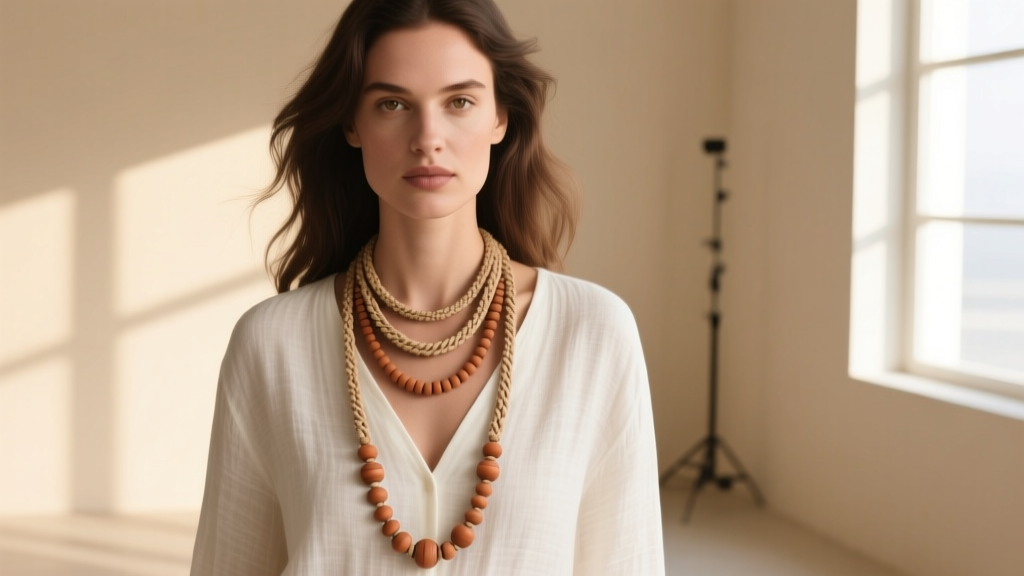
Styling a hemp and bead necklace requires an understanding of scale and proportion. Because hemp has a matte, light-absorbing texture, it does not catch the light like a gold chain. Therefore, you must rely on bead color and physical layering to create visual interest against your clothing.
| Neckline Type | Ideal Hemp Cord Gauge | Recommended Bead Scale | Styling Strategy |
|---|---|---|---|
| Deep V-Neck | 2mm - 3mm | Large (10mm+ focal beads) | Use a Y-style lariat or a long 28-inch pendant to elongate the torso and mirror the V-shape. |
| Crew Neck / T-Shirt | 1mm - 2mm | Small to Medium (4mm-6mm) | Layer three necklaces at 16', 18', and 20' lengths. Use varying bead colors to create a cascading effect over the fabric. |
| Off-the-Shoulder | 3mm+ or Braided | Wide, flat disc beads | Opt for a tight 14-inch choker that rests directly on the collarbone, framing the exposed neck without competing with the garment. |
| Button-Down (Open) | 1mm (Delicate) | Tiny seed beads (2mm) | Wear a single, long 32-inch strand that drops below the sternum, adding a vertical line that complements the open shirt. |
The Mechanics of the Sliding Knot
One of the defining features of the modern hemp and bead necklace is the adjustable sliding knot, which eliminates the need for metal clasps that can tarnish or break. However, not all sliding knots are created equal. The amateur 'overhand knot' slip often jams or slips too easily, ruining the fit.
In 2026, artisan jewelers utilize the macrame square knot slider. This technique involves taking the two ends of the main hemp cord, overlapping them, and using a separate, much thinner piece of cord (usually 0.5mm waxed cotton or micro-cord) to tie a series of 4 to 6 square knots around the overlapping base cords. The wax on the micro-cord provides the exact amount of friction needed: enough to hold the necklace securely at the desired length, but smooth enough to allow the wearer to pull the cords apart when taking it off. This clasp-free methodology ensures the entire piece is biodegradable and hypoallergenic.
Care and Longevity of Natural Fibers
Hemp is incredibly durable, boasting a tensile strength that outlasts cotton by a factor of three, but it is still an organic, plant-based fiber. To ensure your hemp and bead necklace lasts for years, specific care protocols must be followed.
Moisture and Mildew Prevention
Unlike synthetic nylon cords, hemp will absorb water and sweat. If stored in a damp environment or packed away while wet, the natural sugars and lignins in the hemp can attract mildew. Always allow your necklace to air-dry completely in a well-ventilated area before placing it in a jewelry box. If the necklace becomes heavily soiled, spot-clean it with a pH-balanced, mild castile soap and a soft-bristled brush, avoiding harsh chemical detergents that strip the fiber's natural oils.
UV Degradation
Prolonged exposure to direct, intense sunlight will eventually break down the lignin in the hemp, causing it to become brittle and fade. While a natural sun-bleached look is desirable for some, those wishing to maintain the rich, dark tones of dyed hemp or the integrity of the raw fiber should store their pieces in opaque pouches when not in use.
Sourcing Authentic Artisan Pieces
As the trend has grown, so has the market for cheap, synthetic knockoffs. Many fast-fashion retailers sell necklaces labeled as 'hemp' that are actually made from polyester-blend cords designed to mimic the look of natural fiber. These synthetic cords do not biodegrade, lack the tensile strength of real hemp, and often cause skin irritation in hot weather.
When shopping, look for transparency in material sourcing. Authentic artisan pieces typically range from $35 to $120, depending on the rarity of the beads used (e.g., genuine stabilized turquoise vs. dyed howlite). Seek out independent jewelers who specify their cord origin, ply count, and bead authenticity. Investing in a genuine hemp and bead necklace not only supports sustainable agriculture and traditional macrame artisanship but also provides you with a versatile, deeply textured accessory that defines the relaxed elegance of 2026.


