Troubleshooting Necklaces for Daughters From Dad: A Gifting Guide
Struggling to find the perfect jewelry gift? Our troubleshooting guide to necklaces for daughters from dad solves sizing, metal allergy, and style issues.


The Most Common Mistakes Dads Make When Buying Jewelry
Gifting jewelry to your daughter is a profound milestone, but the technical realities of buying fine jewelry often lead to well-intentioned mistakes. When searching for the perfect necklaces for daughters from dad, many fathers prioritize the pendant's aesthetic while completely ignoring the chain's structural integrity, metal composition, and clasp mechanics. The result? A beautiful piece that turns her skin green, snaps within a week, or sits unworn in a drawer because the clasp is impossible to operate.
This troubleshooting guide is designed specifically for fathers navigating the jewelry market in 2026. We will diagnose the most common gifting failures and provide actionable, expert-level solutions to ensure your gift is both emotionally resonant and technically flawless.
Troubleshooting Metal Allergies and Skin Sensitivities
The most frequent complaint after gifting a necklace is contact dermatitis—a red, itchy rash on the neck. This is almost always caused by nickel, a cheap alloying metal used to harden gold and create white gold. According to the American Academy of Dermatology, nickel allergy is one of the most common causes of allergic contact dermatitis, affecting nearly 20% of the population.
The Hypoallergenic Hierarchy
To avoid this failure mode, you must understand metal grades. Do not rely on the vague term 'hypoallergenic' on a jewelry tag; look for specific metallurgical compositions.
- Platinum (950Pt): The ultimate failsafe. It is 95% pure platinum and naturally white, requiring zero nickel or rhodium plating. Price range: $800 - $2,500+.
- 14k or 18k Yellow Gold: Unlike white gold, yellow gold is typically alloyed with copper and silver, not nickel. It is highly biocompatible for most wearers. Price range: $250 - $600.
- Implant-Grade Titanium (ASTM F136): If you are on a budget, skip 'surgical steel' (which can still contain trace nickel) and opt for ASTM F136 titanium. This is the exact grade used in medical implants and is 100% nickel-free. Price range: $40 - $90.
Avoid: White gold (unless specifically labeled 'nickel-free' and alloyed with palladium) and cheap sterling silver that has been plated with a nickel underlayer before rhodium flashing.
Fixing the Sizing Puzzle: Chain Lengths and Gauges by Age
A necklace that is too tight feels restrictive, while one that is too long risks catching on clothing and snapping. Furthermore, dads often underestimate the importance of chain gauge (thickness), leading to fragile chains that break under the weight of a pendant.
Age-Based Sizing and Gauge Framework
Use this troubleshooting chart to match her current life stage with the correct physical dimensions. Always purchase a chain with a 2-inch extender; this single feature solves 90% of sizing guesswork.
| Age Group | Recommended Length | Chain Gauge (Thickness) | Best Chain Style |
|---|---|---|---|
| Toddler (2-5) | 12' - 14' + 2' ext | 0.8mm - 1.0mm | Cable or Box |
| Child (6-12) | 14' - 16' + 2' ext | 1.0mm - 1.2mm | Box or Wheat |
| Teen (13-18) | 16' - 18' + 2' ext | 1.2mm - 1.5mm | Wheat or Rope |
| Adult (18+) | 18' - 20' + 2' ext | 1.5mm - 2.0mm | Rope or Figaro |
Why Chain Link Style Dictates Durability
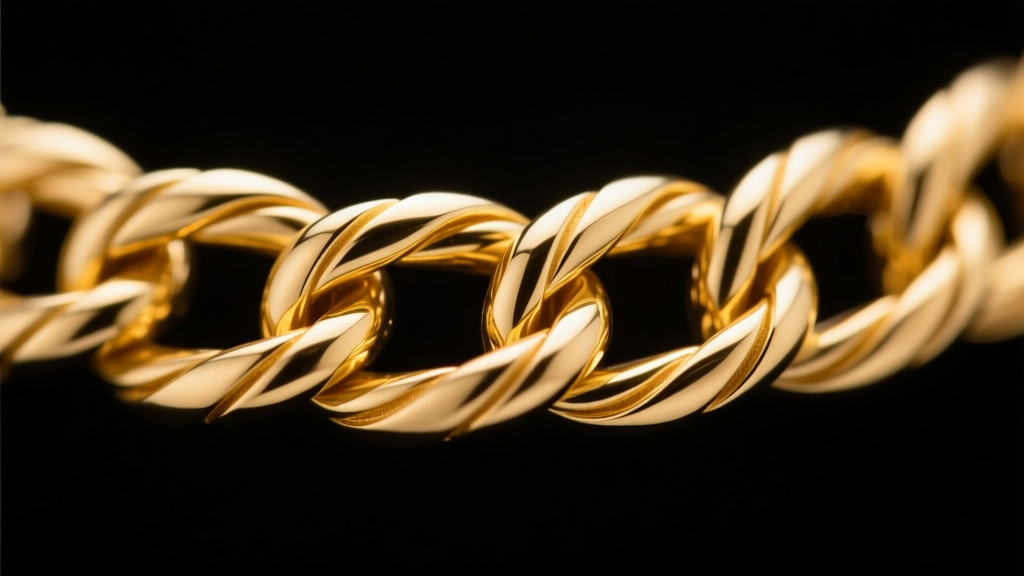
Not all chains are created equal. If your daughter is active, plays sports, or tends to tug on her jewelry, avoid Cable chains under 1.2mm; their simple circular links rely on tiny solder points that fail easily under tension. Instead, troubleshoot for durability by choosing a Wheat (Spiga) chain. Wheat chains are woven from multiple directional links, distributing tension evenly and offering vastly superior tensile strength. The Gemological Institute of America (GIA) notes that woven chain structures inherently resist kinking, a common failure point that permanently weakens standard link chains.
Clasp Failures: Lobster vs. Spring Ring vs. Magnetic
The clasp is the single most common mechanical failure point on any necklace. If your daughter constantly complains that her necklace falls off or that she cannot put it on by herself, the clasp is to blame.
- The Spring Ring (The Problem): This is the default, cheap clasp included on most mass-market jewelry. It relies on a microscopic internal spring and a tiny lever. The lever bends easily, the spring corrodes from perfume and sweat, and it is incredibly frustrating to operate with one hand.
- The Lobster Clasp (The Standard Fix): Shaped like a lobster claw, this clasp is self-closing and features a wider trigger. It is significantly more secure and easier to grip. Always ensure the lobster clasp is cast in solid gold or steel, not hollow-stamped.
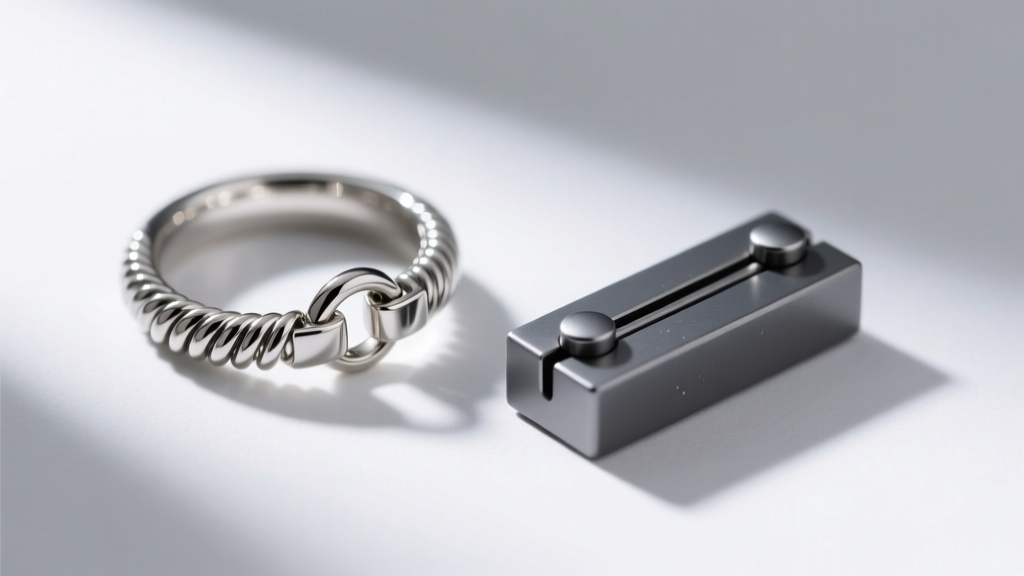
- The Neodymium Magnetic Clasp (The Modern Upgrade): In 2026, high-strength magnetic clasps have become a premier troubleshooting solution. These feature rare-earth magnets encased in stainless steel or gold. They snap together effortlessly, making them perfect for daughters with dexterity issues, long acrylic nails, or dads with large fingers who struggle to fasten tiny jewelry clasps when gifting the piece in person.
Pendant Bail Troubleshooting: The Hidden Friction Point
A frequently overlooked issue is the 'bail'—the loop that connects the pendant to the chain. If the bail hole is too small for the chain gauge, it creates constant metal-on-metal friction, eventually sawing through the chain or the bail itself.
The Rule of Thumb: The interior diameter of the pendant bail must be at least 0.5mm larger than the thickness of the chain. If you are buying a 1.5mm wheat chain, ensure the pendant bail opening is at least 2.0mm. If you are pairing a heavy gemstone pendant with a delicate chain, the weight concentration will cause the chain to stretch and deform. Always match the pendant's physical weight to the chain's tensile rating.
Expert Verdict: The Safest Can't-Miss Choices
Troubleshooting jewelry gifts comes down to anticipating physical wear and biological reactions. If you want a guaranteed success when selecting necklaces for daughters from dad, follow this exact specification: Choose a 14k or 18k solid yellow gold (or platinum) wheat chain, sized at 1.2mm to 1.5mm thick, featuring a 16-inch base length with a 2-inch extender, and finished with a high-quality lobster or magnetic clasp. By prioritizing metallurgical purity and structural mechanics over fleeting trends, you ensure your gift remains a durable, wearable heirloom for decades to come.


