How to Design the Perfect Custom Gold Nana Necklace
Learn how to design a custom gold nana necklace. Our step-by-step guide covers karat choices, chain styles, birthstone settings, and ideal lengths.

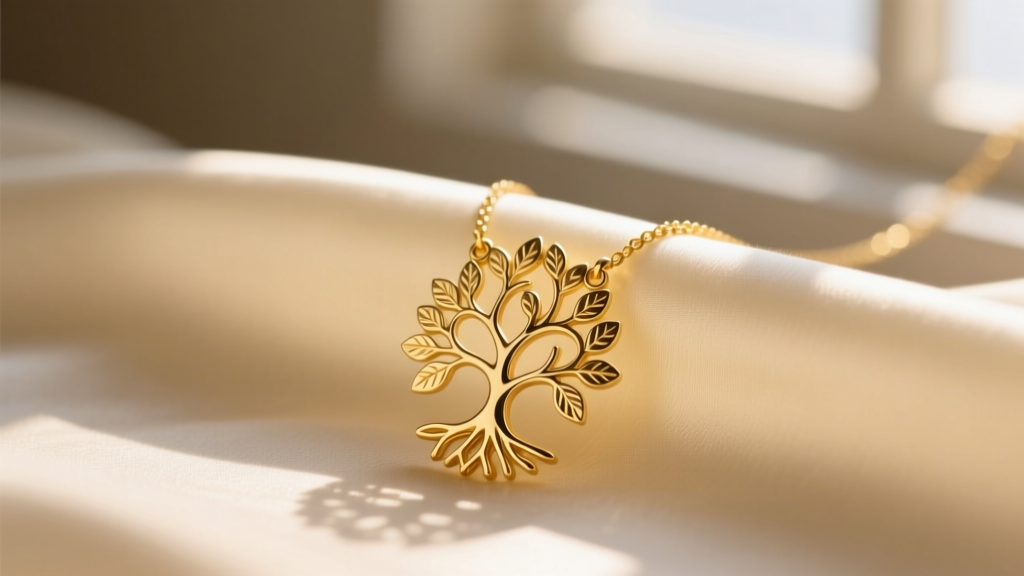
A custom gold nana necklace is more than just an accessory; it is a wearable family heirloom that celebrates a grandmother’s legacy. Whether you are designing a piece to honor a new grandmother or updating a matriarch's jewelry box, creating a personalized necklace requires careful consideration of metallurgy, gemstone durability, and chain mechanics. In this comprehensive step-by-step guide, we will walk you through the exact specifications needed to design a beautiful, durable, and meaningful gold nana necklace that will withstand daily wear while capturing the essence of her family.
Step 1: Choose the Right Gold Karat for Everyday Wear
The foundation of any enduring piece of jewelry is its metal purity. While 24k gold is the purest, it is far too soft for a pendant that will be worn daily. When designing a gold nana necklace, you must balance the rich, warm color of high-karat gold with the structural integrity required to hold gemstones and engravings. According to the Gemological Institute of America (GIA), alloying gold with metals like copper, silver, and zinc increases its hardness and durability.
| Gold Karat | Purity | Durability | Best Use Case |
|---|---|---|---|
| 10k Gold | 41.7% | Very High | Budget-friendly, highly active wearers |
| 14k Gold | 58.5% | High | The ideal sweet spot for daily wear pendants |
| 18k Gold | 75.0% | Moderate | Special occasion wear, rich color preference |
Expert Recommendation: For a custom nana necklace, 14k gold is the undisputed champion. It offers a beautiful yellow, white, or rose hue while providing enough tensile strength to secure prongs around birthstones and resist scratching from daily friction against clothing.
Step 2: Select a Meaningful Pendant Style and Setting
The pendant is the focal point of the necklace. For grandmothers, the design usually revolves around representing children and grandchildren. Here are the three most popular structural designs and how to execute them properly:
1. The Birthstone Cluster
This design features a central gold disc or tree motif surrounded by the birthstones of her grandchildren. Critical E-E-A-T Insight: Pay close attention to the Mohs hardness scale when selecting birthstones. Stones like Opal (5.5-6.5) and Pearl (2.5-4.5) are highly susceptible to scratching and chipping. If a grandchild’s birthstone is an opal, insist on a bezel setting rather than a prong setting to protect the stone's fragile girdle. For harder stones like Sapphires (9) or Rubies (9), traditional prong settings allow maximum light return.
2. The Engraved Family Tree or Disc
If you prefer a minimalist approach, a solid gold disc engraved with names or a family tree is timeless. When ordering custom engraving, specify rotary engraving over laser engraving if you want deep, tactile lettering that will not fade over decades of polishing. For a 15mm disc, limit the engraving to a maximum of three short names or a single meaningful word to maintain legibility.
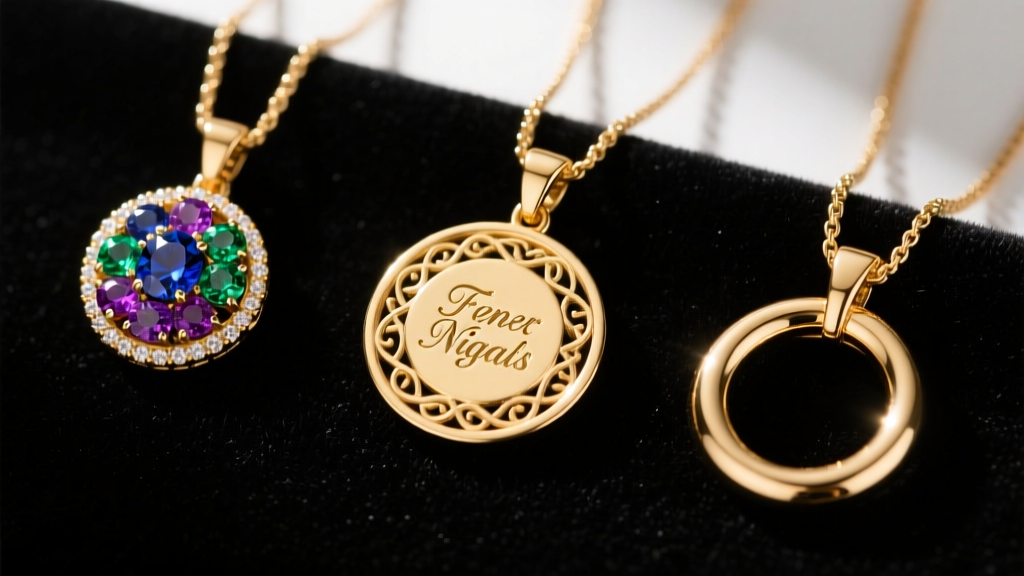
3. Interlocking Generational Rings
Interlocking rings represent the unbreakable bond between generations. Ensure the rings are soldered together at the overlapping joints if they are meant to lay perfectly flat; otherwise, they will constantly tangle and flip over when worn.
Step 3: Pick a Chain That Won't Tangle or Break
A beautiful pendant is useless if the chain breaks or constantly knots. The chain must support the weight of the pendant without overpowering it. For a standard gold nana pendant weighing between 3 and 8 grams, you need a chain with a thickness (gauge) of 0.9mm to 1.2mm.
- Box Chains: The absolute best choice for pendants. The square links lay flat, resist kinking, and allow the pendant bail to slide smoothly. They are incredibly strong for their weight.
- Cable Chains: A classic, simple oval link. Ensure the links are soldered (closed with a tiny weld) rather than unsoldered, which can pull apart if snagged on a sweater.
- Rope Chains: While beautiful and sparkly, rope chains are notorious for catching on fine hair and pulling. Avoid these for grandmothers with longer, unbound hair.
Clasp Mechanics: Always upgrade the clasp. Standard spring-ring clasps are notoriously difficult for older hands with reduced dexterity or arthritis to operate. Request a lobster clasp (at least 5mm in size) or a magnetic neodymium clasp adapter for effortless daily wear.
Step 4: Determine the Ideal Necklace Length
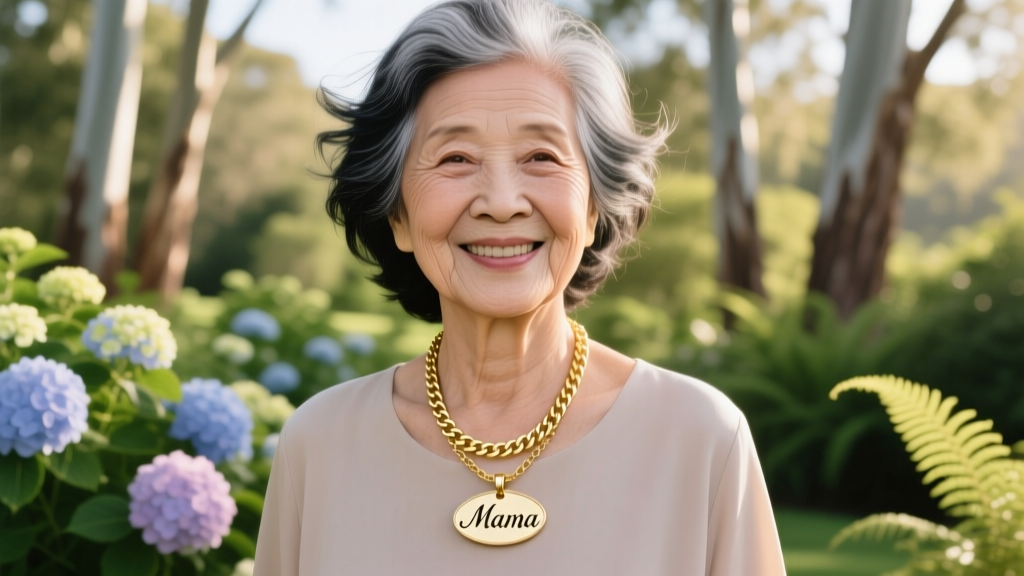
The length of the chain dictates where the pendant rests on the chest, which affects both the visual impact and the physical comfort of the wearer. Jewelers of America recommends considering the wearer's typical necklines and personal comfort when sizing.
Standard Length Guide for Pendants
- 16 Inches (Choker Length): Sits tightly at the base of the neck. Generally not recommended for heavier pendants as it can cause discomfort and restrict movement.
- 18 Inches (Princess Length): The industry standard. Rests perfectly on the collarbone. This is the most universally flattering length for a gold nana necklace and keeps the pendant visible above most crew-neck and scoop-neck shirts.
- 20 Inches (Matinee Length): Drops just below the collarbone. Ideal for women who prefer their jewelry to rest over the top of a button-down shirt or blouse, or for those who find 18-inch chains too restrictive.
- 24 Inches (Opera Length): Rests on the upper chest/sternum. Best reserved for lightweight, smaller pendants, as heavier gold pieces can swing and hit the wearer when bending over.
Pro-Tip: If you are ordering this as a surprise gift and are unsure of her preferred length, purchase an 18-inch chain with a 2-inch extender chain. This allows the wearer to adjust the necklace to 18, 19, or 20 inches depending on her outfit.
Step 5: Sourcing, Budgeting, and Quality Assurance
Designing a custom piece requires vetting your jeweler. Custom 14k gold nana necklaces typically range from $450 to $1,500+, depending on the complexity of the casting, the weight of the gold, and the number of genuine birthstones used.
When reviewing the final CAD (Computer-Aided Design) render or wax model from your jeweler, check the bail (the loop that connects the pendant to the chain). Ensure the bail is lined with a smooth, polished interior. A rough or unpolished bail will act like a saw against the gold chain, eventually causing friction wear and a broken necklace.
Long-Term Care and Maintenance
To ensure the gold nana necklace remains a pristine heirloom, educate the recipient on proper care. Gold alloys can accumulate lotions, soaps, and skin oils, which dull the metal and obscure birthstones.
For routine cleaning, mix a few drops of mild, phosphate-free dish soap in warm water. Use a soft-bristled baby toothbrush to gently clean behind the gemstone settings where debris collects. Never use ultrasonic cleaners on porous birthstones like pearls, opals, or emeralds, as the high-frequency vibrations can shatter the stones. Store the necklace flat or hanging in a soft, anti-tarnish flannel pouch to prevent the chain from knotting and the gold from micro-scratching.


