What Does a DG Necklace Stamp Mean? Hallmark Guide
Found a DG necklace and wonder what the stamp means? Our beginner-friendly guide decodes DG hallmarks, from Dolce & Gabbana to artisan maker's marks.

Decoding the Mystery of the DG Necklace Stamp
If you have recently inherited, thrifted, or unboxed a dg necklace and spotted a tiny "DG" stamp on the clasp or jump ring, you are likely wondering what it signifies. Jewelry hallmarks are the fingerprints of the metalworking world, offering vital clues about a piece's origin, metal purity, and value. However, a two-letter stamp can be notoriously ambiguous for beginners. Is it a luxury designer? An independent silversmith? Or a misleading plating mark?
In this comprehensive, beginner-friendly explainer, we will decode the most common meanings behind a DG necklace stamp. We will also walk you through the legal requirements of jewelry stamping, how to test your metal at home, and what your piece might be worth in today's secondary market.
The Golden Rule of Jewelry Stamps: Purity vs. Maker
Before identifying who "DG" is, you must understand the legal framework of jewelry stamping. According to the Federal Trade Commission (FTC) Jewelry Guides, any piece of jewelry sold in the United States that bears a purity mark (such as 14k, 18k, or 925) must also bear a registered maker's mark. This is a crucial E-E-A-T concept that separates fine jewelry from fashion accessories.
A maker's mark is a registered trademark or symbol that identifies the manufacturer or jeweler responsible for the piece. It ensures accountability for the stated metal purity.
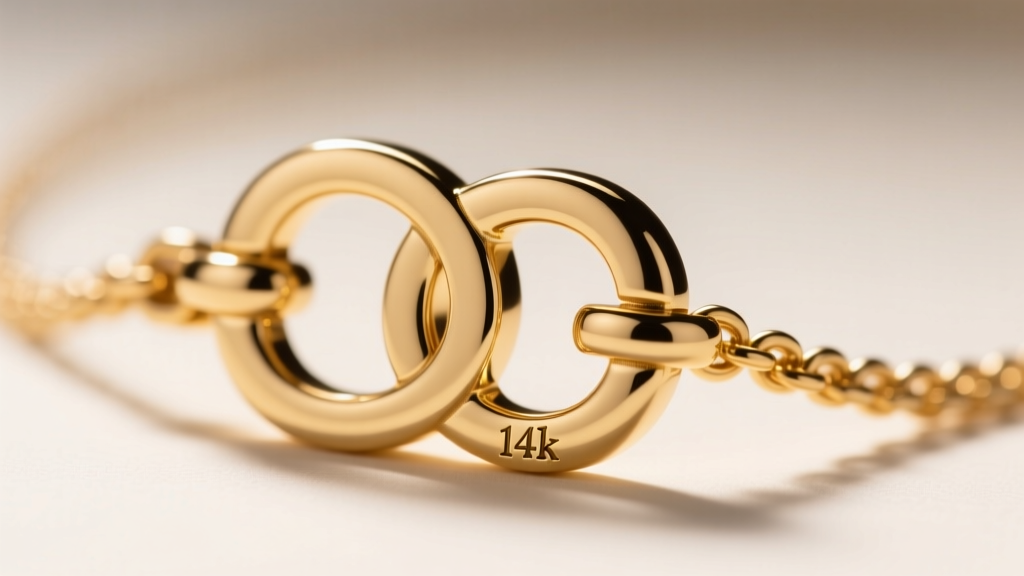
Therefore, if your necklace is stamped only with "DG" and lacks a secondary purity stamp (like 925 for sterling silver or 14k for gold), it is highly likely that the piece is fashion jewelry, base metal, or heavily plated. If you see "DG" alongside "925" or "14k", you are looking at a registered artisan or brand hallmark.

The 3 Most Common Meanings of a "DG" Stamp
1. Dolce & Gabbana (The Luxury Brand)
The most common search intent behind a dg necklace relates to the Italian luxury fashion house, Dolce & Gabbana. However, authentic D&G jewelry is rarely stamped with a simple "DG". Genuine pieces typically feature the full "DOLCE & GABBANA" logo, "D&G", or a specific serial number alongside a metal purity mark. If your necklace features a simple, poorly struck "DG" stamp without accompanying Italian assay marks or brand serials, it is very likely a counterfeit or a "mushroom brand" trying to mimic the luxury house.
2. Independent Maker's Marks (Silversmiths & Jewelers)
In the realm of fine jewelry, "DG" is a highly sought-after maker's mark for several independent artisans and historical silversmiths. For example, David Goldberg, a well-known contemporary jeweler, has used variations of DG marks. Additionally, various mid-century Mexican and American silversmiths registered "DG" as their assay mark. To identify the exact artisan, you must cross-reference the font style and surrounding assay marks (such as an eagle stamp for Mexican silver) with the Assay Office hallmarking databases or specialized silver reference guides.
3. The "Diamond Grade" or "Design Gold" Myth
A persistent myth in vintage jewelry circles is that "DG" stands for "Diamond Grade" or "Designer Gold." This is categorically false. There is no recognized metallurgical or gemological grading system that uses "DG" to denote quality. The Gemological Institute of America (GIA) does not use this terminology. If a seller claims a base-metal necklace is "DG" meaning "Diamond Grade," they are using fabricated terminology to inflate the price of costume jewelry.
Authentication Matrix: Identifying Your DG Necklace
Use this quick-reference table to determine the likely origin of your necklace based on the visual characteristics of the stamp.
| Stamp Characteristic | Accompanying Marks | Likely Origin | Estimated Value |
|---|---|---|---|
| Crisp, serif font, deep engraving | 14k, 18k, or 925 | Registered Artisan / Fine Jeweler | $200 - $2,000+ (Melt + Craft) |
| Sans-serif, shallow laser etching | D&G, Made in Italy | Authentic Dolce & Gabbana | $300 - $1,500 (Retail/Resale) |
| Messy, uneven, or cast into metal | None, or "18k GP" | Counterfeit or Fast Fashion | $10 - $50 (Costume Value) |
| Vintage patina, block letters | Eagle stamp, Taxco mark | Mid-Century Mexican Silversmith | $150 - $800 (Collector Value) |
How to Test the Metal of Your DG Necklace
Once you have analyzed the stamp, you must verify the metal. Never rely solely on a visual stamp, as counterfeiters frequently stamp base metals with fake 14k or 925 marks alongside a fake DG logo.
The Magnet Test (The First Line of Defense)
Precious metals like gold, silver, and platinum are non-magnetic. Take a strong neodymium magnet and hold it near the chain and clasp. If the necklace snaps to the magnet, it is made of a ferrous base metal (like steel or iron) and is merely plated. Note: The internal spring of a lobster clasp is usually made of steel and will be slightly magnetic; focus your test on the chain links and the main pendant body.
The Ceramic Scratch Test
For gold necklaces, gently drag the piece across an unglazed ceramic tile. A genuine gold necklace will leave a metallic gold streak. If the streak is black or dark gray, the piece is likely pyrite, brass, or gold-plated tungsten. Be warned: this is a destructive test and can scratch your jewelry, so perform it only on an inconspicuous edge.
XRF Testing (The Professional Standard)
If you suspect your dg necklace is a valuable artisan piece or an authentic luxury item, take it to a local jeweler who possesses an XRF (X-ray Fluorescence) analyzer. This non-destructive machine shoots X-rays into the metal and reads the exact elemental composition, telling you precisely if the piece is solid 14k gold, 925 silver, or just a thick layer of gold plating over copper.
Valuation: What is Your DG Necklace Worth?
The value of your necklace depends entirely on the intersection of its maker and its material. A solid 18k gold necklace stamped with a registered artisan "DG" maker's mark will be valued primarily on its gold melt weight, which, given current precious metal markets, can easily range from $800 to over $3,000 depending on the chain's gauge and length. Conversely, a verified, pre-owned Dolce & Gabbana fashion necklace made of gold-plated brass will hold a secondary market value strictly based on brand desirability, typically hovering between $150 and $400 on luxury resale platforms.
Ultimately, decoding a dg necklace stamp requires looking past the two letters and examining the piece as a holistic system of metal purity, craftsmanship, and legal hallmarking. By applying the FTC guidelines and utilizing proper metal testing, you can confidently authenticate and value your jewelry.


