2026 Trend Report: Styling The Emerald Pearl Necklace
Discover how the emerald pearl necklace is redefining 2026 luxury. Explore styling tips, gemstone grades, and market trends for this iconic duo.

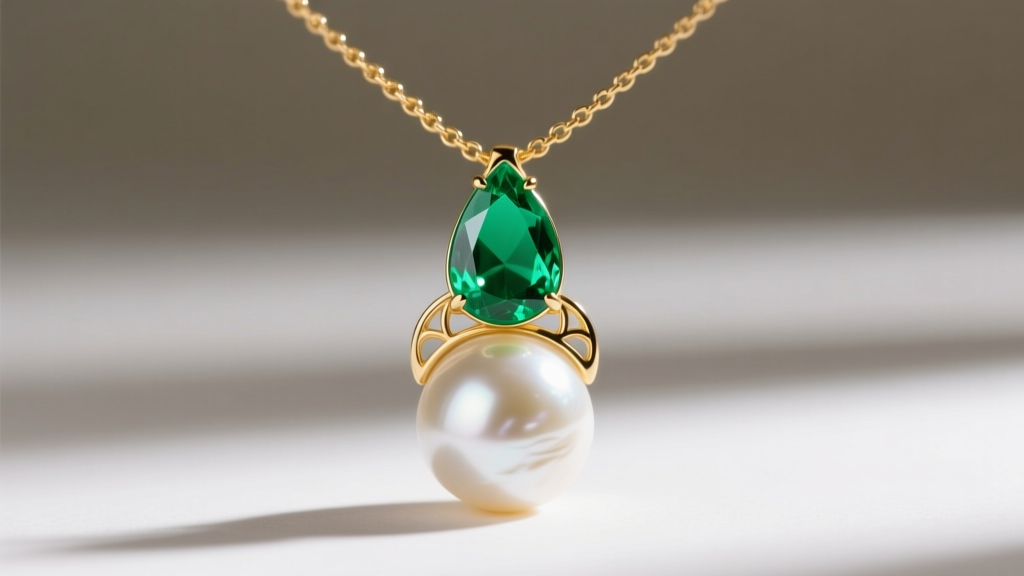
The Renaissance of Organic and Crystalline Pairings
The juxtaposition of organic warmth and crystalline fire has long captivated jewelry designers, but in 2026, the emerald pearl necklace has evolved from a traditional heirloom staple into a vanguard statement of modern luxury. Moving away from the heavy, clustered settings of the late 20th century, contemporary jewelers are embracing negative space, asymmetric drops, and mixed-cut gemstones. This shift reflects a broader consumer desire for pieces that feel both historically grounded and effortlessly modern.
According to recent market analyses by Sotheby's Jewelry Department, mixed-material necklaces featuring top-tier colored gemstones and natural pearls have seen a 34% increase in auction demand over the past eighteen months. Collectors and everyday wearers alike are drawn to the visual tension between the deep, velvety green of a fine emerald and the iridescent, soft luster of a high-grade pearl. But navigating this trend requires a keen understanding of gemology, structural integrity, and modern styling frameworks.
The Anatomy of a Modern Emerald Pearl Necklace
To understand the 2026 iteration of the emerald pearl necklace, one must examine the structural and material shifts that define it. Vintage pieces often relied on prong-set, round-cut emeralds surrounded by small seed pearls. Today, the focus is on architectural silhouettes and the inherent character of the stones.
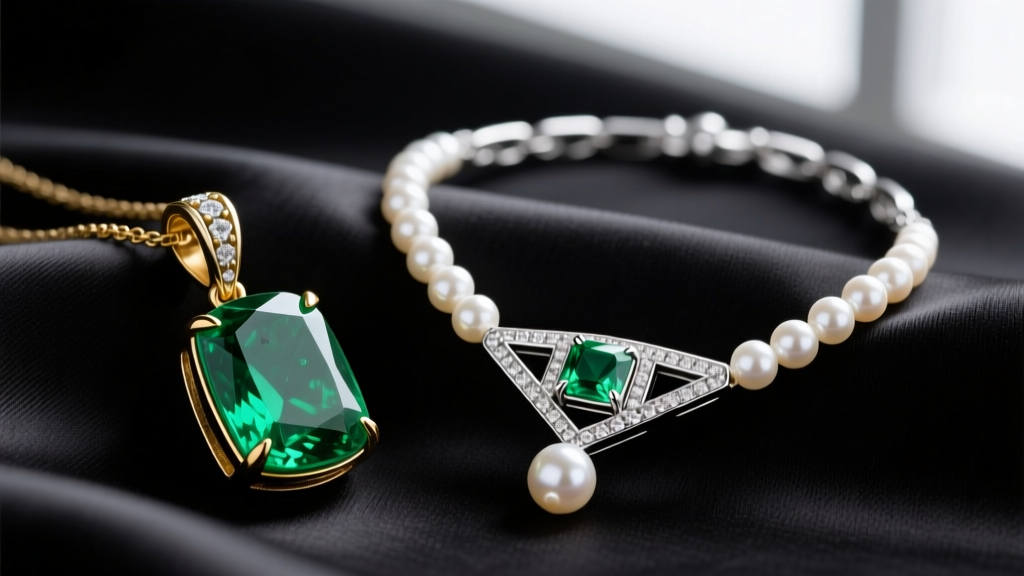
Gemstone Cuts and Setting Innovations
Modern designers are favoring step-cuts (emerald and baguette cuts) and organic cabochons over traditional brilliant faceting. Step-cuts emphasize the deep color and 'jardin' (the natural, garden-like inclusions) of the emerald, while cabochons offer a smooth, tactile surface that mirrors the rounded geometry of a pearl. Bezel settings in 18k yellow gold have become the industry standard for these pairings, as the warm metal tones bridge the cool green of the emerald and the creamy white of the pearl, while providing superior protection for the emerald's vulnerable edges.
The Shift in Pearl Selection
While perfectly round Akoya pearls were the default for decades, 2026 trends heavily favor Baroque and Keshi pearls. Their irregular, organic shapes complement the natural inclusions found in emeralds, creating a cohesive narrative of 'perfect imperfection.' For those who prefer symmetry, drop-shaped South Sea pearls are being utilized as focal pendants, suspended from delicate, micro-pavé diamond chains that terminate in a striking emerald cap.
2026 Trend Matrix: Market and Style Shifts
The evolution of this specific necklace category can be mapped across several key design and market vectors. The table below illustrates the distinct pivot from legacy designs to contemporary preferences.
| Feature | Vintage Heirloom (Pre-2010) | 2026 Contemporary Trend |
|---|---|---|
| Setting Style | Heavy prong, cluster, halo | Minimalist bezel, tension, lariat |
| Emerald Cut | Round brilliant, oval | Step-cut, shield, cabochon, raw |
| Pearl Type | Round Akoya, uniform strands | Baroque South Sea, Keshi, asymmetric |
| Metal Choice | 14k Yellow Gold, Platinum | 18k Yellow Gold, Matte Black Rhodium |
| Chain Profile | Thick rope, box chains | Micro-cable, silk cord, paperclip |
| Primary Vibe | Formal, traditional, matronly | Editorial, fluid, gender-neutral |
Sourcing and Grading: What to Look For
When investing in an emerald pearl necklace, understanding the grading nuances of both materials is non-negotiable. The Gemological Institute of America (GIA) classifies emeralds as Type III gemstones, meaning they almost always contain visible inclusions. The goal is not flawless clarity, but rather a pleasing 'jardin' that does not compromise the stone's structural integrity or transparency.
Emerald Specifics
- Origin and Color: Colombian emeralds (particularly from the Muzo mine) are prized for their warm, intense, slightly bluish-green hue. Zambian emeralds offer a cooler, deeper green with higher clarity but less historical prestige.
- Treatments: Over 90% of emeralds are treated with cedar oil to mask fissures. Always request a lab report detailing the level of enhancement. 'Minor' oiling is acceptable for fine jewelry; 'Moderate' or 'Significant' oiling, or the use of synthetic resins like Opticon, drastically reduces the stone's long-term value and requires careful cleaning protocols.
Pearl Specifics
According to GIA's Pearl Grading Standards, luster and nacre thickness are the paramount indicators of quality. For a pearl to withstand daily wear in a pendant or station necklace, it must possess a minimum nacre thickness of 0.8mm (common in high-grade South Sea pearls). Look for 'mirror-like' luster, where the reflection of light on the pearl's surface is sharp and distinct, rather than cloudy or chalky.
Stylist's Note: When pairing these two distinct gems, ensure the emerald's saturation level is high enough to stand out against the pearl's overtone. A pale, washed-out emerald will look muddy next to a bright, silver-lipped South Sea pearl. Opt for vivid to deep saturation grades.
Styling Frameworks for Necklines and Occasions
The versatility of the emerald pearl necklace in 2026 lies in its adaptability. The rigid rules of 'day' versus 'evening' jewelry have dissolved, replaced by a focus on proportion and neckline geometry.
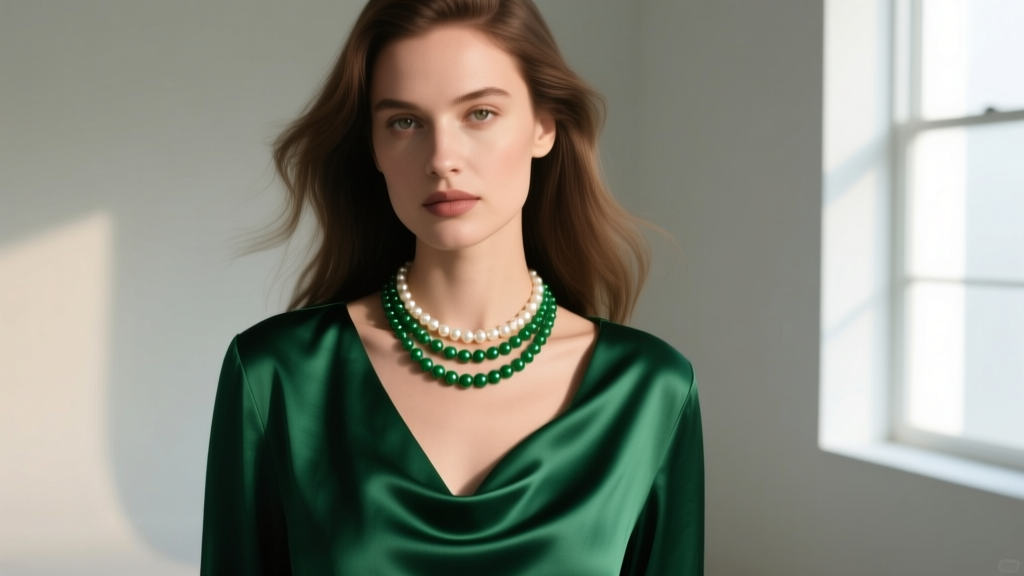
The Asymmetrical and Off-Shoulder Neckline
For asymmetrical tops or off-the-shoulder evening wear, visual balance is critical. A Y-drop lariat necklace featuring a single, large baroque pearl at the terminus and a shield-cut emerald at the junction draws the eye vertically, elongating the neck without competing with the garment's uneven hemline.
The Plunging V-Neck and Wrap Dress
Deep V-necklines require a piece that fills the negative space without looking heavy. An opera-length chain (28 to 32 inches) featuring alternating emerald and pearl stations, finished with a dramatic tassel or geometric pendant, provides a fluid, kinetic movement that complements the draping of wrap dresses and silk blouses.
The High Collar and Mock Neck
Counterintuitively, high-necked garments are the perfect canvas for shorter, choker-style emerald pearl necklaces. A rigid 18k gold collar featuring a single, bezel-set cabochon emerald flanked by two perfectly matched drop pearls creates a striking, editorial look that bridges the gap between corporate power-dressing and avant-garde fashion.
Investment Value and Market Prognosis
The financial barrier to entry for a genuine emerald pearl necklace varies wildly based on the origin of the materials and the craftsmanship of the setting. In the demi-fine sector, utilizing lab-grown emeralds and high-quality freshwater pearls, consumers can expect to pay between $800 and $2,500. These pieces offer excellent aesthetic value but lack long-term appreciative potential.
In the fine and high jewelry sectors, natural Colombian emeralds with minor oil treatments paired with natural, unbleached saltwater pearls command premiums ranging from $18,000 to well over $120,000. As global emerald mining yields continue to decline and environmental regulations restrict pearl farming in sensitive coastal regions, the scarcity of top-tier natural specimens ensures that a well-sourced emerald pearl necklace remains not just a sartorial triumph, but a robust alternative asset class for the discerning collector.


