Diamond Link Necklace Buying Guide: What to Look For
Discover what to look for when shopping for a diamond link necklace. Explore metal grades, diamond clarity, link styles, and pricing in our expert guide.

The Evolution of the Diamond Link Necklace
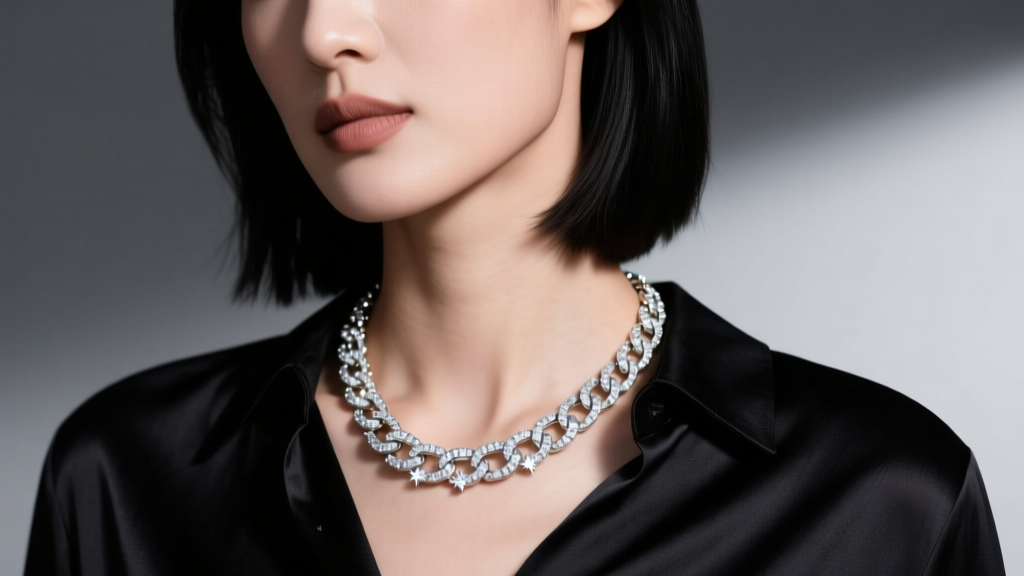
As we navigate the 2026 jewelry market, the diamond link necklace has firmly transitioned from a red-carpet exclusive to a cornerstone of everyday luxury. Unlike traditional pendant necklaces where the chain is merely a vehicle for a center stone, a true diamond link necklace integrates diamonds directly into the chain's architecture. Whether through continuous tennis settings, paved Cuban links, or spaced diamond stations on a paperclip chain, the chain itself is the statement. However, this structural complexity introduces unique purchasing considerations. This comprehensive buying guide breaks down the exact specifications, material grades, and mechanical failure points you must evaluate before investing in a diamond link necklace.
Decoding Link Styles: Tennis, Cuban, and Paperclip
The structural integrity and visual impact of your necklace depend entirely on the link style. Each style dictates how the diamonds are set, which directly impacts durability and light return.
- The Tennis Link: A continuous, flexible line of individually set diamonds. For everyday wear, opt for bezel-set tennis links. The most common failure mode in prong-set tennis necklaces is prong fatigue; when prongs catch on knitwear or hair, they bend outward, compromising the gallery wire and leading to catastrophic stone loss. Bezel settings eliminate this risk entirely, though they reduce light return by approximately 12% compared to four-prong settings.
- The Paved Cuban Link: Characterized by thick, interlocking oval links that lay flat against the chest. In diamond variations, the flat surfaces are paved with melee diamonds. Look for a link width between 4mm and 6mm for a modern, gender-neutral aesthetic. Ensure the paving utilizes shared-prong settings to maximize the diamond surface area while minimizing visible metal.
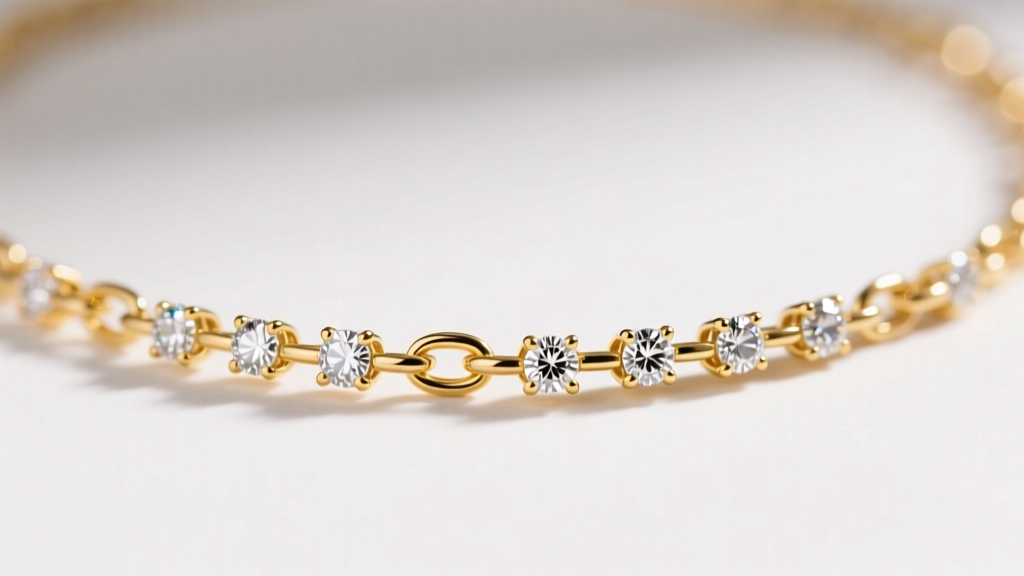
- Paperclip Links with Diamond Stations: Elongated, rectangular links interspersed with diamond clusters or single solitaire stations every few inches. This style offers the highest versatility for layering and is significantly lighter, making it ideal for 20-inch to 24-inch lengths that sit lower on the sternum.
Metal Purity and Durability: 14k vs. 18k vs. Platinum
The metal you choose must support the weight of the diamonds and withstand the tension of the links. According to the Federal Trade Commission's Jewelry Guides, understanding metal purity stamps is critical for verifying quality and ensuring long-term durability.
| Metal Type | Purity | Tensile Strength | Best Application | Price Premium |
|---|---|---|---|---|
| 14k Gold | 58.5% Pure | High | Heavy Cuban links, everyday wear | Base |
| 18k Gold | 75.0% Pure | Medium | Bezel tennis links, station necklaces | +25% to 35% |
| 950 Platinum | 95.0% Pure | Very High (Dense) | High-carat tennis links, secure paving | +60% to 80% |
While 18k gold offers a richer, warmer hue, its softer nature makes it susceptible to link stretching over time if the necklace is heavy (over 15 grams). For diamond Cuban links exceeding 5mm in width, 14k gold or platinum is mandatory to prevent the interlocking links from warping under their own weight. Platinum, while the most expensive, develops a natural patina that hides micro-scratches and provides the most secure prong tension for continuous diamond settings.
Evaluating Diamond Quality in Melee and Station Links
When buying a diamond link necklace, you are rarely buying a single certified stone; you are buying dozens or hundreds of melee diamonds (stones under 0.20 carats). The Gemological Institute of America (GIA) notes that melee diamonds are typically graded in parcels rather than individually, which means you must rely on the jeweler's stated specifications for the total carat weight (CTW) and average color/clarity.
The 4Cs for Link Necklaces
Carat (CTW): Do not confuse Total Carat Weight with individual stone size. A 5.00 CTW tennis necklace made of 100 diamonds (0.05ct each) will look vastly different from a 5.00 CTW necklace made of 50 diamonds (0.10ct each). Larger individual stones offer more brilliance, while smaller stones create a seamless ribbon of light. Always ask for the exact millimeter diameter of the individual stones.
Color: For white gold and platinum settings, insist on G-H color melee. If the diamonds are I-J or lower, they will appear noticeably yellow against the white metal, especially in continuous tennis links where the contrast is magnified. For yellow gold settings, you can safely drop to J-K color, saving up to 15% on the total price without a visible compromise in beauty.
Clarity: Because melee diamonds are small, inclusions are incredibly difficult to see with the naked eye. SI1 to SI2 clarity is the industry standard and the smartest financial choice. Never pay a premium for VVS or IF clarity in a paved link necklace; the visual return on investment is virtually zero.
Cut: This is non-negotiable. Poorly cut melee diamonds will look dead and glassy, regardless of the metal setting. Ensure the jeweler guarantees 'Very Good' or 'Excellent' cut grades for the melee parcels used in your necklace.
Clasp Mechanics and Security Features
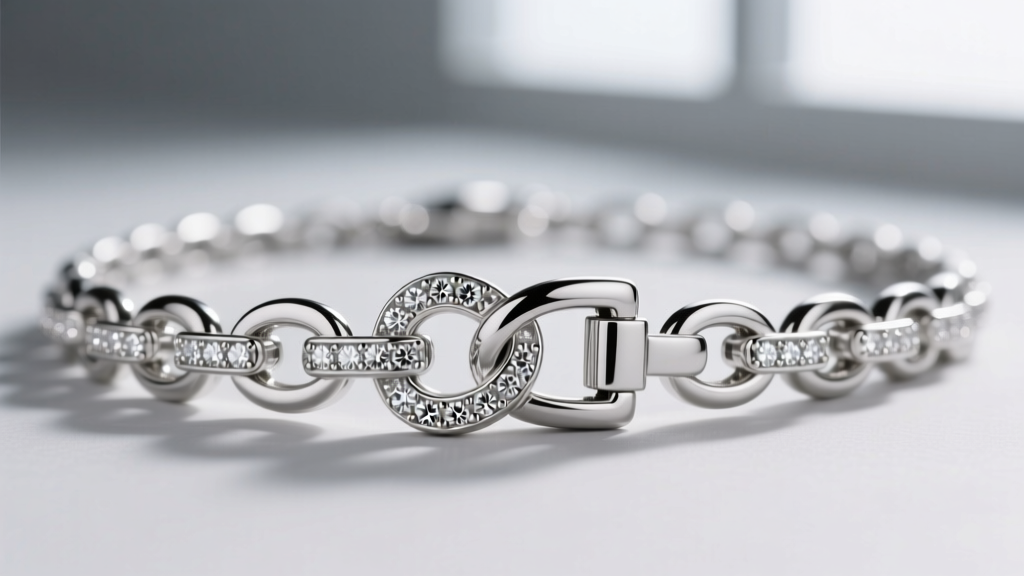
The clasp is the single most critical mechanical point of failure on any diamond link necklace. A standard spring-ring or lobster clasp is entirely insufficient for necklaces weighing more than 8 grams or featuring continuous diamond settings.
- The Box Clasp with Safety Catches: This is the gold standard for tennis and heavy Cuban link necklaces. The tongue slides into a boxed mechanism, locking into place. Crucially, it must feature at least one (preferably two) figure-eight safety wires that snap over the outer edge of the clasp. If the primary box mechanism fails or opens accidentally, the safety wires will prevent the necklace from falling off and losing thousands of dollars in diamonds.
- Hidden/Integrated Clasps: High-end diamond link necklaces often feature a box clasp designed to look exactly like the adjacent links, maintaining the unbroken illusion of the chain. Ensure the release lever on a hidden clasp requires a deliberate, two-step push-pull motion to prevent accidental openings.
Pricing Tiers and What to Expect in 2026
Pricing for diamond link necklaces varies wildly based on the manufacturing technique (hand-set vs. cast-in-place) and the origin of the diamonds (natural vs. lab-grown). Below is a realistic pricing framework for natural, earth-mined diamonds set in 14k or 18k gold.
- Entry-Level ($1,500 - $3,500): 1.00 to 2.50 CTW. Typically paperclip chains with diamond stations or very thin (2mm) bezel-set tennis links. Excellent for layering and daily wear.
- Mid-Tier ($5,000 - $15,000): 4.00 to 8.00 CTW. Standard 3mm to 4mm tennis necklaces or modestly paved Cuban links. This tier offers the best balance of visual impact and structural durability.
- High-End ($25,000 - $80,000+): 10.00 to 20.00+ CTW. Fully paved, wide (6mm+) Cuban links or graduated tennis necklaces featuring larger center stones at the front drape. These pieces require custom fabrication and premium box clasps with double safeties.
Note: Opting for high-quality lab-grown diamonds can reduce these price points by 60% to 80%, allowing for significantly higher carat weights and larger individual stone sizes within the same budget.
Final Verdict: Matching the Necklace to Your Lifestyle
When selecting your diamond link necklace, prioritize structural integrity over sheer carat weight. A well-crafted 3.00 CTW bezel-set tennis link in 14k white gold will outlast and outshine a poorly constructed 6.00 CTW prong-set necklace that constantly requires prong re-tipping. Always inspect the clasp mechanism in person, verify the melee diamond color grades against the chosen metal, and ensure the link articulation is fluid and snag-free. By focusing on these technical details, you will secure a piece that not only elevates your wardrobe but stands up to the rigors of daily wear for decades to come.


