The Diamond Necklace Summary: Expert Care & Cleaning Guide
Discover the diamond necklace summary for expert care. Learn deep cleaning protocols, ultrasonic risks, and prong maintenance for lasting brilliance.

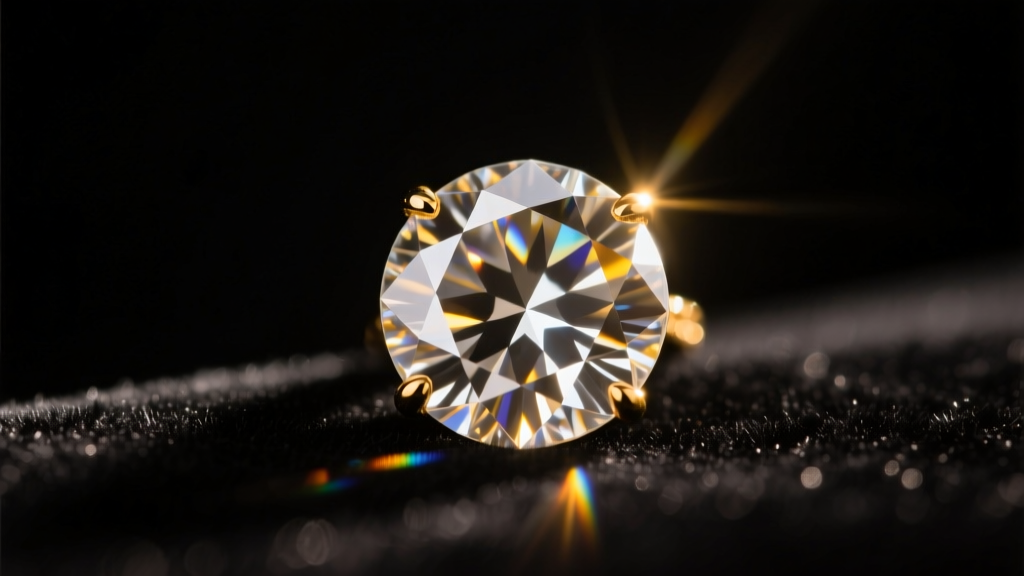
Owning a fine piece of diamond jewelry is an investment in both emotion and capital, yet maintaining its optical brilliance requires more than a casual wipe with a cloth. If you have been searching for the ultimate diamond necklace summary on care and maintenance, this comprehensive guide bridges the gap between basic home remedies and professional gemological protocols. Diamonds are renowned for their unmatched hardness, but their structural integrity and the precious metal settings that hold them are highly susceptible to environmental degradation, chemical exposure, and improper cleaning techniques. Below, we break down the exact science of diamond soiling, actionable daily prevention frameworks, and the precise maintenance schedules required to keep your necklace sparkling for generations.
The Science of Diamond Soiling: Why Brilliance Fades
To properly care for a diamond necklace, one must first understand the chemical nature of the stone. Diamonds are composed of a pure carbon lattice, which inherently makes them lipophilic—meaning they attract and hold onto oils and grease. According to the Gemological Institute of America (GIA), a diamond's affinity for oil is so strong that simply touching the stone with your bare fingers will transfer enough sebum to noticeably dull its light return. When hand lotions, cooking aerosols, and natural skin oils accumulate on the pavilion (the bottom half of the diamond), they create a microscopic film that blocks light from entering and reflecting back through the crown. A pristine 2-carat round brilliant diamond can lose up to 50% of its visible brilliance when coated in a layer of everyday grime, making it appear cloudy, lifeless, and smaller than its actual carat weight.
The Diamond Necklace Summary: Daily Prevention Protocols
The most effective maintenance strategy is proactive prevention. Adopting the 'last on, first off' rule is the cornerstone of jewelry preservation. Your diamond necklace should be the final item you put on after applying cosmetics, perfumes, hairsprays, and lotions, and the very first item you remove when returning home. Furthermore, understanding the chemical vulnerabilities of your setting is critical. While the diamond itself is impervious to most household chemicals, the gold or platinum alloys securing it are not.
- Chlorine Exposure: Never wear your necklace in swimming pools or hot tubs. Chlorine reacts aggressively with the copper and zinc alloys in 14k and 18k gold, leading to a phenomenon known as stress corrosion cracking. Over time, this weakens the prongs, drastically increasing the risk of losing your center stone.
- Physical Impact: While diamonds rank a 10 on the Mohs scale of hardness (resistance to scratching), they possess distinct cleavage planes. Striking your pendant against a hard surface, like a marble countertop or gym equipment, can cause the diamond to chip or fracture along these internal planes.
- Perspiration and Acids: Heavy sweating at the gym introduces acidic salts that can degrade the polish on your chain and accelerate the tarnishing of lower-karat gold alloys.
Step-by-Step Deep Cleaning Framework
For routine home maintenance, bypass commercial 'jewelry dips' which often contain harsh ammonia derivatives that can degrade porous gemstone accents or damage rhodium plating. Instead, utilize this gemologist-approved deep cleaning framework:
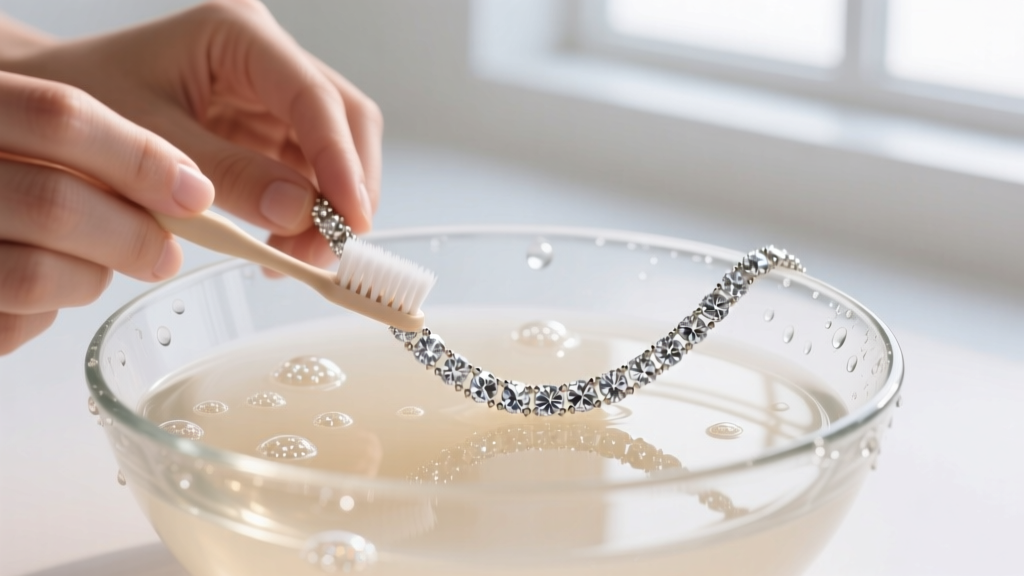
- Prepare the Solution: Fill a small glass bowl with warm distilled water. Tap water contains calcium and magnesium which can leave hard water spots on the metal. Add three drops of unscented, mild dish soap (such as original Dawn) to act as a degreasing agent.
- Soak: Submerge the diamond necklace and let it soak for 15 to 20 minutes. This allows the surfactants to break down the lipophilic bonds of the oils trapped beneath the setting.
- Agitate Gently: Using an extra-soft baby toothbrush, gently brush the diamond. Focus heavily on the pavilion and the culet (the bottom point), as well as the gallery wire beneath the stone. Never use a medium or hard-bristled brush, as this will inflict micro-scratches on polished gold surfaces.
- Rinse and Dry: Rinse the necklace under a gentle stream of warm distilled water. Pat dry with a lint-free microfiber cloth. Avoid paper towels, as the wood pulp fibers can leave microscopic scratches on high-polish platinum or gold chains.
Ultrasonic and Steam Cleaners: A Risk Assessment
Many consumers purchase at-home ultrasonic cleaners, assuming they are universally safe for all diamond jewelry. However, high-frequency sound waves and intense heat pose severe risks to specific diamond treatments and delicate settings. The American Gem Society frequently warns against using these machines without professional oversight. Review the risk matrix below before utilizing mechanical cleaners.
| Cleaning Method | Ideal Applications | High-Risk Scenarios | Expert Verdict |
|---|---|---|---|
| Ultrasonic Waves | Solid gold chains, durable solitaire pendants | Fracture-filled diamonds, pave settings, emerald cuts | Use with extreme caution; avoid for treated stones |
| Steam Cleaning | Heavy grease removal on secure, untreated solitaires | Tension settings, glass-filled diamonds, clarity-enhanced stones | Professional use only; heat can melt Yehuda glass fillers |
| Mild Soap Soak | All diamond jewelry, daily upkeep, delicate pave | None (universally safe for diamonds and precious metals) | Highly Recommended for home care |
Professional Maintenance: Prongs, Chains, and Rhodium
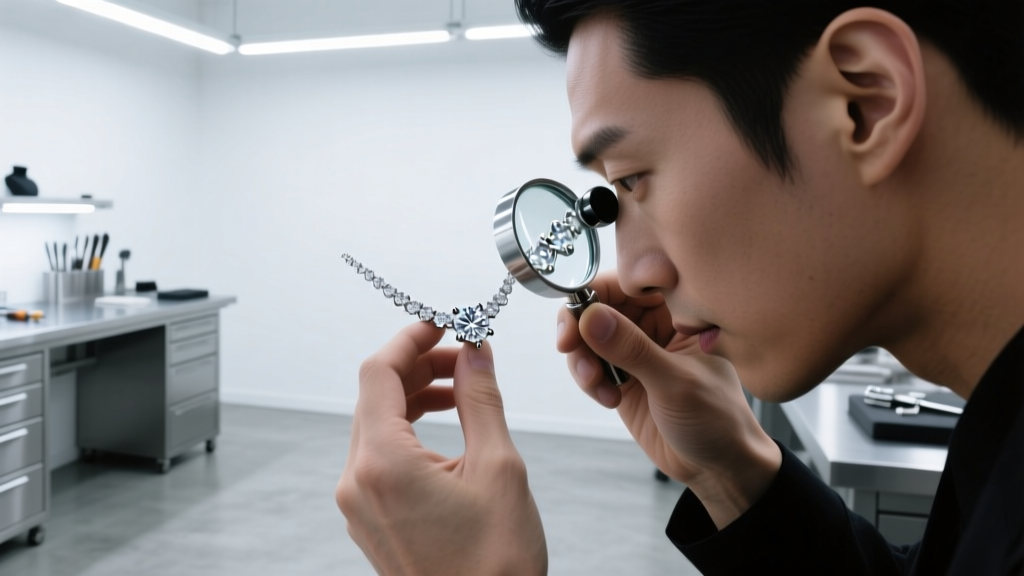
Even with meticulous home care, a diamond necklace requires professional evaluation every 6 to 12 months. The friction of clothing and the natural movement of the body cause microscopic wear on the metal prongs securing your diamonds. This is especially critical for pave diamond tennis necklaces, where dozens of micro-prongs are subjected to continuous tension.
Prong Re-tipping and Metal Wear: Platinum is the superior metal for diamond settings because of its density and displacement properties; when scratched or worn, platinum displaces rather than flaking away, maintaining the structural integrity of the prong. Conversely, 14k and 18k white gold prongs can wear thin and snap. If a jeweler identifies thinning prongs, re-tipping (adding new metal to the tip of the prong) typically costs between $30 and $75 per prong—a minor expense compared to replacing a lost diamond.
Chain Gauge and Rhodium Plating: The chain supporting your pendant is equally important. For pendants weighing over 2 carats, avoid delicate 0.8mm or 1.0mm cable chains, which are prone to kinking and tensile failure. Opt for a 1.5mm to 2.0mm wheat or rolo chain, which offers vastly superior structural support. Additionally, if your chain is crafted from white gold, it will require rhodium plating every 12 to 18 months to maintain its bright, silvery-white luster, as the underlying gold alloy naturally possesses a yellowish hue. Professional rhodium replating generally ranges from $40 to $85, depending on the chain's thickness and complexity.
Final Thoughts on Longevity
Mastering the care of your fine jewelry transforms it from a mere accessory into a lasting heirloom. By understanding the lipophilic nature of carbon, avoiding corrosive household chemicals, and adhering to a strict, gentle cleaning regimen, you ensure that your jewelry remains as radiant as the day it was acquired. Keep this diamond necklace summary as your definitive reference, and never hesitate to consult a certified gemologist or bench jeweler when structural doubts arise. Proper maintenance is the silent guardian of your investment's beauty and value.


