Diamond Necklace Wedding Trends 2026: Neckline & Style Guide
Discover 2026 diamond necklace wedding trends. Learn how to pair carat weights, metal grades, and pendant styles with your bridal neckline perfectly.

The 2026 Bridal Shift: Beyond the Traditional Parure
When planning a diamond necklace wedding ensemble, the days of rigid, heavy, matched-set parures are officially behind us. As we navigate through 2026, bridal jewelry has pivoted toward curated, modular layering and architectural silhouettes. According to recent bridal market analyses by The Knot, modern brides are prioritizing personalization and versatility over traditional uniformity. The focus has shifted to mixing diamond cuts—such as pairing a vintage-inspired old European cut solitaire pendant with a modern, micro-pave tennis chain—to create a bespoke neckline that feels both timeless and distinctly contemporary.
This evolution is heavily influenced by the neckline architecture of 2026 wedding gowns. Designers are moving away from simple strapless bodices, favoring complex geometries like square necks, deep plunge V-necks, and high-illusion halters. Consequently, selecting the right diamond necklace wedding piece requires a precise understanding of chain lengths, diamond millimeter widths, and metal alloys that complement these specific fabric silhouettes without competing with them.
Neckline Architecture: Pairing Diamonds with 2026 Silhouettes
The relationship between your gown’s neckline and your diamond jewelry is a matter of spatial geometry. A necklace that looks stunning on a mannequin may completely disrupt the visual flow of a specific dress cut. Here is the technical breakdown of how to pair diamonds with this year's most prominent bridal silhouettes.
The Plunging V-Neck & Y-Drop Pendants
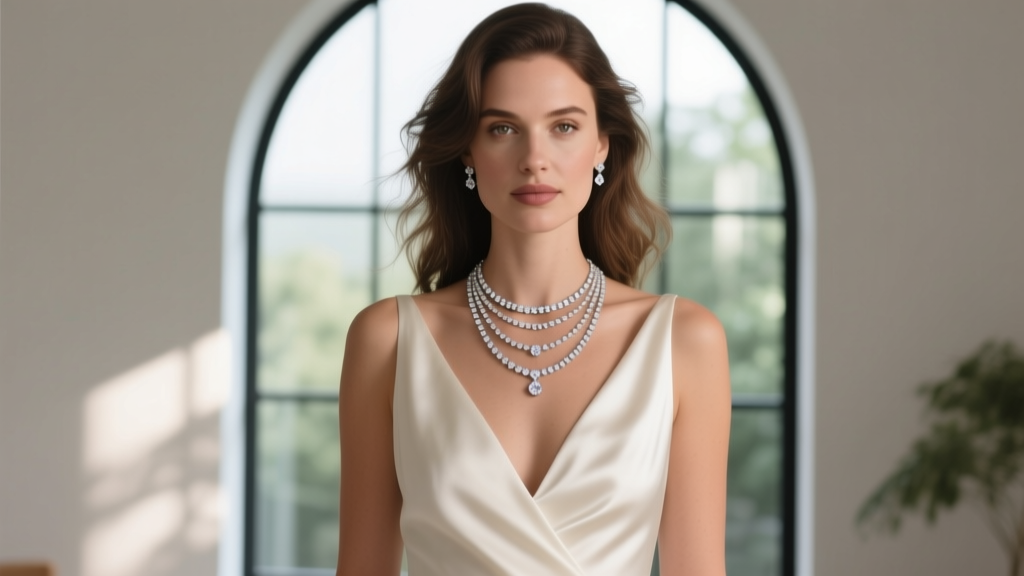
The deep V-neck remains a dominant force in 2026 bridal fashion, but it requires careful vertical elongation. The optimal choice is a Y-drop pendant or a lariat-style necklace. For a standard plunging neckline, aim for a chain length between 18 and 22 inches. The drop should feature a pear-cut or marquise diamond ranging from 0.75ct to 1.50ct. A 4-prong setting is highly recommended here, as it allows approximately 15% more light return than a bezel setting, ensuring the diamond catches the ambient lighting as you move down the aisle. Avoid choker lengths, which will visually truncate the neck and clash with the dress's downward lines.
The Square Neckline & Choker-Length Tennis Chains
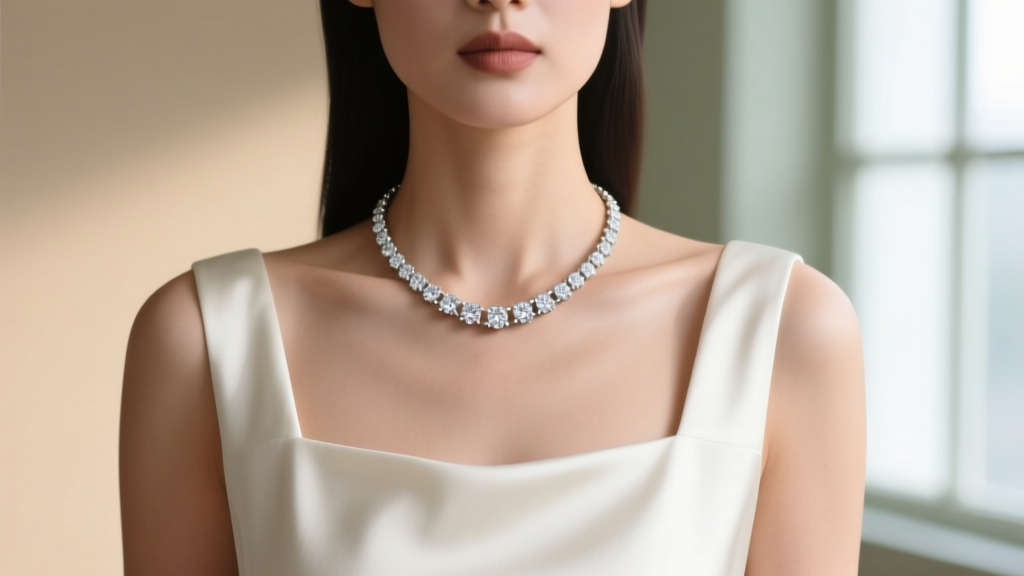
Square necklines frame the collarbone beautifully, creating a natural "shelf" for jewelry. The most flattering pairing is a choker-length tennis necklace measuring exactly 14 to 15 inches. In 2026, the trend leans toward uniform round brilliants in the 3mm to 4.5mm range (approximately 5 to 8 carats total weight). According to grading standards outlined by the Gemological Institute of America (GIA), because these diamonds sit high on the chest and are constantly in the observer's direct line of sight, you should prioritize a color grade of D-F (colorless) and a minimum clarity of VS2 to ensure no inclusions are visible to the naked eye.
The High Illusion / Halter & Delicate Lariat Styles
Halter necks and high-illusion tulle bodices are already visually busy. The golden rule for 2026 is to avoid collarbone clutter entirely. Instead, opt for a backless lariat necklace or a delicate 24-inch station chain that draws the eye down the back of the dress. If you must wear a front-facing piece, choose a single, ultra-delicate 16-inch chain with a micro-bezel set 0.25ct round brilliant diamond. The metal should be 18k yellow gold or rose gold to provide a warm contrast against the cool tones of white ivory or diamond-white fabrics.
Material & Grade Matrix: What to Buy in 2026
Choosing the right metal alloy and diamond grade is critical for ensuring your necklace harmonizes with your engagement ring and wedding band. Below is a decision matrix for 2026 bridal buyers.
| Metal Choice | Best Diamond Color Grade | Ideal Dress Fabric | Visual Effect |
|---|---|---|---|
| Platinum (950) | D - F (Colorless) | Silk Mikado, Crepe | Crisp, modern, high-contrast brilliance |
| 18k White Gold | G - H (Near Colorless) | Tulle, Organza | Soft, ethereal, traditional bridal glow |
| 18k Yellow Gold | I - K (Faint Color) | Lace, Vintage Satin | Warm, romantic, vintage-inspired aesthetic |
Note: If choosing 18k Yellow Gold, the faint yellow tint of I-K diamonds is masked by the metal's reflection, allowing you to allocate more of your budget toward a higher carat weight or better cut quality.
The Convertible Trend: Day-to-Night Bridal Modules
One of the most exciting style trends for 2026 is the rise of convertible diamond necklaces. Brides are increasingly investing in modular pieces that transition seamlessly from the ceremony to the reception. A popular configuration is the 16-inch Riviera necklace featuring a hidden bail mechanism that allows a 2-inch diamond fringe or a 3-carat pear drop to be attached or detached. This means you can wear a classic, understated tennis chain during the vows and attach a dramatic, high-carat pendant for the evening festivities. When shopping for convertible pieces, always test the tension of the hidden clasps to ensure the heavy drops remain secure while dancing.
Pricing Realities: Natural vs. Lab-Grown in the Current Market
The pricing landscape for a diamond necklace wedding purchase has shifted dramatically with the maturation of the lab-grown market. As of 2026, lab-grown diamonds offer identical optical and chemical properties to mined stones but at a fraction of the cost, allowing brides to achieve larger carat weights without compromising on cut quality.
- 5-Carat Total Weight (CTW) Tennis Necklace (3mm): Lab-Grown ($3,200 - $4,800) vs. Natural ($18,000 - $26,000)
- 1.00ct Solitaire Pendant (18" Chain): Lab-Grown ($800 - $1,400) vs. Natural ($5,500 - $8,500)
- 10-CTW Graduated Riviera Necklace: Lab-Grown ($7,500 - $11,000) vs. Natural ($45,000 - $65,000+)
Industry data from Rapaport indicates that while natural diamonds retain a premium for their rarity and long-term resale value, lab-grown diamonds have become the dominant choice for bridal fashion jewelry where sheer visual impact and carat size are the primary goals.
Expert Sizing & Clasp Mechanics
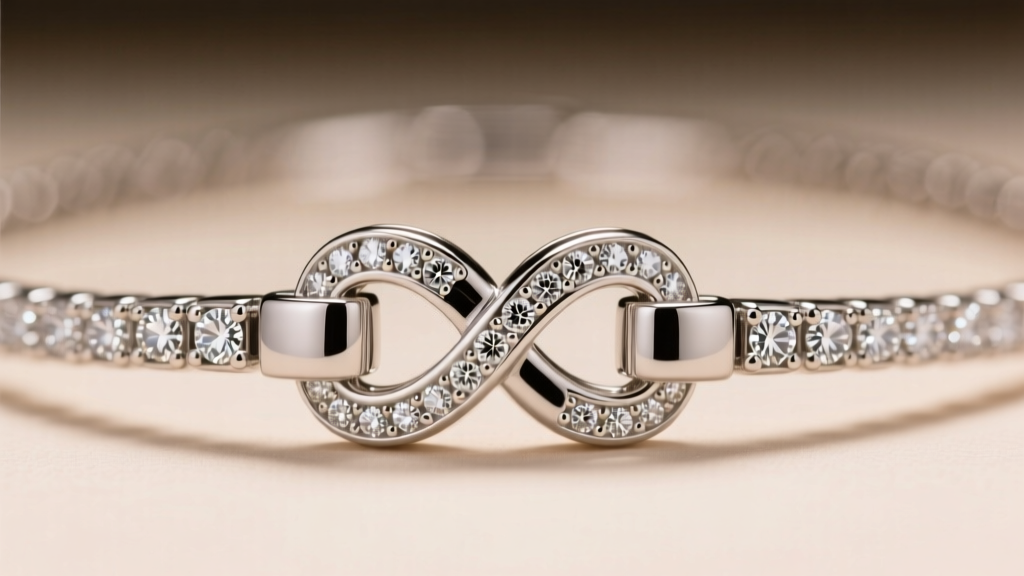
A diamond necklace is only as secure as its weakest link. For high-value bridal pieces, never settle for a standard spring-ring clasp. You must insist on a hidden box clasp equipped with double figure-8 safety catches. The box clasp should sit flush against the neck, effectively disappearing into the diamond line, while the figure-8 wires provide a mechanical backup in the event the primary latch is bumped. Additionally, ensure the chain features a soldered jump ring at the pendant bail to prevent the diamond drop from slipping off the chain during the hustle of the wedding day.
Final Thoughts on Your Bridal Selection
Choosing the perfect diamond necklace wedding piece in 2026 is an exercise in balancing architectural proportions, material science, and personal style. By understanding the exact millimeter widths that suit your gown's neckline, selecting the appropriate metal alloy to complement your skin tone and dress fabric, and insisting on secure, high-quality clasp mechanics, you will secure a breathtaking piece of jewelry that elevates your bridal look and remains a staple in your fine jewelry collection for decades to come.


