Diamond Necklace Womens Buying Guide: 2026 Trends & Tips
Discover our expert 2026 buying guide for a diamond necklace womens styles. Learn about carat weights, metal grades, chain types, and pricing tiers.

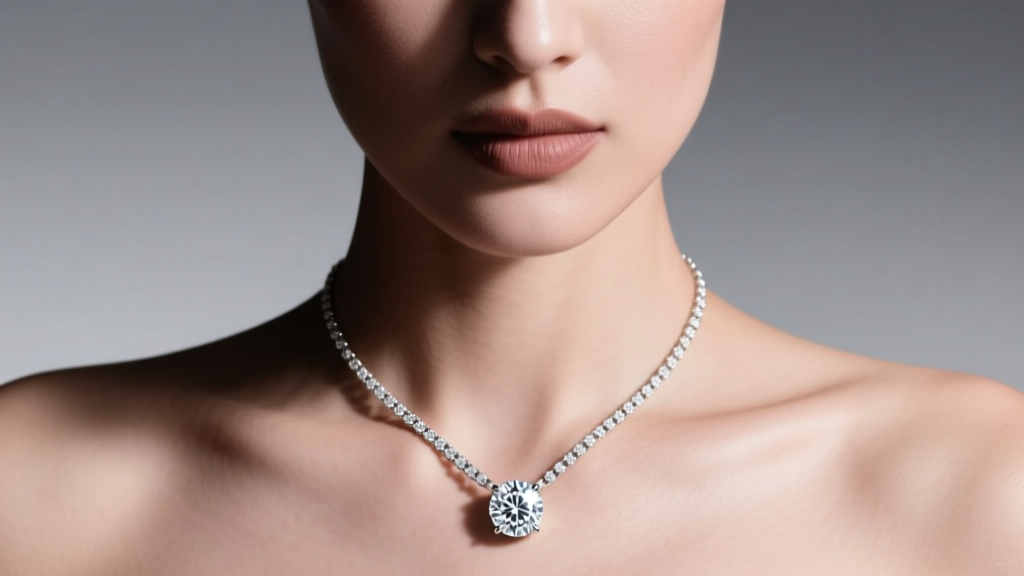
Investing in fine jewelry requires moving beyond basic aesthetics to understand structural engineering, material grades, and long-term wearability. The market for a diamond necklace womens collections offer has evolved significantly in 2026, driven by advancements in lab-grown diamond certification, precision laser cutting, and a renewed focus on chain durability. Whether you are purchasing a delicate solitaire pendant or a heavy statement piece, understanding the mechanics of how a necklace wears, drapes, and ages is critical to making a sound investment.
Decoding the 4Cs for Pendants
When evaluating a diamond pendant, the standard 4Cs (Cut, Color, Clarity, Carat) must be contextualized for how the jewelry is actually worn. A pendant rests on the sternum, typically 16 to 18 inches away from the observer's eye. This distance fundamentally changes how you should allocate your budget.
The Clarity and Color Sweet Spot
For solitaire pendants, Cut is the only non-negotiable metric; it dictates light return and brilliance. However, you can safely compromise on Clarity and Color without sacrificing visual beauty. An SI1 (Slightly Included) clarity grade is the ultimate sweet spot for pendants. Inclusions visible under 10x magnification are completely invisible to the naked eye at a conversational distance, allowing you to save 20% to 30% compared to a VS1 stone. Similarly, a G or H color grade will face up completely white once set, especially when paired with 14k or 18k white gold or platinum. Reserve D-F colorless grades for diamonds that will be viewed up close, such as stud earrings or engagement rings.
Lab-Grown vs. Natural Diamonds in 2026
The pricing gap between natural and lab-grown diamonds has widened dramatically. In 2026, a high-quality 1.00ct natural diamond pendant (VS2/G) typically retails between $6,500 and $9,000. The exact same specification in a lab-grown diamond ranges from $800 to $1,500. If you choose lab-grown, ensure the stone is certified by IGI or GCAL, which provide rigorous grading reports comparable to the GIA. Always verify that the retailer complies with FTC Jewelry Guides regarding clear disclosure of lab-grown origins.
Chain Architecture and Durability
The most common failure point in any necklace is not the diamond, but the chain. A heavy pendant on a micro-thin chain will inevitably result in a broken link and a lost stone. Chain thickness must be scaled to the pendant's dynamic weight—the force exerted by the pendant as it swings and catches on clothing.
| Chain Style | Recommended Thickness | Durability & Best Use Case |
|---|---|---|
| Box Chain | 0.8mm - 1.2mm | High tensile strength; resists kinking. Best for modern solitaire pendants. |
| Cable Chain | 1.0mm - 1.5mm | Classic look but prone to stretching if pulled. Best for lightweight melee clusters. |
| Rope Chain | 1.5mm - 2.5mm | Extremely durable and heavy. Best for large, multi-carat statement pendants. |
| Wheat Chain | 0.9mm - 1.5mm | Woven links prevent snapping; excellent drape. Ideal for medium-weight antique settings. |
Expert Rule of Thumb: Never pair a diamond over 0.50ct with a chain thinner than 0.8mm. Furthermore, always upgrade from a standard spring-ring clasp to a lobster clasp for any chain exceeding 1.0mm in thickness, as the thicker wire will not fit securely through a small spring-ring mechanism.
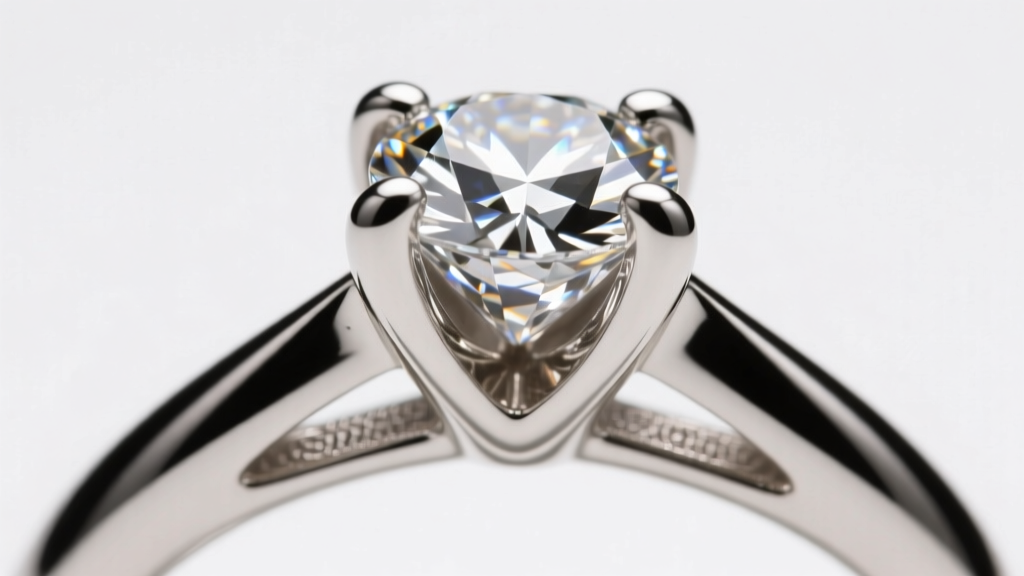
Prong Settings and Structural Failure Modes
The setting dictates both the aesthetic profile and the physical security of the diamond. The two most common pendant settings are the Martini (3-prong) and the Basket (4-prong).
- 3-Prong Martini Setting: This setting lowers the center of gravity, allowing the diamond to sit flush against the collarbone. However, it is structurally unsuited for diamonds larger than 0.75ct. The uneven weight distribution causes heavier stones to "tip" forward, exposing the flat back of the setting rather than the diamond's table.
- 4-Prong Basket Setting: The industry standard for stones 0.50ct and above. When selecting a basket setting, ensure it features a gallery wire—a horizontal ring of metal connecting the prongs near the base of the diamond. This wire prevents the prongs from splaying outward if the pendant is snagged on a sweater or towel.
For maximum security, platinum (950 purity) is the superior metal for prongs. Unlike 14k or 18k white gold, which can become brittle over time and snap upon impact, platinum is malleable. If struck, a platinum prong will bend, holding the stone in place, and can be easily pushed back into position by a jeweler.
Pricing Framework: What to Expect
Understanding current market tiers prevents overpaying for brand markups. Here is a realistic pricing breakdown for natural, GIA-certified diamond solitaire pendants in 2026 (excluding luxury designer premiums):
- Tier 1: Melee & Accent (0.05ct - 0.15ct): $400 - $1,200. Often sold as "diamond dust" or illusion settings. Focus on 14k gold to keep costs reasonable.
- Tier 2: The Everyday Solitaire (0.25ct - 0.50ct): $1,500 - $3,800. The most popular category for milestone gifts. Prioritize Excellent cut grades here.
- Tier 3: The Statement Piece (0.75ct - 1.00ct+): $5,500 - $15,000+. Requires heavy-duty chains and basket settings. SI1 clarity is highly recommended to maximize carat size within budget.
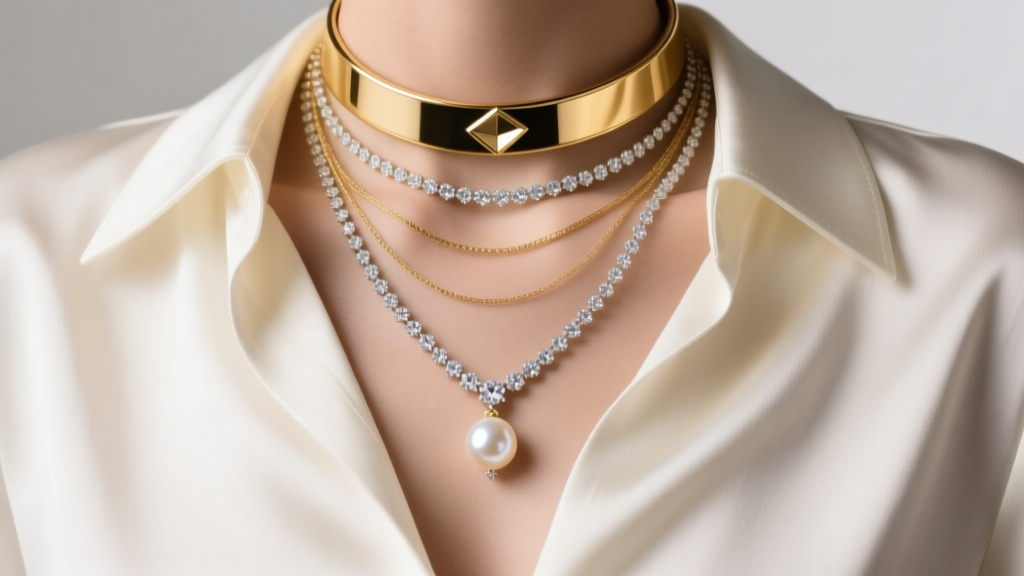
Styling, Layering, and Neckline Integration
A diamond pendant is a versatile anchor for layering, but proportion is key. For a balanced stack, utilize the "rule of three" with varying lengths and textures:
- The Base (14-16 inches): A simple 14k gold herringbone or snake chain choker that sits tightly on the collarbone.
- The Anchor (18 inches): Your primary diamond solitaire pendant on a 1.0mm box chain. This should rest perfectly in the hollow of the throat or just above the sternum.
- The Accent (20-22 inches): A longer, textured chain featuring a colored gemstone or a smaller diamond lariat to draw the eye downward and elongate the neck.
When pairing with necklines, a classic 18-inch princess length complements V-necks and scoop necks by mirroring the geometric angle of the fabric. For high crew necks or turtlenecks, opt for a longer 20-inch matinee length with a larger carat weight to ensure the pendant doesn't get lost in the fabric folds.
Diamond Necklace Womens Buying Checklist
Before finalizing any purchase, run through this expert verification checklist to ensure you are receiving exactly what you paid for:
- Certificate Verification: Cross-reference the laser inscription on the diamond's girdle with the digital grading report on the issuing laboratory's official website.
- Metal Stamping: Inspect the clasp and the pendant bail for accurate hallmarks (e.g., "750" for 18k gold, "PT950" for platinum).
- Bail Construction: Ensure the bail (the loop connecting the pendant to the chain) is soldered shut and features a protective inner lining to prevent the chain from wearing through the metal over time.
- Return and Upgrade Policy: Reputable jewelers will offer a lifetime diamond upgrade policy, allowing you to trade in your current stone for a larger one in the future, applying 100% of the original purchase price toward the new stone.
By prioritizing structural integrity, intelligent grading compromises, and proper chain scaling, you can secure a breathtaking piece of fine jewelry that will endure decades of daily wear without compromise.


