The Anatomy of a Diamond Riviera Necklace: An Expert Guide
Discover the technical anatomy of a diamond riviera necklace. Explore stone matching, platinum alloys, setting architecture, and clasp mechanics.

The Engineering of Light: Defining the Rivière
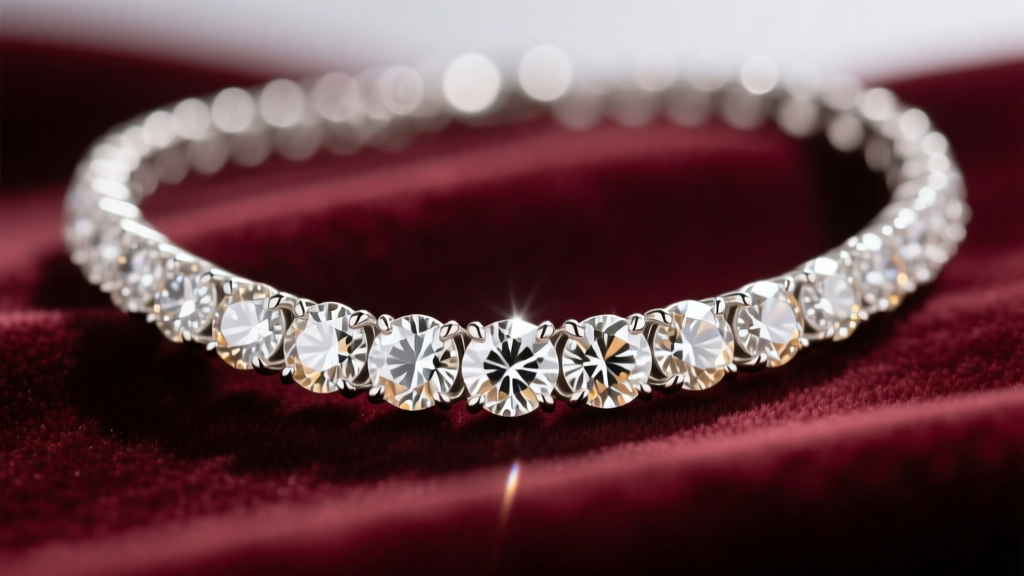
The term 'riviera' (or rivière) translates from French to 'river,' a poetic nod to the continuous, flowing river of light that wraps around the décolletage. Unlike pendant necklaces that rely on a single focal point, a diamond riviera necklace is an exercise in absolute symmetry and optical continuity. From a gemological and manufacturing perspective, constructing a high-caliber riviera is exponentially more complex than sourcing a single solitaire diamond. It requires a master gemologist to sort through thousands of carats of melee and mid-sized stones to find a matched set that shares identical optical properties, precise millimeter tolerances, and uniform fluorescence reactions. In this technical deep dive, we deconstruct the anatomy of the diamond riviera necklace, examining the metallurgy, setting architecture, and mechanical engineering that define heirloom-quality pieces.
Diamond Selection and the Tolerance Matrix
The fundamental challenge of a riviera is achieving visual homogeneity. When 40 to 60 individual diamonds are lined up edge-to-edge, the human eye becomes incredibly sensitive to minute variations in color, clarity, and cut proportions. According to GIA's grading standards, a single diamond's color grade represents a range. However, in a riviera, stones must be matched within a strict 0.05mm tolerance in diameter and share the same facet alignment.
The Fluorescence Factor
One of the most critical, yet frequently overlooked, technical aspects of matching a diamond riviera necklace is fluorescence. If a necklace contains a mix of non-fluorescent and strong-blue fluorescent diamonds, the piece will appear disjointed and mottled under UV-rich lighting environments (such as direct sunlight or club lighting). Master jewelers mandate that every stone in a premium riviera shares the exact same fluorescence grade—typically 'None' or 'Faint'—to ensure the river of light remains unbroken. Sourcing 50 diamonds of matching carat weight, cut, color, clarity, and fluorescence can take a high-end maison upwards of two years.
Metallurgy and Setting Architecture
The metal framework of a riviera must possess immense tensile strength to support the weight of the diamonds while remaining flexible enough to drape fluidly against the collarbone. The choice of alloy dictates the longevity, maintenance, and security of the piece.
Platinum vs. 18k White Gold
While 18k white gold is common in commercial jewelry, high-end rivieras are almost exclusively crafted in Platinum 950. White gold requires rhodium plating to achieve its bright white finish, which wears off over time, revealing a yellowish-grey alloy beneath. Re-plating a diamond riviera is a high-risk procedure, as the chemical baths and heat can degrade the polish of the diamonds or loosen the settings. Platinum, conversely, is naturally white and develops a desirable patina over time without losing metal mass.
| Alloy / Metal | Composition | Tensile Strength | Maintenance Profile | Best Application |
|---|---|---|---|---|
| Platinum 950/Ru | 95% Pt, 5% Ruthenium | High | Low (Develops Patina) | Heirloom / Heavy Carat Graduated Rivieras |
| Platinum 950/Co | 95% Pt, 5% Cobalt | Very High | Low (Slightly Magnetic) | Intricate Micro-Pave & Delicate Links |
| 18k White Gold | 75% Au, 25% Ni/Pd Alloys | Medium | High (Requires Rhodium) | Budget / Lighter Uniform Styles |
Prong Geometry and Gallery Wire
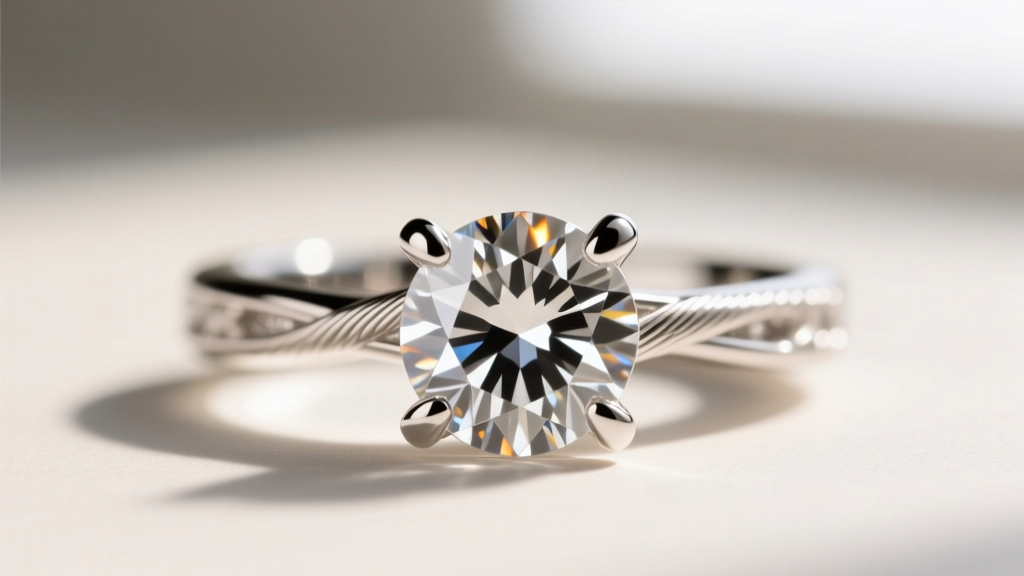
The setting architecture must maximize light return while minimizing metal visibility. Four-prong settings are the industry standard for round brilliant diamonds in a riviera, as they allow maximum light penetration from the pavilion. The gallery wire—the horizontal support structure beneath the diamonds—must be filed to a knife-edge or V-shape to sit flush against the skin, preventing the necklace from flipping over during wear.
Graduation Profiles and Carat Distribution
Rivieras generally fall into two structural categories: uniform (all stones the same size) and graduated (stones increase in size toward the center). The mathematics of a graduated diamond riviera necklace require precise geometric progression.
- The Center Stone: Typically anchors the piece, ranging from 2.00 to 5.00 carats in high-jewelry examples.
- The Drop Increments: Master setters use a strict decrement formula. For example, the center stone may be 8.0mm, dropping by 0.5mm increments for the next four stones, then 0.3mm increments toward the clasp.
- The Taper: The stones at the nape of the neck are often reduced to 2.0mm or 3.0mm to ensure comfort and prevent the metal from kinking when the wearer moves their head.
This meticulous distribution ensures the necklace's center of gravity rests perfectly in the suprasternal notch, preventing the clasp from migrating to the front of the neck—a common failure point in poorly engineered pieces.
Clasp Mechanics and Structural Integrity
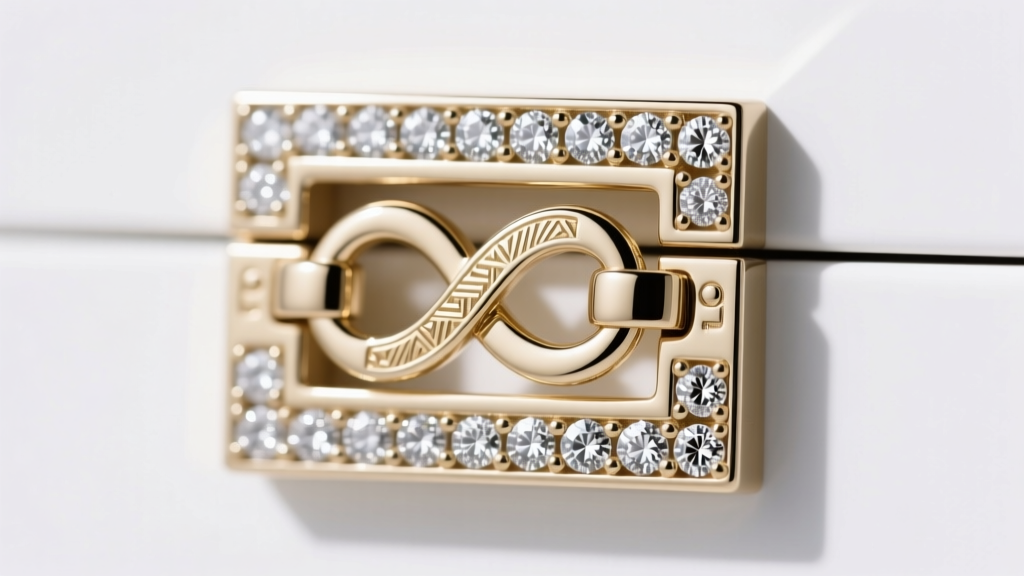
The clasp is the most critical point of failure on any necklace. A diamond riviera weighing 40 total carats can easily exceed 150 grams. Standard lobster clasps or spring rings are entirely insufficient and pose a severe risk of catastrophic loss. High-end rivieras utilize hidden mechanical clasps integrated seamlessly into the graduation pattern.
Tongue-and-Groove Box Clasps
The gold standard for riviera closures is the tongue-and-groove box clasp. A folded metal 'tongue' is compressed and inserted into a hollow box, where it snaps open and locks into place. To ensure redundancy, these are always paired with double figure-eight safety catches—hinged wire loops that snap over a pin on the opposite side of the clasp. According to archival data from the GIA Gem Encyclopedia, a properly engineered double-safety box clasp can withstand over 40 pounds of lateral pull force before deformation, providing ample security for heavy diamond payloads.
Maintenance and Ultrasonic Risks
Owning a diamond riviera necklace requires specialized maintenance protocols. While ultrasonic cleaners are effective for single diamond rings, they are highly discouraged for rivieras. The high-frequency vibrations can easily loosen the delicate prongs holding the smaller melee diamonds near the clasp. Furthermore, if any stone in the necklace has been fracture-filled or laser-drilled, the heat and chemicals in an ultrasonic bath can permanently cloud the stone or destroy the filler. The only safe cleaning method is a manual soak in a mild, ammonia-free degreasing solution, followed by gentle agitation with a soft-bristled baby toothbrush, ensuring the gallery wire is thoroughly cleared of sebum and cosmetic buildup.
Final Verdict on Construction Quality
Evaluating a diamond riviera necklace requires looking far beyond the 4Cs of the individual stones. True expertise lies in assessing the homogeneity of the match, the tensile integrity of the platinum alloy, the fluidity of the articulation, and the redundancy of the clasp mechanics. When these technical elements align, the result is not merely a piece of jewelry, but a masterclass in horological-level precision and gemological engineering.


