Disco Ball Necklace Guide: Sterling Silver vs Crystal vs Resin
Discover the best materials for a disco ball necklace. Compare sterling silver, crystal, and resin options for durability, sparkle, and price.

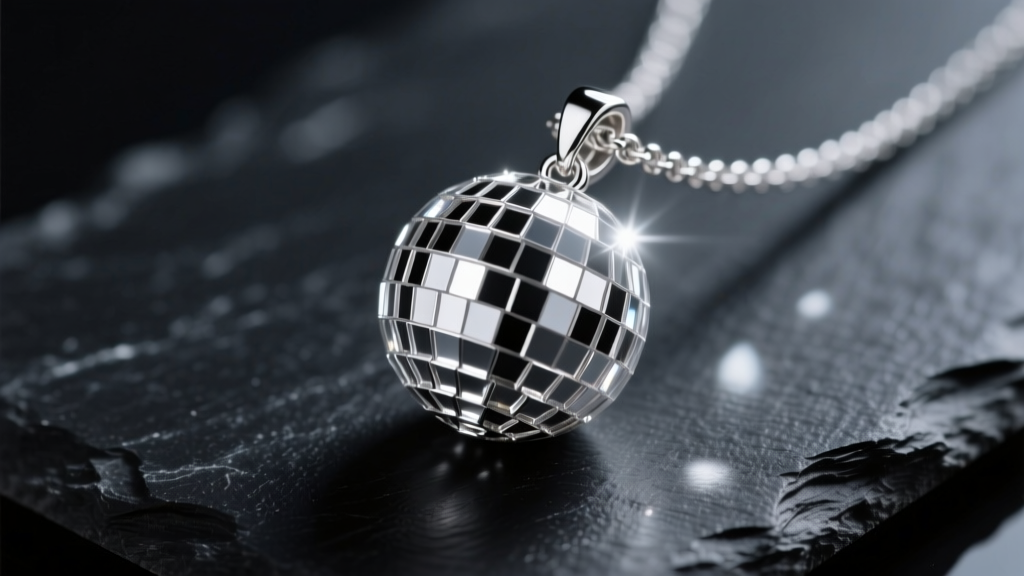
The Physics of the Disco Ball Effect
The disco ball necklace has transcended its nostalgic 1970s origins to become a cornerstone of modern maximalist and Y2K-inspired jewelry layering. However, the signature 'disco' effect—scattering ambient light into hundreds of micro-beams—relies entirely on the material's optical properties and surface geometry. To understand which material is best for your wardrobe, we must first distinguish between specular reflection and refraction.
A true disco ball operates on specular reflection. Light hits the flat, mirrored facets on the exterior and bounces off at an equal angle, creating sharp, distinct beams of light. Materials like polished metals excel at this. Conversely, transparent materials like crystal and glass rely on refraction and dispersion—bending light as it passes through the material to create prismatic 'fire.' When shopping for a disco ball necklace in 2026, understanding this distinction is critical to achieving the exact visual effect you desire.
Sterling Silver: The Reflective Standard
For the most authentic, high-impact light scattering, solid metals are unmatched. Sterling silver (925) remains the premium standard for disco ball pendants. Because pure silver is too soft to hold the precise geometric facets required for a disco ball, it is alloyed with 7.5% copper or zinc to increase its tensile strength and hardness.
High-end silver disco balls are manufactured using CNC (Computer Numerical Control) machining. This allows jewelers to carve exact 1mm x 1mm square facets across a spherical surface, which are then mirror-polished. To prevent the formation of silver sulfide (tarnish) caused by atmospheric sulfur, these pendants are typically plated with rhodium. A high-quality rhodium plating should be between 0.75 and 1.0 microns thick. According to The London Assay Office, ensuring your piece carries a proper 925 hallmark is the only way to guarantee the base metal's purity beneath the rhodium flash.
Pricing & Weight: A solid 12mm sterling silver disco ball pendant typically weighs between 6 and 9 grams and retails from $85 to $180, depending on the brand and the precision of the faceting.
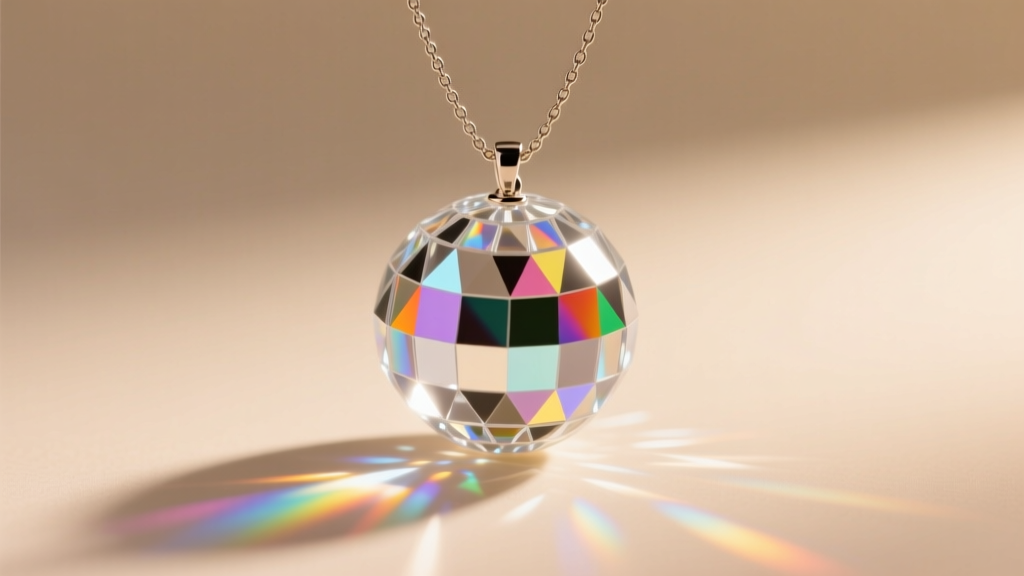
Crystal and Glass: Mastering Refraction
If you prefer prismatic rainbows over stark white light beams, crystal and glass are your ideal materials. The brilliance of a crystal disco ball is measured by its Refractive Index (RI). The higher the RI, the more the material bends light, resulting in greater sparkle.
- Advanced Crystal (e.g., Swarovski): Since transitioning to lead-free formulations, top-tier crystal brands use advanced barium and zinc oxides to maintain an RI of approximately 1.70. These beads are machine-cut and feature an AB (Aurora Borealis) or mirrored foil backing to simulate reflection while maintaining internal fire.
- K9 Borosilicate Glass: A favorite for mid-tier jewelry, K9 glass offers excellent optical clarity with an RI of 1.51. It is highly durable, resistant to thermal shock, and significantly cheaper to produce than premium crystal.
- Acrylic (PMMA): Often mistaken for glass, acrylic has a low RI of 1.49 and lacks the 'weight' and cold-to-the-touch feel of genuine crystal.
For a comprehensive breakdown of how these materials stack up against one another, refer to the GIA Gem Encyclopedia for foundational optical properties of gemological materials.
Material Properties Comparison Chart
| Material | Mohs Hardness | Refractive Index (RI) | Avg. Price Range (2026) | Primary Failure Mode |
|---|---|---|---|---|
| 925 Sterling Silver (Rhodium) | 2.5 - 3.0 | N/A (Opaque) | $85 - $180 | Plating wear, copper oxidation |
| Premium Lead-Free Crystal | 5.5 - 6.0 | ~1.70 | $60 - $120 | Chipping on impact, foil peeling |
| K9 Borosilicate Glass | 5.5 - 6.0 | 1.51 | $35 - $75 | Shattering under high pressure |
| Epoxy Resin / Acrylic | 2.0 - 3.0 | 1.49 | $15 - $40 | Micro-scratches, UV yellowing |
Resin and Acrylic: The Lightweight Contenders
For oversized, avant-garde disco ball necklaces that won't strain the cervical spine, jewelers turn to polymers. Epoxy resins and injection-molded acrylics allow for massive 25mm+ pendants that weigh less than 5 grams. However, these materials come with significant optical and structural compromises.
Acrylic and resin sit at a mere 2.0 to 3.0 on the Mohs hardness scale. This means that everyday contact with dust (which contains microscopic quartz particles at a 7.0 hardness) will cause micro-scratches. Over time, these scratches create a matte, frosted appearance that completely destroys the specular reflection required for the disco effect. Furthermore, unless the resin is treated with HALS (Hindered Amine Light Stabilizers), prolonged exposure to UV radiation will cause the polymer chains to degrade and yellow, ruining the mirrored finish.
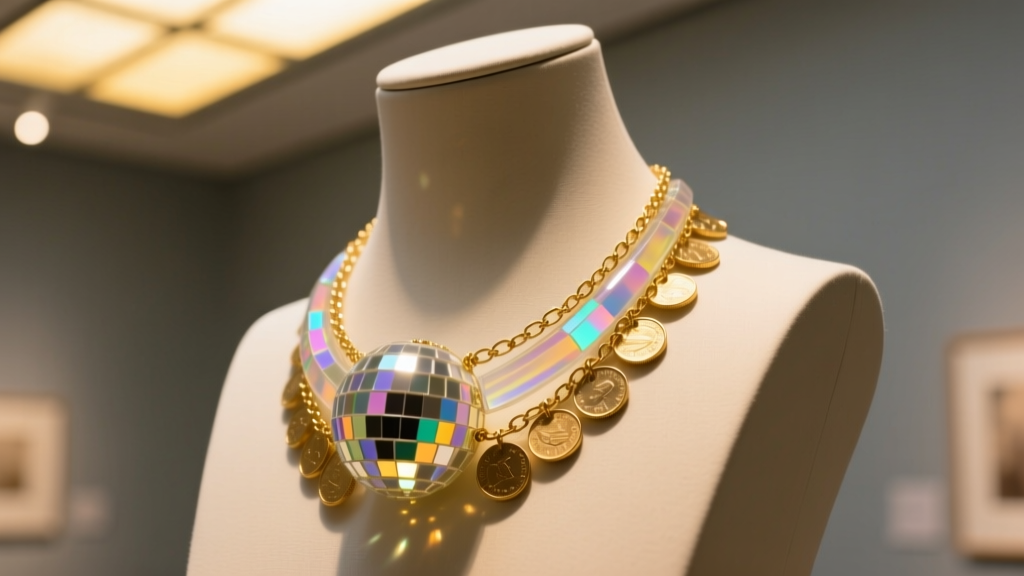
Sizing, Proportions, and Chain Mechanics
The visual impact of a disco ball necklace is heavily dictated by its diameter relative to the wearer's neckline and the structural integrity of the chain.
- 8mm - 10mm (Subtle/Delicate): Best for layering with 16-inch chokers or 18-inch princess chains. Ideal for V-necks and scoop necks where the pendant rests directly on the skin.
- 12mm - 15mm (The Standard): The most versatile size. A 12mm solid silver ball weighs roughly 7 grams. This requires a chain with a minimum tensile strength capable of holding 15 grams to account for dynamic movement and accidental snags.
- 20mm+ (Statement): Reserved for resin or hollow-core metals. Worn best on 20 to 24-inch matinee or opera lengths over high-neck garments or blazers.
Chain Selection: Never pair a heavy metal disco ball with a delicate snake chain; the rigid kinks will permanently bend under the pendulum weight. Instead, opt for a box chain (1.0mm to 1.5mm gauge). Box chains feature interlocking square links that distribute weight evenly and resist kinking. For clasps, avoid spring rings entirely. The internal coil springs degrade quickly, and the microscopic weld point is a primary failure mode. A solid cast lobster clasp is mandatory for any disco ball pendant exceeding 5 grams.
Material-Specific Care and Maintenance
Maintaining the mirror finish of a disco ball necklace requires material-specific protocols. The facets act as microscopic dirt traps, accumulating skin oils and cosmetic residues that dull the light reflection.
- Sterling Silver: Clean with a few drops of mild dish soap and warm water, using a baby hairbrush to gently sweep the facet grooves. Dry immediately with a microfiber cloth. Never use silver dip solutions, as they can strip the rhodium plating and leave a chalky residue in the facet corners.
- Crystal & Glass: These can be safely cleaned in an ultrasonic jewelry cleaner for 3 minutes, provided the crystal does not have a glued-on mirrored backing (which can vibrate loose). Use a 50/50 mix of distilled water and isopropyl alcohol for a streak-free shine.
- Resin: Wipe only with a damp, lint-free cloth. Avoid all alcohol-based cleaners and ultrasonic machines, as solvents will cause the acrylic to cloud and craze (develop microscopic internal fractures).
Final Verdict: Choosing Your Material
If your priority is authentic, razor-sharp light beams and lifelong durability, invest in a CNC-machined sterling silver disco ball necklace. It is an heirloom-quality piece that perfectly mimics the physics of a real dancefloor mirror ball. If you desire vibrant, prismatic color play and a more budget-friendly entry point, K9 glass or premium crystal offers exceptional optical clarity and scratch resistance. Reserve resin and acrylic strictly for temporary, trend-driven statement pieces where oversized proportions are required without the burden of heavy metal weight.


