Juicy Gold Necklace Materials: Vermeil vs Plated vs Solid
Discover the material science behind the perfect juicy gold necklace. Compare vermeil, gold filled, and solid gold for thickness, price, and longevity.

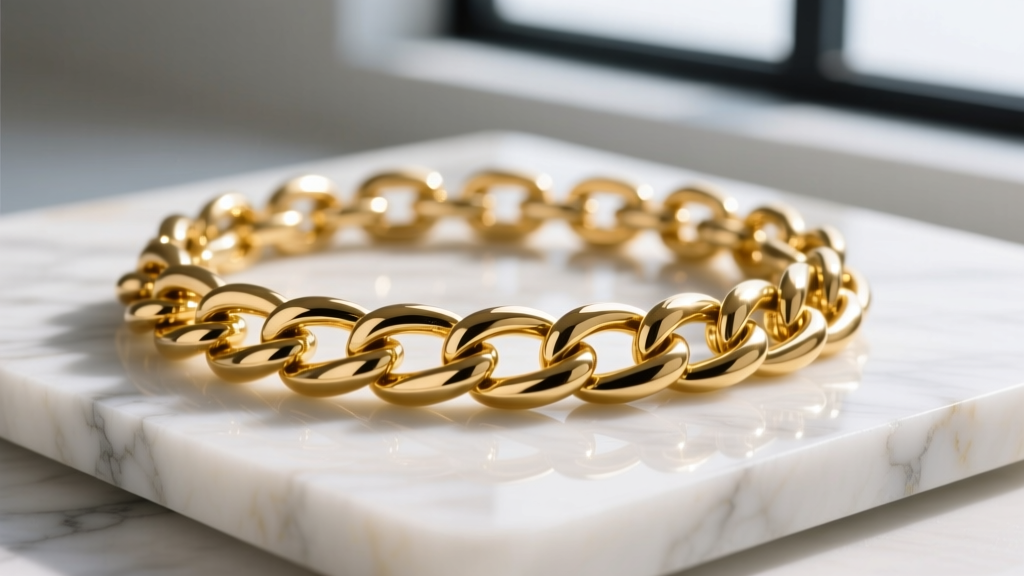
The term 'juicy gold necklace' has dominated jewelry trend forecasts through 2026, describing a highly specific aesthetic: thick, high-polish, liquid-mirror gold chains that catch the light with a warm, saturated yellow hue. Unlike matte, brushed, or hammered finishes, the 'juicy' look requires a flawless, mirror-like surface tension that mimics molten metal. But achieving this luxurious aesthetic involves complex material science, and not all gold jewelry is created equal.
When shopping for a juicy gold necklace, consumers are often faced with a confusing array of terminology: solid gold, gold vermeil, gold filled, and gold plated. Each material category dictates not only the price point but the chain's structural integrity, tarnish resistance, and ultimate lifespan. In this comprehensive material comparison, we break down the exact metallurgical properties, plating thicknesses, and base metal alloys that define the modern gold necklace market.
The Anatomy of a 'Juicy' Gold Finish
The 'juicy' aesthetic is primarily driven by two factors: the karat purity of the gold alloy and the final polishing technique. Pure 24k gold is naturally a deep, rich yellow, but it is far too soft (Vickers hardness of ~25 HV) to be drawn into durable chain links. Therefore, jewelers rely on 14k or 18k gold alloys.
For the ultimate juicy finish, 18k gold (75% pure gold, 25% alloy metals like copper and silver) is the industry gold standard. The higher copper content in 18k yellow gold provides a warmer, more saturated tone compared to the paler, slightly greenish tint of 14k gold (58.3% pure gold). After the chain is cast or drawn, it undergoes a multi-stage polishing process using jeweler's rouge (iron oxide) to achieve the liquid-mirror reflectivity required for the juicy look.
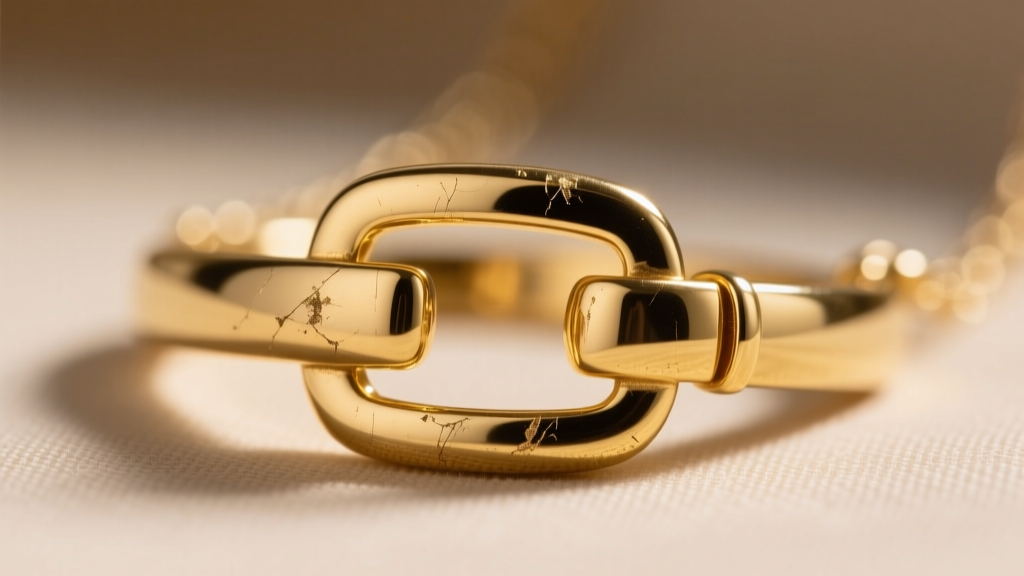
Material Showdown: Solid vs. Vermeil vs. Filled vs. Plated
To understand what you are actually buying, we must look at the cross-section of the chain. Below is a definitive comparison of the four primary material categories available in the 2026 market, based on an 18-inch, 5mm Cuban link chain.
| Material Type | Gold Layer Thickness | Base Metal Core | Avg. Price (18' Chain) | Estimated Lifespan |
|---|---|---|---|---|
| Solid 18k Gold | 100% (Solid) | N/A | $2,800 - $4,500 | Lifetime / Heirloom |
| Gold Vermeil | Minimum 2.5 microns | Sterling Silver (925) | $180 - $350 | 2 - 5 Years (Daily Wear) |
| Gold Filled | 5% of total weight | Jeweler's Brass | $120 - $250 | 5 - 10 Years |
| Gold Plated (HGE) | 0.5 - 1.0 microns | Brass or Stainless Steel | $45 - $90 | 6 - 18 Months |
Micron Thickness and FTC Regulations
The most critical metric for any non-solid juicy gold necklace is the thickness of the gold layer, measured in microns (one-millionth of a meter). According to the Federal Trade Commission (FTC) Jewelry Guides, the term 'Gold Vermeil' is strictly regulated. To be legally sold as vermeil in the United States, the piece must have a sterling silver base and a gold plating of at least 2.5 microns thick.
Standard 'gold plated' jewelry, often labeled as flash-plated, typically features a microscopic layer of just 0.1 to 0.5 microns. While it may look identical to a solid gold chain on day one, the friction from clothing and the acidity of human sweat will wear through a 0.5-micron layer in a matter of months, exposing the base metal and ruining the high-polish finish.
The Rise of PVD Coating vs. Electroplating
As of 2026, many mid-tier brands have shifted toward Physical Vapor Deposition (PVD) coating instead of traditional electroplating. PVD involves vaporizing titanium nitride and real gold dust in a vacuum chamber, bonding it to a stainless steel base at a molecular level. PVD is incredibly hard (up to 2000 HV) and highly resistant to sweat and tarnish. However, PVD coatings often struggle to replicate the deep, warm, 'juicy' yellow hue of 18k electroplated gold, sometimes appearing slightly flatter or more metallic. For purists chasing the true liquid-gold aesthetic, traditional 18k electroplated vermeil remains the superior visual choice.
Base Metal Allergies and Skin Reactions
The core of your necklace dictates its biocompatibility. The 'juicy' look requires a thick, heavy chain, meaning a significant amount of metal rests directly against the skin of the neck and décolletage.
- Brass Cores (Gold Plated / Gold Filled): Brass is an alloy of copper and zinc. When the gold layer eventually wears thin, the copper reacts with sweat and oxygen to create copper chloride, which leaves a harmless but unsightly green stain on the skin. Furthermore, nickel is sometimes added to brass to increase hardness, which can trigger contact dermatitis in sensitive individuals.
- Sterling Silver Cores (Vermeil): Sterling silver (92.5% silver, 7.5% copper) is widely considered hypoallergenic. If a vermeil chain wears down over years of use, the exposed sterling silver will simply oxidize (tarnish) rather than turning the skin green, and it rarely causes allergic reactions.
- Stainless Steel Cores (PVD): Surgical-grade 316L stainless steel is highly biocompatible and nickel-release compliant, making it an excellent choice for those with severe metal allergies, provided the PVD coating is intact.
Care Protocols for High-Polish Gold Jewelry
Maintaining the mirror-like 'juicy' finish requires specific care routines. The high polish is achieved by removing microscopic layers of metal to create a perfectly flat surface. Abrasive cleaning methods will introduce micro-scratches, turning a liquid-mirror finish into a dull, satin haze.
Never use ultrasonic jewelry cleaners or steam cleaners on gold vermeil or gold plated chains. The high-frequency cavitation bubbles in ultrasonic machines will literally blast the microscopic gold layers right off the sterling silver or brass base.
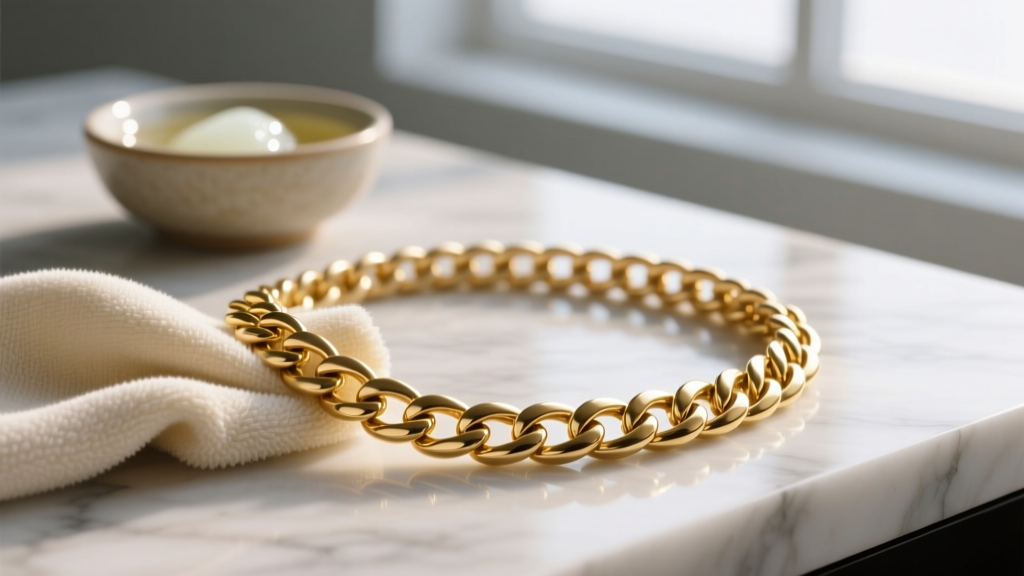
Instead, the Gemological Institute of America (GIA) recommends a gentle approach for cleaning gold alloys and plated jewelry. Mix a few drops of phosphate-free dish soap (like Dawn) in lukewarm water. Let the chain soak for three minutes, then gently agitate it with your fingers. Rinse under a low-pressure stream of distilled water—tap water contains chlorine and hard minerals that can leave water spots on the high-polish surface. Finally, lay the chain flat on a clean microfiber cloth and pat it dry. Never rub a wet gold chain with a paper towel, as wood pulp fibers will cause micro-marring.
Final Verdict: Which Material Wins?
If budget is no constraint, a Solid 18k Gold chain is the undisputed champion. It will never tarnish, can be endlessly re-polished by a jeweler to restore its juicy shine, and holds intrinsic melt value. However, the $3,000+ entry price places it out of reach for many trend-focused buyers.
For the best balance of visual luxury, skin safety, and affordability, 18k Gold Vermeil is the optimal choice. The 2.5-micron thickness provides enough gold to achieve that deep, saturated yellow hue, while the sterling silver base ensures that eventual wear will not result in skin discoloration or allergic reactions. When purchasing a vermeil juicy gold necklace, always demand a certificate of authenticity or a product specification sheet that explicitly states the micron thickness and the 925 sterling silver base, ensuring you are getting a piece built to last well beyond a single season.


