Disney Pin Necklace Care: Cleaning and Maintenance Tips
Learn how to safely clean, maintain, and store your Disney pin necklace. Expert tips on protecting enamel, plating, and base metals.

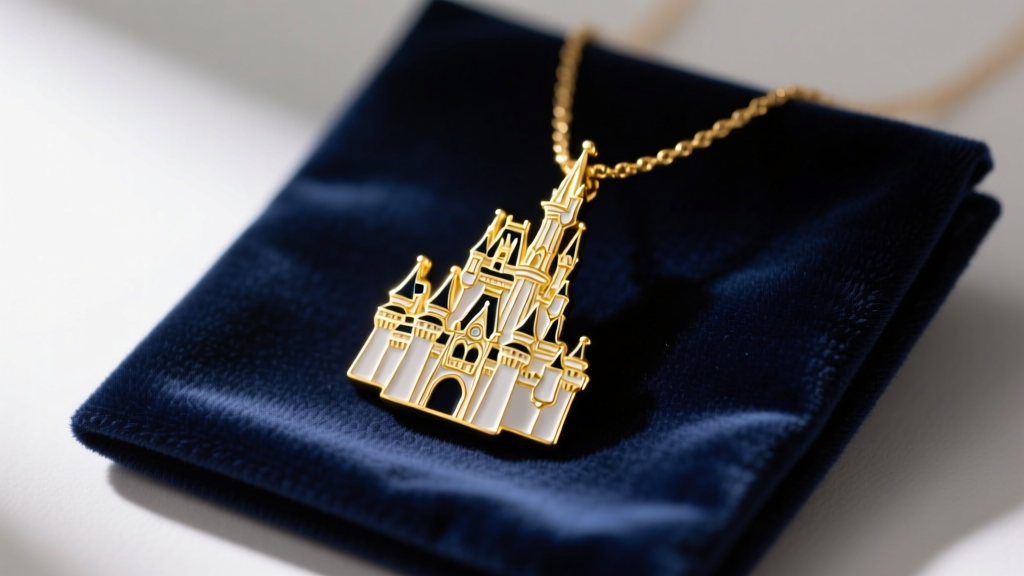
Converting a beloved Disney trading pin into a custom necklace is one of the most creative ways to keep your theme park memories close to your heart. However, treating a Disney pin necklace like traditional fine jewelry is a fast track to ruined enamel, tarnished plating, and degraded base metals. Unlike solid gold or sterling silver pendants, most Disney pins are manufactured using specific base alloys and decorative finishes that require a highly specialized approach to cleaning and maintenance.
Whether your pendant features hard cloisonné enamel, soft enamel with an epoxy dome, or intricate metallic cutouts, understanding the material science behind your jewelry is the first step in preserving its magic. This comprehensive guide will walk you through the exact protocols for cleaning, wearing, and storing your Disney pin necklace to ensure it survives decades of daily wear.
The Anatomy of a Disney Pin Necklace
To properly care for your pendant, you must first understand what it is actually made of. According to the Gemological Institute of America (GIA), enamel and base metal combinations are highly susceptible to thermal shock and chemical corrosion if treated with standard jewelry dips.
Base Metals and Plating
The vast majority of Disney pins are cast from Zamak, a zinc alloy composed of zinc, aluminum, magnesium, and copper. Zamak is excellent for capturing fine details in molds, but it is highly reactive to moisture, acids, and chlorides. To prevent oxidation, these pins are plated with a microscopically thin layer of nickel, gold, silver, or copper. Once this plating wears through from friction or harsh chemicals, the underlying zinc alloy will rapidly corrode, a phenomenon known in conservation circles as 'zinc pest.'
Enamel Types
- Hard Enamel (Cloisonné): Made from finely ground glass that is fired at high temperatures and polished flat. It is highly durable but can crack if subjected to sudden temperature changes.
- Soft Enamel: A pigmented resin or paint that sits recessed below the metal lines. It is softer, more prone to scratching, and vulnerable to chemical solvents.
- Epoxy Domes: A clear polyurethane or epoxy resin coating applied over soft enamel to protect it and give it a smooth, glass-like finish. Epoxy is notorious for photo-oxidation (yellowing) when exposed to prolonged UV light.
Daily Wear and Preventative Maintenance
The most effective way to maintain your Disney pin necklace is to minimize the need for deep cleaning altogether. Human sweat has a pH ranging from 4.5 to 7.0, meaning it is naturally acidic. When this acidity mixes with the salts on your skin and the zinc alloy of your pin, it creates an electrolytic reaction that accelerates tarnishing and plating loss.
The 'Last On, First Off' Rule
Always make your Disney pin necklace the last item you put on when getting dressed and the first item you take off. Cosmetics, perfumes, hairsprays, and chemical sunscreens contain alcohols and aerosolized propellants that will instantly cloud epoxy domes and strip metallic plating. Apply your SPF and lotions at least 15 minutes before putting on your pendant to allow the products to fully absorb into your skin.
Friction and the Bail Attachment
How your pin is converted into a necklace matters. If you are wearing the pin by sliding a chain directly through the pin post and securing it with a rubber clutch, the constant metal-on-metal friction will quickly wear away the plating on the post, leading to rust. For long-term wear, it is highly recommended to have a jeweler solder a sterling silver or gold-filled bail to the top edge of the pin, or use a high-quality, non-reactive pinch bail that grips the edges without scratching the post.
Step-by-Step Cleaning Protocols by Material
Never use ultrasonic jewelry cleaners, steam cleaners, or commercial silver dips (like Tarn-X) on a Disney pin necklace. Ultrasonic vibrations will shatter hard enamel and delaminate epoxy, while thiourea-based silver dips will permanently stain soft enamel resins.
| Material / Finish | Safe Cleaners | Strictly Avoid |
|---|---|---|
| Hard Enamel & Metal Plating | Mild dish soap, distilled water, microfiber | Ultrasonic cleaners, toothpaste, ammonia |
| Soft Enamel (No Epoxy) | Dry microfiber cloth, gentle dusting brush | Any liquid submersion, alcohol, solvents |
| Epoxy Coated Pins | Damp cloth with diluted baby shampoo | Windex, bleach, UV sanitizing lights |
| Unplated Zinc Alloy Edges | Dry polishing cloth only | Water, baking soda pastes, acidic dips |
Protocol 1: Cleaning Hard Enamel and Metal Plating
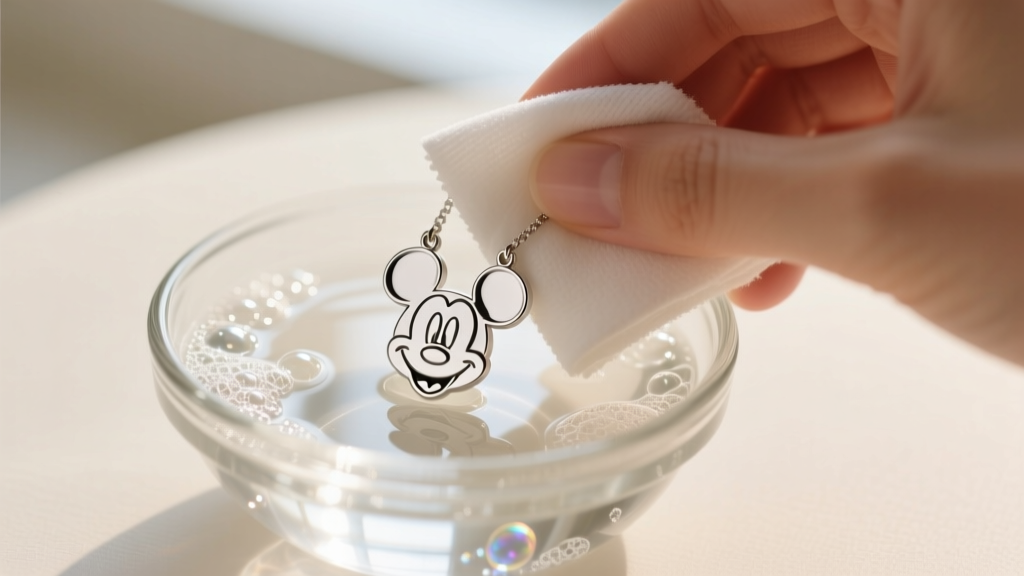
- Mix one drop of pH-neutral dish soap (such as Dawn) into a small bowl of lukewarm distilled water. Tap water contains chlorine and minerals that can leave micro-deposits on the metal.
- Dip a clean, lint-free microfiber cloth into the solution and wring it out until it is only slightly damp.
- Gently wipe the surface of the pin in small, circular motions. Do not scrub the metal lines aggressively.
- Use a dry cotton swab to gently trace the recessed metal crevices to remove trapped skin oils.
- Immediately dry the pendant completely with a second, bone-dry microfiber cloth to prevent water spotting.
Protocol 2: Dusting Soft Enamel and Epoxy Domes
If your pin features soft enamel without an epoxy coating, liquids are your enemy. The pigment can absorb moisture and swell, causing it to flake away from the metal cloisons. Instead, use a clean, soft-bristled makeup brush (like a fluffy eyeshadow blending brush) to gently sweep dust and dead skin cells out of the recessed enamel pockets. For epoxy-coated pins, you may use the damp cloth method described above, but ensure no moisture seeps under the edges of the epoxy dome.
Troubleshooting Common Disney Pin Issues
Even with meticulous care, vintage and frequently worn Disney pin necklaces may develop specific issues. Here is how to address them based on conservation principles outlined by the American Institute for Conservation.
Yellowing Epoxy Domes
If the clear coating over your soft enamel pin has turned yellow, this is a chemical change within the polyurethane resin caused by UV exposure. Unfortunately, this yellowing is irreversible. Do not attempt to sand it off or use hydrogen peroxide, as this will destroy the underlying paint. To prevent this on other pins, store them away from direct sunlight and avoid wearing them during peak UV hours at the theme parks.
Rust on the Pin Post
If you wear the necklace using the original steel or iron pin post, rust is inevitable due to skin contact. If rust develops, carefully apply a microscopic amount of mineral oil to the post using a toothpick. Let it sit for five minutes to loosen the iron oxide, then gently wipe it away with a dry cotton swab. Never use steel wool, as it will scratch the surrounding plating.
Loss of Metallic Plating
If the gold or silver plating on the raised metal lines has rubbed off, exposing the dull grey Zamak underneath, the pin cannot be cleaned back to its original state. However, a professional jeweler can perform a process called 'electroplating' to re-plate the metal lines with 14k gold or rhodium, provided they carefully mask off the enamel areas first.
Proper Storage for Theme Park Souvenirs
How you store your Disney pin necklace when you aren't wearing it is just as critical as how you clean it. Many collectors make the fatal mistake of storing their pins in PVC (polyvinyl chloride) plastic pages or cheap vinyl pouches.
Expert Warning: PVC plastics off-gas hydrochloric acid and plasticizers over time. When trapped in a humid environment, these gases react with the zinc and copper in Disney pins, causing a destructive green crust known as 'bronze disease' or severe zinc rot.
To properly archive your necklace:
- Use Archival Materials: Store the pendant in a polyethylene ziplock bag or a Mylar sleeve. These plastics are chemically inert and will not off-gas.
- Control Humidity: Drop a small silica gel packet into the storage bag to absorb ambient moisture. Ensure you use 'indicating' silica gel (which changes from orange to green when saturated) rather than cobalt chloride, which is toxic.
- Anti-Tarnish Strips: Place a 3M anti-tarnish strip in your jewelry box or storage bag. These strips absorb airborne sulfides and chlorides that cause metal plating to turn black.
- Prevent Scratching: Never toss your Disney pin necklace into a communal jewelry box where it can be scratched by harder gemstones like diamonds or sapphires. Store it individually in a soft, anti-tarnish flannel pouch.
By respecting the unique material composition of your Disney pin necklace and following these targeted maintenance protocols, you can ensure that your favorite piece of theme park memorabilia remains a vibrant, wearable treasure for years to come.


