DM Gold Necklace Buying Guide: Diamond Melee & Pavé
Discover how to evaluate a DM gold necklace. Our expert buying guide covers diamond melee sizes, pavé settings, gold purities, and pricing.

What is a DM (Diamond Melee) Gold Necklace?
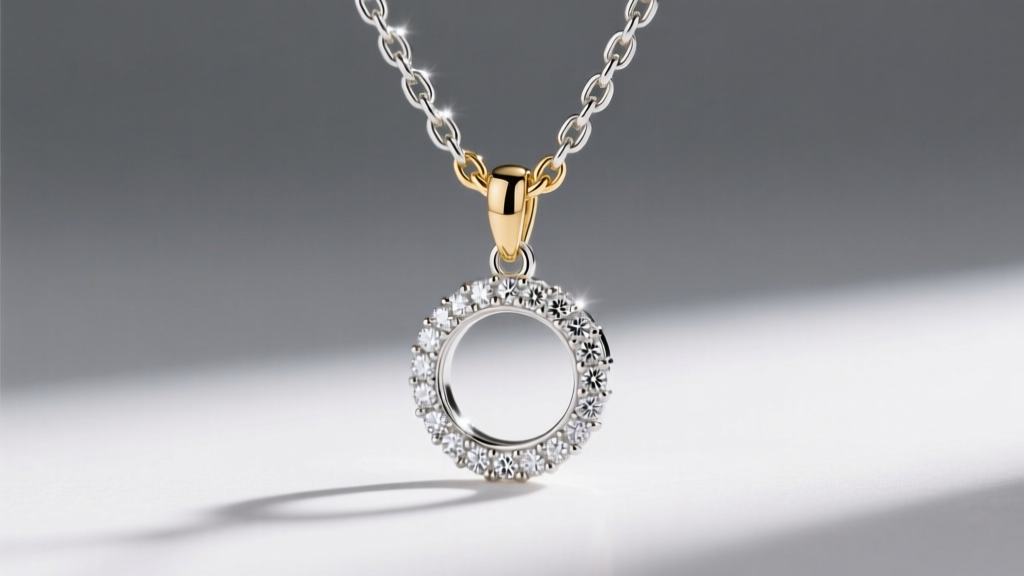
When shopping for high-end jewelry, you will frequently encounter the term DM, which stands for Diamond Melee. A DM gold necklace refers to a piece that utilizes numerous small diamonds—typically weighing between 0.01 and 0.20 carats each—to create intricate pavé, micro-pavé, or channel settings. Unlike solitaire pendants that rely on a single large center stone, a DM gold necklace derives its brilliance from the collective light return of dozens, sometimes hundreds, of meticulously matched micro-diamonds.
In 2026, the landscape of diamond melee has shifted dramatically. With the saturation of lab-grown melee stones in the wholesale market, the cost of the diamonds themselves has decreased. However, the true value of a premium DM gold necklace now lies in the craftsmanship of the setting and the precision of the stone sorting. Understanding these nuances is the difference between acquiring a generational heirloom and a piece that will lose stones within a year.
Full Cut vs. Single Cut: The Sparkle Factor
Not all melee diamonds are created equal. The most critical factor determining the brilliance of your DM gold necklace is whether the stones are 'full cut' or 'single cut'.
- Full Cut Melee: These stones feature the standard 57 or 58 facets found on larger brilliant-cut diamonds. Because they possess a complex facet arrangement, they bend and reflect light aggressively, creating the signature 'fire' and scintillation expected in luxury pavé jewelry.
- Single Cut Melee: Often featuring only 17 or 18 facets, single cut stones are cheaper and faster to produce. In larger sizes, they look glassy and lifeless. However, they are sometimes used in ultra-micro-pavé (under 0.005 ct) where a full facet structure is physically impossible to cut.
Expert Rule: Always demand full-cut melee for any stone larger than 1.00mm. According to the Gemological Institute of America (GIA), the precision of the cut is the primary driver of a diamond's optical performance, regardless of its carat weight.
Melee Sizing and Carat Weight Chart
Diamond melee is categorized by its diameter in millimeters rather than individual carat weight, as the stones are too small to weigh individually. They are sorted through precision sieves. Below is the standard conversion chart used by master jewelers to estimate carat weight based on millimeter spread.
| Diameter (mm) | Approx. Carat Weight | Common Necklace Application |
|---|---|---|
| 0.80 - 0.90 mm | 0.0025 - 0.003 ct | Micro-pavé halos, delicate watch bezels |
| 1.00 - 1.10 mm | 0.005 - 0.006 ct | Standard pavé chains, small pendant accents |
| 1.30 - 1.50 mm | 0.01 - 0.015 ct | Halo settings, channel-set chain links |
| 1.70 - 2.00 mm | 0.02 - 0.03 ct | Prominent pavé, graduated tennis necklaces |
Setting Techniques: Pavé vs. Micro-Pavé
The method used to secure the DM stones dictates both the aesthetics and the durability of the necklace.
Traditional Pavé
Stones are set closely together, separated by small beads of gold raised from the base metal. This technique requires stones in the 1.30mm to 2.00mm range. It offers excellent durability because the metal beads are substantial enough to grip the girdle of the diamond securely.
Micro-Pavé
Utilizing stones under 1.00mm, micro-pavé is set under a microscope. The metal beads are incredibly tiny, creating a 'floating' illusion where the gold is barely visible. While visually stunning, micro-pavé is inherently more fragile. A hard impact against a countertop can easily shear off a micro-bead, resulting in a lost stone.
Choosing the Right Gold Purity for Micro-Settings
The karatage of your gold chain and pendant base directly impacts how well it will hold onto the diamond melee over time.
- 18k Gold (75% Pure): Offers a rich, deep color (especially in yellow and rose gold) and is hypoallergenic. However, it is softer. 18k gold is acceptable for low-impact pendants but is not recommended for everyday tennis necklaces where the links experience constant friction and pulling.
- 14k Gold (58.5% Pure): The industry standard for DM gold necklaces intended for daily wear. The higher alloy content provides the necessary tensile strength to keep micro-prongs rigid and secure. The American Gem Society (AGS) frequently notes that 14k white gold, alloyed with nickel or palladium, provides superior prong memory compared to higher karats.
The 'Casted-in-Place' Red Flag
If you are buying a budget-friendly DM gold necklace, you must be wary of 'casted-in-place' manufacturing. In this mass-production technique, diamonds are placed directly into the rubber mold, and molten gold is poured over them.
Master Jeweler Warning: Never buy casted-in-place melee jewelry. The extreme thermal shock of molten gold (over 1,900°F) can fracture the diamonds or cause them to turn cloudy. Furthermore, the metal does not shrink tightly around the stone, meaning the diamonds will inevitably fall out.
Always look for cast-and-set or hand-set pieces, where the gold is cast first, the seats are bur-cut by a jeweler, and the stones are set cold using a pneumatic hammer and microscope.
Pricing Framework for 2026
Because lab-grown melee is now sold in bulk 'sieves' rather than by individual carat weight, the pricing model for DM gold necklaces has changed. You are no longer paying a premium for the raw diamonds; you are paying for the labor.
Expect to pay between $400 and $800 per carat of total melee weight for natural, high-clarity (VS2-SI1) full-cut stones. However, for a micro-pavé pendant, the setting labor can account for up to 70% of the final retail price. A 1.00 total carat weight (TCW) micro-pavé pendant in 14k gold should reasonably retail between $1,800 and $3,200, depending on the brand and the complexity of the CAD design.
Care and Maintenance for Micro-Settings
Maintaining a DM gold necklace requires a departure from standard jewelry cleaning habits. Never use an ultrasonic cleaner on a micro-pavé necklace. The high-frequency sound waves create microscopic vibrations that can easily shake loose the tiny metal beads holding the melee in place.
Instead, clean your necklace weekly using a soft baby toothbrush, warm water, and a few drops of mild dish soap. Gently brush the underside of the pendant (the gallery) where lotion and dead skin cells accumulate, blocking the light from entering the pavilion of the melee diamonds. Have a professional jeweler inspect the prongs under magnification every 12 months to ensure the beads have not worn down.


