Dominican Republic Necklace Care: Clean Larimar & Amber Safely
Discover expert care, cleaning, and maintenance tips for your Dominican Republic necklace, focusing on delicate Larimar pectolite and rare amber.

The Unique Vulnerabilities of Dominican Jewelry
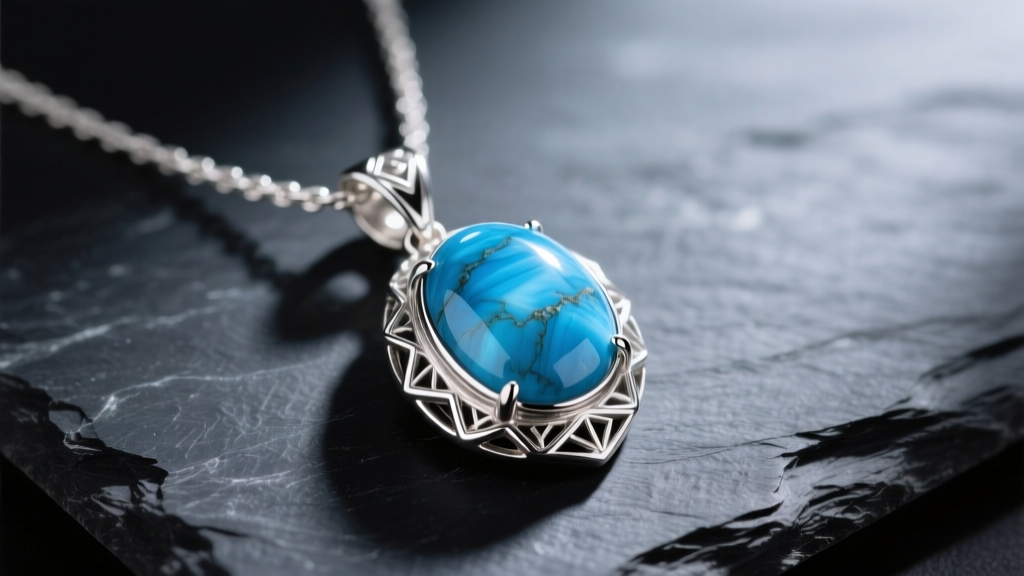
A genuine Dominican Republic necklace is more than just an accessory; it is a piece of Caribbean geological history. Whether your piece features the mesmerizing sky-blue veins of Larimar (blue pectolite) sourced from the Los Chupaderos mine, or the prehistoric inclusions of Dominican blue amber from Bayaguana, these materials require highly specialized care. Unlike diamonds or sapphires, the organic and semi-porous nature of Dominican gemstones makes them exceptionally vulnerable to everyday chemicals, heat, and improper cleaning techniques. In this comprehensive guide, we break down the exact protocols for maintaining the structural integrity and optical brilliance of your Dominican Republic necklace.
Understanding the Mineralogy of Larimar
Larimar is a rare, hydrated sodium calcium silicate. According to the Mindat mineral database, pectolite ranks between 4.5 and 5.0 on the Mohs hardness scale. This relative softness means it can be easily scratched by quartz dust (which is suspended in the air and settles on your jewelry). Furthermore, Larimar's signature blue coloration is photosensitive. Prolonged exposure to ultraviolet light and direct sunlight will cause the vibrant blue hues to fade into a dull, chalky white over time. Its porous nature also means it will readily absorb lotions, perfumes, and chlorine, leading to irreversible internal staining.
The Organic Fragility of Dominican Amber
Dominican amber is fossilized tree resin, ranking a mere 2.0 to 2.5 on the Mohs scale. The Gemological Institute of America (GIA) notes that amber is highly susceptible to thermal shock and chemical degradation. Because it is organic, it can literally melt, craze (develop surface cracks), or cloud when exposed to alcohol, acetone, or even the oils from your skin over prolonged periods. Dominican blue amber, prized for its fluorescent properties under UV light, is particularly sensitive to surface abrasions that can ruin its optical play-of-color.
Step-by-Step Cleaning Protocols
Forget the ultrasonic cleaners and harsh commercial silver dips. Cleaning a Dominican Republic necklace requires a gentle, methodical approach tailored to the specific stone in the pendant or bead strand.
The Safe Soap-and-Water Method for Larimar
If your Larimar pendant has accumulated body oils or environmental grime, follow this exact procedure:
- Preparation: Mix three drops of pH-neutral, phosphate-free dish soap (like Dawn Free & Clear) into a bowl of lukewarm distilled water. Never use hot water, as thermal expansion can cause micro-fractures in the stone.
- Agitation: Dip a baby-soft toothbrush (extra-soft bristles only) into the solution. Gently sweep the bristles over the surface of the Larimar and the silver bezel setting. Do not scrub aggressively.
- Rinsing: Hold the necklace under a gentle stream of lukewarm distilled water to rinse away soap residue. Tap water contains trace minerals and chlorine that can leave hard water spots on the porous stone.
- Drying: Immediately pat the stone dry with a lint-free microfiber cloth. Do not let the necklace air dry, as water spotting can occur.
The Dry-Polish Method for Amber
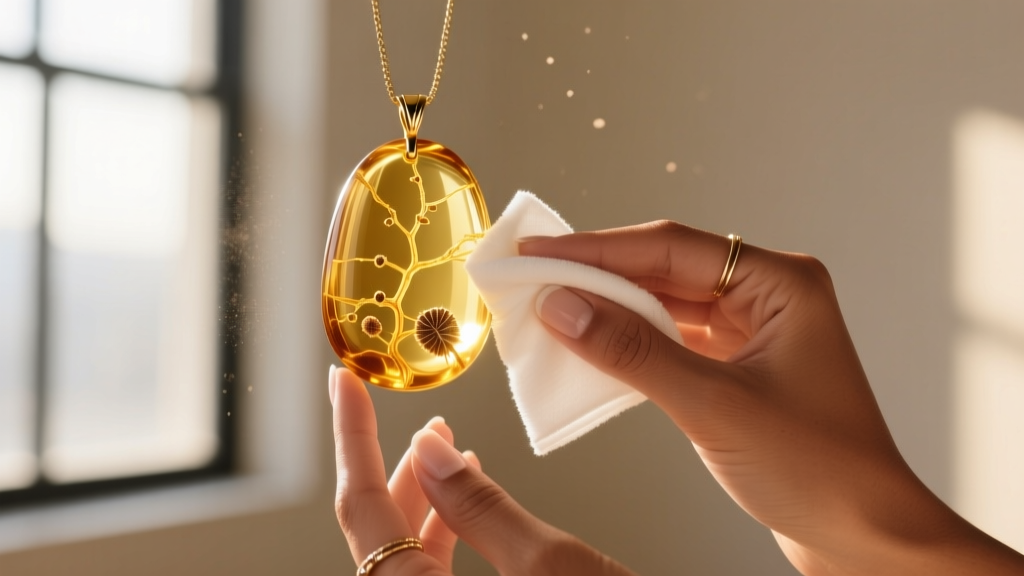
Water and soap are generally discouraged for amber, especially if the necklace features knotted silk thread or if the amber has surface-reaching fractures. Instead, use a dedicated, clean jeweler's microfiber cloth. Gently buff the amber pendant in circular motions to generate a mild static charge, which naturally lifts dust particles from the surface. If the amber is heavily soiled, slightly dampen a corner of the cloth with pure distilled water—never tap water—and wipe the stone, immediately following up with the dry side of the cloth.
Chemical Compatibility and Material Hazards
To prevent catastrophic damage to your Dominican Republic necklace, you must understand which chemicals are strictly prohibited. The following table outlines the chemical tolerance of common Dominican jewelry materials.
| Material | Mohs Hardness | Safe Cleaners | Strictly Avoid |
|---|---|---|---|
| Larimar (Pectolite) | 4.5 - 5.0 | Mild dish soap, distilled water | Ultrasonic, steam, bleach, ammonia |
| Dominican Amber | 2.0 - 2.5 | Dry microfiber, distilled water | Alcohol, perfume, acetone, hairspray |
| .925 Sterling Silver | 2.5 - 3.0 | Silver polishing cloth | Liquid silver dip, toothpaste |
| Oxidized Silver | 2.5 - 3.0 | Dry polishing cloth (edges only) | All liquid cleaners, silver dips |
Identifying Fakes: How Cleaning Affects Imitations
The market is flooded with counterfeit Dominican Republic necklaces. Larimar is frequently faked using dyed howlite or white marble, while amber is often replaced with copal (immature resin) or plastic. Your cleaning routine can actually help you identify a fake.
If you apply a drop of acetone or nail polish remover to an inconspicuous area of a genuine amber pendant, nothing will happen. If the piece is copal or plastic, the surface will become tacky, melt, or leave a white residue on your cotton swab. Similarly, dyed howlite masquerading as Larimar will often bleed blue dye when wiped with a damp cloth.
Always test a hidden area, such as the back of a pendant or the clasp ring, before assuming your necklace is authentic. The GIA's guide on Larimar emphasizes that visual inspection of the natural veining patterns is crucial, as dyed stones often show color concentration in the cracks and crevices.
Advanced Maintenance: Restringing and Settings
Many Dominican Republic necklaces feature beaded strands of Larimar or amber. The maintenance of the stringing material is just as critical as the stones themselves.
Choosing the Right Stringing Wire
Larimar beads are heavy and their drill holes can be rough and abrasive. Traditional silk thread will fray and snap within months. When having your necklace restrung, insist on a nylon-coated stainless steel wire, such as Soft Flex .019-inch diameter wire. This gauge provides the necessary tensile strength to support the weight of the stones while remaining flexible enough to drape elegantly around the neck. For amber beads, which are lighter but highly brittle, a thinner .014-inch wire is sufficient and prevents excessive pressure on the drill holes.
Bezel vs. Prong Settings
If your necklace features a large cabochon, evaluate the setting. Prong settings leave the edges of Larimar and amber exposed. Given their low hardness, a simple bump against a doorframe can chip the girdle of the stone. Bezels are vastly superior for Dominican gemstones, as the metal rim completely encases the vulnerable edges. If your necklace has prongs, have a jeweler check them every six months to ensure the tension hasn't relaxed, which could allow the stone to rattle and fracture.
Environmental Storage Parameters
How you store your Dominican Republic necklace when it is not being worn dictates its lifespan. Never toss these pieces into a communal jewelry box where they can be scratched by harder gems like diamonds or rubies.
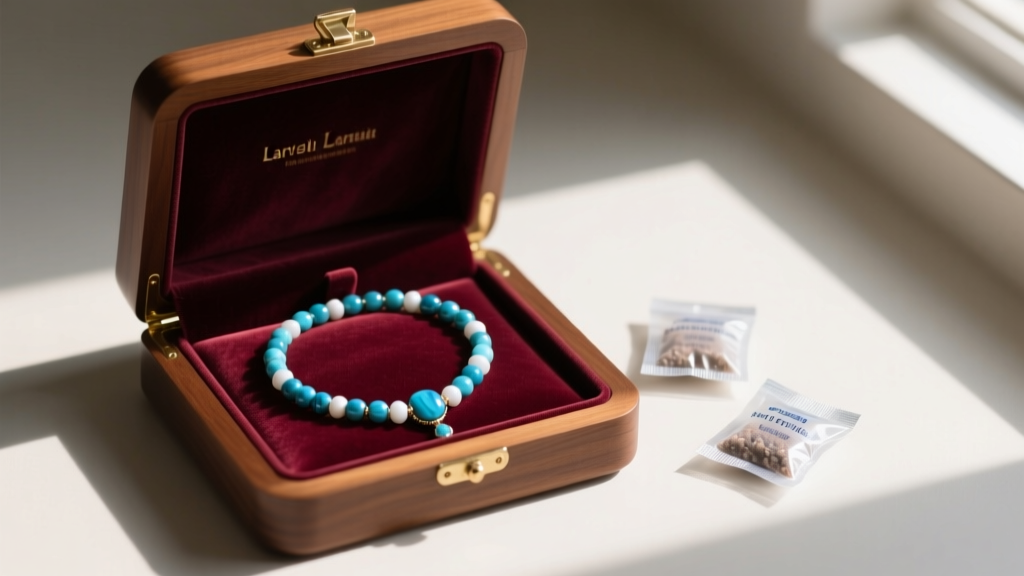
- Light Deprivation: Store Larimar in an opaque, velvet-lined drawer or pouch to prevent UV-induced color fading.
- Humidity Control: Silver settings tarnish rapidly in high humidity. Place anti-tarnish silica gel packets and 3M anti-tarnish strips inside your storage container to absorb ambient moisture and sulfur compounds.
- Thermal Stability: Never leave an amber necklace in a car or near a radiator. Amber begins to soften and degrade at temperatures as low as 200°C (392°F), but prolonged exposure to even moderate heat (like a hot bathroom) can cause internal crazing.
By adhering to these stringent care and maintenance protocols, your Dominican Republic necklace will retain its geological brilliance and structural integrity for generations, serving as a pristine testament to the natural wonders of the Caribbean.


