Donut Necklace Troubleshooting: Bails, Cords & Authenticity
Fix common donut necklace issues. Learn to choose the right bail, prevent cord fraying, and authenticate jade ping'an kou pendants like a pro.

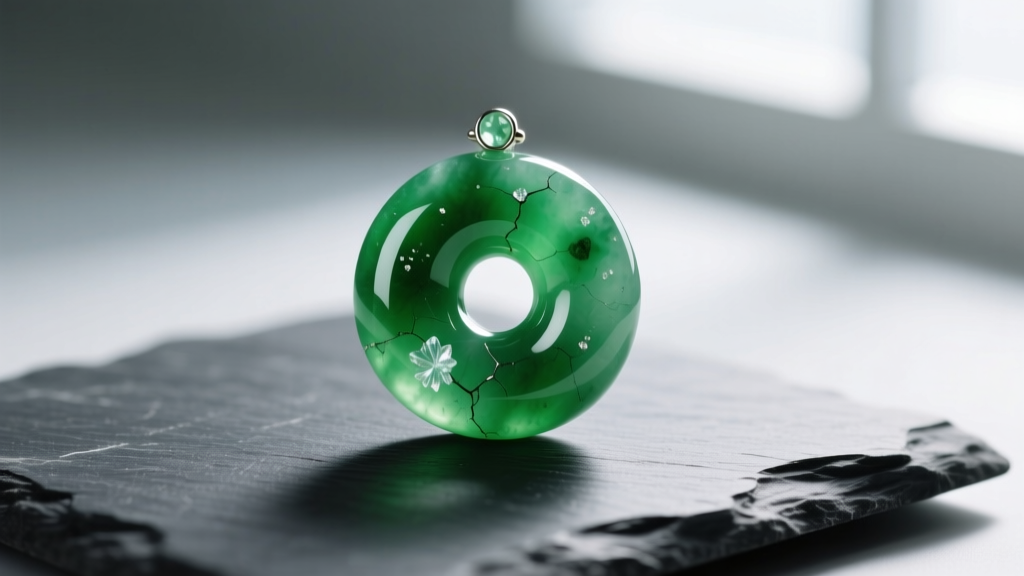
The donut necklace—often recognized as the traditional Chinese ping'an kou or a simple geometric torus pendant—is a staple in minimalist and spiritual jewelry. However, its deceptively simple design harbors several structural vulnerabilities. Because the pendant lacks an integrated metal bail, the connection point between the stone and the suspension material becomes a high-stress pivot. Combined with the prevalence of treated stones and inappropriate cord materials, donut necklaces frequently suffer from premature breakage, bail detachment, and authenticity disputes.
This guide bypasses generic styling advice to focus strictly on the mechanical, material, and gemological troubleshooting required to maintain, repair, and verify your donut pendants.
The Anatomy of a Donut Pendant (and Why It Fails)
A standard donut pendant features a centralized drill hole. In mass-produced stone, glass, or resin donuts, this hole is often drilled from both sides to prevent blowout, leaving a rough, unpolished ridge in the exact center of the channel. This internal ridge acts as a microscopic saw blade against whatever cord or wire passes through it. Furthermore, the smooth, non-porous exterior of materials like jadeite, obsidian, or borosilicate glass makes traditional adhesive bails highly prone to catastrophic failure.
Troubleshooting Bail and Cord Failures
The Glue-On Bail Detachment
Many commercial donut necklaces utilize a flat-pad sterling silver or base-metal bail secured with cyanoacrylate (Super Glue) or E6000 jewelry adhesive. This is a primary failure point. Adhesives require micro-porosity to create a mechanical bond. On polished jade or glass, thermal expansion from body heat and the acidic nature of human sweat will degrade the adhesive layer within 6 to 12 months.
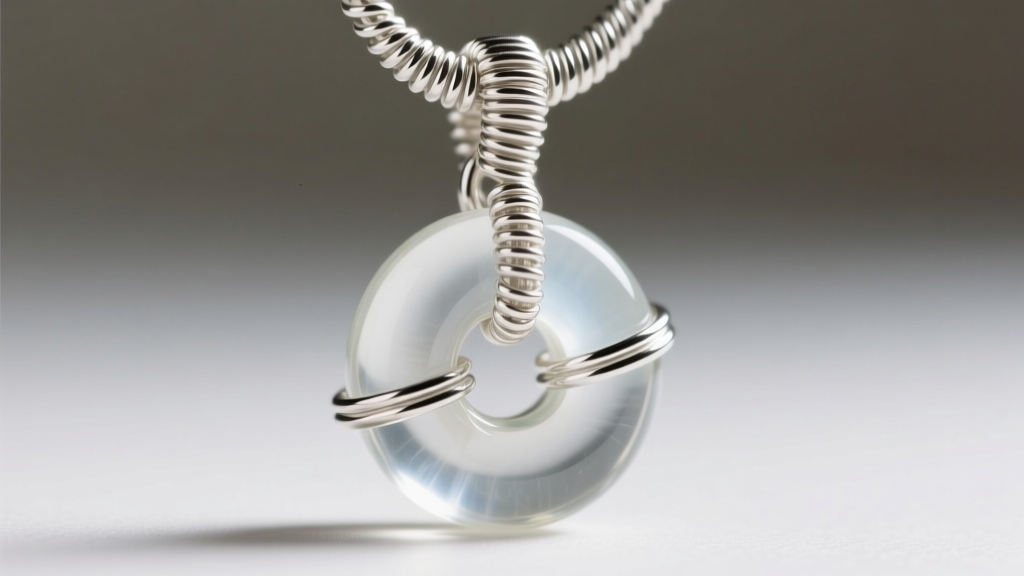
The Fix: If you must use a glue-on bail, score the bonding surface of the pendant with a 400-grit diamond burr or a coarse sharpening stone to create a micro-textured surface. Clean the area with isopropyl alcohol, and use a two-part jeweler's epoxy rather than cyanoacrylate, which becomes brittle over time. Better yet, abandon glue entirely in favor of a mechanical wire wrap using 20-gauge or 22-gauge dead-soft argentium silver wire, which grips the stone without relying on chemical adhesion.
Cord Fraying: The Silent Killer
Silk cords are traditional but highly susceptible to rot from perspiration and friction against the unpolished drill hole. When a silk cord snaps, the heavy stone drops and often chips or shatters on impact.
| Suspension Material | Friction Resistance | Est. Lifespan (Daily Wear) | Best Application |
|---|---|---|---|
| Braided Silk Cord | Low | 6-12 Months | Occasional wear, lightweight resin |
| Waxed Polyester (0.8mm) | High | 3-5 Years | Heavy jade or stone donuts |
| Braided Nylon (1.0mm) | Very High | 5+ Years | Outdoor/active wear |
| Sterling Silver Cable (1.5mm) | Extreme | 10+ Years | High-end glass or metal donuts |
The Fix: Switch to a 0.8mm waxed polyester cord. The wax coating fills the microscopic gaps in the braid, reducing friction and repelling moisture. Additionally, use a diamond needle file to gently bevel and smooth the inside of the donut's drill hole before restringing.
Authenticity Testing: Is Your Jade Donut Real?
The donut shape is the most common cut for jadeite, making it a frequent target for misrepresentation. The market is flooded with serpentine, dyed quartz, and polymer-impregnated jadeite masquerading as high-quality natural stone. Before investing in repairs or premium hardware, verify your stone's authenticity using these non-destructive gemological protocols.
1. The Specific Gravity (SG) Test
Density is the most reliable at-home indicator. Natural jadeite has a specific gravity of 3.30 to 3.38. Nephrite is slightly lighter (2.90 to 3.03). Common imitations like glass (2.4 to 2.6) or quartz (2.65) will feel noticeably lighter in the hand for their size. Using a digital pocket scale and a water displacement setup, you can calculate the exact SG of your donut pendant.
2. Longwave UV Fluorescence
Type B jadeite (acid-bleached and polymer-impregnated) is structurally compromised. While it may look vibrant, the polymer resin used to stabilize the stone will fluoresce a chalky, blueish-white under a 365nm longwave UV flashlight. Type A (natural, untreated) jadeite is generally inert or shows very weak, localized fluorescence. According to the Gemological Institute of America (GIA), strong blue-white fluorescence in a translucent green donut is a red flag for polymer treatment.
3. The Acoustic Chime Test
Suspend the donut by a silk thread and strike it gently with a metal rod or another piece of jade. Natural Type A jadeite produces a clear, resonant, bell-like chime that sustains. Type B jade, due to the dampening effect of the internal polymer resin, produces a dull, flat 'clack'. The Swiss Gemmological Institute (SSEF) frequently notes that acoustic testing, while not definitive on its own, is a highly effective preliminary sorting tool for experienced dealers.
The Pendulum Effect: Chain Fatigue and Weight Distribution
If you prefer a metal chain over a cord, you must account for the 'pendulum effect.' A dense stone donut (which can easily weigh 15 to 30 grams) will swing and pull laterally on the chain links, particularly at the clasp and the bail jump ring.
- Avoid Snake and Herringbone Chains: These lack lateral flexibility. The pendulum motion will quickly kink and permanently deform the links.
- Avoid Delicate Figaro or Curb Chains: The varying link sizes create weak points where the solder can snap under dynamic lateral stress.
- Use Wheat (Spiga) or Box Chains: A 1.5mm to 2.0mm wheat chain offers multi-directional flexibility and high tensile strength, distributing the kinetic energy of the swinging donut evenly across the links.
Step-by-Step: Tying a Secure Macrame Sliding Knot
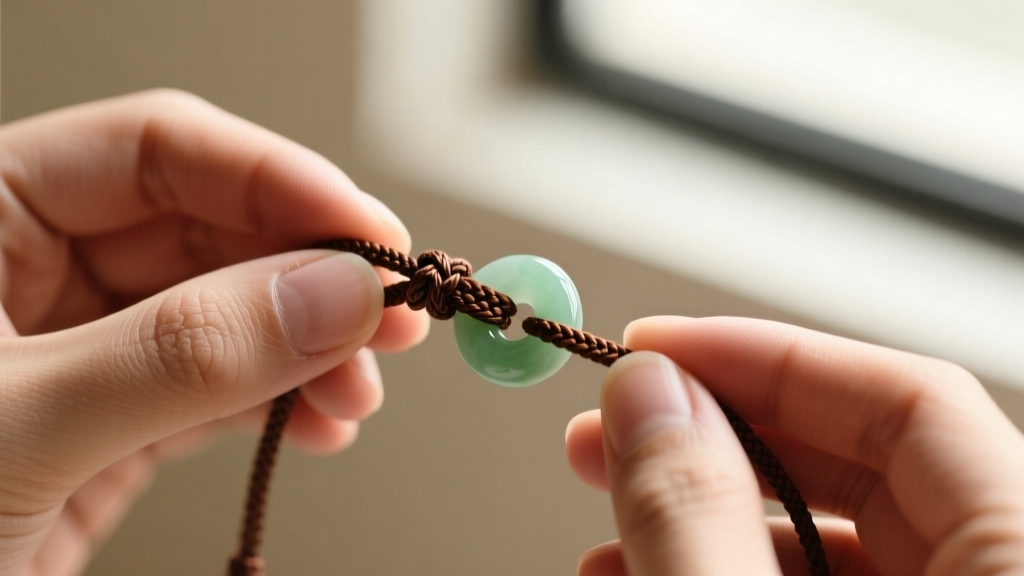
The ultimate troubleshooting method for a donut necklace is eliminating the bail entirely by using a macrame sliding knot directly on the cord. This allows for adjustable length and removes the metal-to-stone friction point.
- Thread your 0.8mm waxed polyester cord through the donut hole.
- Overlap the two ends of the cord by about 4 inches.
- Take the left cord and wrap it tightly over both the right cord and the left cord's own tail, making three distinct, tight coils.
- Pass the end of the left cord through the loop created at the base of the coils.
- Pull the knot tight, sliding it down to the base. The wax on the polyester will help the knot grip the underlying cord.
- Trim the excess tails to 2mm and carefully melt the tips with a lighter, pressing them flat with the side of the flame (not the tip) to create a smooth, rounded bead that prevents the knot from unraveling.
Maintenance and Storage Protocols
To preserve the polish of your donut pendant, store it in a soft microfiber pouch separate from harder gemstones like diamonds or sapphires, which can scratch jade and glass. If the stone accumulates skin oils and loses its luster, clean it using only lukewarm water and a drop of pH-neutral dish soap. Never use ultrasonic cleaners or harsh chemical jewelry dips, especially on jadeite, as these can strip natural waxes or degrade the polymer in treated stones. By addressing the mechanical weak points and understanding the material science of your pendant, your donut necklace will remain a secure and enduring staple in your collection.


