Double Necklace Value Guide: Budgeting for Layered Styles
Discover if a double necklace is worth the investment. We break down material costs, hardware durability, and budget tiers to assess true value.

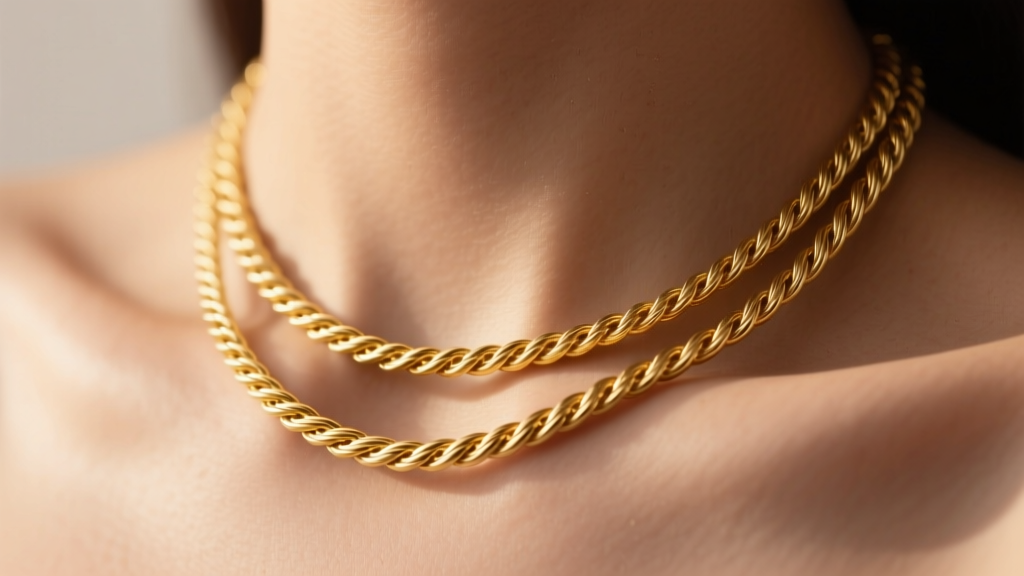
The Economics of the Double Necklace: Pre-Layered vs. DIY
The layered jewelry trend has evolved significantly over the past decade. What once required consumers to purchase, measure, and manually layer multiple individual chains has now been streamlined by the modern double necklace. These pre-layered pieces feature two distinct chains attached to a single clasp mechanism, often separated by a soldered jump ring or a fixed spacer bar. But from a strict budget and value assessment perspective, does buying a unified double necklace offer better financial ROI than curating two separate strands?
To answer this, we must look at manufacturing economics. A pre-layered double necklace requires less finishing labor on the clasp end—only one lobster clasp and one set of end rings are needed, rather than two. However, jewelers often apply a "design premium" to pre-layered pieces because they solve the consumer's pain point of tangling and uneven spacing. On average, a pre-layered 14k gold-filled double necklace will cost roughly 15% to 20% more than buying two individual gold-filled chains of the same weight and brand. You are paying for the convenience of guaranteed spacing and the engineered prevention of the dreaded "tangling tax."
Material Grades & Price Tiers: Where Does Your Money Go?
When assessing the value of any layered neckpiece, the base metal and plating thickness dictate the true lifespan of your investment. The market is currently saturated with misleading terminology. According to the Federal Trade Commission (FTC) Jewelry Guides, specific legal thresholds must be met for terms like "vermeil" and "gold plated." Understanding these tiers is critical for budget-conscious buyers who want longevity without the solid gold price tag.
| Material Category | Base Metal | Gold Layer / Thickness | Expected Lifespan (Daily Wear) | Avg. Price Range (16" Double) |
|---|---|---|---|---|
| Flash Plated | Brass or Copper | < 0.175 microns | 1 - 3 Months | $25 - $45 |
| Gold Vermeil | Sterling Silver (925) | Minimum 2.5 microns | 1 - 3 Years | $85 - $160 |
| PVD Coated Steel | 316L Stainless Steel | Titanium Nitride (PVD) | 3 - 5+ Years | $40 - $75 |
| Solid 10k / 14k | Gold Alloy (No base) | Solid throughout | Lifetime (Generational) | $350 - $800+ |
For the best value-to-cost ratio in 2026, PVD (Physical Vapor Deposition) coated stainless steel has emerged as the undisputed champion for budget buyers. Unlike traditional electroplating, PVD bonds gold colorants to steel at a molecular level in a vacuum chamber, making it highly resistant to sweat, perfume, and the friction inherent in double-strand designs. If your budget allows for $100+, the Gemological Institute of America (GIA) notes that heavy gold vermeil over sterling silver remains the best hypoallergenic alternative to solid gold.
The Hidden Costs: Clasp Hardware and Chain Weaves
A critical failure point in budget double necklaces is the hardware. Because a double necklace carries the dead weight of two chains plus any pendants, the tensile stress on the primary clasp is doubled. Budget manufacturers often cut costs by using 5mm spring-ring clasps. These are notorious for failing under the dual-chain load, leading to lost jewelry. Always inspect the clasp type: a 7mm or 9mm lobster clasp is mandatory for a secure double necklace. Furthermore, check the jump rings connecting the chains to the clasp. If they are not soldered shut, the dual friction of the chains can slowly pry the jump ring open over time.
Durability & Maintenance: The Tangling Tax
The primary reason consumers abandon layered jewelry is the frustration of constant knotting. When two chains of similar length and weave rest against the collarbone, body movement causes them to twist around one another. This isn't just an annoyance; it causes severe micro-abrasions on the metal links, accelerating the wear of gold plating.
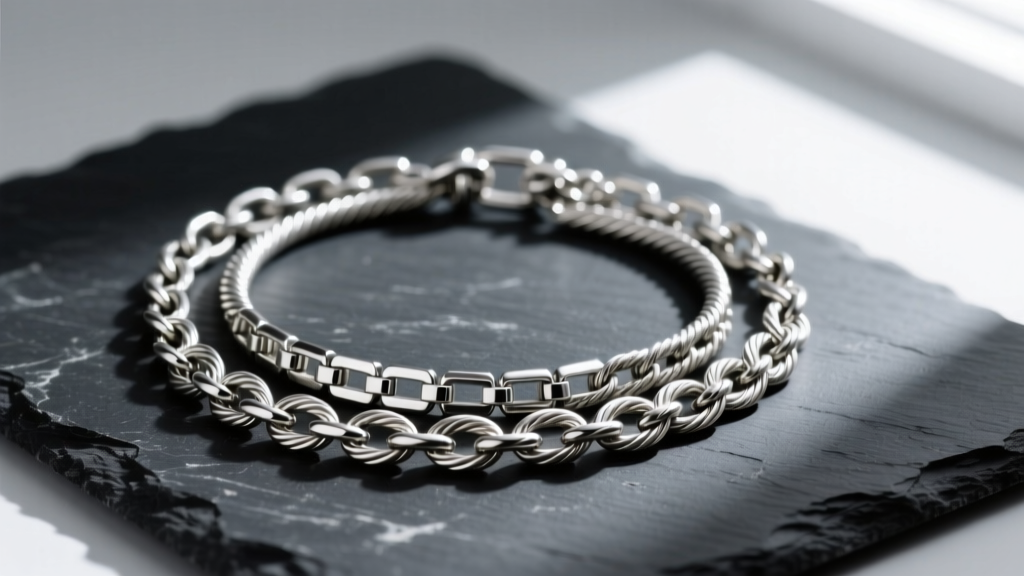
High-value double necklaces solve this through chain weave compatibility and fixed spacing. If you are buying a pre-layered piece, look for designs that utilize a permanent spacer bar—a small metal bridge soldered between the two chains near the clasp. This forces the chains to lay flat and prevents them from wrapping around each other near the nape of the neck, which is where 80% of tangles originate. Additionally, beware of pairing a box chain with a cable chain in a DIY double setup; the sharp interior edges of a box chain will act like a file against a softer cable chain, stripping the plating within weeks.
Value Assessment Framework: 3 Questions Before You Buy
Before adding a double necklace to your cart, run it through this rapid value-assessment checklist to ensure you aren't overpaying for a poorly engineered piece:
- Is the length differential engineered correctly? A true double necklace should have a minimum 2-inch to 3-inch difference between the top and bottom strands (e.g., 16" and 18.5"). Anything less will cause the pendants to collide and the chains to knot.
- Are the pendants fixed or free-floating? Free-floating pendants on a double necklace offer versatility but increase the risk of the chains tangling. Fixed pendants (soldered or held by two jump rings) maintain the structural integrity of the layout and justify a higher price point.
- Does the metal weight justify the price? A hollow-rope chain double necklace will look thick but dent easily and snap under minor tension. Look for product descriptions that specify "semi-solid" or provide the exact gram weight. A quality 16-inch layered set should weigh no less than 4 to 6 grams depending on the chain style.
Expert Verdict: When to Invest and When to Save
The double necklace is a masterclass in jewelry convenience, but its value is entirely dependent on how you intend to wear it. If you are looking for a daily-wear piece that will withstand showers, workouts, and constant friction, skip the gold-plated brass options entirely. The money spent replacing tarnished, tangled, and snapped budget chains will quickly exceed the cost of a solid 10k gold or high-quality PVD steel alternative.

Ultimately, the best budget strategy is to invest heavily in the hardware and base metal of the double necklace, while saving money on the pendants. A high-quality, pre-soldered 14k gold-filled double chain with a secure lobster clasp will serve as a permanent foundation in your jewelry wardrobe. You can then swap out inexpensive, trend-driven pendants on the bottom strand as styles change, maximizing both your financial budget and your stylistic versatility.


